NASAâs Heliophysics Experiment
to Study Sun on European Mission
MAY 21, 2024
RELEASE 24-072
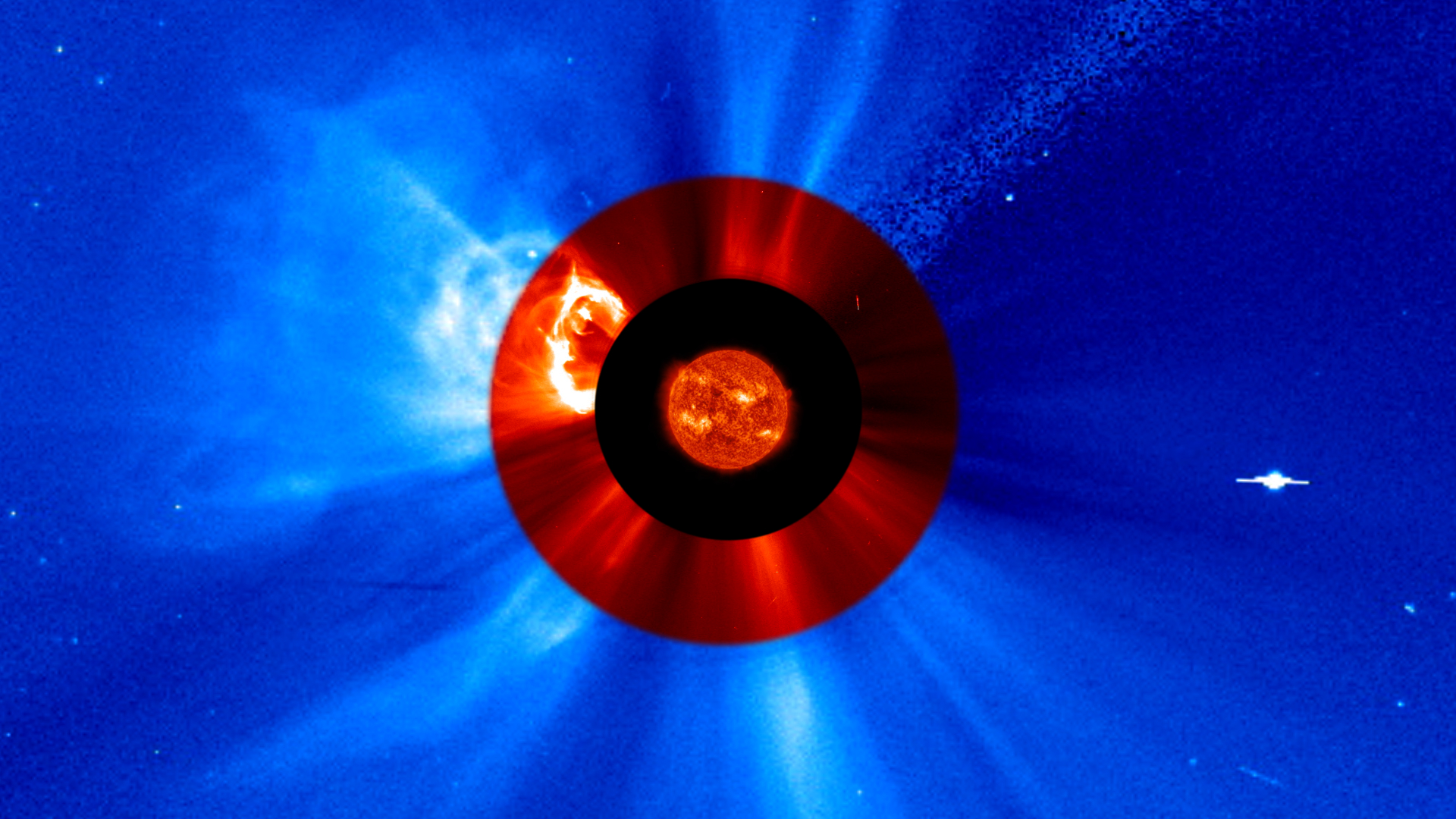
The Joint EUV coronal Diagnostic Investigation (JEDI) will fly aboard the European Space Agencyâs Vigil space weather mission and capture
new views that will help researchers connect features on the Sunâs surface to those in the Sunâs outer atmosphere, the corona.
Credits: NASA
NASA announced Tuesday it selected a new instrument to study the Sun and how it creates massive solar eruptions. The agencyâs Joint EUV coronal Diagnostic Investigation, or JEDI, will
capture images of the Sun in extreme ultraviolet light, a type of light invisible to our eyes but reveals many of the underlying mechanisms of the Sunâs activity.
Once integrated aboard the ESAâs (European Space Agencyâs) Vigil
space weather mission, JEDIâs two telescopes will focus on the middle layer of the solar corona, a region of the Sunâs atmosphere that plays a key role in creating the solar wind and the solar eruptions that cause space weather.
The Vigil space mission, planned to launch in 2031, is expected to provide around-the-clock space weather data from a unique position at Sun-Earth Lagrange point 5 â a gravitationally
stable point about 60 degrees behind Earth in its orbit. This vantage point will give space weather researchers and forecasters a new angle to study the Sun and its eruptions. NASAâs JEDI will be the first instrument to provide a constant view of the Sun from
this perspective in extreme ultraviolet light â giving scientists a trove of new data for research, while simultaneously supporting Vigilâs ability to monitor space weather.
âJEDIâs observations will help us link the features we see on the Sunâs surface with what we measure in the solar atmosphere, the corona,â said Nicola Fox, associate administrator,
Science Mission Directorate at NASA Headquarters in Washington. âCombined with Vigilâs first-of-its-kind, eagle eye view of the Sun, this will change the way we understand the Sunâs drivers of space weather â which in turn can lead to improved warnings to
mitigate space weather effects on satellites and humans in space as well as on Earth.â
The project is led by Don Hassler at the Southwest Research Institute in Boulder, Colorado. The instrument is funded by the NASA Heliophysics Space Weather Program with a total cost
not to exceed $45 million. Management oversight will be provided by the Living With a Star Program of the Explorers & Heliophysics Projects Division at NASAâs Goddard Space Flight Center in Greenbelt, Maryland.
For more information on NASA heliophysics missions, visit:
https://science.nasa.gov/heliophysics
-end-