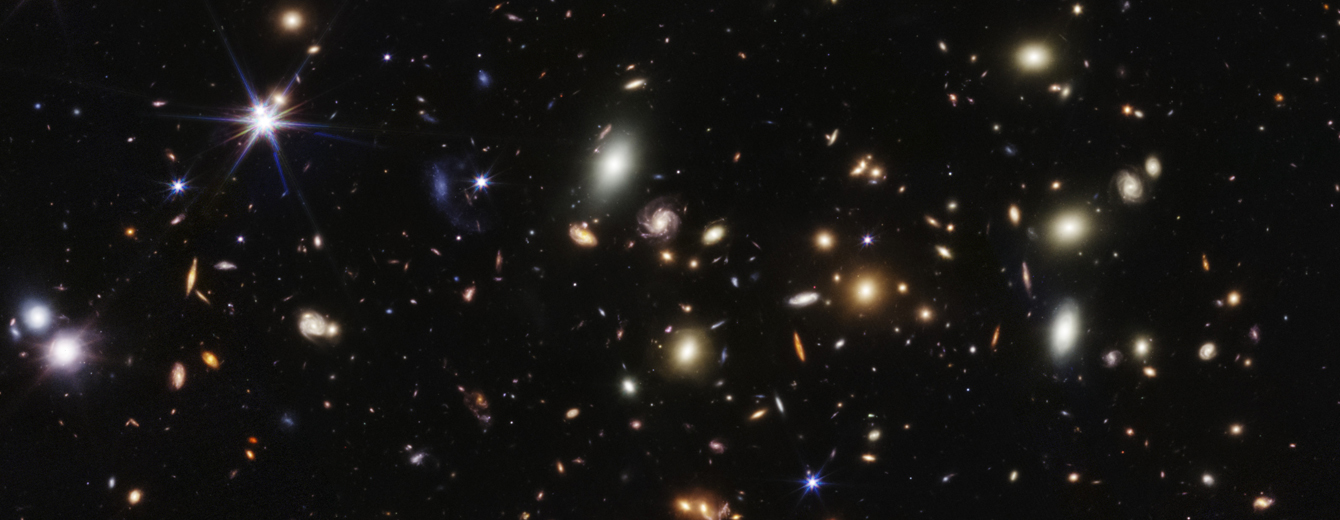
In addition to setting a new distance record, galaxy MoM-z14 joins an emerging population of galaxies that are unexpectedly bright, compact, and chemically enriched.
It’s an exciting time to be an astronomer focused on the origins of the universe. How did we get here? It’s one of humanity’s biggest questions, and NASA’s James Webb Space Telescope is making it possible to explore that question in completely new ways, revealing galaxies closer to the big bang than we’ve ever seen before.
Webb’s current most-distant galaxy, MoM-z14, existed only 280 million years after the universe began in the big bang. The number, and contents, of bright galaxies in the early universe are defying expectations and demanding new theories of what this period of cosmic history was like, and how it led to us.
Find additional resources at www.stsci.edu
You are receiving this email because you are subscribed to the Inbox Astronomy mailing list.


