NASA History News & Notes

FEBRUARY 2026 • Volume 43, Number 2

In this edition, we discuss the value of NASA’s oral histories, invite you to hear about the creation of “ISS in Real Time,” and challenge your knowledge about America’s first astronaut in space.

CONTENTS

  • NASA's oral history program and our return to the Moon
  • Ben Feist's upcoming presentation on "ISS in Real Time"
  • Spaceflight history trivia challenge

ORAL HISTORY

Capturing the Insights of NASA's Past Experts for Our Return to the Moon

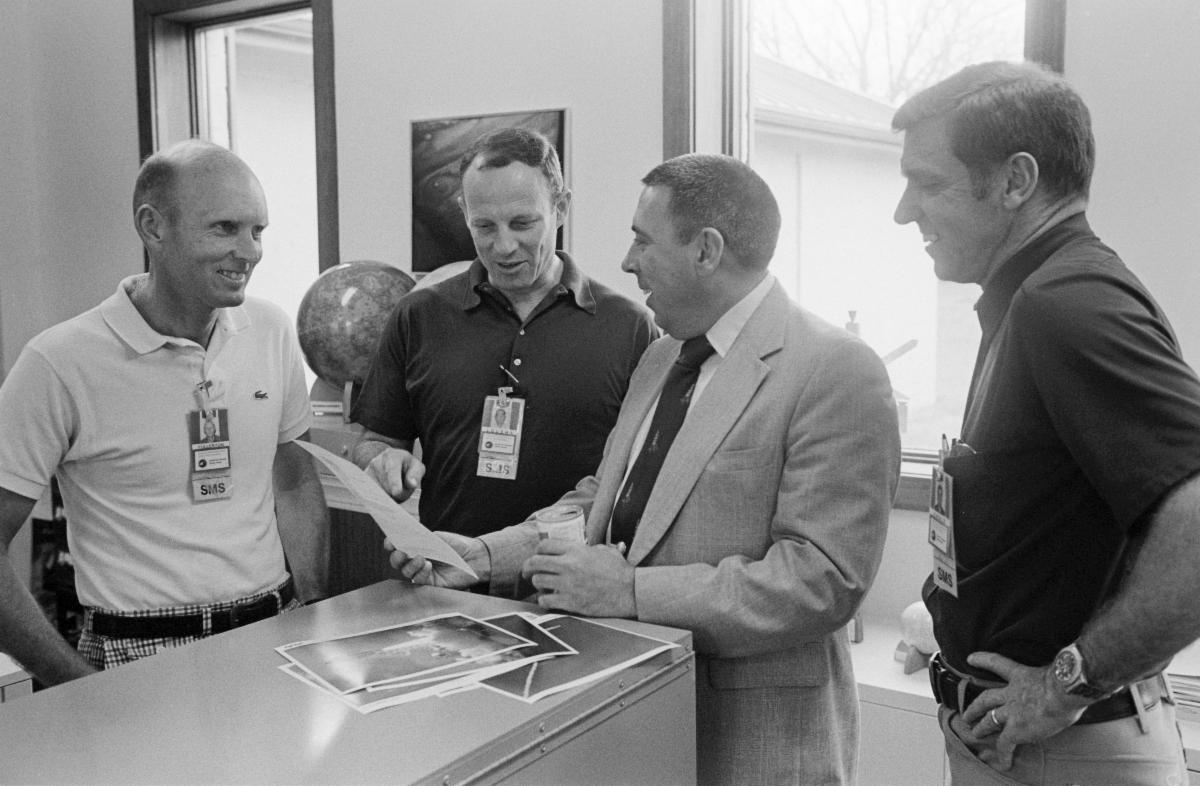
Four men stand around a tabletop as they look at photos together. They are, from right to left, C. Gordon Fullerton, Jack Lousma, George Abbey, and Joe Engle.

George Abbey (wearing a suit) takes a break with STS-2 commander Joe Engle (right) and the STS-3 crew, Jack Lousma (second from left) and C. Gordon Fullerton (left), during their April 1, 1982, debriefing. Semi-related side note: We wish Jack Lousma a very happy 90th birthday this weekend! Credit: NASA

In 1996, then-director of Johnson Space Center George Abbey; concerned with the prospect of losing the collected wisdom gleaned from over 40 years of planning, executing, and achieving human spaceflight; commissioned a project to collect as many oral history interviews as possible with the “graybeards” of NASA before it was too late. The project soon expanded to capturing interviews for NASA Headquarters, and the original team of oral historians traveled to every NASA center to continue this work, establishing oral history projects across the agency.


Transcripts from the resulting projects are publicly available online and used by researchers, authors, and students across the globe. They also serve as a valuable resource for NASA’s management, engineers, and scientists when developing new spaceflight programs, not only for the information contained in the interviews, but also in identifying the former NASA experts who were pioneers in the field.


During an interview for the Orion Oral History Project in 2016, the Program Director for Exploration Systems Development, Daniel L. Dumbacher, explained the importance of capturing history at NASA.


(T)he History Office is just as important in my book as anybody else, because if we don’t learn from the history, we’re bound to repeat it. I love nothing more than making the young people go back and read the history, because they’ve got to learn it somehow.


After reading the available oral history transcripts with George Mueller, who headed the Office of Manned Space Flight from 1963 through 1969, Dumbacher had the opportunity to speak with Mueller personally. “I was trying to get his insight before I got too far into this job at Headquarters.” He credited talking to Mueller—doing his “own version of oral history”—with learning several key points for managing a large and diverse workforce.


Earlier, Constellation Program management realized that even with NASA’s talented workforce, “programs intended to carry humans to and from space are characterized by design, development, and testing challenges that differ greatly from those encountered by the orbiting International Space Station or operational space shuttle.” As a result, the SAGES [Shuttle and Apollo Generation Expert Services] group formed “to reach back and capture launch and return vehicle experience.” SAGES provided access to retired experts from NASA’s past for advice and mentorship. Constellation management recognized the value of past experience to transfer technical, flight operations, and program management knowledge to the next generation.

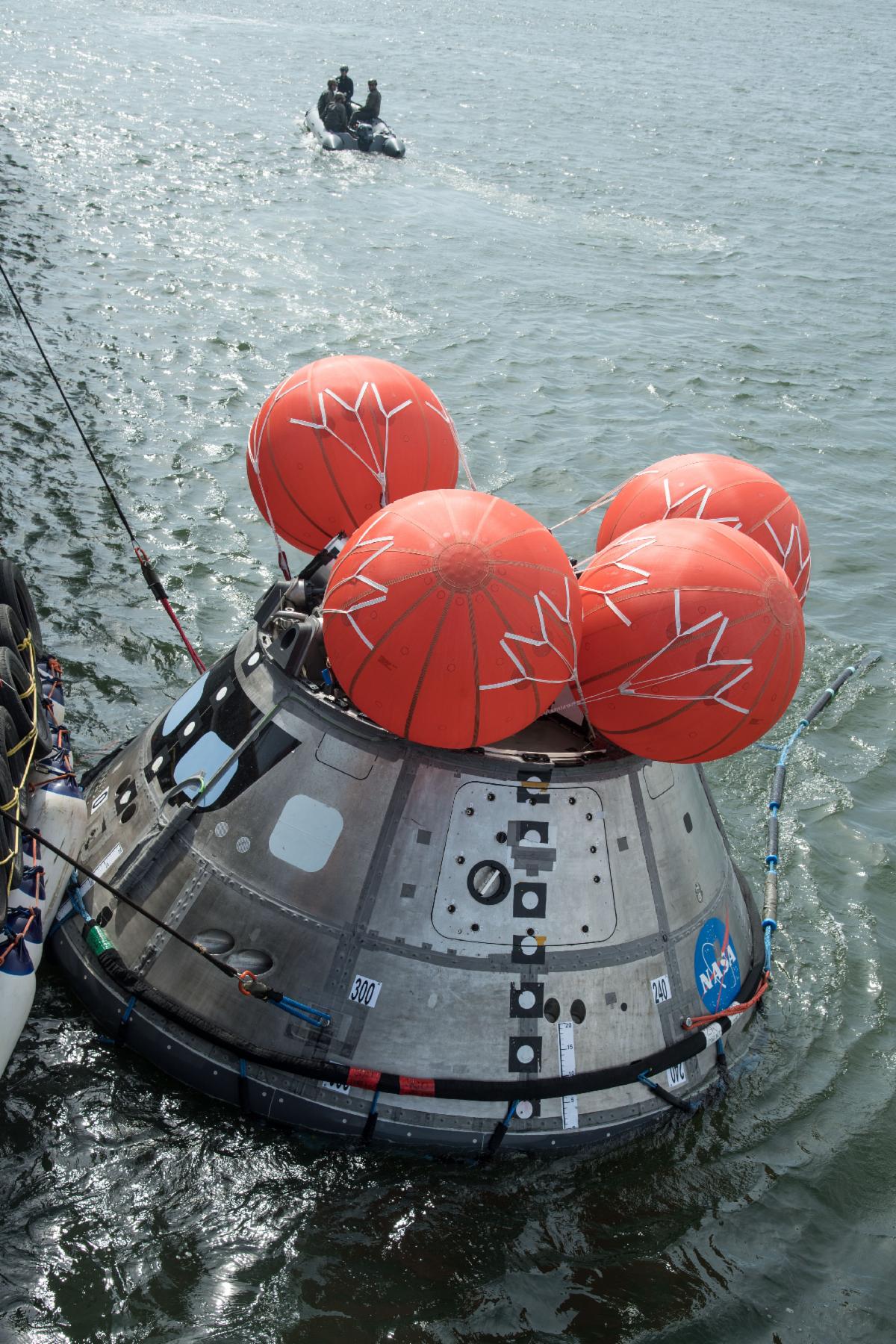
After the successful Orion EFT-1 test flight in December 2014, the program identified a partial system failure with the Crew Module Uprighting System. Orion deployed five inflatable flotation bags to maintain an upright position after splashdown allowing for the crew to exit through the hatch. However, only two of the five bags kept their pressure on the test flight. As a result, a small team of engineers began investigating the problem. With the help of the History Office, the team searched through relevant oral histories and documents in NASA’s archives to find information on how the Apollo team handled the problem and to determine what additional features the Orion capsule would need to support those options. They contacted some of those original interview subjects to discuss issues they had experienced during Apollo and how they were solved.

View from above of the Orion Crew Module floating in the ocean. It has 4 red inflated flotation bags at the top of the spacecraft.

Testing of the Orion Crew Module Uprighting System in March 2019. Credit: NASA/Bill Stafford

The NASA History Office continues its active partnership within the agency, capturing context, insight, and relevant experience for the present and future of NASA’s programs. Part of that initiative includes documenting the experiences of today’s experts, allowing deeper understanding of the programs, organization, lessons learned, and teamwork involved. To that end, the NASA History Office is currently conducting an oral history project capturing and archiving the development history of the Artemis Program as well as many other important programs across human spaceflight, science, and institutional history. As the agency prepares to return humans to the Moon and establish a long-term lunar presence, the personal accounts and records of those who have been part of this journey will be preserved as a rich source of information for future generations.


Sandra Johnson

Oral History Lead

SPEAKER SERIES

ISS in Real Time: Capturing 25 Years on the Space Station

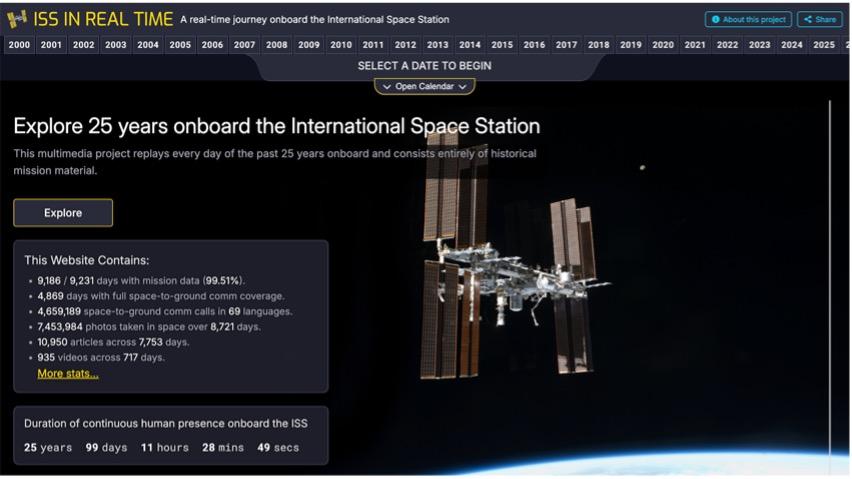
On Wednesday, March 25 (12 pm ET), Ben Feist will present on his monumental multimedia project “ISS in Real Time.” Built in collaboration with David Charney, this interactive website aggregates millions of pieces of publicly available NASA mission data—photos, space to ground audio, videos, and articles—and synchronizes them into a seamless chronological experience, allowing users to replay any moment in the International Space Station’s 25-year history. Feist will discuss the process of acquiring and wrangling the massive datasets involved, indexing the archive, and creating an intuitive user interface. The discussion will also touch on the broader historical insights that this archive offers into the Station’s evolving scientific, operational, and human narratives.


Ben Feist is a Software Engineer at NASA’s Johnson Space Center. He is a Lead Developer and Product Owner supporting human spaceflight on the International Space Station and Artemis program. Before joining NASA in 2017, he led technology teams in the creative industry and created Apollo in Real Time, an award-winning digital restoration of Apollo mission archives. 

"Houston, How Do You Read?"

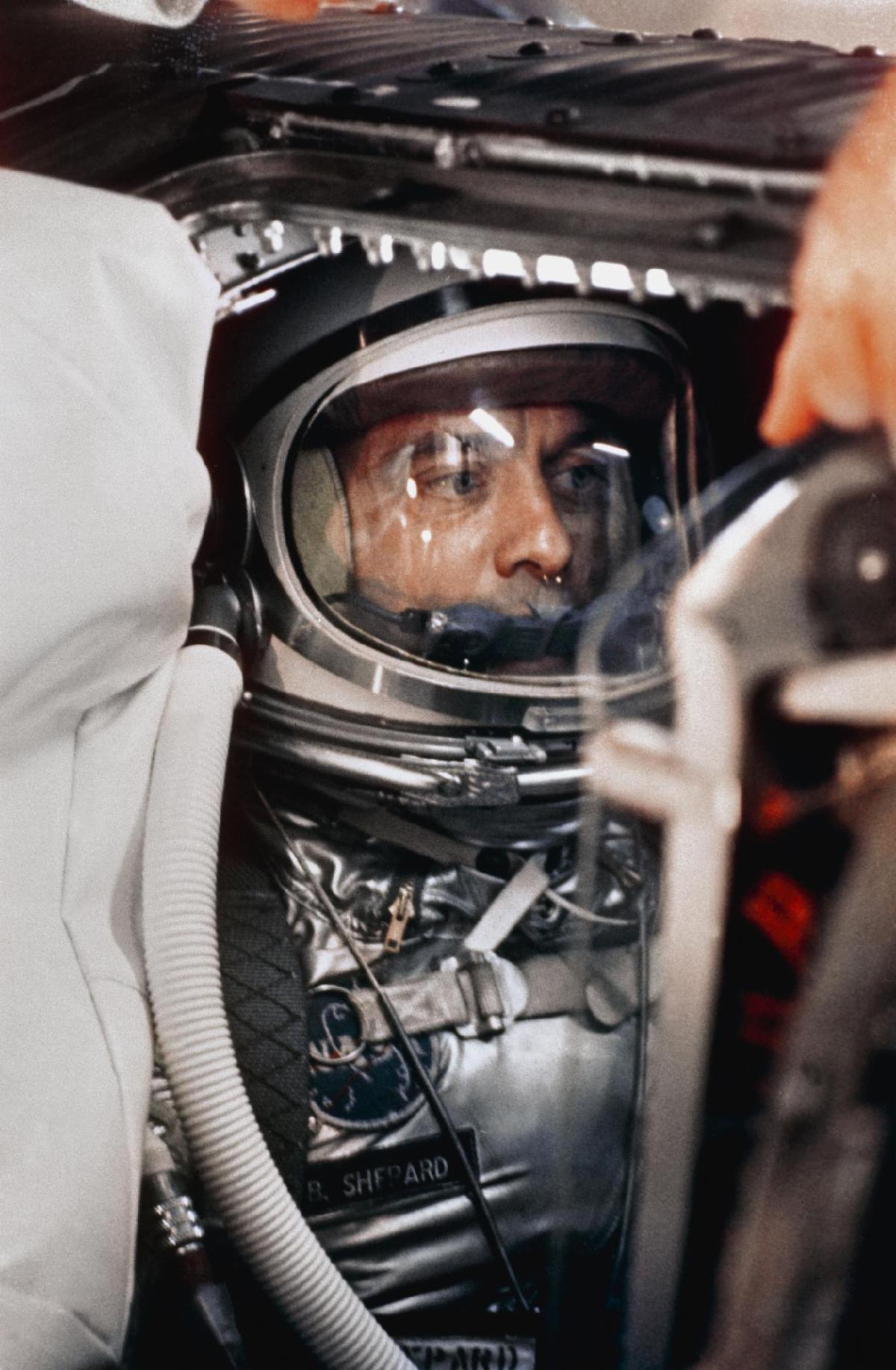
Mercury Redstone 3 astronaut Alan Shepard inside his spacecraft wearing his space suit.

Alan Shepard prepares for his Mercury-Redstone 3 mission in 1961. Credit: NASA

This year we mark the 65th anniversary of the world’s first human spaceflights. Yuri Gagarin’s pioneering flight on April 12, 1961, was followed on May 5, 1961, by NASA astronaut Alan Shepard’s 15-minute suborbital flight.


What comment did Shepard make a few minutes into his mission?

Want to read the mission transcript for yourself? The transcripts for all the Mercury, Gemini, and Apollo missions can be found online on the NASA website.

NASA History

The NASA History Office documents and preserves NASA’s remarkable history and strives to engage with the public about NASA's past and how it relates to our world today.

Visit www.nasa.gov/history

Follow Us

Facebook  X

Email the NASA History Office

Was this newsletter forwarded to you? Subscribe to receive more

National Aeronautics and Space Administration


NASA explores the unknown in air and space, innovates for the benefit of humanity, and inspires the world through discovery.


Visit nasa.gov

Follow NASA

Facebook  Instagram  LinkedIn  X  YouTube