| |
NASA History News & Notes
FEBRUARY 2026 • Volume 43, Number 3
| | |
CONTENTS
- Robert Goddard’s independent pursuits in rocketry
- Join us next week for Ben Feist’s “ISS in Real Time” presentation
- Welcome to Catherine Byrd, NASA Kennedy’s new archivist
- How well do you know the Gemini VIII mission?
| | |
ESSAY
Robert Goddard's Enigmatic Path toward Space
| | |
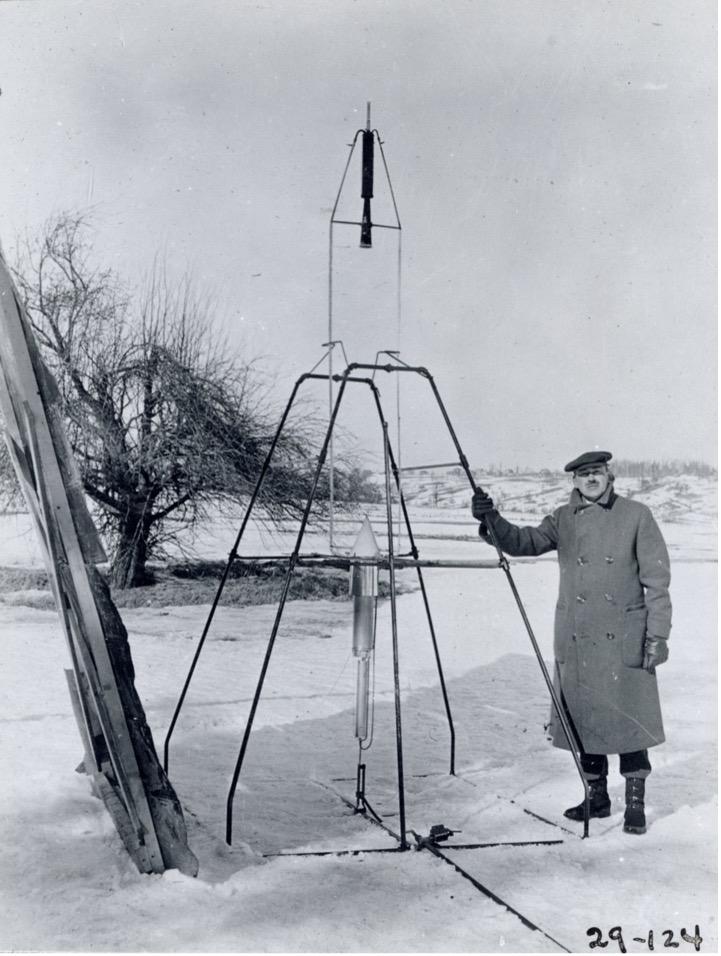
On March 16, 1926, Robert H. Goddard launched the world’s first liquid-fueled rocket from his aunt’s snowy farm in Massachusetts. The rocket’s flight was relatively uninspiring, flying for less than three seconds and landing 184 feet away, but marked an important first in the history of modern rocketry.
Present with Goddard was his wife Esther, assistant Henry Sachs, and a fellow Clark University professor Percy Roope. That small gathering was not incidental—it was characteristic. Throughout his career, Goddard worked in deliberate isolation, relying on a tight circle of collaborators rather than engaging with the broader scientific community. That independence shaped both what he achieved and the limits of his influence.
Goddard's insularity was, in part, a matter of temperament. He was shy, meticulous, and private, filling voluminous journals and notebooks in a nearly illegible hand. He documented everything—the technical specifications of each test, his design changes, even mundane details like taking his car to get oiled once a month. But this obsessive record-keeping was for his own use.
| | Robert Goddard stands with his liquid-fueled rocket in its test frame prior to the rocket’s launch on March 16, 1926. Credit: Esther Goddard, from the Clark University archive. | | |
Goddard was wary of having his ideas appropriated, and that wariness kept him from the kind of open exchange with other engineers and scientists that might have accelerated his progress. Given how important tacit knowledge is for translating theory into practice, his self-imposed isolation almost certainly limited his impact during his lifetime.
At the center of his small world was Esther Goddard. Her role went far beyond domestic support. She was a steady presence through years of difficult and often dangerous experimental work, and after Goddard's death in 1945, she became the primary steward of his legacy. Without her efforts to organize and formally file his patents, much of his work might have slipped into obscurity. It was Esther who ensured that his papers found a permanent home in the archives at Clark University, providing the documentary foundation for all subsequent historical analysis of his contributions. His legacy, in no small part, is her achievement too.
His handful of assistants completed the inner circle. They were a small group of skilled technicians who earned Goddard’s trust and worked beside him in the field, in conditions that were often remote and improvised. Funding from the Smithsonian and the Guggenheim Foundation provided crucial support, but it was incremental and uneven, never enough to expand his operation significantly.
Goddard’s reticence to publish was exacerbated when his early work was misinterpreted and mocked by the media, leading him to seek even less exposure. Goddard’s work relied upon his ingenuity, persistence, and his wife Esther. That his achievements were as substantial as they were, built by so few hands, is in itself remarkable.
James Anderson
NASA Historian
| | |
FROM THE NASA HISTORY SERIES
Readings in Rocketry
| | |
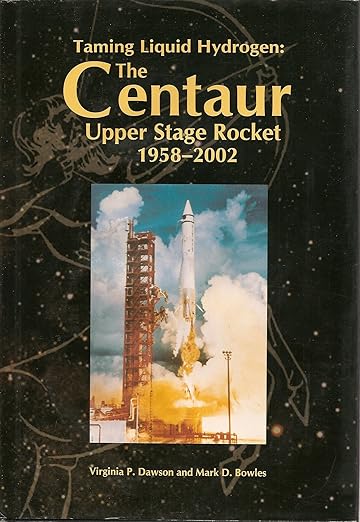
Taming Liquid Hydrogen: The Centaur Upper Stage Rocket 1958–2002
Virginia P. Dawson and Mark D. Bowles
Taming Liquid Hydrogen recounts the technological, organizational, and engineering challenges involved in developing the Centaur upper stage rocket and chronicles its role in advancing U.S. spaceflight.
| | |
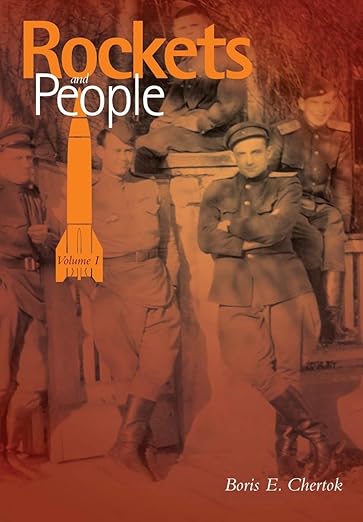
Rockets and People
A four-volume memoir by Boris Chertok Series editor, Asif Siddiqi
Academician Boris Chertok narrates the history of the Soviet space program from the end of World War II through the 1980s.
| | |
SPEAKER SERIES
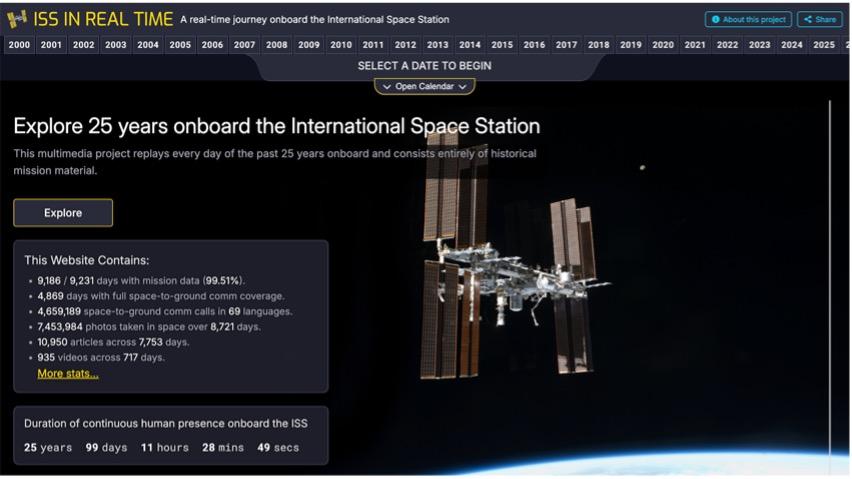
ISS in Real Time: Capturing 25 Years on the Space Station
| | Join us on Wednesday, March 25 (12 pm ET), for the next presentation in our speaker series. Ben Feist will present on “ISS in Real Time,” a multimedia project he created with David Charney, which aggregates 25 years of International Space Station operations through photos, audio, videos, articles, and more. | | | |
Meet Our Newest Archivist | | Catherine Byrd, Kennedy Space Center's new archivist. | | |
This month the NASA History Office welcomed archivist Catherine Byrd to the team. Catherine, a native of Oklahoma City, has bachelor's degrees in anthropology and sociology, and a master’s degree in library and information studies from the University of Oklahoma. Before joining us at the Kennedy Space Center archives, she worked as the principal librarian for the National Weather Center library and more recently at Goddard Space Flight Center’s Heliophysics Digital Research Library (HDRL).
Catherine enjoys hot yoga classes, playing with her two dogs, running, drawing, and researching random things.
Welcome Catherine!
| | |
TRIVIA CHALLENGE
The First Docking in Space Turns 60
| | |
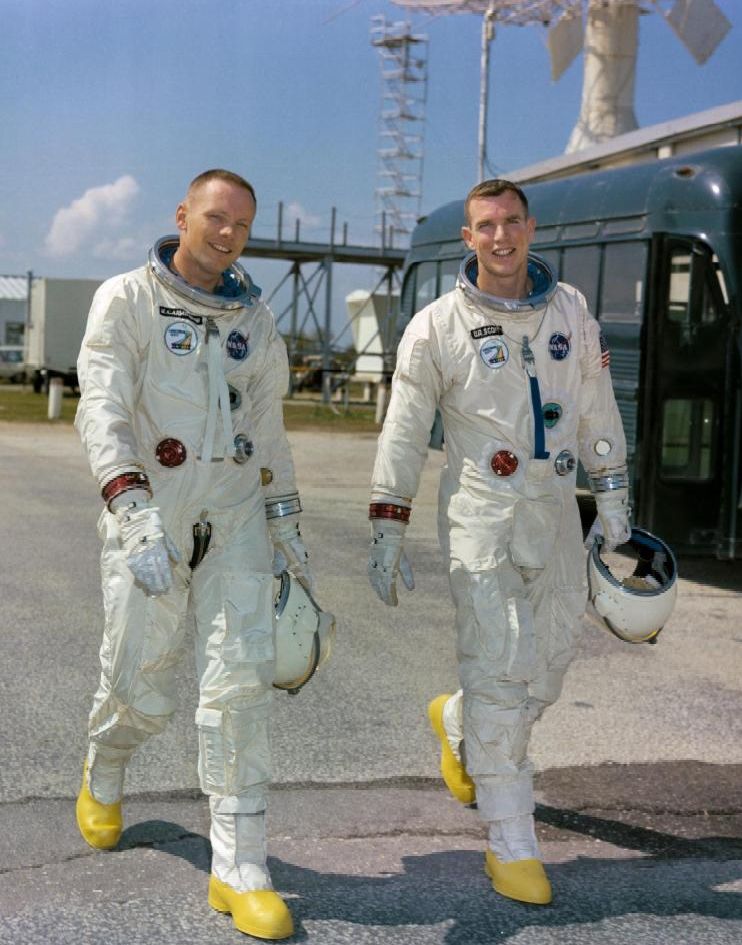
In addition to being the 100th anniversary of the first flight of a liquid-fueled rocket, March 16, 2026, also marks the 60th anniversary of the launch of the Gemini VIII mission. This first spaceflight for astronauts Neil Armstrong and David Scott was also the first time in history that two spacecraft docked together.
What did Armstrong say after docking with the Agena target vehicle?
| | Gemini VIII astronauts Neil Armstrong (left) and David R. Scott. Credit: NASA | | Soon after the successful docking, the Gemini VIII spacecraft experienced a near-disastrous malfunction that required Armstrong’s cool-headed problem solving. | | |
NASA History
The NASA History Office documents and preserves NASA’s remarkable history and strives to engage with the public about NASA's past and how it relates to our world today.
| |
| |
National Aeronautics and Space Administration
NASA explores the unknown in air and space, innovates for the benefit of humanity, and inspires the world through discovery.
Visit nasa.gov
| | | | | |