| |
NASA History News & Notes
APRIL 2026 • Volume 43, Number 4
| | |
CONTENTS
- A vast photo collection capturing over 65 years of Wallops Flight Facility history
- Paul Lowman, the first geologist hired by NASA
- Hear David DeVorkin present research on scientist and inventor George Carruthers
- Celebrating excellence in the NASA History Office
- Solar science trivia challenge
| | |
ARCHIVING NASA'S HISTORY
Looking Skyward
65 Years of Photography from NASA's Wallops Flight Facility
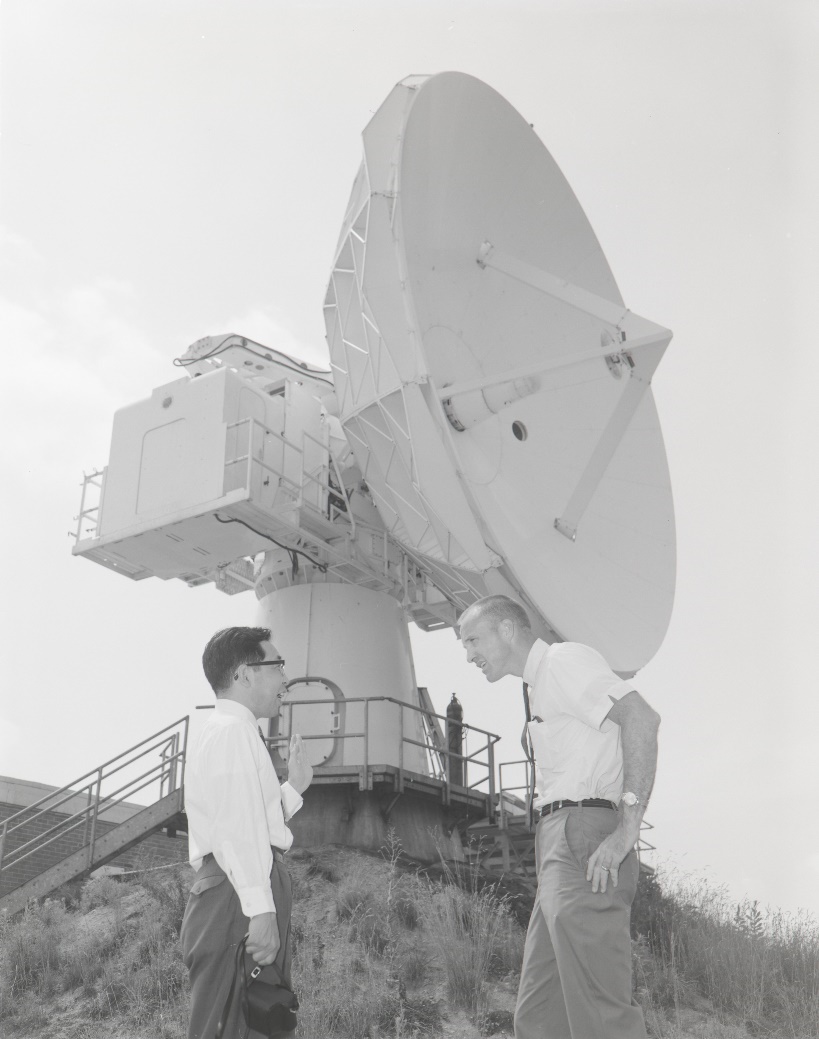
| | Identifier: WI-65982
Title: Prof. S. Saito, Univ. of Tokyo and Bob Flowers at FPQ-6.
Date: July 8, 1965
Photographer: Hansen | | |
In 1945, the National Advisory Committee for Aeronautics (NACA) established a research site on Virginia’s Eastern Shore. The site would be known by many names throughout its history but today is known as NASA’s Wallops Flight Facility.
Over the years, the Wallops Facility’s primary mission areas have included sounding rockets, scientific balloons, flight tests of spacecraft and aircraft, launches of orbital and suborbital vehicles, and data collection and research. The campus currently houses tracking facilities for satellites, a research airport, and a rocket launch range. The Wallops Facility also hosts both government and commercial organizations, including the United States Navy, the National Oceanic and Atmospheric Administration (NOAA), Northrop Grumman, and Rocket Lab.
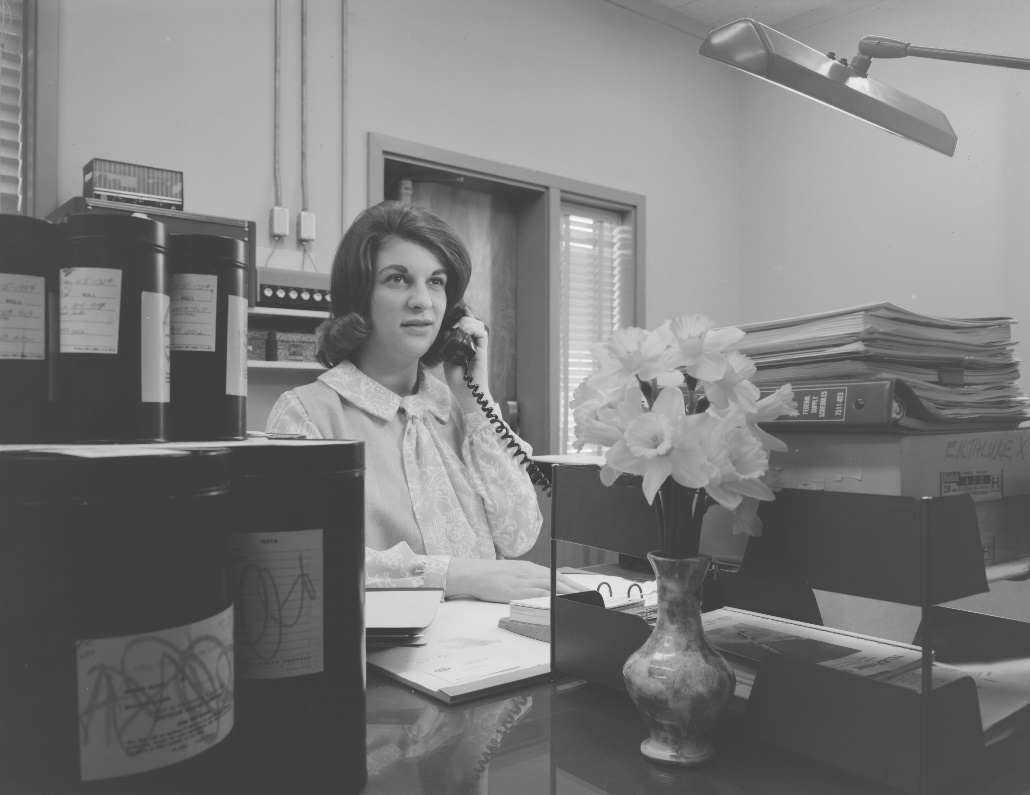
| | From its inception in 1945, the history of Wallops was extensively documented through photographs. The Wallops Flight Facility Photograph Collection depicts the daily life and events at the facility up until 2009. In 2015, a team of Wallops and Goddard Space Flight Center personnel performed a holdings review of the photograph collection, deeming it necessary (for purposes of preservation, risk reduction, accessibility, and information gathering) for these photos to be digitized and transferred to the National Archives and Records Administration (NARA). To accomplish this, the NASA Archives Program brought on a project archivist to perform archival and logistical support, followed by digitization through a collaboration with a team at Johnson Space Center (JSC). | | Identifier: WI-65528
Title: NASA Photo Personnel on the Job.
Date: April 7, 1965
Photographer: Hansen | | |
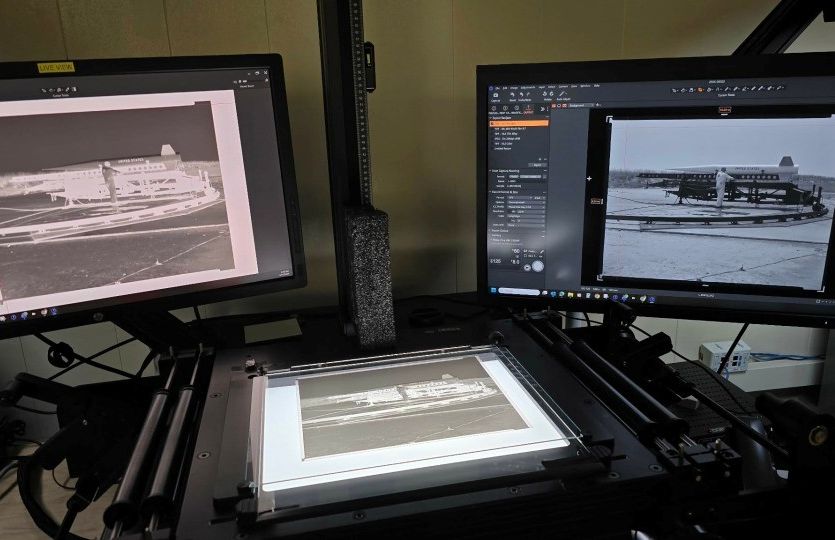
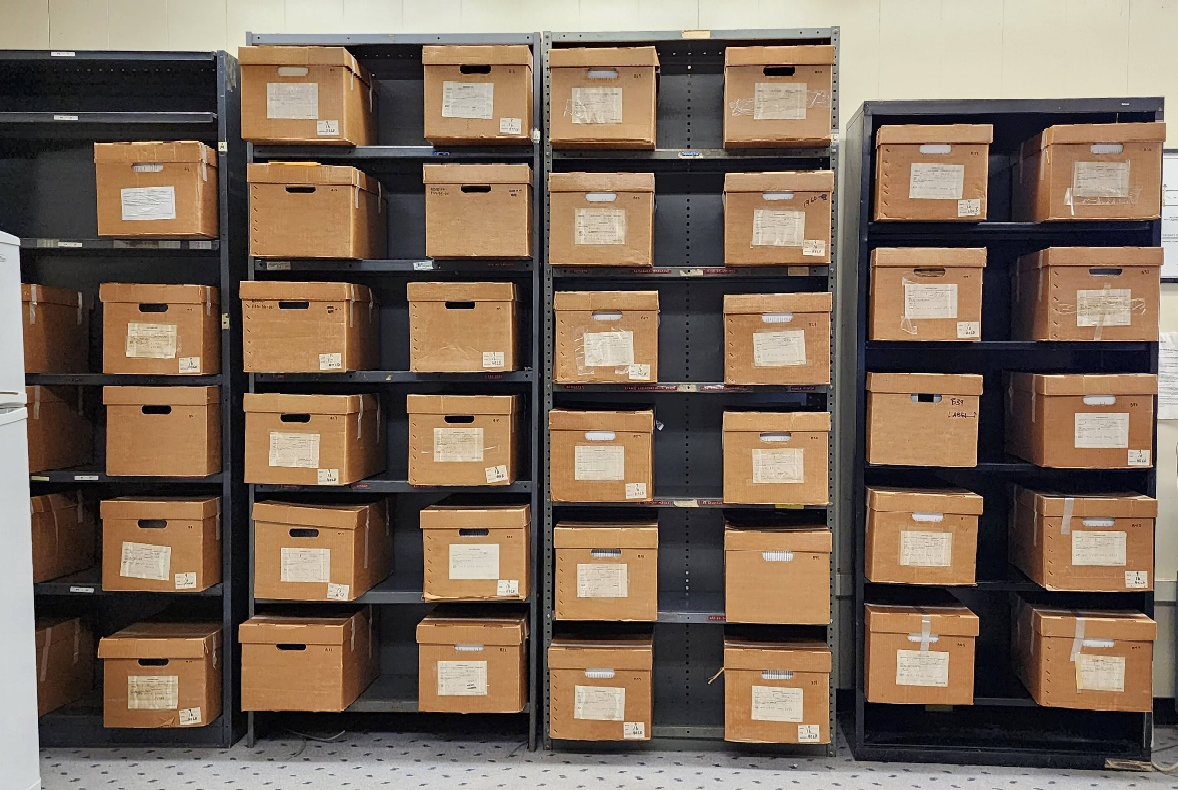
The goal of the Wallops Photograph Collection project is to capture, preserve, and make accessible photographs representing nearly 65 years of history. The collection, consisting mostly of negative photographs, color prints, and film strips, was originally housed in a suboptimal environment. As part of the preservation effort, the material is being removed from that environment and transferred to Goddard, where it is prepared for digitization. Metadata, including unique identifier numbers, photo titles, dates, and photographers, must be captured, and the photographs temporarily rehoused. Once prepared, the photos travel to JSC where they are scanned. After digitization, the photographs are ready to be sent to their permanent home in cold storage at NARA.
So far, the project has largely proceeded smoothly, but it has not been without challenges. Some conservation work has been necessary to prepare materials for long-term storage at NARA. Most troublesome was the discovery of a particular adhesive, applied to several negatives via a literal red tape, that required removal with a specialized photographic emulsion cleaner under a fume hood.
Dealing with the effects of “vinegar syndrome” on many of the early negatives has also been a challenge. Vinegar syndrome occurs when cellulose film deteriorates over time, creating moisture and a strong vinegar smell. It is infectious (vapors emitted by materials with vinegar syndrome can cause other materials nearby to begin decaying) but can be slowed down with cold storage. The decay, however, cannot be reversed, and materials must be handled with care. The Johnson team has ensured that the scanner and other assets being used for this collection are in a separate building, isolated from other film materials. Despite these few hurdles, the project team has found the process to be challenging, rewarding, and unique.
| | |
After the project archivist prepares Wallops imagery, it is scanned at Johnson Space Center. Credit: NASA/Warren Harold.
| |  | |
Boxes of Wallops Photographic Collection assets proceeding through the digitization process. Credit: NASA/Warren Harold.
| | | |
Included in the Wallops photograph collection are aerial views, building construction, research structures, rocket models, launches and launch set-ups, mishaps and accidents, and Wallops personnel. These images are an incredibly important historical record, providing a scientific context for Wallops’ development and history, and a human context as well. Photographs of vibrant and colorful rockets sit alongside instances of launch failures and payload destruction. Depictions of comets and eclipses accompany automobile accidents and natural disasters. And humorous images, such as a puppy posing at a command console, and a funny poem inscribed on fragments of a metal payload, allow glimpses into the world of the facility’s employees.
The collection offers incredibly valuable insight into the technical, scientific, and personal history at Wallops. Once complete, these many different facets of the facility’s story will be accessible worldwide through NARA’s catalog.
Zoe Costanza
NASA Project Archivist
with contributions from Warren Harold and David DeHoyos
| | |
ARCHIVES HIGHLIGHT
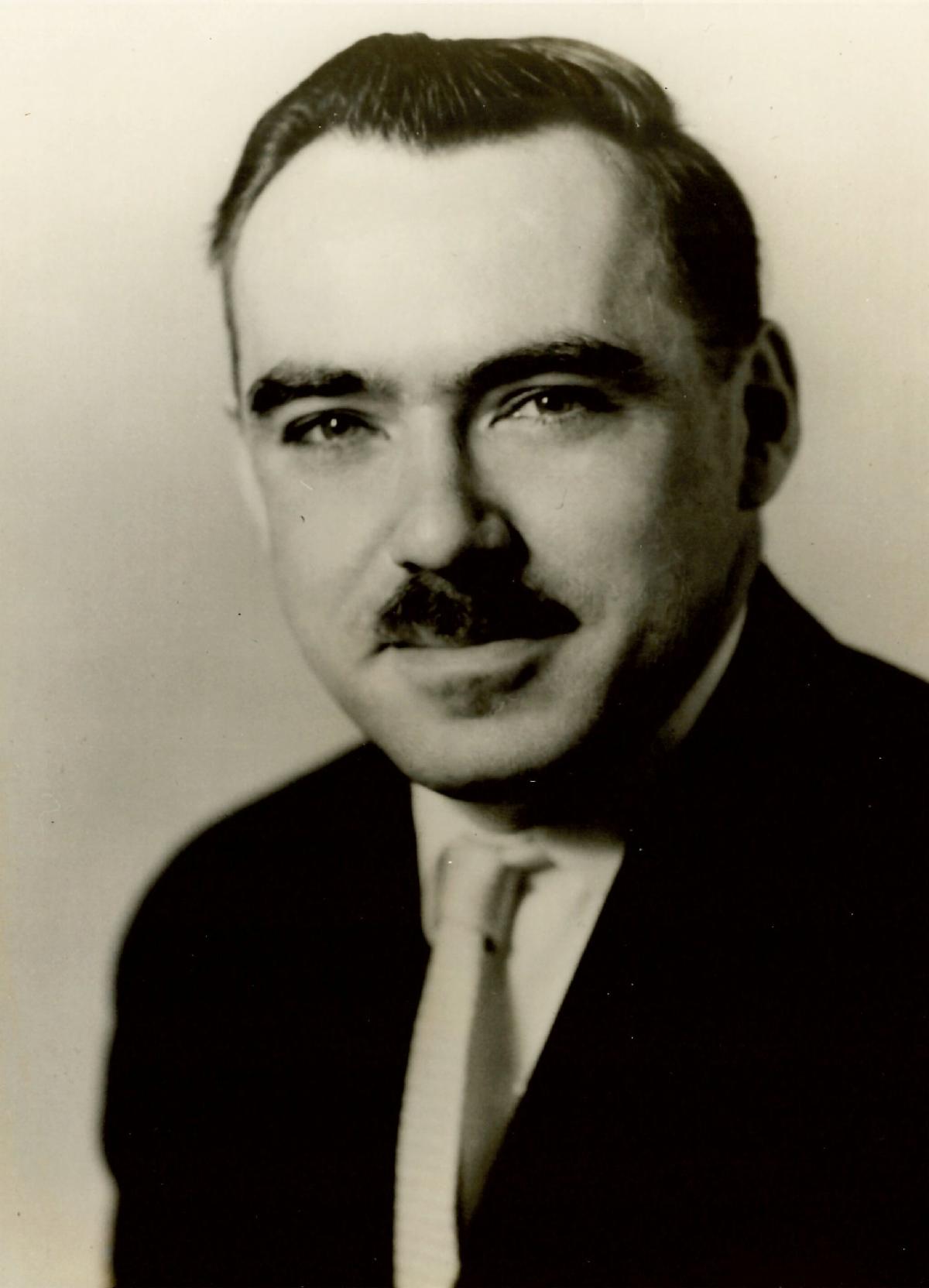
Paul Lowman, the First Geologist Hired by NASA
| | |
SPEAKER SERIES
The Quiet Genius of George R. Carruthers
| | |
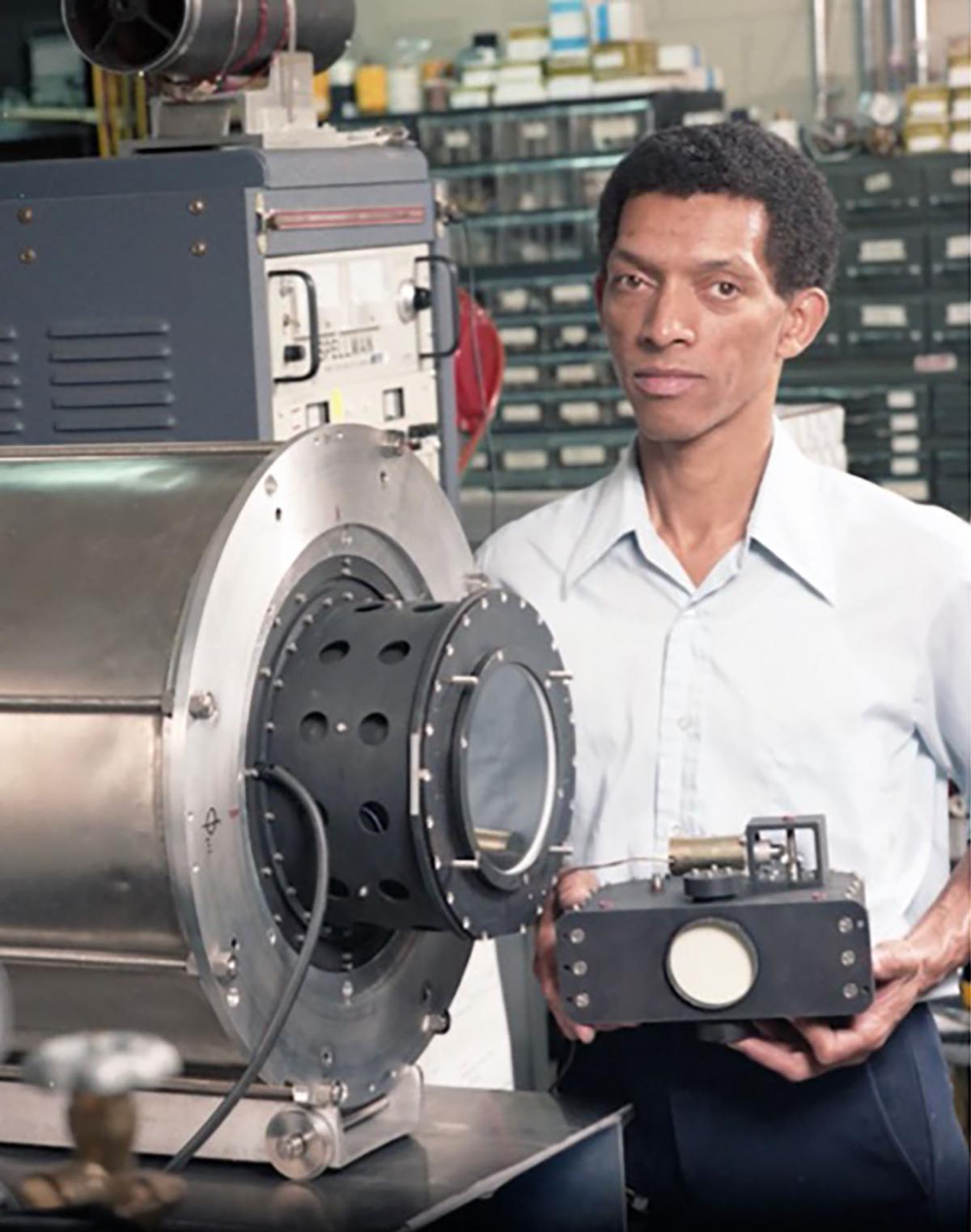
We invite you to hear space historian David DeVorkin present his research on scientist and inventor George R. Carruthers on Wednesday, May 13, at 12:00 pm EDT.
In April 1972, George Carruthers watched as astronaut John Young positioned the golden far ultraviolet camera/spectrograph on the Moon. The instrument, Carruthers’s invention, was the first astronomical observatory on the lunar surface.
DeVorkin will tell the story of a deeply reserved farm boy infatuated with building telescopes that observed the universe from space. The story follows Carruthers from his childhood in Ohio to his career at the U.S. Naval Research Laboratory in Washington, DC. In the politically complex and highly competitive world of space science in the 1960s and 1970s, and the racial turmoil in Washington, DC, Carruthers strove to instill his passion for experimentation in students across the DC area, gaining notice as a Black man in science and a tireless advocate for underserved young people in science and engineering.
| | | |
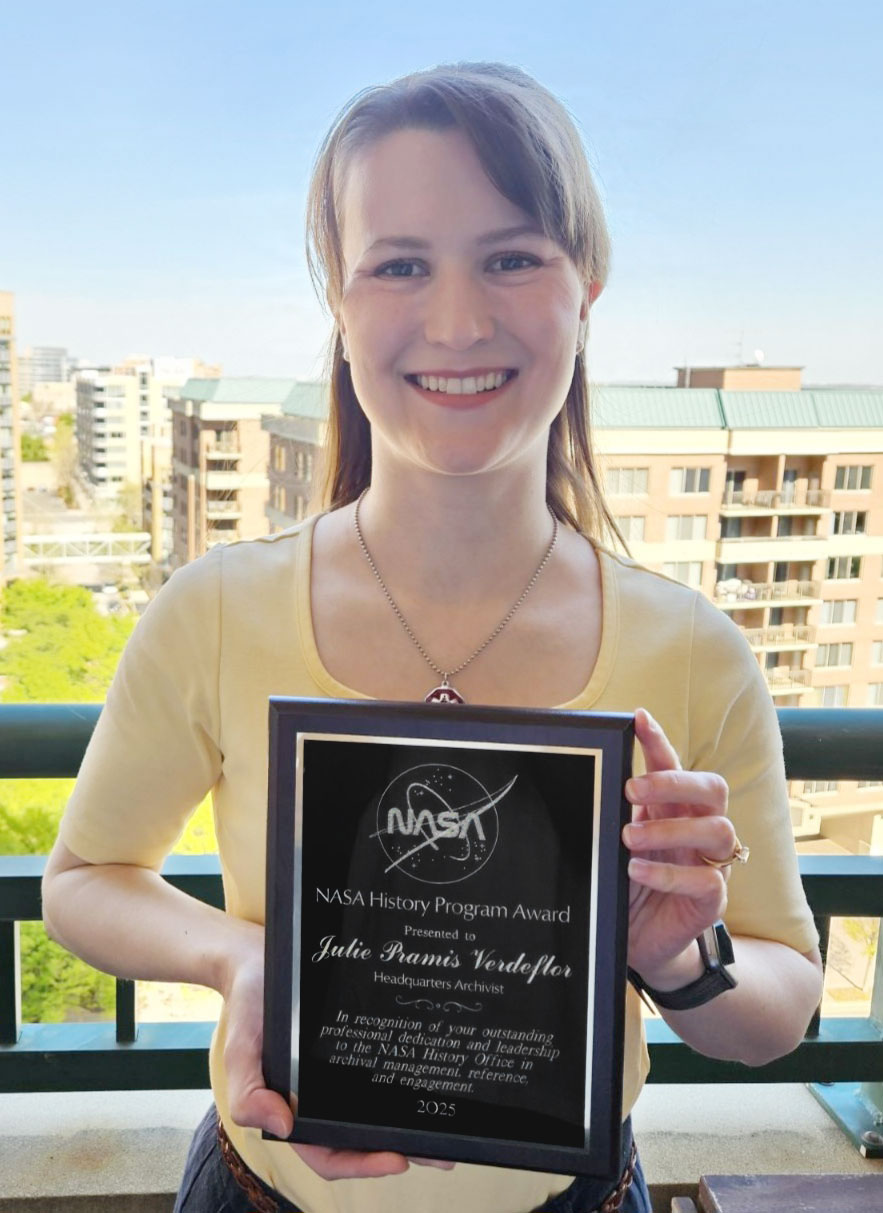
Celebrating Excellence in the NASA History Office | | Julie Pramis, NASA Headquarters archivist and winner of the 2025 NASA History Office Award. | | |
We are pleased to announce that the 2025 NASA History Office Program Award has been awarded to Julie Pramis Verdeflor, archivist at NASA Headquarters.
Over the past year, Julie has demonstrated exceptional dedication, professionalism, and leadership in guiding the work at the NASA Headquarters archives under challenging circumstances. She has unfailingly delivered outstanding support for public reference requests and researcher needs, responding with speed, clarity, and attention.
At the same time, Julie has made meaningful progress on long-term office priorities, including advancing archival description work and strengthening the process for handling reference requests. She has also identified gaps in archival policy, and has taken the lead in developing thoughtful solutions and bringing colleagues together to improve institutional practices.
Equally impressive is Julie’s commitment to mentorship. In 2025, she guided an intern through significant, well-designed projects that will have lasting benefits for the program—providing support with confidence and minimal oversight.
Congratulations to Julie on this well-deserved recognition.
| | |
TRIVIA CHALLENGE
Flying Close to the Sun
| | |
Fifty years ago, on April 17, 1976, a spacecraft developed in a German Aerospace Center (DLR) and NASA partnership set a new record by flying closer to the Sun than any previous human-made object. It held this record for more than 40 years until it was eclipsed in 2018 by NASA’s Parker Solar Probe.
What was the name of the spacecraft?
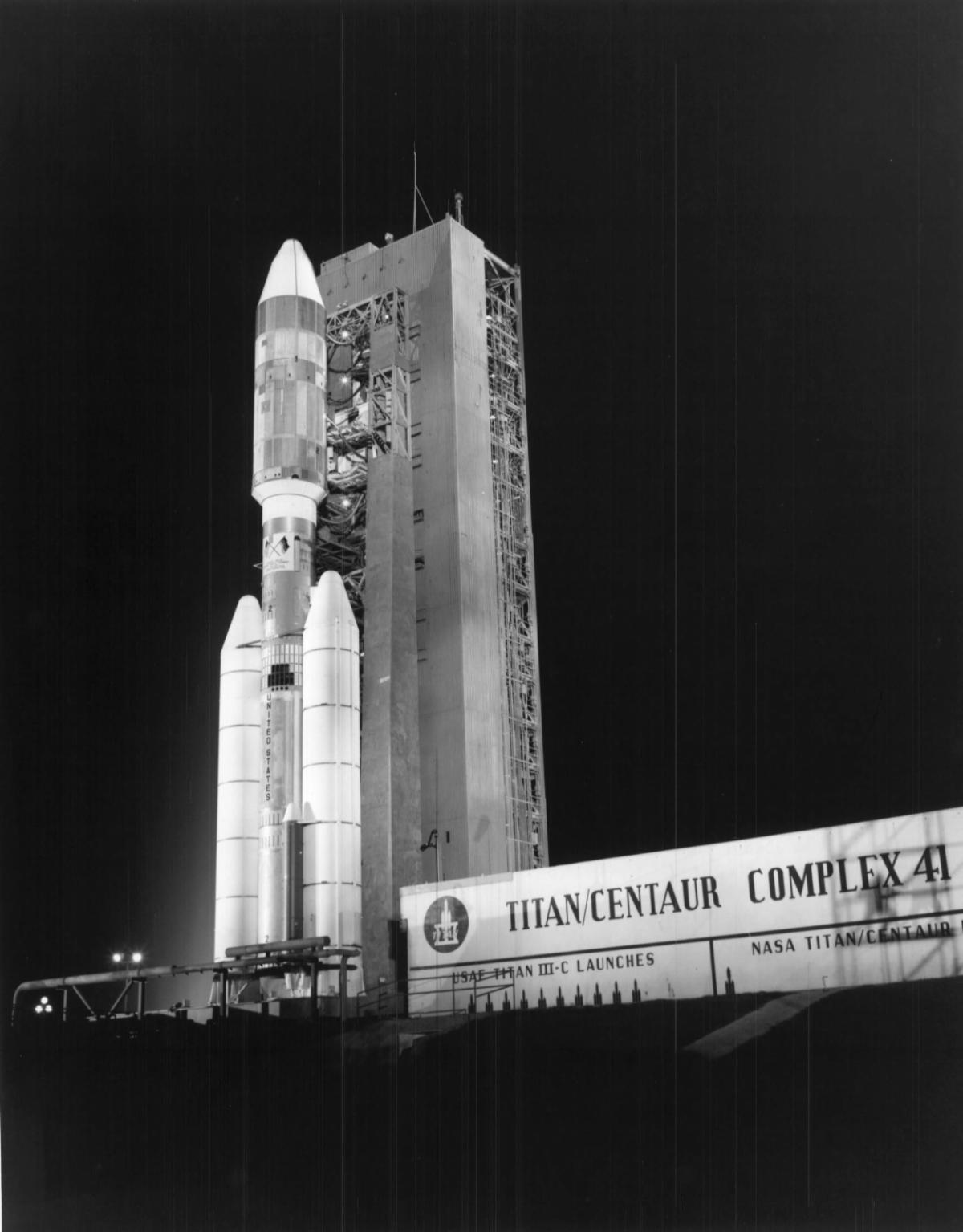
| | Fun Fact: The spacecraft in question was launched on a Titan IIIE, the same rocket used to launch the Viking probes to Mars in 1975 and the Voyager probes to the outer solar system in 1977. Credit: NASA | | |
NASA History
The NASA History Office documents and preserves NASA’s remarkable history and strives to engage with the public about NASA's past and how it relates to our world today.
| |
| |
National Aeronautics and Space Administration
NASA explores the unknown in air and space, innovates for the benefit of humanity, and inspires the world through discovery.
Visit nasa.gov
| | | | | |