|
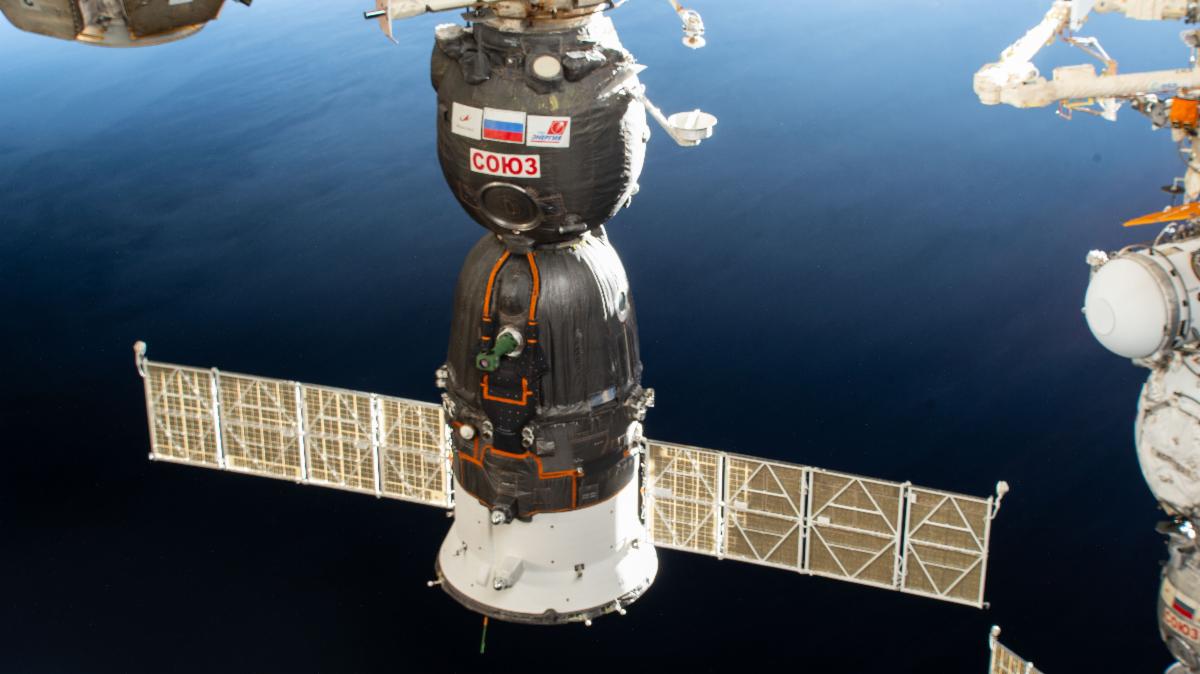
NASA astronaut Chris Williams and Roscosmos cosmonauts Sergey Kud-Sverchkov and Sergei Mikaev are wrapping up their 241‑day mission aboard the International Space Station.
The crew and its Soyuz MS-28 spacecraft will undock from the orbiting laboratory’s Rassvet module at 3:02 a.m. EDT Sunday, July 26, heading for a parachute-assisted landing at 6:26 a.m. (3:26 p.m. local time) on the steppe of Kazakhstan, southeast of Dzhezkazgan.
NASA’s live return coverage will stream through a variety of platforms. Learn where to watch online:
https://www.nasa.gov/live
Williams and his crewmates will complete 3,856 orbits and travel more than 102 million miles before returning to Earth. The flight marks the first mission for Williams and Mikaev and the second for Kud‑Sverchkov.
After landing, the crew will fly by helicopter to Karaganda, Kazakhstan, where recovery teams are based. Williams then will return to NASA’s Johnson Space Center in Houston, while Kud‑Sverchkov and Mikaev head back to their training base in Star City, Russia.
NASA’s live return coverage is as follows (all times Eastern and subject to change based on real-time operations):
Saturday, July 25
9:40 a.m. – Coverage of the Space Station Expedition 74/75 change of command ceremony begins.
Kud‑Sverchkov will transfer command of the orbital complex to NASA astronaut Jessica Meir. Expedition 75 officially begins when Soyuz MS‑28 undocks.
11:10 p.m. – Coverage of crew farewells and hatch closing begins.
11:30 p.m. – Hatch closing
Sunday, July 26
2:30 a.m. – Coverage of undocking begins.
3:02 a.m. – Undocking
5:15 a.m. – Coverage of deorbit and landing begins.
5:32 a.m. – Deorbit burn
6:26 a.m. – Landing
For more than 25 years, people have lived and worked continuously aboard the International Space Station, advancing scientific knowledge and making research breakthroughs not possible on Earth. The space station helps NASA understand and overcome the challenges of human spaceflight, expand commercial opportunities in low Earth orbit, and build on the foundation for long-duration missions to the Moon, as part of the Artemis program, and to Mars.
To learn more about International Space Station research, operations, and its crews, visit:
|