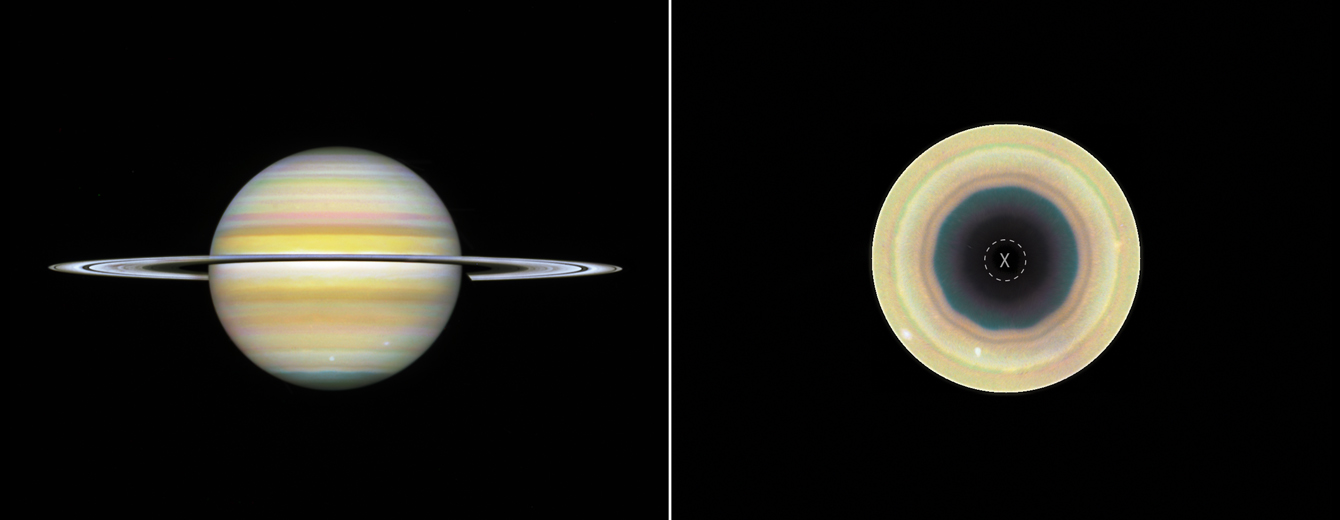
10-sided wave appears to strengthen in year-over-year Hubble observations
Stunning portraits of the gas giants in our solar system over the last several decades can make these planets seem like familiar, unchanging worlds. Jupiter’s Great Red Spot and Saturn’s famous northern hexagon are recognizable features that have persisted for years, reinforcing that message.
However, astronomers know that these planets are actually constantly in motion, changing much like our own Earth. The latest major discovery from NASA’s Hubble Space Telescope offers a striking example: a newly formed, 10-sided atmospheric wave, called a decagon, encircling Saturn’s south pole.
Researchers are just beginning to piece together the history of this new feature and investigate what its evolution can reveal about the dynamic atmospheres of gas giant planets.
Find additional resources at www.stsci.edu
You are receiving this email because you are subscribed to the Inbox Astronomy mailing list.


