| |
NASA History News & Notes
AUGUST 2026 • Volume 43, Number 7
| | |
CONTENTS
- Shannon Lucid’s early life and her record-breaking Shuttle-Mir mission
- The 2026 NASA History Program Review
- Two new archivists welcomed to the team
- Planetarity conference report
- Trivia challenge
| | |
ORAL HISTORY
How Shannon Lucid's Resolve Launched a Record-Setting Career
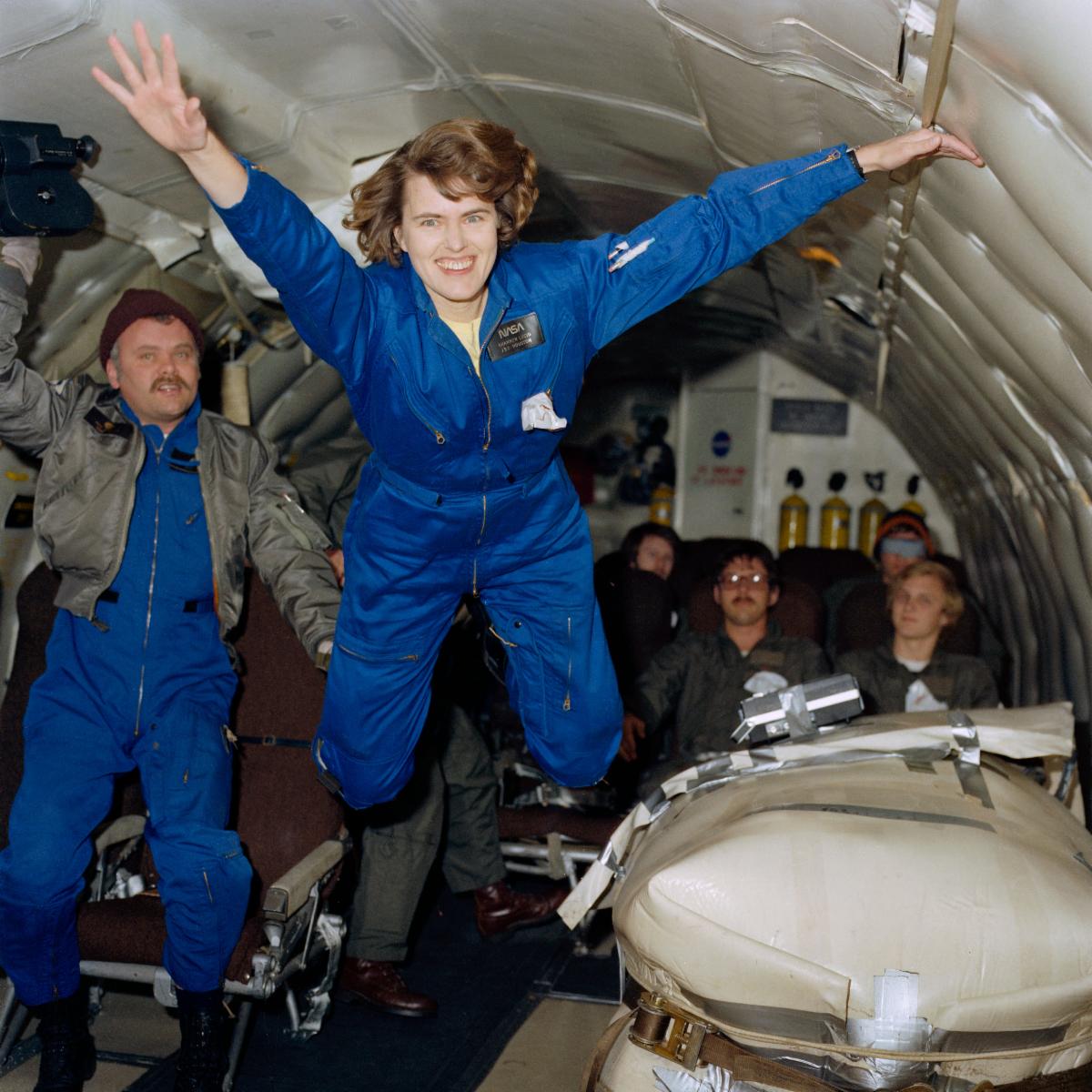
| | Astronaut candidate Shannon Lucid during a zero-gravity flight aboard NASA’s modified Boeing KC-135 aircraft, also known as the “Vomit Comet,” which repeats a parabolic flight pattern to simulate 30-second weightless sessions. Credit: NASA | | |
Growing up, Shannon Lucid dreamed of a life of exploration but feared she would be too late. As she explained in a NASA oral history, “(T)he world was changing. What would be left for me to do? There wouldn’t be anything left to do by the time I grew up.”
In eighth grade, a teacher assigned Lucid’s class an essay on what they wanted to do when they grew up. At that time, the Cold War and space race were heating up, and the country was in need of scientists and engineers. Lucid explained, “I was very interested in rockets, so I wrote mine on being a rocket scientist. I said, ‘If our country really is having a shortage of people in science and technology, then they’ll even let women come into the field.’”
Lucid prepared for the future she foresaw by earning a pilot’s license, a bachelor’s degree in chemistry, and a master’s and PhD in biochemistry, all while working full time, and, along with her husband, raising their young family. One evening she saw an advertisement in Science Magazine: NASA was soliciting applications for the new 1978 class of Space Shuttle astronauts, and for the first time, encouraged women and minorities to apply. She quickly sent in her application and waited. Her determination and hard work finally paid off when she received a call from Johnson Space Center Director George Abbey asking if she was still interested in becoming an astronaut.
| | |
Lucid was one of six women to qualify for the astronaut class known as the TFNGs (Thirty-Five New Guys). Lucid enthusiastically embraced the required training and assignments. “(I)t really didn’t feel like you were working. I sort of equated the word ‘working’ with drudgery, and there was no drudgery involved. It was just doing all sorts of things that were loads of fun.” Lucid put her training to use as a Mission Specialist on STS-51G in 1985 and flew on three additional shuttle missions between 1989 and 1993.
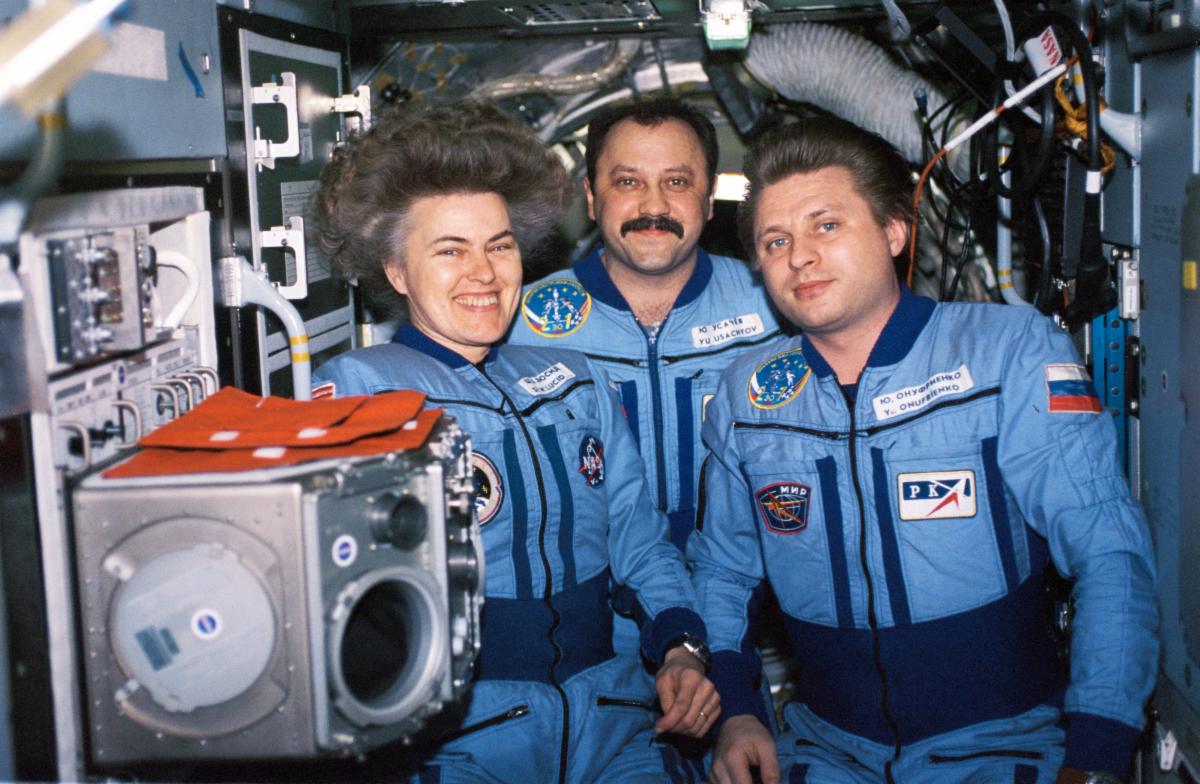
In 1992, the United States and Russia signed a cooperative agreement for Russian cosmonauts to fly on the shuttle and American astronauts to spend time on Russia’s space station Mir. Lucid, an explorer at heart, jumped at the chance to volunteer for a crew assignment. After being chosen to represent NASA in the second U.S. increment, she received some advice from a friend. “Ellen Baker flew (to Mir) on the Shuttle and they went up to get Norm (Thagard) and bring him back. As soon as she landed back at the Cape, she called me up. She said, ‘Shannon, don’t go; it’d be just like living in a mine shaft.’ So that was just her impression. We just laughed.”
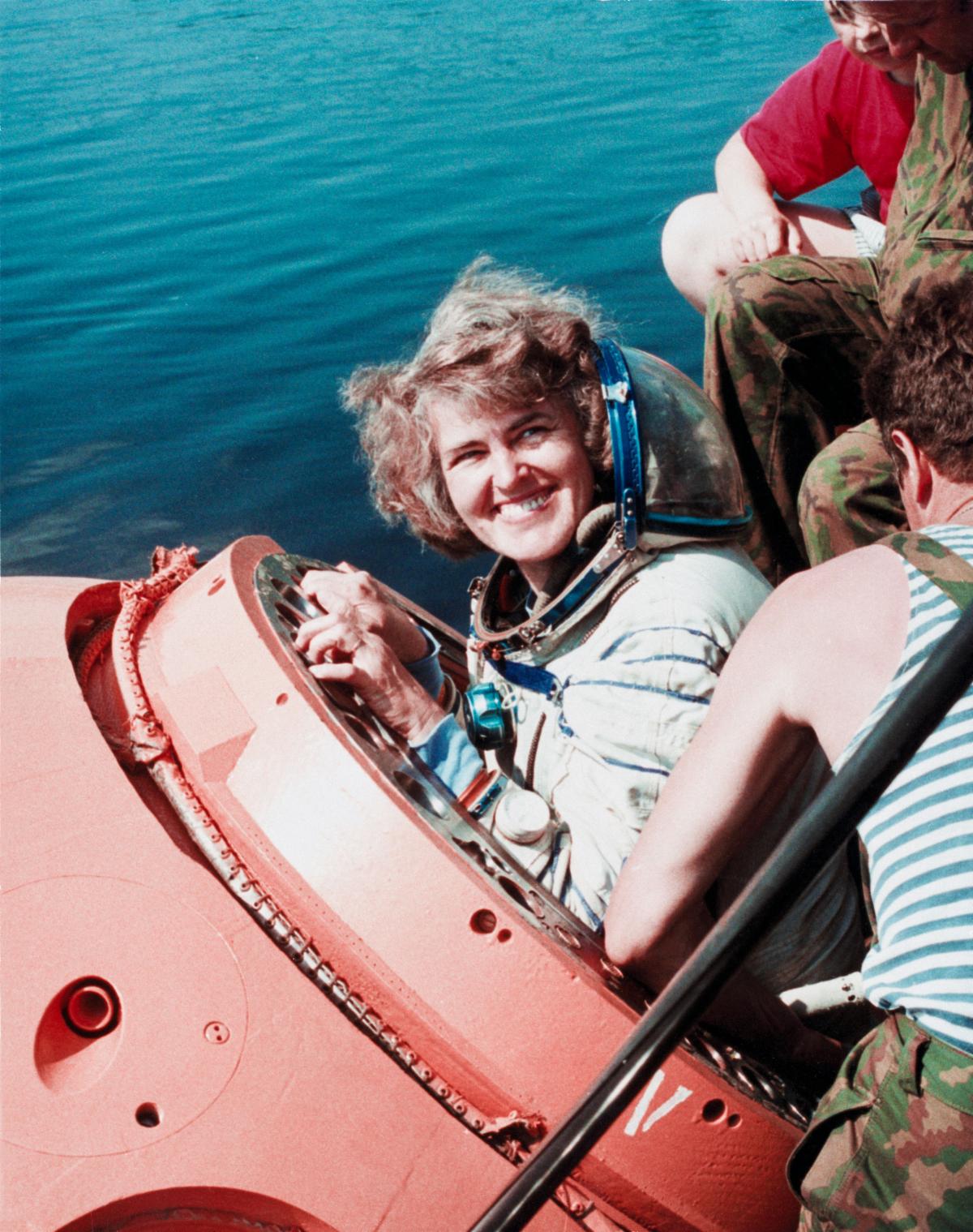
| | Astronaut Shannon Lucid egresses from a training version of a Soyuz spacecraft during water survival training in Russia in August 1995. Lucid was training for her upcoming mission aboard the Mir space station. Credit: NASA | | Sandra Johnson
NASA Oral History Lead | | |
NASA HISTORY OFFICE
The 2026 NASA History Program Review
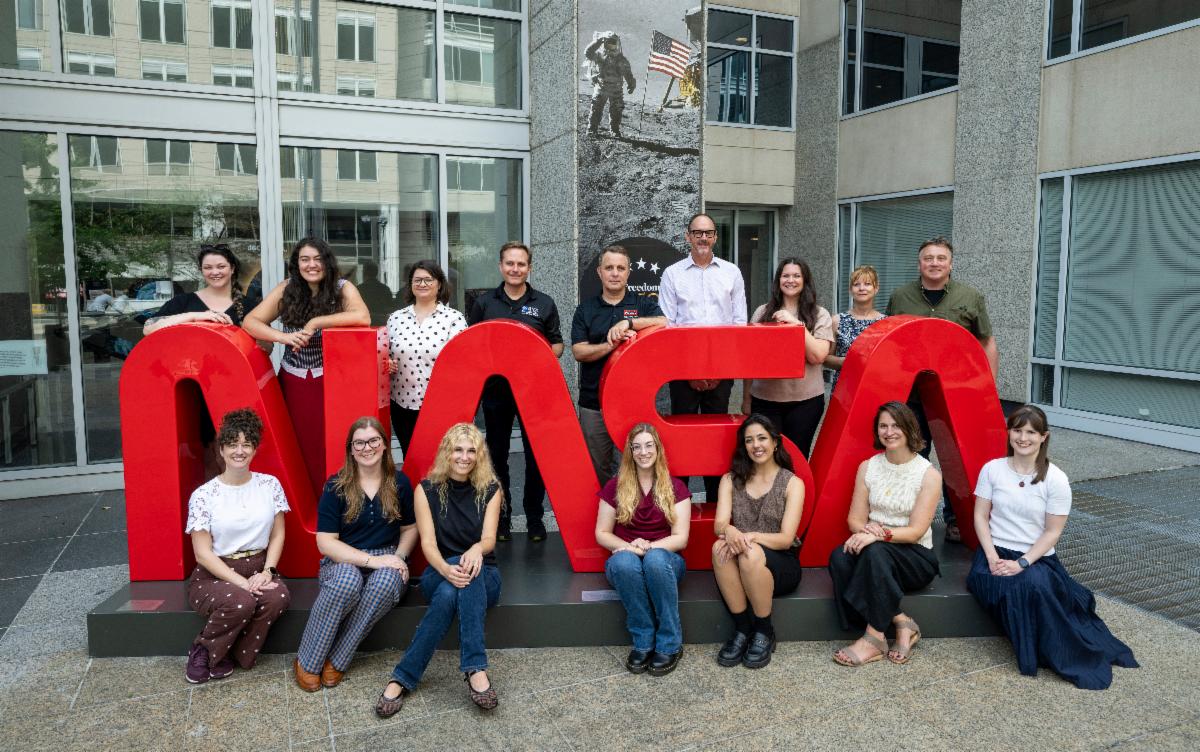
On September 2, NASA History Office staff convened at NASA Headquarters to discuss current research and archival projects, address shared challenges, and consider future directions. During the three-day review, historians and archivists from across the enterprise and the Jet Propulsion Laboratory met to discuss how the program has evolved since the last review and to reflect on the issues shaping their work today.
Each team member offered updates on ongoing efforts—from processing archival collections, reference, and research; to publications, oral histories, communications, and other initiatives—highlighting the breadth of activity across the enterprise. For many attendees, it was also the first chance to connect face-to-face after years of virtual collaboration. By the close of the three-day meeting, the group left with refreshed strategies for advancing their work, actions for increasing the effectiveness of both functions, and a renewed sense of camaraderie.
| | The staff of the NASA History Office gathered at NASA Headquarters in Washington, DC, from September 2–4. Pictured are: Front row (L–R) Jessica Kelly, Christine Shaw, Madison Teodo, Kylie Neal, Lois Rosson, Michele Ostovar, and Julie Pramis Verdiflor. Back row (L–R) Zoe Costanza, Hannah Kaufman, Carly Hornberger, James Anderson, Brian Odom, Brad Massey, Jillian Rael, April Gage, and Robert Arrighi. Not pictured: Sandra Johnson and Victoria Castaneda. Credit: NASA | | |
NEW STAFF
Two New Archivists Welcomed to the NASA History Office
| | |
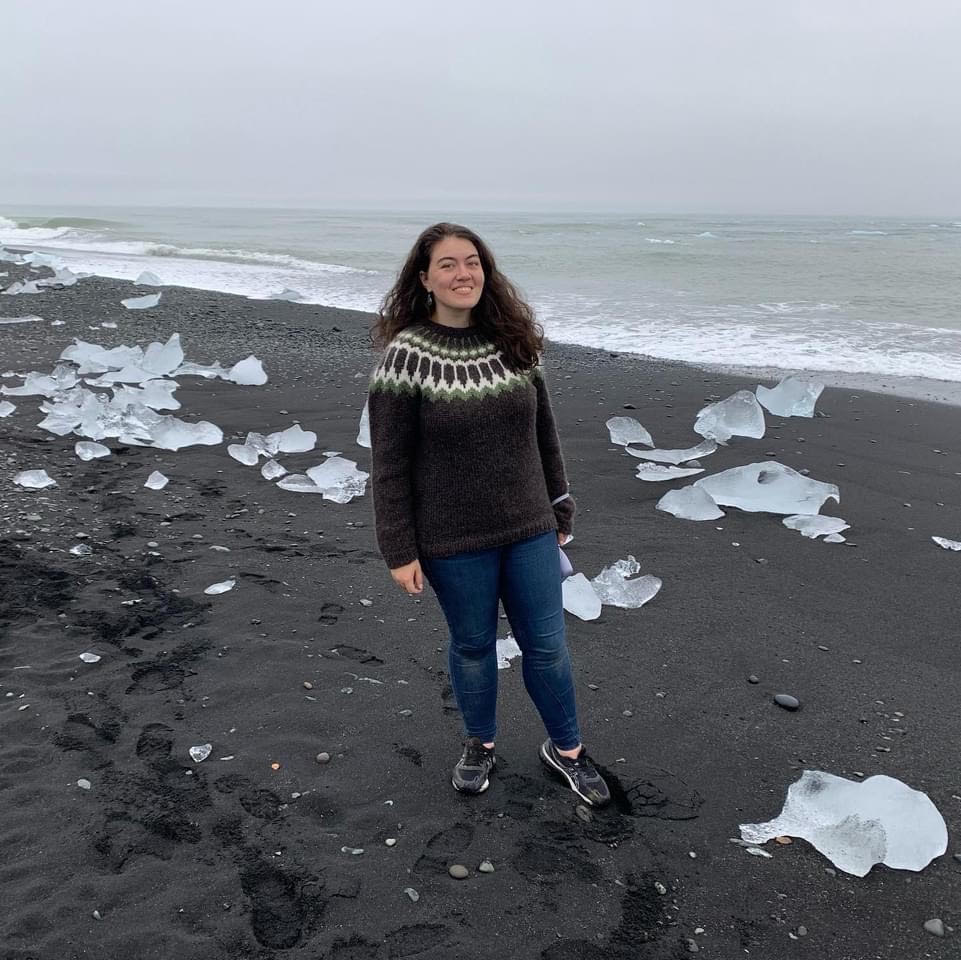
Hannah Kaufman is our newest archivist at NASA Headquarters. She has previously worked at the State Department, the National Archives, and Catholic University Archives, where she also obtained her Master of Science in Library and Information Science degree. Currently, Hannah is diving into reference, as well as processing a collection on the Deep Space Network.
When not in the archives, Hannah enjoys reading, archery, and going to more concerts than is good for her.
| |  | |
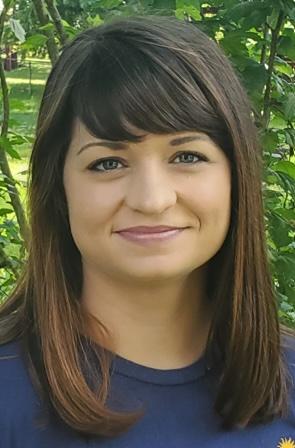
Carly Hornberger worked in the Goddard archives as a NASA intern before joining our team a few weeks ago as an archivist at Goddard Space Flight Center. She is currently getting a Master of Library and Information Science degree with a concentration in archives through the University of Alabama's online program.
Before working at NASA, Carly was a primate keeper at the Smithsonian’s National Zoological Park for eight years. Another fun fact: Carly is following in the footsteps of her grandfather who worked at Goddard as a budget analyst in the 1970s.
| | |
Interdisciplinary Conference on Planetary History
In May of 2026, a group of researchers gathered in Northern Germany for a two-day workshop on planetarity. Scholars from a range of disciplines gathered to contribute to a growing literature examining planet Earth as a conceptual vantage point. Using humankind’s ventures in outer space as a backdrop, the group discussed the emergence of a planetary consciousness across history, literature, science, and politics. Read the conference report.
| | |
|
TRIVIA CHALLENGE
When the Going Gets Tough…
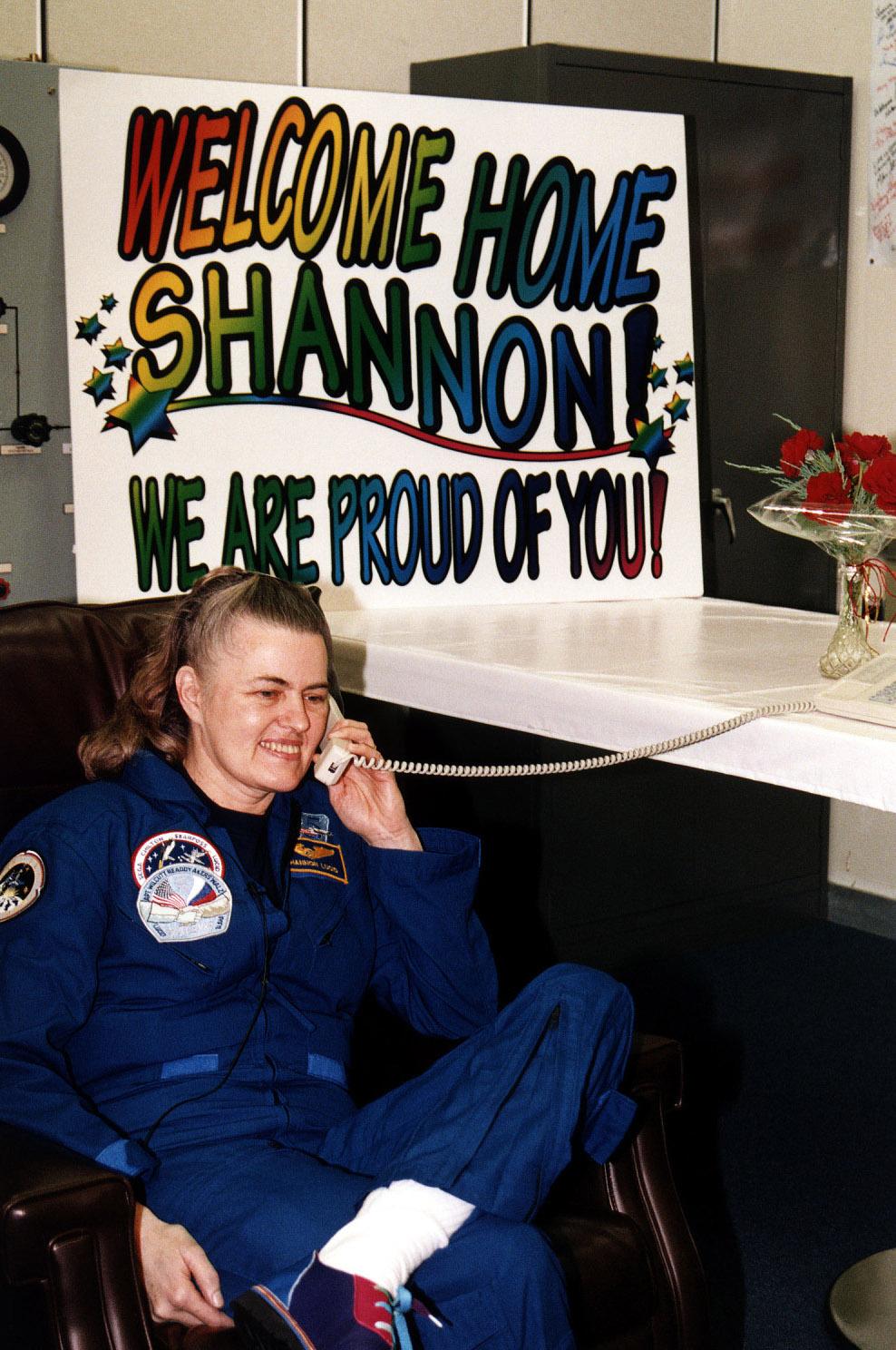
| | In Shannon Lucid’s first year of life, she and her family faced a difficult experience that hints at the resilience she exhibited throughout her career. | | What was that difficult experience? | | | | With her historic six-month stay aboard the Russian Space Station Mir completed, Shannon Lucid accepts a congratulatory phone call from President Bill Clinton. Credit: NASA | | |
NASA History
The NASA History Office documents and preserves NASA’s remarkable history and strives to engage with the public about NASA's past and how it relates to our world today.
| |
| |
National Aeronautics and Space Administration
NASA explores the unknown in air and space, innovates for the benefit of humanity, and inspires the world through discovery.
Visit nasa.gov
| | | | | |