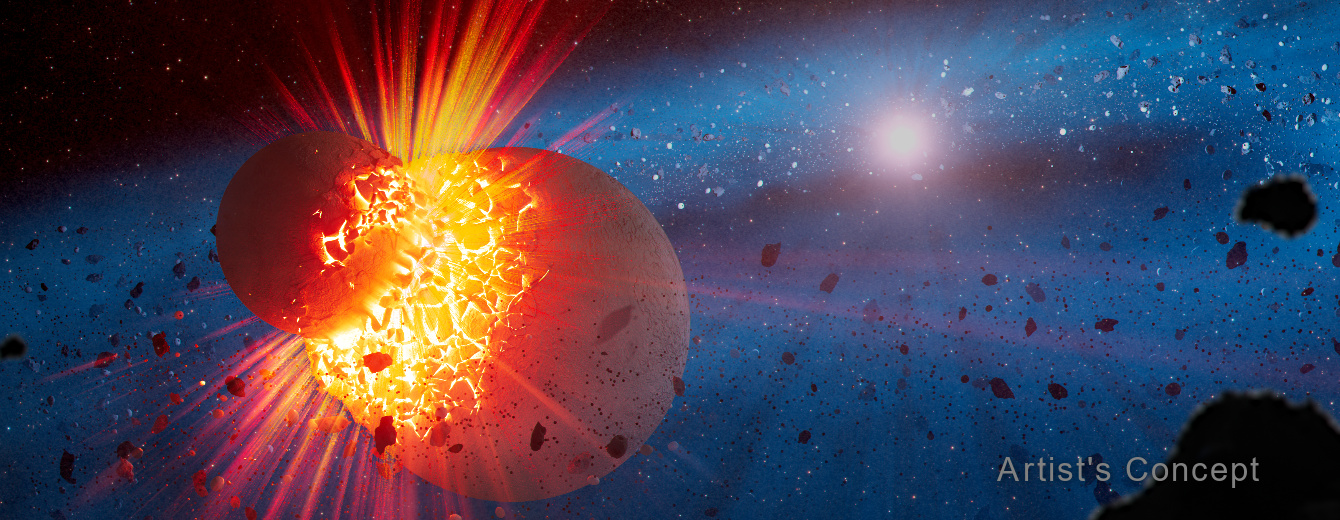
The telescope is going beyond grazing the surface of these dusty, chaotic systems.
Approximately 20 years ago, the Spitzer Space Telescope uncovered an enigmatic subclass of circumstellar disks — rings of dust and rock orbiting mature stars. Now a team of astronomers has used the James Webb Space Telescope to further study these confounding environments known as extreme debris disks. Within these disks, Moon-sized and even Mars-sized objects are colliding, creating massive amounts of warm dust. With the largest survey of these disks to date, the team has enough data to begin investigating their composition, origins, and connection to planet formation and evolution — including in our own solar system.


