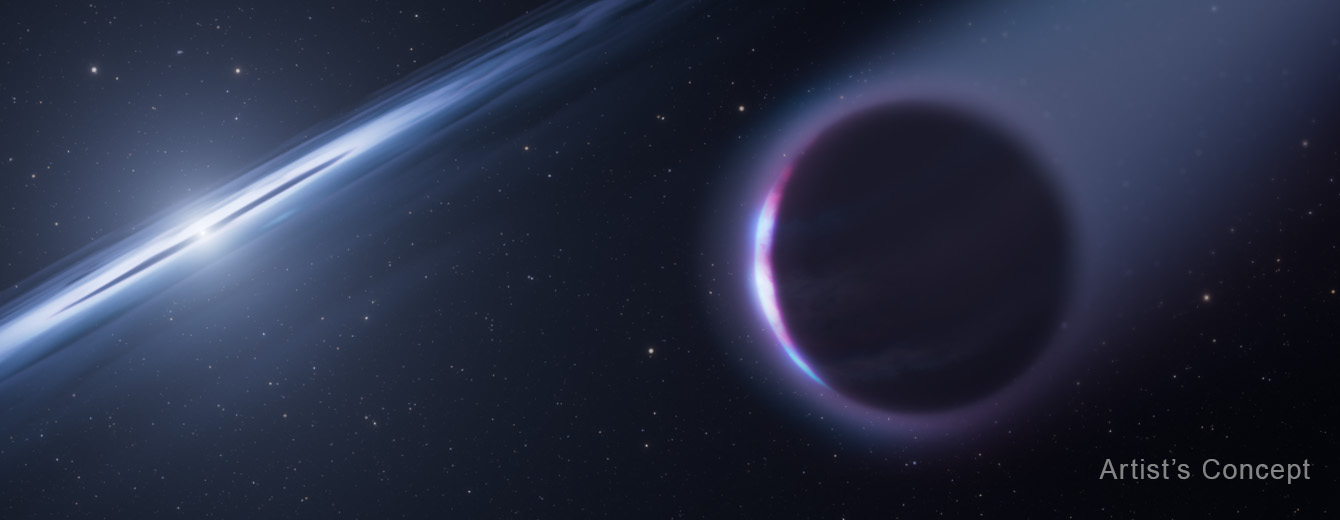
New analysis of archival Hubble data points to the possibility of "dead" white dwarf stars hosting second-generation planetary systems
For more than a quarter century, unidentified chemical signatures from a white dwarf star have laid dormant in the archive of NASA’s Hubble Space Telescope, until diligent sleuthing by a young astronomer revealed something extraordinary: high amounts of the element niobium, and other unusual chemical abundances, indicating a potential second-generation planet orbiting the white dwarf.
While a handful of planets have been identified orbiting white dwarfs, this is the first candidate with the hallmarks of a planet that formed from material related to a star’s death, rather than its birth. The discovery proposes a fascinating new area of future research and highlights the intriguing concept that stars could have an extended second act hosting new planets long after the fuel of their primary “lifetime” runs out.


