Unsubscribe Automatically:

=?utf-8?Q?News_&_Notes_=E2=80=93_October_2026_?=
 

NASA History News & Notes

OCTOBER 2026 • Volume 43, Number 9


CONTENTS

  • NASA in the 21st Century Symposium – Call for proposals
  • Halloween highlights from the archives
  • Terrifying trivia challenge


CALL FOR PROPOSALS

NASA History Office Announces “NASA in the 21st Century” Symposium

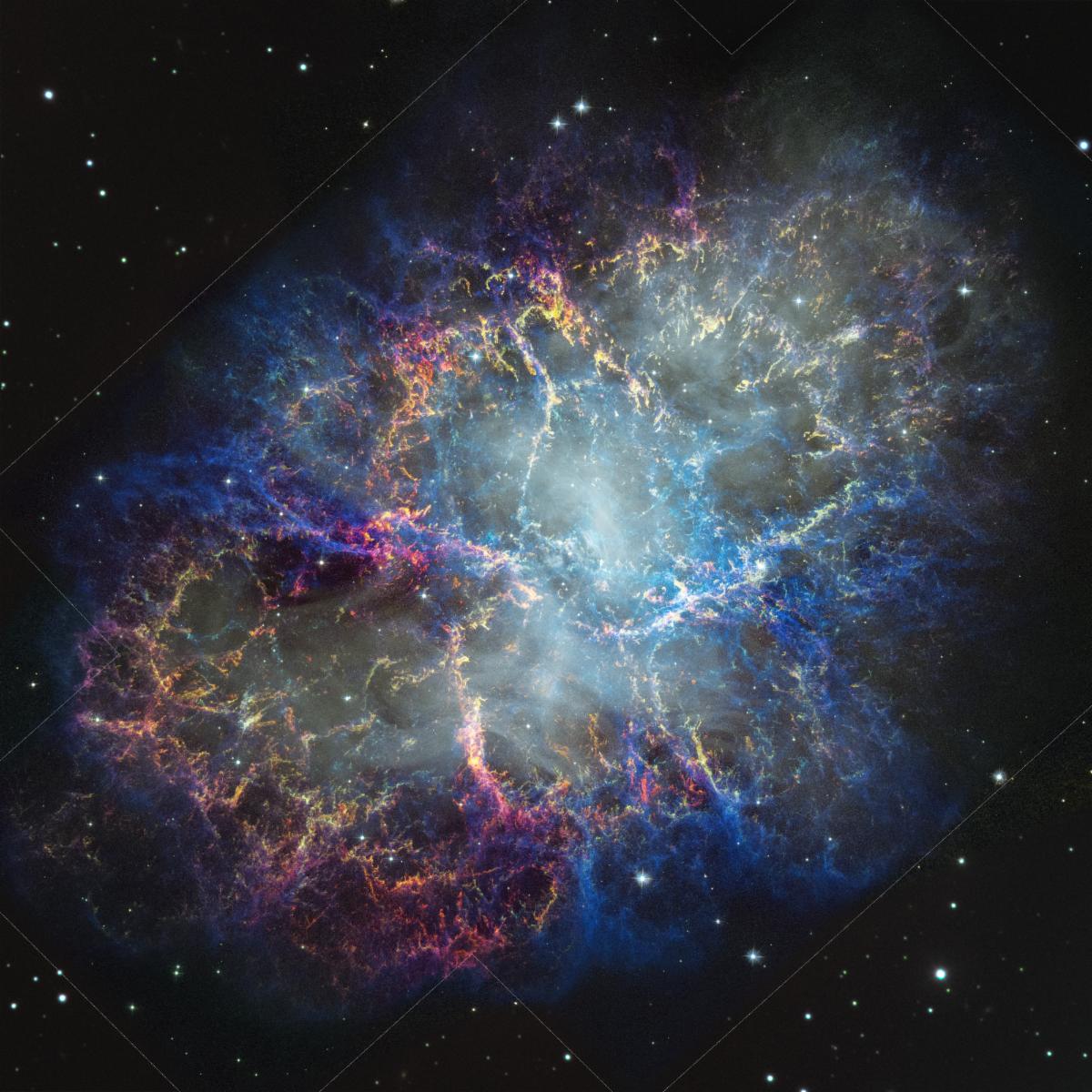
Hubble's 2024 view of the Crab Nebula

This 2024 view of the Crab Nebula as seen by the Hubble Space Telescope’s Wide Field Camera 3 was taken a quarter-century after Hubble’s first observations of the full nebula. Credit: NASA, ESA, STScI, William Blair (John Hopkins University); Image Processing: Joseph DePasquale (Space Telescope Science Institute)


The NASA History Office invites historians, interdisciplinary scholars, NASA leaders and practitioners, scientists, engineers, and other researchers to participate in "NASA in the 21st Century: History, Change, and Institutional Adaptation," a two-day symposium scheduled for November 16–17, 2027, at NASA Headquarters in Washington, D.C.


The first quarter of the 21st century has brought profound changes to NASA’s missions, organizational structures, partnerships, and place in the world. Since the turn of the millennium, the agency’s human spaceflight program has navigated the close out of the Space Shuttle Program, building and operation of the International Space Station, the Columbia accident and its aftermath, rise and cancellation of the Constellation Program, the expansion of commercial space partnerships, and the development of the Artemis campaign. Across its science, aeronautics, and technology portfolios, NASA has also continued to adapt to new scientific priorities, everchanging technological capabilities, and shifting international relationships.


The goal behind this symposium is to place these developments in the larger historical context, asking not only what changed at NASA, but also how and why those changes occurred. By exploring the decisions, institutional relationships, political circumstances, and professional experiences that have shaped the agency since 2000, the effort aims to deepen understanding of NASA’s contemporary trajectory and provide historical perspective on its future.


Proposals are welcome on any aspect of NASA’s history since 2000. Potential topics include the evolution of human spaceflight from Shuttle to Artemis; NASA's relationships with Congress, presidential administrations, industry, and international partners; space diplomacy and geopolitics; the changing roles of NASA Headquarters and the field centers; the agency’s social, cultural, and economic impact on local communities; and developments in Earth science, planetary exploration, astrophysics, and aeronautics. Research examining NASA within broader histories of science and technology, the federal government, international relations, and the global space sector is especially encouraged.


Researchers interested in participating should submit an abstract of no more than 400 words outlining their proposed paper, its principal questions and sources, and its contribution to the symposium. Submissions should also include a brief biography or curriculum vitae with current institutional affiliation.


The submission deadline is May 31, 2027. Proposals should be sent to Brian C. Odom, NASA Chief Historian, at brian.c.odom@nasa.gov.


Brian C. Odom
NASA Chief Historian


FROM THE ARCHIVES

Historical Halloween Hijinks

Every October, American Archives Month reminds us that archives preserve far more than official reports and historic achievements. Tucked among NASA's millions of records are moments of creativity, humor, and celebration that bring the agency's history to life. This Halloween, we're highlighting a few spirited scenes from the archives that show how NASA employees have always known how to balance serious work with a little seasonal fun.

 
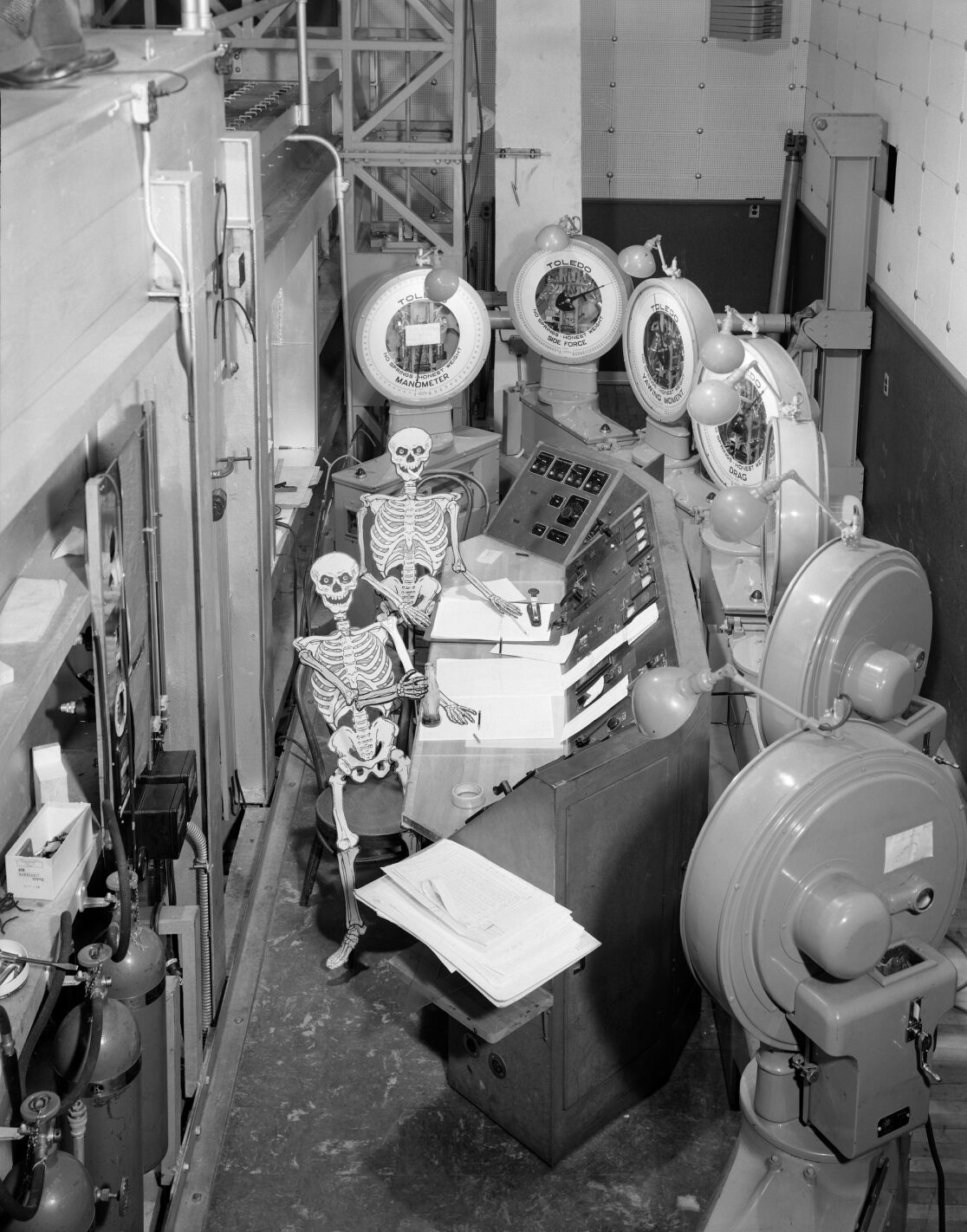
Overhead view of a wind tunnel control room. Two skeletons made of paper sit in the chairs at the console.

Working late on Halloween night is not humerus. A skeleton crew attends the control panel at the 7- by 10-foot low-speed wind tunnel at NASA’s Langley Research Center in 1949.


Get details about each of the wind tunnels operated by the NACA and NASA.

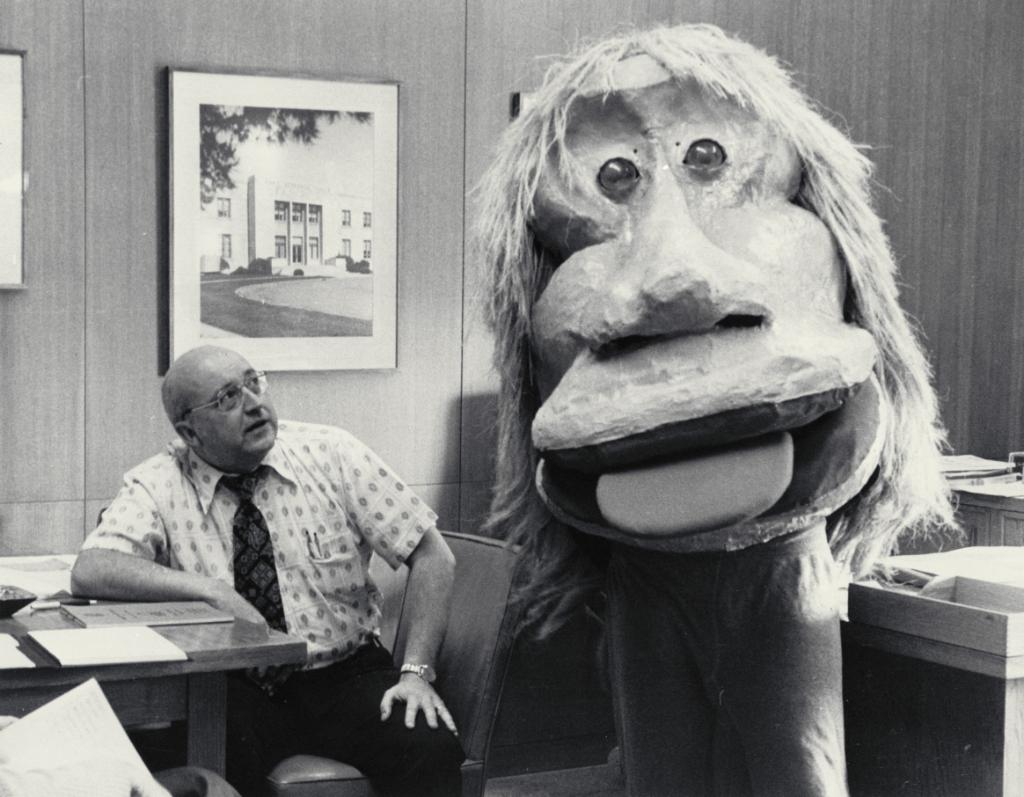
Clarence Syvertson sits at his desk and looks apprehensively at a giant creature in his office.

“This is the last time the ILLIAC will be used for computer dating.” NASA Ames Research Center Acting Director Clarence “Sy” Syvertson wasn’t quite sure what he was seeing when a creature visited his office during the Ames Halloween parade in October 1977.


Ames staff members were invited to caption this photo in the Nov. 17, 1977, edition of the center newsletter, The Astrogram. The winning caption, referencing former center director Hans Mark who had recently left Ames to serve as the Secretary of the Air Force, was submitted by Fred Immen: “Sy, this is your old friend Hans! Don’t you remember me? Look what Washington has done to me!” Another entry is shown in bold above.

 
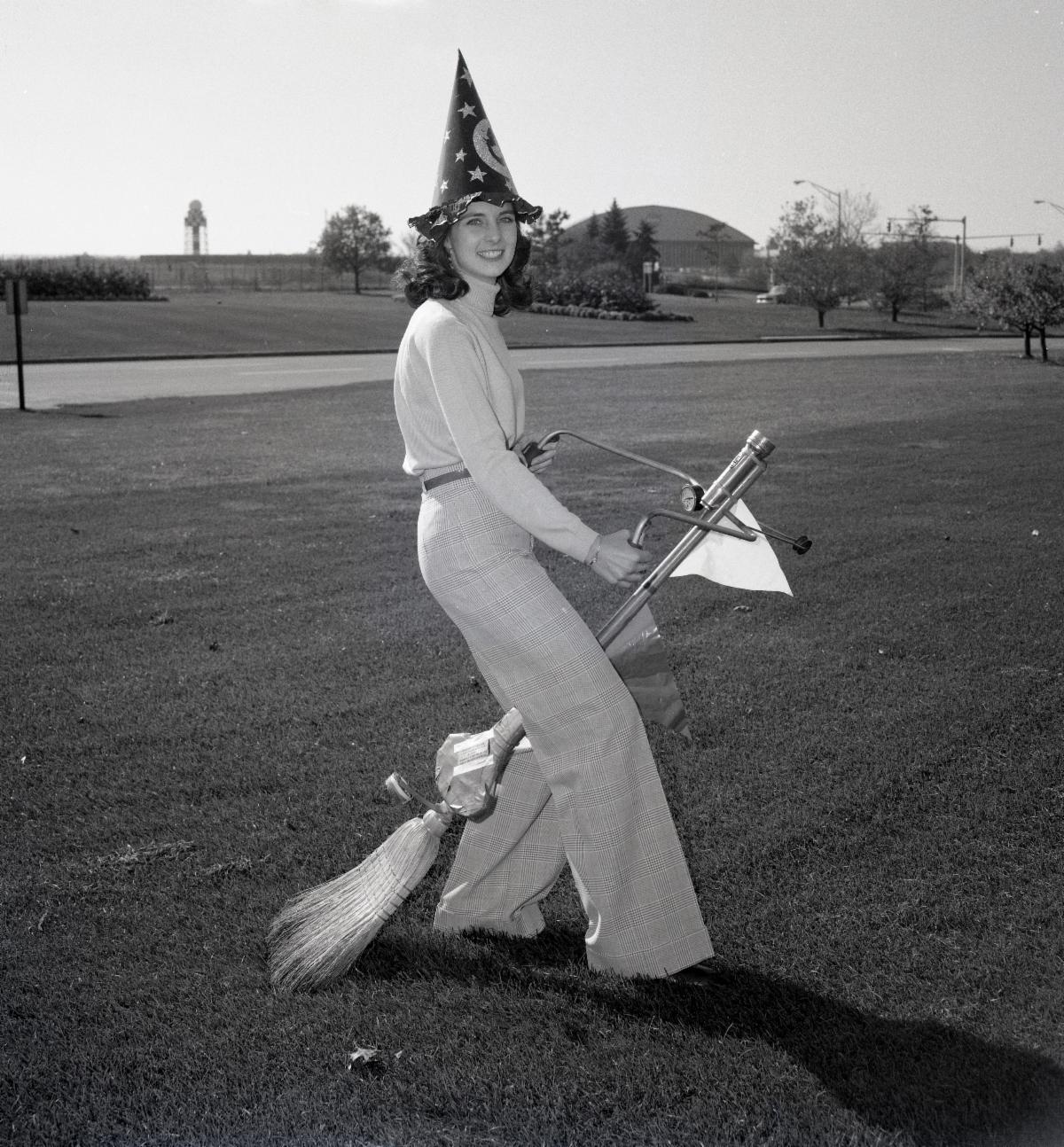
Mary Kathleen McGuirk, an employee at NASA Lewis Research Center (now known as NASA Glenn) wears a pointed hat and rides a space age broom for the center’s Halloween celebration in 1977

Witch transportation goes “high tech.” Mary Kathleen McGuirk, a Procurement Division employee at NASA Lewis Research Center (now NASA Glenn) rides a space-age broom for the center’s Halloween celebration in 1977. Quoted in the Nov. 11, 1977, edition of Lewis News, she commented, “I have to fly low to keep up with demands of my job.”


Visit our collection of Glenn photos from 1942 to 1979. 

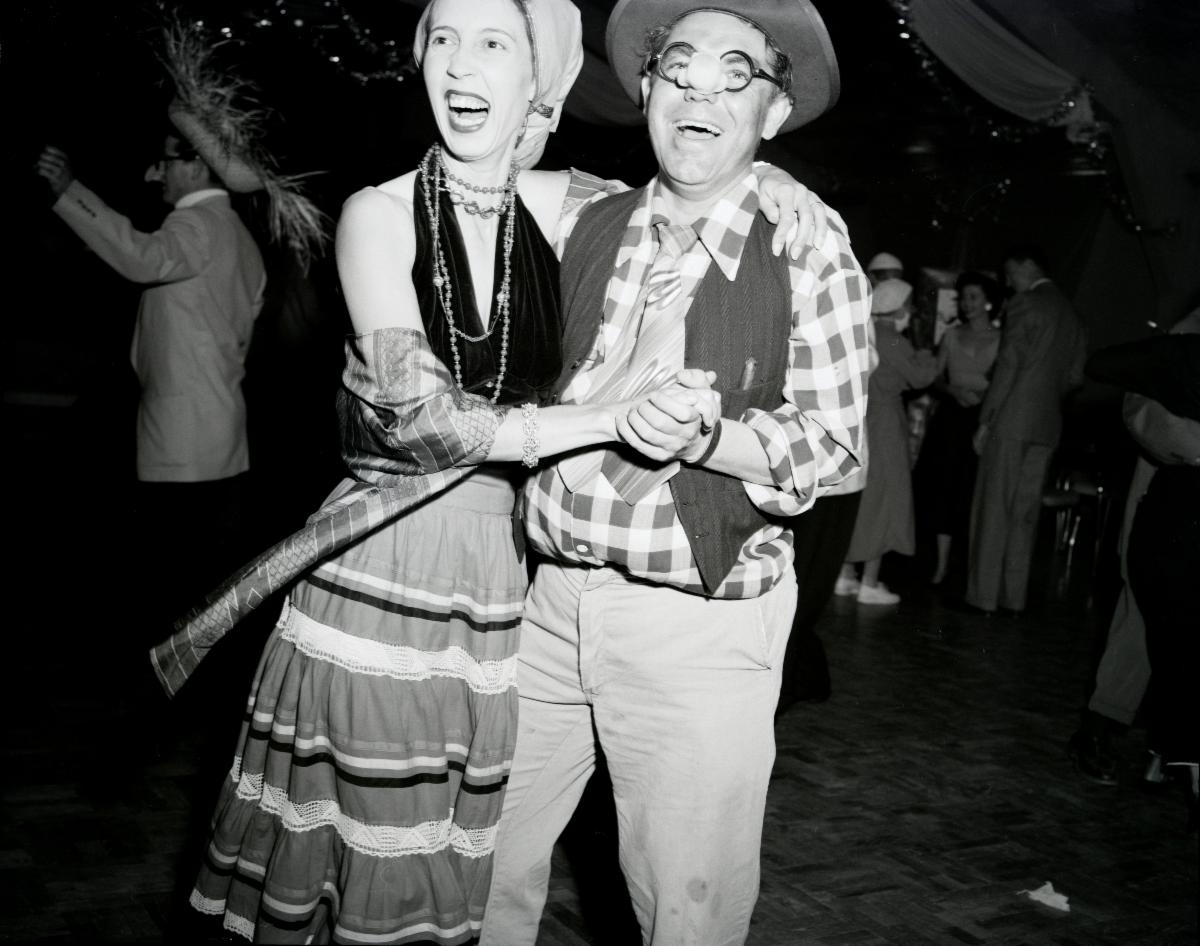
A man and woman dressed in costumes dance together at a party

Twinkle, twinkle, little toes. Halloween has held a special significance at NASA’s Jet Propulsion Laboratory (JPL) since its founders conducted the first rocket tests in the Arroyo Seco on that day 90 years ago!


Celebrated in recent years with costume contests and pumpkin-carving contests, JPL’s first Halloween “Masquerade Dance,”pictured here, was held in October 1954. 


TRIVIA CHALLENGE

"It's Alive!"

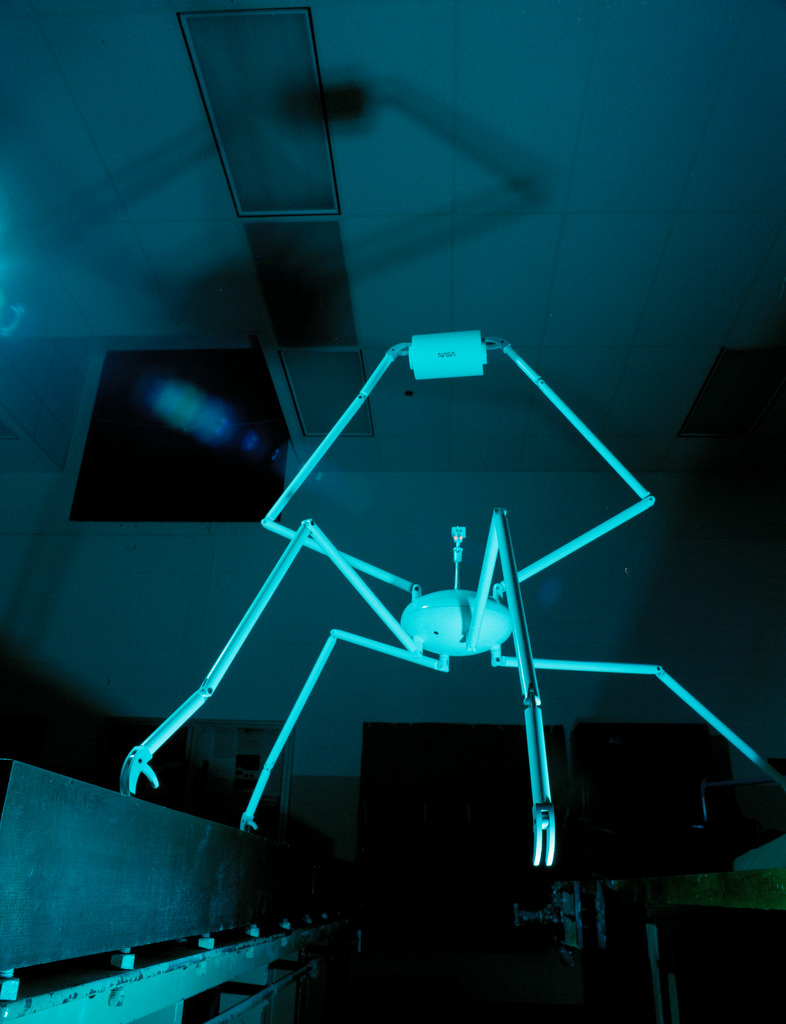
This photo from NASA Langley’s archival photo collection highlights a creepy-looking robotic concept developed in the 1970s and ‘80s.

What was this spider-like robot designed for?
A white spider-like robot casts an eerie shadow on the ceiling.

A robotic project designed at NASA's Langley Research Center. Credit: NASA


NASA History

The NASA History Office documents and preserves NASA’s remarkable history and strives to engage with the public about NASA's past and how it relates to our world today.

Visit www.nasa.gov/history

Follow Us

Facebook  X
 

Email the NASA History Office

Was this newsletter forwarded to you? Subscribe to receive more


National Aeronautics and Space Administration


NASA explores the unknown in air and space, innovates for the benefit of humanity, and inspires the world through discovery.


Visit nasa.gov

Follow NASA

Facebook  Instagram  LinkedIn  X  YouTube