Unsubscribe Automatically:
Inbox Astronomy: NASA=?UTF-8?Q?=E2=80=99s_?=Webb Shows How Supernova Dust Chronicles Star Evolution
INBOX ASTRONOMY
NASA’s Webb Shows How Supernova Dust Chronicles Star Evolution
Release date: Monday, November 23, 2026 10:00:00 AM Eastern Standard Time
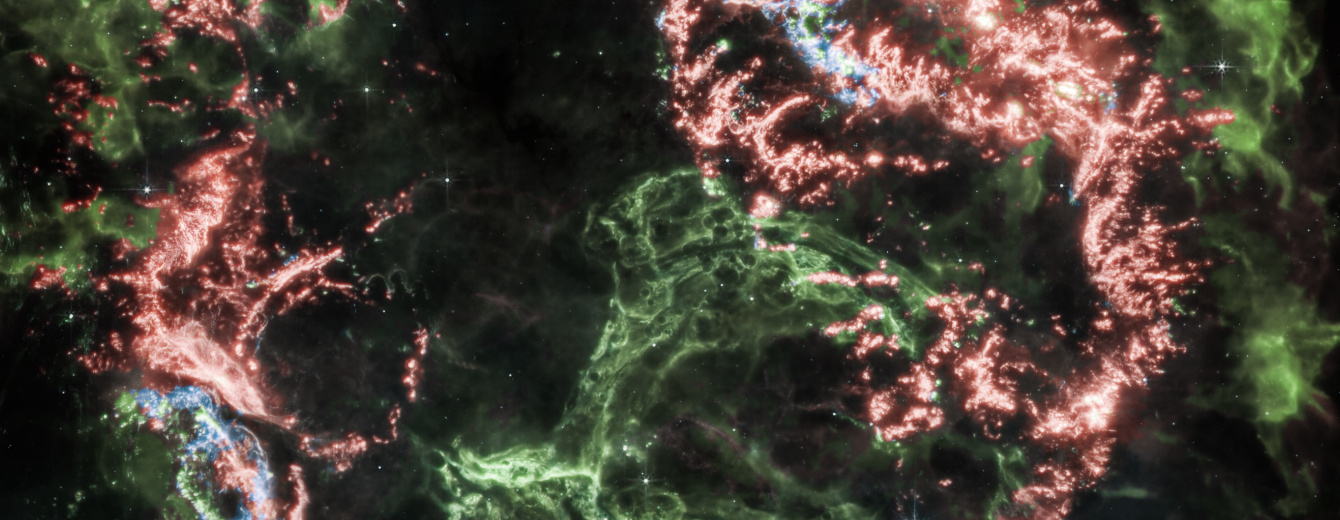
Dust formed after the supernova shows how changes within a soon-to-explode star influenced the elements it released.
NASA’s James Webb Space Telescope captured the mid-infrared light of Cassiopeia A (Cas A), one of the most well-studied supernova remnants, to characterize its dust. Astronomers used Webb’s detailed observations to gain new insights into shell mergers, a process that is theorized to occur mere hours before a star’s supernova explosion, revealing new details about the structure of Cas A’s original star.
Find additional resources at
www.stsci.edu
Please do not reply to this message.
You are receiving this email because you are subscribed to the Inbox Astronomy mailing list.
Produced by the Space Telescope Science Institute's
Office of Public Outreach


