Guidance for Education and Public Outreach Activities Under Sequestration
NASA has taken the first steps in addressing the mandatory spending cuts called for in the Budget Control Act of 2011. The law mandates a series of indiscriminate and significant across-the-board spending reductions totaling $1.2 trillion over 10 years.
As a result, NASA has been forced to implement a number of new cost-saving measures, policies, and reviews in order to minimize impacts to the mission-critical activities of the Agency. Guidance regarding conferences, travel, and training that reflect the new fiscal reality in which the agency must operate has been provided.
For specific guidance as it relates to public outreach and engagement activities please reference the following webpage.
http://www.nasa.gov/offices/education/about/sequestration-NASA-education-guidance.html______________________________________________________________________________________________________________
Check out the following NASA opportunities for the education community. Full descriptions are listed below.
Build NASA's Future With LEGO Bricks: Inventing Our Future of Flight
Audience: Students Ages 13 and Older
Contest Deadline: Coming Soon
Sign Up for The Space Flyer Newsletter
Audience: All Educators and Students
Free Education Webinar Series from the Aerospace Education Services Project
Audience: K-12 Educators
Event Date: Multiple Upcoming Dates
NASA History Program Office Fall 2013 Internships
Audience: Higher Education Educators and Students
Fall 2013 Application Deadline: June 1, 2013
Heritage Family Day Events at Smithsonian's Air and Space Museum
Audience: All Educators and Students
Next Event Date: June 1, 2013
Center for Astronomy Education Teaching Excellence Workshops
Audience: Higher Education Educators and Students
Next Event Date: June 1-2, 2013
Presidential Awards for Excellence in Science, Mathematics and Engineering Mentoring
Audience: All Educators and Students
Nomination Deadline: June 5, 2013
NASA Seeks Academic Partners for SmallSat Technology Collaboration
Audience: U.S. Colleges and Universities
Proposal Deadline: June 5, 2013
2013 Lunar Workshops for Educators
Audience: 6-9 Educators
Workshop Dates: June 24-28, and July 8-12, 2013
The Unknown Moon -- A Weeklong Institute for High School Educators
Audience: 9-12 Educators
Institute Dates: June 24-28, 2013
Langley Aerospace Research Student Scholars -- Fall 2013 Session
Audience: Higher Education Students
Application Deadline: June 26, 2013
Student Spaceflight Experiments Program -- Mission 5 to the International Space Station
Audience: School Districts Serving Grades 5-12, Informal Education Institutions, Colleges and Universities
Inquiry Deadline: June 30, 2013
Going to Mars With MAVEN Campaign
Audience: Educators and Students Worldwide
Deadline: July 1, 2013
Historical NASA Space Artifacts Available for Educational Use
Audience: Educational Institutions, Museums and Other Education Organizations
Deadline: July 1, 2013
NASA Exploration Design Challenge
Audience: K-12 Educators and Students
Virtual Crew Registration Deadline: March 14, 2014
Don't miss out on upcoming NASA education opportunities.
For a full list of events, opportunities and more, visit the Educator and Student Current Opportunity pages on NASA's website:
-- Educators
http://www.nasa.gov/audience/foreducators/current-opps-index.html-- Students
http://www.nasa.gov/audience/forstudents/current-opps-index.html______________________________________________________________________________________________________________
Build NASA's Future With LEGO Bricks: Inventing Our Future of Flight
Teachers, can your team of young, aspiring inventors out-design the professionals?
Develop creative designs for real-world needs. Combine authentic research and a prototype built out of LEGO bricks.
Coming in summer 2013, student teams will have their chance to compete against the most imaginative minds in the world. Your students can tackle the same aeronautics challenges that NASA and industry teams have been working on. We want to see if your team can do better.
LEGO Group and NASA have teamed up for the �Inventing Our Future of Flight� design contest, and now it�s your turn.
-- Entrants will be asked to develop a research paper and a LEGO built prototype (using LEGO bricks or LEGO Digital Designer).
-- Individuals or teams of up to five may enter.
-- Minimum age for entry is 13 years of age. While all researchers and builders will be entered in the overall category, builders ages 13 to 18 will also be entered in the young builders category.
We can�t release the full contest details yet, but we wanted you to be the first to know. Details will be released at the end of May, so make plans and watch for your chance to design the future!
______________________________________________________________________________________________________________
Sign Up for The Space Flyer Newsletter
Are you looking for ways to transform your summer vacation into an out-of-this-world learning experience? From sea to shining sea, NASA Visitor Centers are bustling with exciting new missions and programs that inspire the imagination. Sign up to receive The Space Flyer newsletter and stay up-to-date on all of the fun activities taking place at all 11 NASA Visitor Centers.
The Space Flyer newsletter highlights incredible new experiences that offer a unique blend of history, entertainment and education that only the NASA Visitor Centers can offer. This year, escape the ordinary and drop by to experience the wonder of space!
To learn more about the NASA Visitor Centers and to sign up to have The Space Flyer delivered straight to your inbox, visit
http://www.visitnasa.com/.______________________________________________________________________________________________________________
Free Education Webinar Series from the Aerospace Education Services Project
The Aerospace Education Services Project is presenting a series of free webinars throughout May 2013. All webinars can be accessed online. Join aerospace education specialists to learn about activities, lesson plans, educator guides and resources to bring NASA into your classroom.
Looking at the Sun (Grades 3-8)
May 28, 2013, at 4 - 5 p.m. EDT and 6 - 7 p.m. EDT
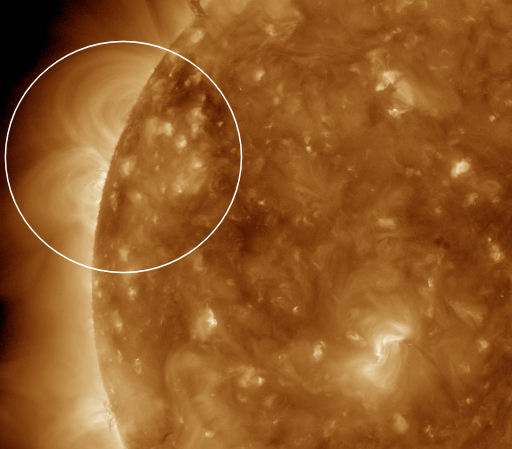
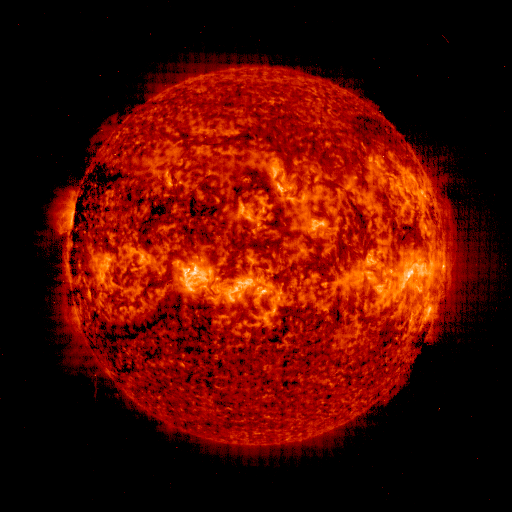
Aerospace education specialist Rick Varner will give participants a glimpse of NASA's solar missions, share sun-Earth classroom activities and introduce a Solar and Heliospheric Observatory, or SOHO, activity using current sun data to track sun spots.
For more information about these webinars, and to see a full list of webinars taking place through May 2013, visit
http://aesp.psu.edu/programs/webinars/.Questions about this series of webinars should be directed to Chris Gamrat at gamrat@psu.edu.
______________________________________________________________________________________________________________
NASA History Program Office Fall 2013 Internships
The NASA History Program Office is seeking undergraduate and graduate students for fall 2013 internships. The History Program Office maintains archival materials to answer research questions from NASA personnel, journalists, scholars, students at all levels and others from around the world. The division also edits and publishes several books and monographs each year. It maintains a large number of websites on NASA history.
Students of all majors are welcome to apply. While detailed prior knowledge of the aeronautics and space fields is not necessary, a keen interest and some basic familiarity with these topics are needed. Strong research, writing and editing skills are essential. Experience with computers, especially hypertext markup language, or HTML, formatting and social media (Twitter and Facebook) is a plus.
Intern projects are flexible. Typical projects include handling a variety of information requests, editing historical manuscripts, doing research and writing biographical sketches, updating and creating websites, creating Twitter and Facebook entries, and identifying and captioning photos.
Applications for fall 2013 internships are due June 1, 2013.
For more information, visit
http://history.nasa.gov/interncall.htm.If you have questions about this opportunity, please contact Bill Barry at bill.barry@nasa.gov.
______________________________________________________________________________________________________________
Heritage Family Day Events at Smithsonian's Air and Space Museum
The 2013 Heritage Family Day event series celebrates the diverse ethnic and cultural communities that have contributed to aviation and space exploration. Events will commemorate historic and current contributions through presentations and activities for the entire family. The events will take place at the Smithsonian's Air and Space Museum Steven F. Udvar-Hazy Center in Chantilly, Va., and at the Smithsonian's National Air and Space Museum in Washington, DC. The events are free and open to the public.
Explore the Universe Day: Everyone Looks Up!
June 1, 2013, from 10 a.m. to 3 p.m. EDT
Everyone looks up! People around the world have always looked to the sky, but they don�t always see the same things. Experience how different people study the sky and hear their stories.
http://airandspace.si.edu/events/eventDetail.cfm?eventID=4835To see a list of all upcoming Heritage Family Days events, visit
http://airandspace.si.edu/heritage-days/.Questions about this series of events should be directed to the Visitor Service line at 202-633-1000.
______________________________________________________________________________________________________________
Center for Astronomy Education Teaching Excellence Workshops
NASA's Center for Astronomy Education, or CAE, announces a series of educator workshops for astronomy and space science educators.
These workshops provide participants with experiences needed to create effective and productive active-learning classroom environments. Workshop leaders model best practices in implementing many different classroom-tested instructional strategies. But most importantly, you and your workshop colleagues will gain first-hand experience implementing these proven strategies yourselves. During many microteaching events, you will have the opportunity to role-play the parts of student and instructor. You will assess and critique each other�s implementation in real time, as part of a supportive learning community. You will have the opportunity to use unfamiliar teaching techniques in collaboration with mentors before using them with your students. CAE is funded through NASA's Jet Propulsion Laboratory's Exoplanet Exploration Program.
June 1-2, 2013 -- Indianapolis, Ind.
CAE Tier I Teaching Excellence Workshop for Current and Future Astronomy and Space Science Instructors
June 17-20, 2013 -- College Park, Md.
New Faculty Workshop for Physics and Astronomy
Aug. 24-25, 2013 -- Albuquerque, N.M.
CAE Tier I Teaching Excellence Workshop for Current and Future Astronomy and Space Science Instructors
For more information and to register for workshops online, visit
http://astronomy101.jpl.nasa.gov/workshops/index.cfm.Inquiries about this series of workshops should be directed to Gina Brissenden at gbrissenden@as.arizona.edu.
______________________________________________________________________________________________________________
Presidential Awards for Excellence in Science, Mathematics and Engineering Mentoring
The White House Office of Science and Technology Policy and the National Science Foundation are currently accepting nominations for the Presidential Awards for Excellence in Science, Mathematics and Engineering Mentoring, or PAESMEM. This award program recognizes U.S. citizens or permanent residents and U.S. organizations that have demonstrated excellence in mentoring individuals from groups that are underrepresented in science, technology, engineering and mathematics education and the workforce.
Presidential awardees receive a $10,000 award and a commemorative presidential certificate. Awardees are invited to participate in an awards ceremony in Washington D.C., which includes meetings with education policy leaders.
Individuals and organizations in all public and private sectors are eligible, including industry, academia, primary and secondary education, military and government, nonprofit organizations and foundations. Nominations, including self-nominations, are due June 5, 2013.
For more information, visit
www.nsf.gov/PAESMEM.Please email any questions about this opportunity to PAESMEM@nsf.gov.
______________________________________________________________________________________________________________
NASA Seeks Academic Partners for SmallSat Technology Collaboration
NASA is seeking small spacecraft technology project proposals from U.S. colleges and universities that would like to collaborate with agency researchers.
Small spacecraft, or smallsats, represent a growing field of space research and operations in which universities often have led the way in technology development. Smallsats, some of which are as small as a four-inch cube, are not expected to replace conventional spacecraft, but sometimes can provide an alternative to larger, more costly spacecraft. Smallsats can serve as platforms for rapid technology testing or specialized scientific research and exploration not otherwise possible. Smallsats also can be developed relatively quickly and inexpensively, and can share a ride to orbit with larger spacecraft.
NASA expects to competitively select approximately 10 proposals. Each team will form proposal partnerships with researchers from any of NASA's field centers. Awards for each project will include as much as $100,000 ($150,000 for teams of more than one school). Proposals submitted in response to this NASA cooperative agreement notice are due June 5, 2013.
In addition, NASA will fund the time for NASA employees to work with each selected team. Project funding is for one year with the potential to continue for a second year. Proposed projects could include anything from laboratory work to advance a particular spacecraft technology to flight testing of a new smallsat. For example, projects might focus on a technology area such as propulsion, power or communications, or on a smallsat capability, such as formation flight or satellite rendezvous.
Details of the opportunity and instructions for submitting proposals are provided in a Cooperative Agreement Notice that is available online at
http://tinyurl.com/cb3mqdw.For additional information on the Small Spacecraft Technology Program, visit
http://www.nasa.gov/smallsats.The Small Spacecraft Technology Program is part of NASA's Space Technology Mission Directorate, which is innovating, developing, testing and flying hardware for use in NASA's future missions. For more information about NASA's investment in space technology, visit
http://www.nasa.gov/spacetech.Questions about this opportunity should be directed to Rachel Khattab at rachel.khattab@nasa.gov.
______________________________________________________________________________________________________________
2013 Lunar Workshops for Educators
NASA's Lunar Reconnaissance Orbiter, or LRO, mission is sponsoring a pair of workshops for educators of students in grades 6-9. These workshops will focus on lunar science, exploration and how our understanding of the moon is evolving with the new data from current and recent lunar missions.
The Lunar Reconnaissance Orbiter has allowed scientists to measure the coldest known place in the solar system, map the surface of the moon in unprecedented detail and accuracy, find evidence of recent lunar geologic activity, characterize the radiation environment around the moon and its potential effects on future lunar explorers and much, much more!
Workshop participants will learn about these and other recent discoveries, reinforce their understanding of lunar science concepts, gain tools to help address common student misconceptions about the moon, interact with lunar scientists and engineers, work with LRO data and learn how to bring these data and information to their students using hands-on activities aligned with grades 6-9 National Science Education Standards and Benchmarks.
Workshops will take place: June 24-28 and July 8-12, 2013, at NASA's Goddard Space Flight Center in Greenbelt, Md. Workshop participants will have the opportunity to tour the LRO Mission Operation Center and the Goddard spacecraft testing facilities.
Each workshop will be limited to 25 participants. Interested educators are encouraged to apply early to secure a spot. Qualified applicants will be accepted in the order they apply.
For more information and to register for the workshops, visit
http://lunar.gsfc.nasa.gov/lwe/index.html.Questions about these workshops should be directed to Katie Hessen at Katie.K.Hessen@nasa.gov.
______________________________________________________________________________________________________________
The Unknown Moon -- A Weeklong Institute for High School Educators
NASA's Lunar Science Institute is hosting a weeklong institute for high school science educators. Participants will receive hands-on standards-aligned classroom resources that bridge the topics of Earth and the moon, as well as a variety of science and engineering topics. Tours of scientific research facilities and interaction with lunar scientists will also take place during the institute.
The Unknown Moon Institute will take place June 24-28, 2013, in Laurel, Md. Registration is free, and applications are considered on a first-come, first-served basis. Participants will receive a certificate for professional development hours.
For more information and to apply for the institute, visit
http://www.lpi.usra.edu/education/workshops/unknownMoon/.Questions about this opportunity should be directed to Christine Shupla at shupla@lpi.usra.edu.
______________________________________________________________________________________________________________
Langley Aerospace Research Student Scholars -- Fall 2013 Session
Langley Aerospace Research Student Scholars, or LARSS, is offering a 15-week fall internship at NASA's Langley Research Center in Hampton, Va. Internships are available for rising undergraduate juniors, seniors and graduate students at accredited U.S. colleges, universities and community colleges. Students of all majors are encouraged to apply. The grade point average requirement is a 3.0 out of a 4.0.
The internship includes doing a research project under the supervision of a researcher, attending technical lectures by prominent engineers and scientists and presenting project results at a poster session. Additional elements include tours of Langley wind tunnels, computational facilities and laboratories, as well as several networking activities.
Applicants must be U.S. citizens. Applications are due June 26, 2013.
Note: Spring and summer sessions are also offered. Please see the website for details.
For more information and to apply online, visit
http://www.nianet.org/LARSS-2012/index.aspx.Please email any questions about this opportunity to Debbie Murray at Deborah.B.Murray@nasa.gov.
______________________________________________________________________________________________________________
Student Spaceflight Experiments Program -- Mission 5 to the International Space Station
The National Center for Earth and Space Science Education and the Arthur C. Clarke Institute for Space Education, in partnership with NanoRacks LLC, announce an authentic science, technology, engineering and mathematics, or STEM, opportunity for school districts across the U.S. and space station partner nations. The newest flight opportunity, Mission 5 to the International Space Station, or ISS, gives students across a community the ability to design and propose real experiments to fly in low Earth orbit on the International Space Station. This opportunity is part of the Student Spaceflight Experiments Program, or SSEP.
Each participating community will receive a real microgravity research mini-laboratory capable of supporting a single microgravity experiment, and all launch services to fly the mini-lab to the space station in spring 2014 and return it to Earth. An experiment design competition in each community -- engaging typically 300+ students -- allows student teams to design and propose real experiments vying for their community�s reserved mini-lab. Content resources for teachers and students support foundational instruction on science in microgravity and experimental design. Additional SSEP programming leverages the experiment design competition to engage the community, embracing a learning community model for science, technology, engineering and mathematics, or STEM, education.
This competition is open to students in grades 5-12 and college. Informal education groups and organizations are also encouraged to participate. Interested communities must inquire about the program no later than June 30, 2013. The National Center for Earth and Space Science Education is available to help interested communities in the U.S. secure the needed funding.
To learn more about this opportunity, visit the SSEP Mission 5 to International Space Station National Announcement of Opportunity at
http://ssep.ncesse.org/2013/05/to-s...nternational-space-station-for-2013-14/.SSEP is enabled through a strategic partnership with NanoRacks LLC working with NASA under a Space Act Agreement as part of the utilization of the International Space Station as a national laboratory. The Center for the Advancement of Science in Space (
http://www.iss-casis.org/) is a national partner on SSEP. To view a list of all SSEP national partners, visit
http://ssep.ncesse.org/national-partners/.If you have any questions about this opportunity, please email SSEP National Program Director Jeff Goldstein at jeffgoldstein@ncesse.org.
______________________________________________________________________________________________________________
Going to Mars With MAVEN Campaign
The Mars Atmosphere and Volatile Evolution Mission, also known as MAVEN, is set to launch to the Red Planet in November 2013. And your name and personal message could hitch a ride to Mars!
Names that are submitted to the Going to Mars With MAVEN website will be placed on a DVD that will be carried aboard the MAVEN spacecraft. Participants who submit their names to the Going to Mars campaign will be able to print a certificate of appreciation to document their involvement with the MAVEN mission.
The MAVEN spacecraft will also carry personal messages from three contest winners. The Message to Mars contest is looking for personal messages in the form of haiku poems to send to the Red Planet. The public will vote to select the top three entries. Entries must be written in English. Winning haikus will be carried aboard the MAVEN spacecraft and will be prominently displayed on the MAVEN website.
Names and entries for the Message to Mars contest are due July 1, 2013.
For more information and to submit your name and message, visit
http://lasp.colorado.edu/maven/goingtomars/send-your-name/.Questions about this opportunity should be directed to
http://lasp.colorado.edu/maven/goingtomars/contact/.______________________________________________________________________________________________________________
Historical NASA Space Artifacts Available for Educational Use
NASA is inviting eligible educational institutions, museums and other organizations to screen and request historical space artifacts.
The artifacts represent significant human spaceflight technologies and processes and the accomplishments of NASA's many programs. NASA and the General Services Administration worked together to ensure broad access to space artifacts and to provide a Web-based electronic artifacts viewing capability. The Web-based artifacts module is located at
http://gsaxcess.gov/NASAWel.htm.Eligible participants may view the artifacts now and request specific items at the website June 10 through July 1, 2013. Only schools and museums are eligible to receive artifacts. They must register online using an assigned Department of Education number, or through the state agency for surplus property in their state.
The artifacts are free of charge. Eligible organizations must cover shipping costs and any special handling fees. Shipping fees on smaller items will be relatively inexpensive, while larger items may involve extensive disassembly, preparation, shipping and reassembly costs. NASA will work closely with eligible organizations, on a case-by-case basis, to address any unique special handling costs.
Special items, such as space shuttle thermal protective tiles, space shuttle main engine turbine blades and packages of three packets of astronaut food are also offered on a first-come, first-served basis. Instructions for requesting artifacts and special items are linked on the website home page.
Questions about this opportunity should be directed to GSAXcessHelp@gsa.gov.
______________________________________________________________________________________________________________
NASA Exploration Design Challenge
Students from Kindergarten through 12th grade will have the opportunity to play a unique role in the future of human spaceflight through participation in NASA's Exploration Design Challenge, or EDC. NASA EDC invites students around the world to think and act like scientists in order to overcome one of the major hurdles of deep space long-duration exploration -- the dangers associated with space radiation. Students taking part in the challenge will discover how to plan and design improved radiation shielding aboard the Orion Multi-Purpose Crew Vehicle, currently being developed by NASA, Lockheed Martin and other partners to carry astronauts to space, venturing farther than humans have ever gone before.
Through a series of science, technology, engineering and mathematics, or STEM, engagement activities, students in grades K-8 will analyze different materials that simulate space radiation shielding and recommend materials that best block radiation and protect astronauts. Students in grades 9-12 will think and act like engineers as they apply what they learn to design shielding to protect a sensor on the Orion crew module from space radiation. After a review of the design solutions submitted by teams in the grades 9-12 challenge, five finalist teams will be selected and matched with a mentor from NASA to test their designs in a virtual simulator. The winning team will build a prototype radiation shield that will be analyzed and submitted to Lockheed Martin for flight certification on the inaugural flight of the Orion Exploration Flight Test, or EFT-1.
The five U.S. finalist teams from the grades 9-12 challenge will be invited to attend the EFT-1 launch, currently scheduled for November 2014. The names of all students, grades K-12, participating in the NASA EDC will fly aboard the spacecraft as honorary virtual crewmembers for Orion�s first flight. The deadline to register students for the virtual crew is March 14, 2014.
For more information and to register online, visit
http://www.nasa.gov/education/edc.For more information about Orion, visit
http://www.nasa.gov/orion.Email any questions about this opportunity to nasaedc@nianet.org