|
1 members (Alisa),
856
guests, and
20
robots. |
|
Key:
Admin,
Global Mod,
Mod
|
|
S |
M |
T |
W |
T |
F |
S |
|
|
1
|
2
|
3
|
4
|
5
|
6
|
|
7
|
8
|
9
|
10
|
11
|
12
|
13
|
|
14
|
15
|
16
|
17
|
18
|
19
|
20
|
|
21
|
22
|
23
|
24
|
25
|
26
|
27
|
|
28
|
29
|
30
|
|
|
|
|
|
There are no members with birthdays on this day. |
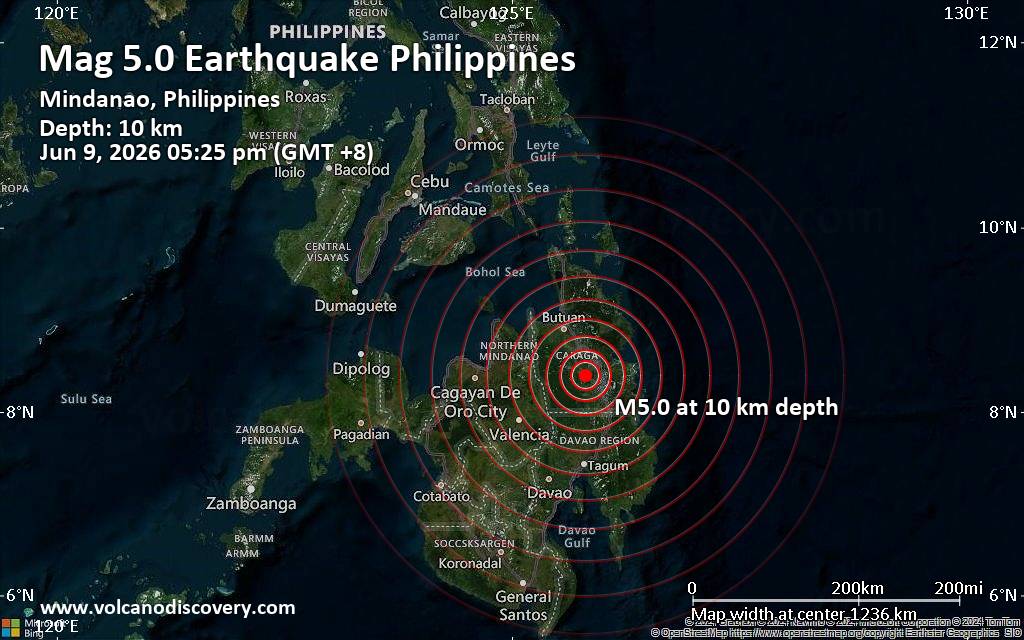
Significant earthquake of magnitude 5.0 just reported 22 km southwest of Prosperidad, Philippines
• Strong mag. 5.0 earthquake - Mindanao, Philippines, on Tuesday, Jun 9, 2026...
• World Earthquake Report for Tuesday, 9 June 2026
• Moderate magnitude 4.8 earthquake 110 km southwest of Tambolaka, Indonesia
• Moderate mag. 4.8 earthquake - South of Sumbawa, Indonesia, on Tuesday, Jun...
• Volcano earthquake report for Tuesday, 9 Jun 2026
|

#38462
Mon 14 Jul 2008 12:07:PM
|
Joined: Feb 2001
Posts: 678,975
Launch Director
|
OP

Launch Director
Joined: Feb 2001
Posts: 678,975 |
HUBBLE SPACE TELESCOPE - Continuing to collect World Class Science
DAILY REPORT #4651
PERIOD COVERED: 5am July 11 - 5am July 14, 2008 (DOY193/0900z-196/0900z)
OBSERVATIONS SCHEDULED
NIC1/NIC2/NIC3 8795
NICMOS Post-SAA Calibration - CR Persistence Part 6
A new procedure proposed to alleviate the CR-persistence problem of
NICMOS. Dark frames will be obtained immediately upon exiting the SAA
contour 23, and every time a NICMOS exposure is scheduled within 50
minutes of coming out of the SAA. The darks will be obtained in parallel
in all three NICMOS Cameras. The POST-SAA darks will be non-standard
reference files available to users with a USEAFTER date/time mark. The
keyword 'USEAFTER=date/time' will also be added to the header of each
POST-SAA DARK frame. The keyword must be populated with the time, in
addition to the date, because HST crosses the SAA ~8 times per day so
each POST-SAA DARK will need to have the appropriate time specified, for
users to identify the ones they need. Both the raw and processed images
will be archived as POST-SAA DARKSs. Generally we expect that all NICMOS
science/calibration observations started within 50 minutes of leaving an
SAA will need such maps to remove the CR persistence from the science i
mages. Each observation will need its own CRMAP, as different SAA
passages leave different imprints on the NICMOS detectors.
NIC3 11545
A NICMOS Survey of Newly-Discovered Young Massive Clusters
We are on the cusp of a revolution in massive star research triggered by
2MASS and Spitzer/GLIMPSE, and now is the ideal time to capitalize on
these projects by performing the first survey of massive stars in young
stellar clusters throughout the Galactic plane. A search of the 2MASS
and GLIMPSE surveys has produced over 450 newly-identified massive
stellar cluster candidates in the Galactic plane which are hidden from
our view at optical wavelengths due to extinction. Here we propose a
program of 29 orbits to image the most promising candidate clusters in
broad and narrow band filters using HST/NICMOS. We will be complementing
these observations with approved Spitzer and Chandra programs,
numerous approved and planned ground-based spectroscopic observations,
and state-of-the-art modeling. We expect to substantially increase the
numbers of massive stars known in the Galaxy, including main sequence OB
stars and post-main sequence stars in the Red Supergiant, Luminous Blue
Variable and Wolf-Rayet stages. Ultimately, this program will address
many of the fundamental topics in astrophysics: the slope to the initial
mass function (IMF), an upper-limit to the masses of stars, the
formation and evolution of the most massive stars, gamma-ray burst (GRB)
progenitors, the chemical enrichment of the interstellar medium, and
nature of the first stars in the Universe.
NIC1/NIC2/NIC3 11330
NICMOS Cycle 16 Extended Dark
This takes a series of Darks in parallel to other instruments.
S/C 11320
NICMOS Focus Monitoring Cycle 16
This program is a version of the standard focus sweep used since cycle
7. It has been modified to go deeper and uses more narrow filters for
improved focus determination. A new source was added in Cycle 14 in
order to accommodate 2-gyro mode: the open cluster NGC1850. This source
is part of the current proposal. The old target, the open cluster
NGC3603, will be used whenever available and the new target used to fill
the periods when NGC3603 is not visible. Steps: a) Use refined target
field positions as determined from cycle 7 calibrations b) Use
MULTIACCUM sequences of sufficient dynamic range to account for defocus
c) Do a 17-point focus sweep, +/- 8mm about the PAM mechanical zeropoint
for each cameras 1 and 2, in 1.0mm steps. For NIC3 we step from -0.5mm
to -9.5mm relative to mechanical zero, in steps of 1.0mm. d) Use PAM X/Y
tilt and OTA offset slew compensations refined from previous focus
monitoring/optical alignment activities
NIC2 11237
The Origin of the Break in the AGN Luminosity Function
We propose to use NICMOS imaging to measure rest-frame optical
luminosities and morphological properties of a complete sample of faint
AGN host galaxies at redshifts z ~ 1.4. The targets are drawn from the
VLT-VIMOS Deep Survey, and they constitute a sample of the lowest
luminosity type 1 AGN known at z > 1. The spectroscopically estimated
black hole masses are up to an order of magnitude higher than expected
given their nuclear luminosities, implying highly sub-Eddington
accretion rates. This exactly matches the prediction made by recent
theoretical models of AGN evolution, according to which the faint end of
the AGN luminosity function is populated mainly by big black holes that
have already exhausted a good part of their fuel. In this proposal we
want to test further predictions of that hypothesis, by focusing on the
host galaxy properties of our low-luminosity, low- accretion AGN. If the
local ratio between black hole and bulge masses holds at least
approximately at these redshifts, one expects most of these
low-luminosity AGN to reside in fairly big ellipticals with stellar
masses around and above 10^11 solar masses (in contrast to the Seyfert
phenomenon in the local universe). With NICMOS imaging we will find out
whether that is true, implying also a sensitive test for the validity of
the M_BH/M_bulge relation at z ~ 1.4.
WFPC2 11235
HST NICMOS Survey of the Nuclear Regions of Luminous Infrared Galaxies
in the Local Universe
At luminosities above 10^11.4 L_sun, the space density of far-infrared
selected galaxies exceeds that of optically selected galaxies. These
`luminous infrared galaxies' {LIRGs} are primarily interacting or
merging disk galaxies undergoing enhanced star formation and Active
Galactic Nuclei {AGN} activity, possibly triggered as the objects
transform into massive S0 and elliptical merger remnants. We propose
NICMOS NIC2 imaging of the nuclear regions of a complete sample of 88
L_IR > 10^11.4 L_sun luminous infrared galaxies in the IRAS Revised
Bright Galaxy Sample {RBGS: i.e., 60 micron flux density > 5.24 Jy}.
This sample is ideal not only in its completeness and sample size, but
also in the proximity and brightness of the galaxies. The superb
sensitivity and resolution of NICMOS NIC2 on HST enables a unique
opportunity to study the detailed structure of the nuclear regions,
where dust obscuration may mask star clusters, AGN and additional nuclei
from optical view, with a resolution significantly higher than possible
with Spitzer IRAC. This survey thus provides a crucial component to our
study of the dynamics and evolution of IR galaxies presently underway
with Wide-Field, HST ACS/WFC and Spitzer IRAC observations of these 88
galaxies. Imaging will be done with the F160W filter {H-band} to examine
as a function of both luminosity and merger stage {i} the luminosity and
distribution of embedded star clusters, {ii} the presence of optically
obscured AGN and nuclei, {iii} the correlation between the distribution
of 1.6 micron emission and the mid-IR emission as detected by Spitzer
IRAC, {iv} the evidence of bars or bridges that may funnel fuel into the
nuclear region, and {v} the ages of star clusters for which photometry
is available via ACS/WFC observations. The NICMOS data, combined with
the HST ACS, Spitzer, and GALEX observations of this sample, will result
in the most comprehensive study of merging and interacting galaxies to
date.
WFPC2 11222
Direct Detection and Mapping of Star Forming Regions in Nearby, Luminous
Quasars
We propose to carry out narrow-band emission line imaging observations
of 8 quasars at z=0.05-0.15 with the WFPC2 ramp filters and with the
NICMOS narrow-band filters. We will obtain images in the [O II], [O
III], H-beta, and Pa-alpha emission line bands to carry out a series of
diagnostic tests aimed at detecting and mapping out star-forming regions
in the quasar host galaxies. This direct detection of star-forming
regions will confirm indirect indications for star formation in quasar
host galaxies. It will provide a crucial test for models of quasar and
galaxy evolution, that predict the co-existence of starbursts and
"monsters" and will solve the puzzle of why different indicators of star
formation give contradictory results. A secondary science goal is to
assess suggested correlations between quasar luminosity and the size of
the narrow-line region.
FGS 11212
Filling the Period Gap for Massive Binaries
The current census of binaries among the massive O-type stars is
seriously incomplete for systems in the period range from years to
millennia because the radial velocity variations are too small and the
angular separations too close for easy detection. Here we propose to
discover binaries in this observational gap through a Faint Guidance
Sensor SNAP survey of relatively bright targets listed in the Galactic O
Star Catalog. Our primary goal is to determine the binary frequency
among those in the cluster/association, field, and runaway groups. The
results will help us assess the role of binaries in massive star
formation and in the processes that lead to the ejection of massive
stars from their natal clusters. The program will also lead to the
identification of new, close binaries that will be targets of long term
spectroscopic and high angular resolution observations to determine
their masses and distances. The results will also be important for the
interpretation of the spectra of suspected and newly identified binary
and multiple systems.
FGS 11211
An Astrometric Calibration of Population II Distance Indicators
In 2002 HST produced a highly precise parallax for RR Lyrae. That
measurement resulted in an absolute magnitude, M{V}= 0.61+/-0.11, a
useful result, judged by the over ten refereed citations each year
since. It is, however, unsatisfactory to have the direct,
parallax-based, distance scale of Population II variables based on a
single star. We propose, therefore, to obtain the parallaxes of four
additional RR Lyrae stars and two Population II Cepheids, or W Vir
stars. The Population II Cepheids lie with the RR Lyrae stars on a
common K-band Period- Luminosity relation. Using these parallaxes to
inform that relationship, we anticipate a zero- point error of 0.04
magnitude. This result should greatly strengthen confidence in the
Population II distance scale and increase our understanding of RR Lyrae
star and Pop II Cepheid astrophysics.
FGS 11210
The Architecture of Exoplanetary Systems
Are all planetary systems coplanar? Concordance cosmogony makes that
prediction. It is, however, a prediction of extrasolar planetary system
architecture as yet untested by direct observation for main sequence
stars other than the Sun. To provide such a test, we propose to carry
out FGS astrometric studies on four stars hosting seven companions. Our
understanding of the planet formation process will grow as we match not
only system architecture, but formed planet mass and true distance from
the primary with host star characteristics for a wide variety of host
stars and exoplanet masses. We propose that a series of FGS astrometric
observations with demonstrated 1 millisecond of arc per-observation
precision can establish the degree of coplanarity and component true
masses for four extrasolar systems: HD 202206 {brown dwarf+planet}; HD
128311 {planet+planet}, HD 160691 = mu Arae {planet+planet}, and HD
222404AB = gamma Cephei {planet+star}. In each case the companion is
identified as such by assuming that the minimum mass is the actual mass.
For the last target, a known stellar binary system, the companion orbit
is stable only if coplanar with the AB binary orbit.
WEPC2 11196
An Ultraviolet Survey of Luminous Infrared Galaxies in the Local
Universe
At luminosities above 10^11.4 L_sun, the space density of far-infrared
selected galaxies exceeds that of optically selected galaxies. These
Luminous Infrared Galaxies {LIRGs} are primarily interacting or merging
disk galaxies undergoing starbursts and creating/fueling central AGN. We
propose far {ACS/SBC/F140LP} and near {WFPC2/PC/F218W} UV imaging of a
sample of 27 galaxies drawn from the complete IRAS Revised Bright Galaxy
Sample {RBGS} LIRGs sample and known, from our Cycle 14 B and I-band ACS
imaging observations, to have significant numbers of bright {23 < B < 21
mag} star clusters in the central 30 arcsec. The HST UV data will be
combined with previously obtained HST, Spitzer, and GALEX images to {i}
calculate the ages of the clusters as function of merger stage, {ii}
measure the amount of UV light in massive star clusters relative to
diffuse regions of star formation, {iii} assess the feasibility of using
the UV slope to predict the far-IR luminosity {and thus the star
formation rate} both among and within IR-luminous galaxies, and {iv}
provide a much needed catalog of rest- frame UV morphologies for
comparison with rest-frame UV images of high-z LIRGs and Lyman Break
Galaxies. These observations will achieve the resolution required to
perform both detailed photometry of compact structures and spatial
correlations between UV and redder wavelengths for a physical
interpretation our IRX-Beta results. The HST UV data, combined with the
HST ACS, Spitzer, Chandra, and GALEX observations of this sample, will
result in the most comprehensive study of luminous starburst galaxies to
date.
WFPC2 11167
A Unique High Resolution Window to Two Strongly Lensed Lyman Break
Galaxies
On rare occasions, the otherwise very faint Lyman Break Galaxies {LBGs}
are magnified by gravitational lensing to provide exceptional targets
for detailed spectroscopic and imaging studies. We propose HST WFPC2 and
NICMOS imaging of two strongly lensed Lyman Break Galaxies {LBGs} that
were recently discovered by members of our team. These two LBGs -- the
"8 O'Clock Arc" and the "SDSS J1206+5142 Arc" -- are currently the
brightest known LBGs, roughly 3 times brighter than the former
record-holder, MS1512-cB58 {a.k.a. "cB58"}. The z=2.73 "8 O'Clock Arc"
extends ~10 arcsec in length and is magnified by a factor of 12. The
z=2.00 "SDSS J1206+5142 Arc" also extends ~10 arcsec in length and is
magnified by a factor of 30. Due to their brightness and magnification,
these two strongly lensed LBGs offer an unprecedented opportunity for
the very detailed investigation of two individual galaxies at high
redshift. We are currently pursuing a vigorous ground-based campaign to
obtain multi- wavelength {UV, optical, NIR, radio} observations of these
two LBGs, but our campaign currently lacks a means of obtaining
high-resolution optical/NIR imaging -- a lack that currently only HST
can address. Our prime objective for this proposal is to obtain high
resolution HST images of these two systems with two-orbit WFPC2 images
in the BVI bands and two-orbit NICMOS/NIC2 images in the J and H bands.
These data will allow us to construct detailed lensing models, probe the
mass and light profiles of the lenses and their environments, and
constrain the star formation histories and rest-frame UV/optical
spectral energy distributions of the LBGs.
NIC1/NIC2 11155
Dust Grain Evolution in Herbig Ae Stars: NICMOS Coronagraphic Imaging
and Polarimetry
We propose to take advantage of the sensitive coronagraphic capabilities
of NICMOS to obtain multiwavelength coronagraphic imaging and
polarimetry of primordial dust disks around young intermediate-mass
stars {Herbig Ae stars}, in order to advance our understanding of how
dust grains are assembled into larger bodies. Because the polarization
of scattered light is strongly dependent on scattering particle size and
composition, coronagraphic imaging polarimetry with NICMOS provides a
uniquely powerful tool for measuring grain properties in spatially
resolved circumstellar disks. It is widely believed that planets form
via the gradual accretion of planetesimals in gas-rich, dusty
circumstellar disks, but the connection between this suspected process
and the circumstellar disks that we can now observe around other stars
remains very uncertain. Our proposed observations, together with
powerful 3-D radiative transfer codes, will enable us to quantitatively
determine dust grain properties as a function of location within disks,
and thus to test whether dust grains around young stars are in fact
growing in size during the putative planet-formation epoch. HST imaging
polarimetry of Herbig Ae stars will complement and extend existing
polarimetric studies of disks around lower-mass T Tauri stars and debris
disks around older main-sequence stars. When combined with these
previous studies, the proposed research will help us establish the
influence of stellar mass on the growth of dust grains into larger
planetesimals, and ultimately to planets. Our results will also let us
calibrate models of the thermal emission from these disks, a critical
need for validating the properties of more distant disks inferred on the
basis of spectral information alone.
ACS/SBC 11151
Evaluating the Role of Photoevaporation of Protoplanetary Disk Dispersal
Emission produced by accretion onto the central star leads to
photoevaporation, which may play a fundamental role in disk dispersal.
Models of disk photoevaporation by the central star are challenged by
two potential problems: the emission produced by accretion will be
substantially weaker for low-mass stars, and photoevaporation must
continue as accretion slows. Existing FUV spectra of CTTSs are biased to
solar-mass stars with high accretion rates, and are therefore
insufficient to address these problems. We propose use HST/ACS SBC
PR130L to obtain FUV spectra of WTTSs and of CTTSs at low masses and
mass accretion rates to provide crucial data to evaluate
photoevaporation models. We will estimate the FUV and EUV luminosities
of low-mass CTTSs with small mass accretion rates, CTTSs with transition
disks and slowed accretion, and of magnetically-active WTTSs.
WFPC2/NIC3/ACS/SBC 11144
Building on the Significant NICMOS Investment in GOODS: A Bright,
Wide-Area Search for z>=7 Galaxies
One of the most exciting frontiers in observational cosmology has been
to trace the buildup and evolution of galaxies from very early times.
While hierarchical theory teaches us that the star formation rate in
galaxies likely starts out small and builds up gradually, only recently
has it been possible to see evidence for this observationally through
the evolution of the LF from z~6 to z~3. Establishing that this build up
occurs from even earlier times {z~7-8} has been difficult, however, due
to the small size of current high-redshift z~7-8 samples -- now
numbering in the range of ~4-10 sources. Expanding the size of these
samples is absolutely essential, if we are to push current studies of
galaxy buildup back to even earlier times. Fortunately, we should soon
be able to do so, thanks to ~50 arcmin**2 of deep {26.9 AB mag at 5
sigma} NICMOS 1.6 micron data that will be available over the two ACS
GOODS fields as a result of one recent 180-orbit ACS backup program and
a smaller program. These data will nearly triple the deep near-IR
imaging currently available and represent a significant resource for
finding and characterizing the brightest high-redshift sources -- since
high-redshift candidates can be easily identified in these data from
their red z-H colours. Unfortunately, the red z-H colours of these
candidates are not sufficient to determine that these sources are at
z>=7, and it is important also to have deep photometry at 1.1 microns.
To obtain this crucial information, we propose to follow up each of
these z-H dropouts with NICMOS at 1.1 microns to determine which are at
high redshift and thus significantly expand our sample of luminous, z>=7
galaxies. Since preliminary studies indicate that these candidates occur
in only 30% of the NIC3 fields, our follow-up strategy is ~3 times as
efficient as without this preselection and 9 times as efficient as a
search in a field with no pre-existing data. In total, we expect to
identify ~8 luminous z-dropouts and possibly ~2 z~10 J-dropouts as a
result of this program, more than tripling the number currently known.
The increased sample sizes are important if we are to solidify current
conclusions about galaxy buildup and the evolution of the LF from z~8.
In addition to the high redshift science, these deep 1.1 micron data
would have significant value for many diverse endeavors, including {1}
improving our constraints on the stellar mass density at z~7-10 and {2}
doubling the number of galaxies at z~6 for which we can estimate dust
obscuration.
NIC2/WFPC2 11142
Revealing the Physical Nature of Infrared Luminous Galaxies at 0.3<z<2.7
Using HST and Spitzer
We aim to determine physical properties of IR luminous galaxies at
0.3<z<2.7 by requesting coordinated HST/NIC2 and MIPS 70um observations
of a unique, 24um flux-limited sample with complete Spitzer mid-IR
spectroscopy. The 150 sources investigated in this program have S{24um}
> 0.8mJy and their mid-IR spectra have already provided the majority
targets with spectroscopic redshifts {0.3<z<2.7}. The proposed
150~orbits of NIC2 and 66~hours of MIPS 70um will provide the physical
measurements of the light distribution at the rest-frame ~8000A and
better estimates of the bolometric luminosity. Combining these
parameters together with the rich suite of spectral diagnostics from the
mid-IR spectra, we will {1} measure how common mergers are among LIRGs
and ULIRGs at 0.3<z<2.7, and establish if major mergers are the drivers
of z>1 ULIRGs, as in the local Universe. {2} study the co-evolution of
star formation and blackhole accretion by investigating the relations
between the fraction of starburst/AGN measured from mid-IR spectra vs.
HST morphologies, L{bol} and z. {3} obtain the current best estimates of
the far-IR emission, thus L{bol} for this sample, and establish if the
relative contribution of mid-to-far IR dust emission is correlated with
morphology {resolved vs. unresolved}.
WFPC2 11129
The Star Formation History of the Fornax Dwarf Spheroidal Galaxy
The Fornax dwarf spheroidal galaxy is one of the most luminous dwarf
satellites of the Milky Way. It is unusual in many ways: it hosts 5
globular clusters, shows some relatively young stars, and has faint
sub-structures which have been interpreted as signs of recent
interactions. It is thus of great interest to learn the complete star
formation history {SFH} of Fornax to establish a link between its
evolutionary path and the predictions from numerical simulations, as a
test of our understanding of dwarf galaxy evolution. Yet many questions
remain open. Is the old stellar population made up of stars formed in a
very early burst, perhaps before the epoch of re- ionization, or the
result of a more continuous star formation between 13 and 9 Gyr ago ?
How quickly did Fornax increase its metallicity during its initial
assembly and during subsequent episodes of star formation ? Are
accretion episodes required to explain the age-metallicity history of
Fornax ? However, there has never been a comprehensive study of the
global SFH of the Fornax field based on data of sufficient depth to
unambiguously measure the age mixture of the stellar populations and
their spatial variation. We propose to use the WFPC2 to obtain very deep
images in several fields across the central region of Fornax in order to
reach the oldest main-sequence turnoffs. The number of fields is
determined by the need to measure the SFH over different regions with
distinct kinematics and metallicity. The resolution achievable with HST
is crucial to answer these questions because, to derive the age
distribution of the oldest stars, we are interested in I magnitude
differences of the order 0.2 mag in crowded fields at V=24.5. We will
directly measure the time variation in star-formation rate over the
entire galaxy history, from first stars coeval with the Milky Way halo
to the youngest populations 200 Myr ago. The combination of detailed CMD
analysis with WFPC2 with our existing metallicity and kinematic
information will allow us to trace out the early phases of its
evolution.
WFPC2 11039
Polarizers Closeout
Observations of standard stars and a highly polarized reflection nebula
are made as a final calibration for the WFPC2 polarizers. VISFLATS are
also obtained.
FLIGHT OPERATIONS SUMMARY:
Significant Spacecraft Anomalies: (The following are preliminary reports
of potential non-nominal performance that will be investigated.)
HSTARS:
11386 - GSACQ(2,0,2) failed
GSACQ(2,0,2) at 194/13:34:20 failed to RGA control with QF2STOPF and
QSTOP flags set at 13:39:26. No other flags were seen. Three 486 ESB
"1805" messages (T2G_MOVING_TARGET_DETECTED) were received at that time,
with two more received at 13:41:06 and 13:41:18.
Observations affected: Astrometry, Proposal 11210.
COMPLETED OPS REQUEST:
18250-0 - Off-Line +BB SPA Trim Relay @ 193/1406z
COMPLETED OPS NOTES: None
SCHEDULED SUCCESSFUL
FGS GSacq 23 22
FGS REacq 16 16
OBAD with Maneuver 78 78
SIGNIFICANT EVENTS:
Battery 3 SPA Off-lined Flash Report:
The +BB SPA Trim relay (Battery 3) was off-lined to counteract the
post-beta-peak warming of the Bay 2 battery module. Commanding to
off-line the SPA was performed at 193/1405 GMT via Ops Request 18250. In
the orbit immediately following the uplink Battery 3�s peak temperature
was below 5.0 degrees C. The same action was taken following the beta
peak in May.
David Cottle
UBB Owner & Administrator
|
|



CMS The Best Conveyancing solicitors conveyancing quotes throughout the UK
For any webhosting enquiries please email webmaster@aus-city.com
|
|
Entire Thread
|
 DAILY REPORT #4651
|
Webmaster
|
Mon 14 Jul 2008 12:07:PM
|
|
Forums60
Topics779,521
Posts814,279
Members2,960
| |
Most Online22,463
May 9th, 2026
|
|
|