|
0 members (),
1,746
guests, and
31
robots. |
|
Key:
Admin,
Global Mod,
Mod
|
|
S |
M |
T |
W |
T |
F |
S |
|
|
|
|
1
|
2
|
3
|
4
|
|
5
|
6
|
7
|
8
|
9
|
10
|
11
|
|
12
|
13
|
14
|
15
|
16
|
17
|
18
|
|
19
|
20
|
21
|
22
|
23
|
24
|
25
|
|
26
|
27
|
28
|
29
|
30
|
31
|
|
|
There are no members with birthdays on this day. |
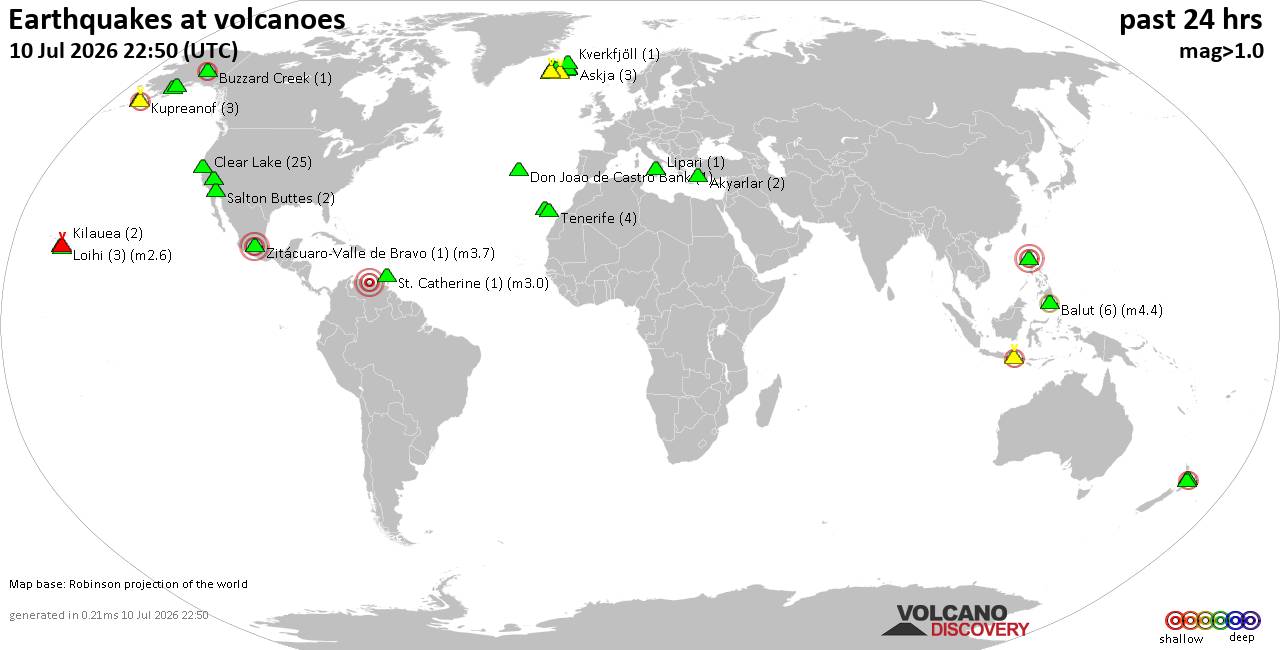
Volcano earthquake report for Friday, 10 Jul 2026
• Moderate mag. 4.2 earthquake - 133 km northwest of Ternate, Kota Ternate, N...
• World Earthquake Report for Friday, 10 July 2026
• Moderate mag. 4.6 earthquake - 17 km southwest of Comalapa, Estado de Chiap...
• Moderate mag. 4.1 earthquake - Olyutorskiy Rayon, 47 km northwest of Tilich...
• Moderate mag. 4.0 earthquake - Hawke's Bay, New Zealand, on Saturday, Jul 1...
|

#1769
Mon 21 Apr 2003 11:17:PM
|
Joined: Feb 2001
Posts: 3,536
Mission Commander
|
OP

Mission Commander
Joined: Feb 2001
Posts: 3,536 |
April 19, 2003, 10:16PM<br /> http://www.chron.com/cs/CDA/ssistory.mpl/space/1875313<br /><br />Shuttle program to lose Dittemore, some reports say<br />By MARK CARREAU<br />Copyright 2003 Houston Chronicle<br />Space shuttle program manager Ron Dittemore, who became widely known for<br />the daily televised briefings he gave after Columbia broke up on<br />re-entry Feb. 1, will soon resign his post, according to published<br />reports. <br /><br />Dittemore, 51, an aeronautical engineer who has worked at Johnson Space<br />Center for 26 years, could announce his departure as early as this week.<br /><br /><br />He declined to confirm or deny the reports by the Orlando Sentinel and<br />CBS News. "I can't say anything about it," he said Saturday. "I can't<br />comment." <br /><br />A source said Dittemore had planned his departure before the Columbia<br />mission began on Jan. 16 and was going to announce it after the crew<br />returned. He reportedly was going to take a job in private industry. <br /><br />Until a replacement is selected, the program would be in the hands of<br />Bill Readdy, NASA's Washington-based associate administrator for<br />spaceflight, and his deputy, Michael Kostelnik. Last month, they<br />selected James Halsell, a veteran NASA astronaut, to lead efforts to<br />return the shuttle program to flight. <br /><br />There is a growing consensus among investigators that Columbia's breakup<br />over Texas was precipitated by the impact shortly after liftoff of a<br />chunk of insulating foam from the external fuel tank against the<br />spacecraft's left wing. <br /><br />In the early briefings, Dittemore said the foam strike was not likely to<br />have led to the accident. He supported a Boeing Co.-led assessment done<br />during the mission that concluded the impact had hit the underside of<br />the wing and was not likely to have created a safety-of-flight hazard. <br /><br />He contended that the in-flight analysis had been carried out using the<br />most conservative parameters -- assigning the highest estimate for the<br />size of the foam and using a computer software tool that was designed to<br />"overpredict" the possible danger. <br /><br />He also noted that shuttles had sustained an average of more than 100<br />foam strikes over 112 missions without a safety concern. <br /><br />"For all of these 112 flights, we have never identified damage that<br />would be a safety-of-flight concern," Dittemore said at a Feb. 5<br />briefing. "And so it's difficult for us to believe as engineers, as<br />management, and as a team, that this particular piece of foam debris<br />shedding from the tank represented a safety-of-flight issue." <br /><br />His role as NASA's lead accident spokesman ended two days later, when<br />the independent 13-member Columbia Accident Investigation Board gathered<br />in Houston to take over the probe. <br /><br />Since then, Dittemore has resumed his management role and has no direct<br />influence over the probe. <br /><br />Dittemore laid plans well before Columbia's mission to leave NASA and<br />planned a public announcement after the seven astronauts landed and<br />returned to Houston, according to two associates. <br /><br />"The accident was the wrong time to leave. So he rolled up his sleeves,"<br />said one associate, who asked not to be named. "The man is dedicated,<br />hard-working and only wants the right thing for this agency. He has been<br />going through hell." <br /><br />After joining Johnson Space Center in 1977, he rose from flight director<br />to deputy assistant space station program director and manager of space<br />shuttle integration. He was named shuttle manager in April 1999 by<br />then-JSC director George Abbey. <br /><br />In the weeks following Columbia's breakup, the accident board led by<br />Harold Gehman, a retired Navy admiral, has relied on a careful and<br />continuing analysis of launch film and video to pinpoint the foam impact<br />against the 22 U-shaped carbon composite panels lining the leading edge<br />of the left wing. <br /><br />A tape from a flight data recorder recovered from the Columbia wreckage<br />has revealed that sensors showed a sharp temperature rise near<br />carbon-composite panel nine on the left wing and along the aft fuselage<br />within minutes of Columbia's initial re-entry into the atmosphere. <br /><br />Further, a temperature sensor in the same area recorded an unusual rise<br />during the first minutes of Columbia's climb to orbit, a finding that<br />would add further confirmation the wing was damaged as the spacecraft<br />lifted off. That finding is still under review. <br /><br />Teams of experts who work under the direction of the NASA Accident<br />Investigation Team and the Columbia Accident Investigation Board intend<br />to conclude soon that the foam blow along left wing panels seven, eight<br />and nine triggered the breakup, according to one source familiar with<br />the probe. <br /><br />A spokesman for the board, however, rejected any suggestion that the<br />probe was nearing completion. <br /><br />"The board hasn't made a final determination yet about what caused the<br />accident," Laura Brown, the board's chief spokesperson, said Saturday.<br />"They are still looking at a lot of issues, including the information<br />from the NASA technical teams. <br /><br />By early May, a round of foam-impact testing is scheduled to begin at<br />the Southwest Research Institute in San Antonio. Investigators hope the<br />tests confirm their theories that the force of the foam strike was<br />sufficient to cause damage to the wing, causing it to break apart in the<br />stress of re-entry. <br /><br />In addition to the probable cause, the board is looking into<br />contributing factors, including White House space policy, annual funding<br />levels, as well as NASA's own safety practices and its supervision of<br />shuttle mission preparations and operations.
|
|



CMS The Best Conveyancing solicitors conveyancing quotes throughout the UK
For any webhosting enquiries please email webmaster@aus-city.com
|
|
Entire Thread
|
 Shuttle program to lose Dittemore
|
VA3DBJ
|
Mon 21 Apr 2003 11:17:PM
|
|
Forums60
Topics787,680
Posts822,454
Members2,960
| |
Most Online102,106
Yesterday at 06:57 PM
|
|
|