|
1 members (Alisa),
1,680
guests, and
23
robots. |
|
Key:
Admin,
Global Mod,
Mod
|
|
S |
M |
T |
W |
T |
F |
S |
|
|
|
|
|
1
|
2
|
3
|
|
4
|
5
|
6
|
7
|
8
|
9
|
10
|
|
11
|
12
|
13
|
14
|
15
|
16
|
17
|
|
18
|
19
|
20
|
21
|
22
|
23
|
24
|
|
25
|
26
|
27
|
28
|
29
|
30
|
31
|
|
There are no members with birthdays on this day. |
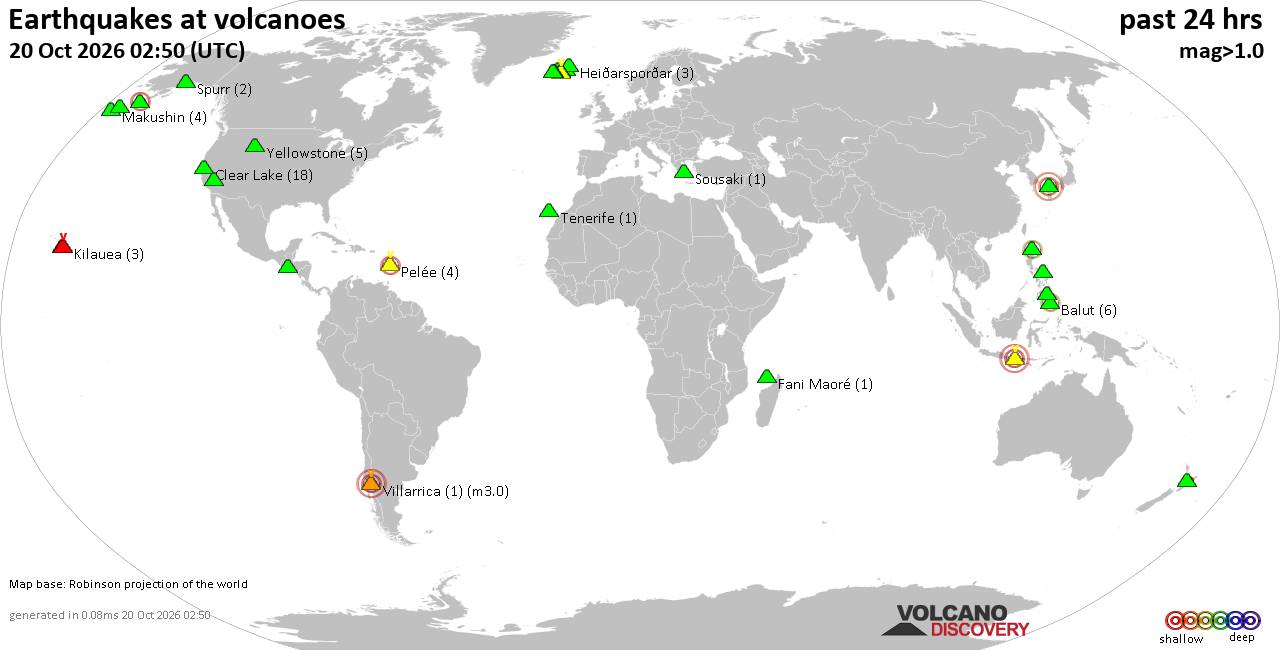
Volcano earthquake report for Tuesday, 20 October 2026
• M 7.7 - 12 km WSW of Pitaloza Arriba, Panama
• M 1.1 - 7 km SSW of Olancha, CA
• M 5.6 - 43 km NNW of Lake Minchumina, Alaska
• M 0.2 - 11 km WNW of Cobb, CA
• M 2.2 - 15 km NNE of Milford, Utah
|

#45918
Tue 08 Sep 2009 11:56:AM
|
Joined: Feb 2001
Posts: 678,977
Launch Director
|
|
Launch Director
Joined: Feb 2001
Posts: 678,977 |
HUBBLE SPACE TELESCOPE - Continuing to Collect World Class Science
DAILY REPORT #4925
PERIOD COVERED: 5am September 4 - 5am September 8, 2009 (DOY
247/09:00z-251/09:00z)
OBSERVATIONS SCHEDULED
WFC3/UVIS 11935
UVIS G280 Wavelength Calibration
Wavelength calibration of the UVIS G280 grism will be established using
observations of the Wolf Rayet star WR14. Accompanying direct exposures
will provide wavelength zeropoints for dispersed exposures. The
calibrations will be obtained at the central position of each CCD chip
and at the center of the UVIS field. No additional field- dependent
variations will be obtained.
WFC3/IR/S/C 11929
IR Dark Current Monitor
Analyses of ground test data showed that dark current signals are more
reliably removed from science data using darks taken with the same
exposure sequences as the science data, than with a single dark current
image scaled by desired exposure time. Therefore, dark current images
must be collected using all sample sequences that will be used in
science observations. These observations will be used to monitor changes
in the dark current of the WFC3-IR channel on a day-to-day basis, and to
build calibration dark current ramps for each of the sample sequences to
be used by GOs in Cycle 17. For each sample sequence/array size
combination, a median ramp will be created and delivered to the
calibration database system (CDBS).
WFC3/UVIS 11912
UVIS Internal Flats
This proposal will be used to assess the stability of the flat field
structure for the UVIS detector throughout the 15 months of Cycle 17.
The data will be used to generate on- orbit updates for the delta-flat
field reference files used in the WFC3 calibration pipeline, if
significant changes in the flat structure are seen.
WFC3/UVIS 11908
Cycle 17: UVIS Bowtie Monitor
Ground testing revealed an intermittent hysteresis type effect in the
UVIS detector (both CCDs) at the level of ~1%, lasting hours to days.
Initially found via an unexpected bowtie-shaped feature in flatfield
ratios, subsequent lab tests on similar e2v devices have since shown
that it is also present as simply an overall offset across the entire
CCD, i.e., a QE offset without any discernable pattern. These lab tests
have further revealed that overexposing the detector to count levels
several times full well fills the traps and effectively neutralizes the
bowtie. Each visit in this proposal acquires a set of three 3x3 binned
internal flatfields: the first unsaturated image will be used to detect
any bowtie, the second, highly exposed image will neutralize the bowtie
if it is present, and the final image will allow for verification that
the bowtie is gone.
WFC3/UVIS 11907
UVIS Cycle 17 Contamination Monitor
The UV throughput of WFC3 during Cycle 17 is monitored via weekly
standard star observations in a subset of key filters covering 200-600nm
and F606W, F814W as controls on the red end. The data will provide a
measure of throughput levels as a function of time and wavelength,
allowing for detection of the presence of possible contaminants.
WFC3/UVIS 11905
WFC3 UVIS CCD Daily Monitor
The behavior of the WFC3 UVIS CCD will be monitored daily with a set of
full-frame, four-amp bias and dark frames. A smaller set of 2Kx4K
subarray biases are acquired at less frequent intervals throughout the
cycle to support subarray science observations. The internals from this
proposal, along with those from the anneal procedure (Proposal 11909),
will be used to generate the necessary superbias and superdark reference
files for the calibration pipeline (CDBS).
COS/NUV 11896
NUV Spectroscopic Sensitivity Monitoring
The purpose of this proposal is to monitor sensitivity of each NUV
grating mode to detect any changes due to contamination or other causes.
ACS/WFC3 11879
CCD Daily Monitor (Part 1)
This program comprises basic tests for measuring the read noise and dark
current of the ACS WFC and for tracking the growth of hot pixels. The
recorded frames are used to create bias and dark reference images for
science data reduction and calibration. This program will be executed
four days per week (Mon, Wed, Fri, Sun) for the duration of Cycle 17. To
facilitate scheduling, this program is split into three proposals. This
proposal covers 352 orbits (22 weeks) from 31 August 2009 to 31 January
2010.
WFC3/ACS/UVIS 11877
HST Cycle 17 and Post-SM4 Optical Monitor
This program is the Cycle 17 implementation of the HST Optical
Monitoring Program.
The 36 orbits comprising this proposal will utilize ACS (Wide Field
Channel) and WFC3 (UVIS Channel) to observe stellar cluster members in
parallel with multiple exposures over an orbit. Phase retrieval
performed on the PSF in each image will be used to measure primarily
focus, with the ability to explore apparent coma, and astigmatism
changes in WFC3.
The goals of this program are to: 1) monitor the overall OTA focal
length for the purposes of maintaining focus within science tolerances
2) gain experience with the relative effectiveness of phase retrieval on
WFC3/UVIS PSFs 3) determine focus offset between the imagers and
identify any SI-specific focus behavior and dependencies
If need is determined, future visits will be modified to interleave
WFC3/IR channel and STIS/CCD focii measurements.
STIS/CCD 11855
STIS/CCD Spectroscopic Sensitivity Monitor for Cycle 17
The purpose of this proposal is to monitor the sensitivity of each CCD
grating mode to detect any changes due to contamination or other causes.
STIS/CCD 11850
CCD Sparse Field CTE Internal
CTE measurements are made using the "internal sparse field test", along
the parallel axis. The "Pos=" optional parameter, introduced during
Cycle 11, is used to provide off- center MSM positionings of some slits.
All exposures are internals.
STIS/CCD 11849
STIS CCD Hot Pixel Annealing
This purpose of this activity is to repair radiation induced hot pixel
damage to the STIS CCD by warming the CCD to the ambient instrument
temperature and annealing radiation-damaged pixels.
Radiation damage creates hot pixels in the STIS CCD Detector. Many of
these hot pixels can be repaired by warming the CCD from its normal
operating temperature near - 83 deg. C to the ambient instrument
temperature (~ +5 deg. C) for several hours. The number of hot pixels
repaired is a function of annealing temperature. The effectiveness of
the CCD hot pixel annealing process is assessed by measuring the dark
current behavior before and after annealing and by searching for any
window contamination effects.
STIS/CCD 11846
CCD Bias Monitor-Part 1
The purpose of this proposal is to monitor the bias in the 1x1, 1x2,
2x1, and 2x2 bin settings at gain=1, and 1x1 at gain = 4, to build up
high-S/N superbiases and track the evolution of hot columns.
STIS/CCD 11844
CCD Dark Monitor Part 1
The purpose of this proposal is to monitor the darks for the STIS CCD.
FGS 11706
The Parallax of the Planet Host Star XO-3
We will use HST+FGS to measure the parallax of the transiting planet
host star XO 3. The resulting accurate distance measurement will provide
the most accurate radius determination to date for this massive
extrasolar planet (XO-3B), allowing us to critically test current giant
extrasolar planet structure models. These observations will also
constrain the amount of heating that may be produced inside XO-3B by
tides raised on the planet as it moves through its 3.2 d-eccentric (e ~
0.22) orbit.
WFC3/UVIS 11657
The Population of Compact Planetary Nebulae in the Galactic Disk
We propose to secure narrow- and broad-band images of compact planetary
nebulae (PNe) in the Galactic Disk to study the missing link of the
early phases of post-AGB evolution. Ejected AGB envelopes become PNe
when the gas is ionized. PNe expand, and, when large enough, can be
studied in detail from the ground. In the interim, only the HST
capabilities can resolve their size, morphology, and central stars. Our
proposed observations will be the basis for a systematic study of the
onset of morphology. Dust properties of the proposed targets will be
available through approved Spitzer/IRS spectra, and so will the
abundances of the alpha-elements. We will be able thus to explore the
interconnection of morphology, dust grains, stellar evolution, and
populations. The target selection is suitable to explore the nebular and
stellar properties across the Galactic Disk, and to set constraints on
the galactic evolutionary models through the analysis of metallicity and
population gradients.
WFC3/UVIS 11650
Mutual Orbits, Colors, Masses, and Bulk Densities of 3 Cold Classical
Trans-Neptunian
Many trans-neptunian objects (TNOs) have been found to be binary or
multiple systems. As in other astrophysical settings, trans-neptunian
binaries (TNBs) offer uniquely valuable information. Their mutual orbits
allow the direct determination of their system masses, perhaps the most
fundamental physical quantity of any astronomical object. Their
frequency of occurrence and dynamical characteristics provide clues to
formation conditions and evolution scenarios affecting both the binaries
and their single neighbors. Combining masses with sizes, bulk densities
can be measured. Densities constrain bulk composition and internal
structure, key clues to TNO origins and evolution over time. Several TNB
bulk densities have been determined, hinting at interesting trends. But
none of them belongs to the Cold Classical sub-population, the one group
of TNOs with demonstrably distinct physical characteristics. Two
top-priority Spitzer programs will soon observe and measure the sizes of
3 Cold Classical TNBs. This proposal seeks to determine the mutual
orbits and thus masses of these systems, enabling computation of their
densities.
WFC3/UVIS/IR 11644
A Dynamical-Compositional Survey of the Kuiper Belt: A New Window Into
the Formation of the Outer Solar System
The eight planets overwhelmingly dominate the solar system by mass, but
their small numbers, coupled with their stochastic pasts, make it
impossible to construct a unique formation history from the dynamical or
compositional characteristics of them alone. In contrast, the huge
numbers of small bodies scattered throughout and even beyond the
planets, while insignificant by mass, provide an almost unlimited number
of probes of the statistical conditions, history, and interactions in
the solar system. To date, attempts to understand the formation and
evolution of the Kuiper Belt have largely been dynamical simulations
where a hypothesized starting condition is evolved under the
gravitational influence of the early giant planets and an attempt is
made to reproduce the current observed populations. With little
compositional information known for the real Kuiper Belt, the test
particles in the simulation are free to have any formation location and
history as long as they end at the correct point. Allowing compositional
information to guide and constrain the formation, thermal, and
collisional histories of these objects would add an entire new dimension
to our understanding of the evolution of the outer solar system. While
ground based compositional studies have hit their flux limits already
with only a few objects sampled, we propose to exploit the new
capabilities of WFC3 to perform the first ever large-scale
dynamical-compositional study of Kuiper Belt Objects (KBOs) and their
progeny to study the chemical, dynamical, and collisional history of the
region of the giant planets. The sensitivity of the WFC3 observations
will allow us to go up to two magnitudes deeper than our ground based
studies, allowing us the capability of optimally selecting a target list
for a large survey rather than simply taking the few objects that can be
measured, as we have had to do to date. We have carefully constructed a
sample of 120 objects which provides both overall breadth, for a general
understanding of these objects, plus a large enough number of objects in
the individual dynamical subclass to allow detailed comparison between
and within these groups. These objects will likely define the core
Kuiper Belt compositional sample for years to come. While we have many
specific results anticipated to come from this survey, as with any
project where the field is rich, our current knowledge level is low, and
a new instrument suddenly appears which can exploit vastly larger
segments of the population, the potential for discovery -- both
anticipated and not -- is extraordinary.
WFC3/UVIS 11594
A WFC3 Grism Survey for Lyman Limit Absorption at z=2
We propose to conduct a spectroscopic survey of Lyman limit absorbers at
redshifts 1.8 < z < 2.5, using WFC3 and the G280 grism. This proposal
intends to complete an approved Cycle 15 SNAP program (#10878) which was
cut short due to the ACS failure. We have selected 64 quasars at 2.3 < z
< 2.6 from the Sloan Digital Sky Survey Spectroscopic Quasar Sample, for
which no BAL signature is found at the QSO redshift and no strong metal
absorption lines are present at z > 2.3 along the lines of sight. The
survey has three main observational goals. First, we will determine the
redshift frequency dn/dz of the LLS over the column density range 16.0 <
log(NHI) < 20.3 cm^-2. Second, we will measure the column density
frequency distribution f(N) for the partial Lyman limit systems (PLLS)
over the column density range 16.0 < log(NHI) < 17.5 cm^-2. Third, we
will identify those sightlines which could provide a measurement of the
primordial D/H ratio. By carrying out this survey, we can also help
place meaningful constraints on two key quantities of cosmological
relevance. First, we will estimate the amount of metals in the LLS using
the f(N), and ground based observations of metal line transitions.
Second, by determining f(N) of the PLLS, we can constrain the amplitude
of the ionizing UV background at z~2 to a greater precision. This survey
is ideal for a snapshot observing program, because the on-object
integration times are all well below 30 minutes, and follow-up
observations from the ground require minimal telescope time due to the
QSO sample being bright.
WFC3/ACS/IR 11584
Resolving the Smallest Galaxies with ACS
An order of magnitude more dwarf galaxies are expected to inhabit the
Local Group, based on currently accepted galaxy formation models, than
have been observed. This discrepancy has been noted in environments
ranging from the field to rich clusters, with evidence emerging that
lower density regions contain fewer dwarfs per giant than higher density
regions, in further contrast to model predictions. However, there is no
complete census of the faintest dwarf galaxies in any environment. The
discovery of the smallest and faintest dwarfs is hampered by the
limitations in detecting such compact or low surface brightness
galaxies, and this is compounded by the great difficulty in determining
accurate distances to, or ascertaining group membership for, such faint
objects. The M81 group provides a powerful means for establishing
membership for faint galaxies in a low density region. With a distance
modulus of 27.8, the tip of the red giant branch (TRGB) appears at I ~
24, just within the reach of ground based surveys. We have completed a
65 square degree survey in the region around M81 with the CFHT/MegaCam.
Half of our survey was completed before Cycle 16 and we were awarded
time with WFPC2 to observe 15 new candidate dwarf galaxy group members
in F606W and F814W bands in order to construct color-magnitude diagrams
from which to measure accurate TRGB distances and determine star
formation and metallicity histories. The data obtained show that 8 - 9
of these objects are galaxies at the same distance as M81. In completing
our survey, we have discovered an additional 8 candidate galaxies we
propose to image with ACS in order to measure TRGB distances and
establish membership. We also wish to re-observe our smallest candidate
group member and a tidal dwarf candidate with deeper observations made
possible with ACS. Once membership has been established for this second
set of candidates, we will have a complete census of the dwarf galaxy
population in the M8 group to M_r ~ -10, allowing us to obtain a firm
measurement of the luminosity function faint-end slope, and, combined
with previous HST data, to provide a complete inventory of the age and
abundance properties for the collapsed core of the M81 group.
WFC3/ACS/IR 11563
Galaxies at z~7-10 in the Reionization Epoch: Luminosity Functions to
<0.2L* from Deep IR Imaging of the HUDF and HUDF05 Fields
The first generations of galaxies were assembled around redshifts
z~7-10+, just 500-800 Myr after recombination, in the heart of the
reionization of the universe. We know very little about galaxies in this
period. Despite great effort with HST and other telescopes, less than
~15 galaxies have been reliably detected so far at z>7, contrasting with
the ~1000 galaxies detected to date at z~6, just 200-400 Myr later, near
the end of the reionization epoch. WFC3 IR can dramatically change this
situation, enabling derivation of the galaxy luminosity function and its
shape at z~7-8 to well below L*, measurement of the UV luminosity
density at z~7-8 and z~8-9, and estimates of the contribution of
galaxies to reionization at these epochs, as well as characterization of
their properties (sizes, structure, colors). A quantitative leap in our
understanding of early galaxies, and the timescales of their buildup,
requires a total sample of ~100 galaxies at z~7-8 to ~29 AB mag. We can
achieve this with 192 WFC3 IR orbits on three disjoint fields
(minimizing cosmic variance): the HUDF and the two nearby deep fields of
the HUDF05. Our program uses three WFC3 IR filters, and leverages over
600 orbits of existing ACS data, to identify, with low contamination, a
large sample of over 100 objects at z~7-8, a very useful sample of ~23
at z~8-9, and limits at z~10. By careful placement of the WFC3 IR and
parallel ACS pointings, we also enhance the optical ACS imaging on the
HUDF and a HUDF05 field. We stress (1) the need to go deep, which is
paramount to define L*, the shape, and the slope alpha of the luminosity
function (LF) at these high redshifts; and (2) the far superior
performance of our strategy, compared with the use of strong lensing
clusters, in detecting significant samples of faint z~7-8 galaxies to
derive their luminosity function and UV ionizing flux. Our recent z~7.4
NICMOS results show that wide-area IR surveys, even of GOODS-like depth,
simply do not reach faint enough at z~7-9 to meet the LF and UV flux
objectives. In the spirit of the HDF and the HUDF, we will waive any
proprietary period, and will also deliver the reduced data to STScI. The
proposed data will provide a Legacy resource of great value for a wide
range of archival science investigations of galaxies at redshifts z~2-9.
The data are likely to remain the deepest IR/optical images until JWST
is launched, and will provide sources for spectroscopic followup by
JWST, ALMA and EVLA.
COS/FUV 11491
COS FUV External Flat Fields
Obtain external spectra of flat field targets at different positions
along the cross- dispersion direction of the FUV detector (and at a
variety of FP-POS positions) in order to obtain an FUV flat field. The
choices of gratings and positions of the target in the aperture have
been made in order to maximize the coverage on the detector in the
cross-dispersion direction and cover the entire region where science
spectra will fall.
COS/FUV 11490
COS FUV External Spectroscopic Performance - Part 2
The goal of this activity is to verify the spatial resolution of COS in
the FUV and to characterize the interdependence of the spatial and
spectral resolution of the instrument in that wavelength band. By
stepping the source along the cross-dispersion direction out to the edge
of the PSA, we will be able to quantify the variation of the spatial
profile of the source with off-axis position, both by measuring the
shape and width of the profile and by measuring the amount of flux
transmitted through the aperture as the source is stepped past the edge
of the aperture. Aside from measuring the spatial resolution of COS
spectra, this study will be particularly useful for understanding the
contamination of sources near the targeted object in crowded stellar
fields.
This test is ideally performed with a spatially unresolved point source
with an emission line spectrum. Our observations with the PSA will
target the symbiotic star LIN 358 in the Large Magellanic Cloud. This
star produces little or no continuum in the FUV, but exhibits line
emission from He II (particularly strong), C IV, N IV and N V. The
individual lines are unresolved in FOS spectra of this object, but the
lines within the C IV and N V doublets are well resolved from one
another. This indicates that the emission lines in the COS observations
are likely to be narrow (<~ 60 km/s).
These observations will implement the following procedure: First, a
target acquisition is performed to place the target at the center of the
aperture. For each FUV grating we obtain moderately high S/N (~ 30 per
resel counting statistics) observations at one central wavelength
setting with the PSA. Next we repeat the sequence of observations at
each of five additional positions, with offsets of 0.25, 0.5, 1.0, 1.5,
and 1.75 arcseconds in the cross-dispersion (Y) direction from the
center of the aperture. The procedure is then repeated for five more
POSTARGs offset in the negative cross-dispersion direction (-Y). This
results in a total of 11 exposures with the G130M and G140L gratings.
For observations with the G160M grating we include an additional set of
5 POSTARGs each along the positive (+X) and negative (-X) dispersion
directions. The goal of these observations is to test variations in the
shape and width of the profile along the dispersion direction, and to
compare the results with those from the cross-dispersion direction.
All of these observations will be performed in Time-Tag mode with
Flash=Yes for all three FUV gratings, but with FP-POS set to the default
value of 3.
The observations with the BOA will be performed on the Galactic
symbiotic star AG Draconis (M_V = 9.8). This object is a bright
recurrent nova (period ~ 15 yrs) and a source of strong ultraviolet line
emission. Here we obtain a single Time-Tag exposure for each of the four
FUV gratings with the object centered in the BOA to evaluate the spatial
resolution in this mode. We aim for S/N = 20 for the brightest emission
line in each observation.
The number of exposures in this program is somewhat larger than the
number described in the Activity Summary, but is necessary to perform
the intended tests of the COS spectral resolution.
This activity is SMOV program COS 32.
Implementation Method: Stored Commanding
Data Requirements: Approximately 420 MB
Dependencies: Execute after verification based upon results of Activity
COS 30 (Internal FUV Wavelength Calibration) (SMOV Proposal 11488)
Applicable SMOV Requirements: L.10.4.2.3.12.2; L.10.4.2.3.12.3;
L.10.4.2.3.13
COS/FUV 11482
FUV Detector Dark
Measure the FUV detector dark rate by taking long science exposures with
no light on the detector. The detector dark rate and spatial
distribution of counts will be compared to pre-launch data in order to
verify the nominal operation of the detector, and for use in the CalCOS
calibration pipeline. Variations of count rate as a function of orbital
position will be analyzed to find dependence of dark rate on proximity
to the SAA.
This is SMOV Activity COS-24.
COS/NUV 11477
COS NUV External Spectroscopic Performance - Part 2
The goal of this activity is to verify the spatial resolution of COS in
the NUV and to characterize the interdependence of the spatial and
spectral resolution of the instrument in that wavelength band. By
stepping the source along the cross-dispersion direction out to the edge
of the PSA, we will be able to quantify the variation of the spatial
profile of the source with off-axis position, both by measuring the
shape and width of the profile and by measuring the amount of flux
transmitted through the aperture as the source is stepped past the edge
of the aperture. Aside from measuring the spatial resolution of COS
spectra, this study will be particularly useful for characterizing the
contamination of sources near the targeted object in crowded stellar
fields.
This test is ideally performed with a spatially unresolved point source
with an emission line spectrum. Our observations with the PSA will
target the Galactic symbiotic stars AG Draconis and He 2-38. The former
object produces a low, nearly flat NUV continuum and exhibits line
emission from He II (particularly strong), N III], Si III] and Bowen
fluorescence line emission from OIII]. The lines are well resolved in
existing STIS echelle spectra of this object, where they exhibit line
widths ranging from 40 km/s to 60 km/s. We expect similar line widths in
our COS observations. He 2-38, on the other hand, is considerably
fainter than AG Dra in the NUV, due to presence of a dust shell around
the source (it is a Mira-type system). The reddening toward He 2-38 is
also considerable (E(B -V)=1.2).
Our observations with the BOA will target another Galactic symbiotic
star, RR Telescopii. This object exhibits similar line widths to AG Dra,
but includes a rich array of Fe II emission lines as well.
These observations will implement the following procedure: First, a
target acquisition is performed to place the target at the center of the
aperture. For each NUV grating we obtain moderately high S/N (~ 30 per
resel counting statistics) observations at one central wavelength
setting with the PSA. Next we repeat the sequence of observations at
each of 5 additional positions, with offsets of 0.25, 0.5, 1.0, 1.5 and
1.75 arcseconds in the cross-dispersion direction (+Y). The procedure is
repeated for 5 more POSTARGs offset in the negative cross-dispersion
direction (-Y). This results in a total of 11 exposures with the G225M
and G285M gratings. For observations with the G185M grating we include
an additional set of 5 POSTARGs each along the positive (+X) and
negative (-X) dispersion directions. The goal of these observations is
to test variations in the shape and width of the profile along the
dispersion direction. All of these observations will be performed in
Time-Tag mode with Flash=Yes for all four NUV gratings, but with FP-POS
simply set to the default value of 3. Our G230L observations will target
He 2-38, and will be performed with the same set of offsets (11) as the
G185M and G225M gratings.
We plan to perform additional NUV observations through the BOA of the
symbiotic star RR Tel, where we will obtain a single TIME-TAG exposure
for each of the four NUV gratings with the object centered in the BOA to
evaluate the spatial resolution in this mode. We aim for S/N >= 20 in
these observations.
This activity is SMOV Program COS 17.
Implementation Method: Stored Commanding
Data Requirements: Approximately 420 MB
Dependencies: Execute after verification based upon results of Activity
COS 15 (Internal NUV Wavelength Verification) (SMOV Program 11475).
Applicable SMOV Requirements: L.10.4.2.3.7.2; L.10.4.2.3.7.3;
L.10.4.2.3.13
STIS20 11402
STIS-20 NUV MAMA Dark Monitor
The STIS NUV-MAMA dark current is dominated by a phosphorescent glow
from the detector window. Meta-stable states in this window are
populated by cosmic ray impacts, which, days later, can be thermally
excited to an unstable state from which they decay, emitting a UV
photon. The equilibrium population of these meta-stable states is larger
at lower temperatures; so warming up the detector from its cold safing
will lead to a large, but temporary, increase in the dark current.
To monitor the decay of this glow, and to determine the equilibrium dark
current for Cycle 17, four 1380s NUV-MAMA ACCUM mode darks should be
taken each week during the SMOV period. Once the observed dark current
has reached an approximate equilibrium with the mean detector
temperature, the frequency of this monitor can be reduced to one pair of
darks per week.
WFC3/ACS/IR 11235
HST NICMOS Survey of the Nuclear Regions of Luminous Infrared Galaxies
in the Local Universe
At luminosities above 10^11.4 L_sun, the space density of far-infrared
selected galaxies exceeds that of optically selected galaxies. These
`luminous infrared galaxies' (LIRGs) are primarily interacting or
merging disk galaxies undergoing enhanced star formation and Active
Galactic Nuclei (AGN) activity, possibly triggered as the objects
transform into massive S0 and elliptical merger remnants. We propose
NICMOS NIC2 imaging of the nuclear regions of a complete sample of 88
L_IR > 10^11.4 L_sun luminous infrared galaxies in the IRAS Revised
Bright Galaxy Sample (RBGS: i.e., 60 micron flux density > 5.24 Jy).
This sample is ideal not only in its completeness and sample size, but
also in the proximity and brightness of the galaxies. The superb
sensitivity and resolution of NICMOS NIC2 on HST enables a unique
opportunity to study the detailed structure of the nuclear regions,
where dust obscuration may mask star clusters, AGN, and additional
nuclei from optical view, with a resolution significantly higher than
possible with Spitzer IRAC. This survey thus provides a crucial
component to our study of the dynamics and evolution of IR galaxies
presently underway with Wide-Field, HST ACS/WFC3, and Spitzer IRAC
observations of these 88 galaxies. Imaging will be done with the F160W
filter (H-band) to examine as a function of both luminosity and merger
stage: (i) the luminosity and distribution of embedded star clusters,
(ii) the presence of optically obscured AGN and nuclei, (iii) the
correlation between the distribution of 1.6 micron emission and the
mid-IR emission as detected by Spitzer IRAC, (iv) the evidence of bars
or bridges that may funnel fuel into the nuclear region, and (v) the
ages of star clusters for which photometry is available via ACS/WFC3
observations. The NICMOS data, combined with the HST ACS, Spitzer, and
GALEX observations of this sample, will result in the most comprehensive
study of merging and interacting galaxies to date.
FLIGHT OPERATIONS SUMMARY:
Significant Spacecraft Anomalies: (The following are preliminary reports
of potential non-nominal performance that will be investigated.)
HSTARS: (None)
COMPLETED OPS REQUEST: (None)
COMPLETED OPS NOTES: (None)
SCHEDULED SUCCESSFUL
FGS GSAcq 34 34
FGS REAcq 29 29
OBAD with Maneuver 29 29
SIGNIFICANT EVENTS: (None)
David Cottle
UBB Owner & Administrator
|
|



CMS The Best Conveyancing solicitors conveyancing quotes throughout the UK
For any webhosting enquiries please email webmaster@aus-city.com
|
|
Entire Thread
|
 DAILY REPORT #4925 |
Webmaster
|
Tue 08 Sep 2009 11:56:AM
|
|
Forums60
Topics885,066
Posts919,863
Members2,960
| |
Most Online102,106
Jul 10th, 2026
|
|
|