|
0 members (),
5,182
guests, and
28
robots. |
|
Key:
Admin,
Global Mod,
Mod
|
|
S |
M |
T |
W |
T |
F |
S |
|
|
|
|
1
|
2
|
3
|
4
|
|
5
|
6
|
7
|
8
|
9
|
10
|
11
|
|
12
|
13
|
14
|
15
|
16
|
17
|
18
|
|
19
|
20
|
21
|
22
|
23
|
24
|
25
|
|
26
|
27
|
28
|
29
|
30
|
31
|
|
|
There are no members with birthdays on this day. |
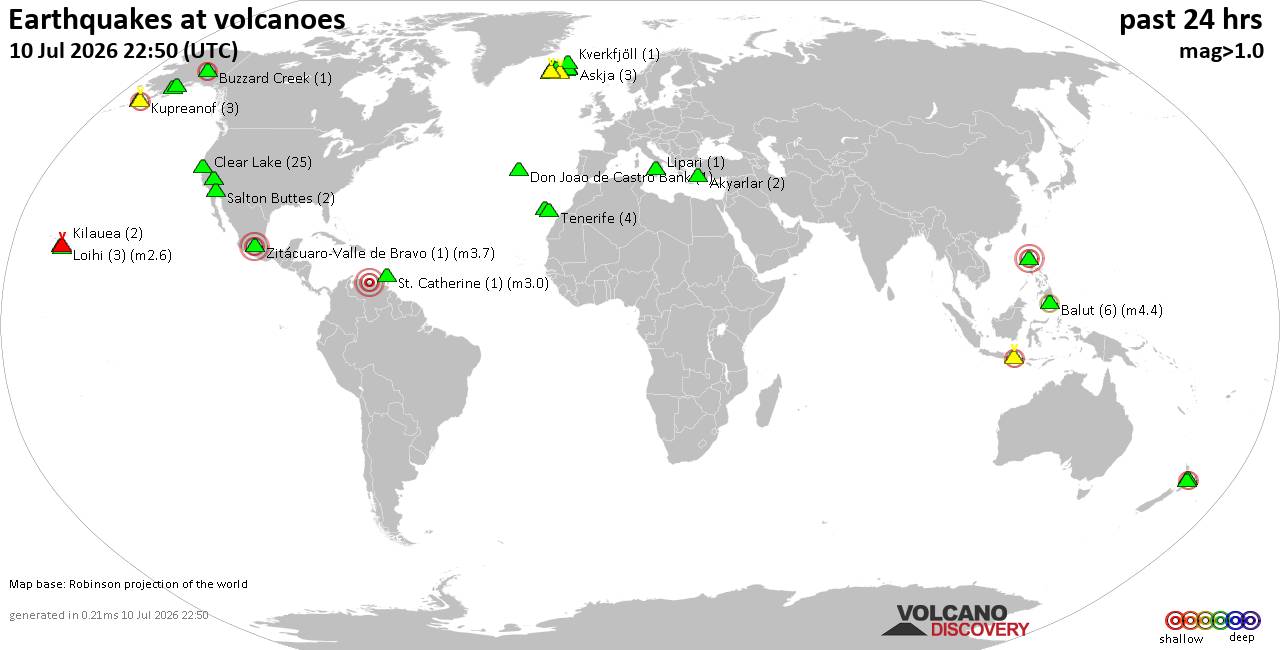
Volcano earthquake report for Friday, 10 Jul 2026
• Moderate mag. 4.2 earthquake - 133 km northwest of Ternate, Kota Ternate, N...
• World Earthquake Report for Friday, 10 July 2026
• Moderate mag. 4.6 earthquake - 17 km southwest of Comalapa, Estado de Chiap...
• Moderate mag. 4.1 earthquake - Olyutorskiy Rayon, 47 km northwest of Tilich...
• Moderate mag. 4.0 earthquake - Hawke's Bay, New Zealand, on Saturday, Jul 1...
|

#48029
Fri 02 Apr 2010 11:30:AM
|
Joined: Feb 2001
Posts: 678,976
Launch Director
|
OP

Launch Director
Joined: Feb 2001
Posts: 678,976 |
HUBBLE SPACE TELESCOPE - Continuing to Collect World Class Science
�
DAILY REPORT��� ��#5066
�
PERIOD COVERED: 5am April 1 - 5am April 2, 2010 (DOY 091/09:00z-092/09:00z)
�
OBSERVATIONS SCHEDULED
�
ACS/WFC 11679
�
Probing The Globular Cluster / Low Mass X-ray Binary Connection in
Early-type Galaxies At Low X-ray Luminosities
�
Combined high-resolution images from Hubble and Chandra (CXO) have
revolutionized our understanding of extragalactic low-mass X-ray
binaries (LMXBs) and globular clusters (GCs), yet their connection in
early-type galaxies has remained unstudied at the luminosities of the
Galactic LMXBs in GCs. NGC 3379 and NGC 4278 are be the first
prototypical elliptical galaxies with complete, deep CXO observations
enabling the study of LMXBs at lower luminosities. We propose completing
mosaic ACS observations of both galaxies (5 fields per galaxy) that will
provide the most comprehensive view into the connection between GCs and
LMXBs in early-type galaxies. We will detect ~860 and ~270 GCs in all of
NGC 4278 and NGC 3379, respectively. These two galaxies will have among
the greatest number of detected GC-LMXBs to date (~130 & 50) and will
include the faintest GC-LMXBs in a normal early-type galaxy. We will
measure the fraction of GCs which contain LMXBs, as a function of X-ray
luminosity, galactocentric distance, color, and GC half-light radius.
Using the radial profiles of optical light, GCs, and LMXBs, we will
determine the percentage of field LMXBs which may have originated in
GCs. We will use the measured GC properties over the entire extent of
both galaxies to constrain theories of GC formation and evolution. This
is a resubmission of an approved Cycle 15 program (10835) which was only
partially completed.
�
COS/FUV 11897
�
FUV Spectroscopic Sensitivity Monitoring
�
The purpose of this proposal is to monitor sensitivity in each FUV
grating mode to detect any changes due to contamination or other causes.
�
COS/FUV/STIS/CCD/MA1 11592
�
Testing the Origin(s) of the Highly Ionized High-Velocity Clouds: A
Survey of Galactic Halo Stars at z>3 kpc
�
Cosmological simulation predicts that highly ionized gas plays an
important role in the formation and evolution of galaxies and their
interplay with the intergalactic medium. The NASA HST and FUSE missions
have revealed high-velocity CIV and OVI absorption along extragalactic
sightlines through the Galactic halo. These highly ionized high-velocity
clouds (HVCs) could cover 85% of the sky and have a detection rate
higher than the HI HVCs. Two competing, equally exciting, theories may
explain the origin of these highly ionized HVCs: 1) the "Galactic"
theory, where the HVCs are the result of feedback processes and trace
the disk-halo mass exchange, perhaps including the accretion of matter
condensing from an extended corona; 2) the "Local Group" theory, where
they are part of the local warm-hot intergalactic medium, representing
some of the missing baryonic matter of the Universe. Only direct
distance determinations can discriminate between these models. Our group
has found that some of these highly ionized HVCs have a Galactic origin,
based on STIS observations of one star at z<5.3 kpc. We propose an HST
FUV spectral survey to search for and characterize the high velocity NV,
CIV, and SiIV interstellar absorption toward 24 stars at much larger
distances than any previous searches (4<d<21 kpc, 3<|z|<13 kpc). COS
will provide atomic to highly ionized species (e.g.,OI, CII, CIV, SiIV)
that can be observed at sufficient resolution (R~22, 000) to not only
detect these highly ionized HVCs but also to model their properties and
understand their physics and origins. This survey is only possible
because of the high sensitivity of COS in the FUV spectral range.
�
COS/NUV 11561
�
An Intensive COS Spectroscopic Study of the Planetary Debris Disks
Around two Warm White Dwarfs
�
It is very likely that the gas giants in our Solar system will survive
the evolution of the Sun into a white dwarf, and the same is thought to
be generally true for Jovian planets around solar-like stars if their
initial orbits are wider than ~3AU. Despite this prediction, no
unambiguous detection of a planet around a white dwarf has been
announced so far. However, over the past few years, about a dozen white
dwarfs have been identified which host metal-rich debris disks that are
thought to stem from the tidal disruption of asteroids. In most cases
the debris disks are observed in the form of an infrared flux excess,
and offer relatively little diagnostic potential for the study of their
structure. We have discovered three warm (T~20000K) white dwarfs with
metal-rich debris disks in a gaseous phase which display strong
double-peaked CaII emission lines in the I-band and weak Fe 5169A
emission. The line profiles can be modeled in terms of Keplerian disks
with an extension of ~1Rsun around the white dwarfs. Photospheric MgII
4481A absorption demonstrates that the white dwarfs are accreting from
the debris disks. Besides these spectral features, the optical
wavelength range is devoid of other useful metal transitions. Here, we
propose an intensive spectroscopic ultraviolet study of these systems,
which will provide (a) ~1000 photospheric absorption lines of 15
chemical elements, allowing an accurate abundance study of the material
accreted from the debris disks, and (b) ~2 dozen additional emission
lines of Mg, Cr, Ti, and Fe that will provide detailed insight into the
dynamical, thermal, and density structure of these exo-planetary debris
disks.
�
COS/NUV 11894
�
NUV Detector Dark Monitor
�
The purpose of this proposal is to measure the NUV detector dark rate by
taking long science exposures with no light on the detector. The
detector dark rate and spatial distribution of counts will be compared
to pre-launch and SMOV data in order to verify the nominal operation of
the detector. Variations of count rate as a function of orbital position
will be analyzed to find dependence of dark rate on proximity to the
SAA. Dependence of dark rate as function of time will also be tracked.
�
FGS 11704
�
The Ages of Globular Clusters and the Population II Distance Scale
�
Globular clusters are the oldest objects in the universe whose age can
be accurately determined. The dominant error in globular cluster age
determinations is the uncertain Population II distance scale. We propose
to use FGS 1R to obtain parallaxes with an accuracy of 0.2
milliarcsecond for 9 main sequence stars with [Fe/H] < -1.5. This will
determine the absolute magnitude of these stars with accuracies of 0.04
to 0.06mag. This data will be used to determine the distance to 24
metal-poor globular clusters using main sequence fitting. These
distances (with errors of 0.05 mag) will be used to determine the ages
of globular clusters using the luminosity of the subgiant branch as an
age indicator. This will yield absolute ages with an accuracy of 5%,
about a factor of two improvement over current estimates. Coupled with
existing parallaxes for more metal-rich stars, we will be able to
accurately determine the age for globular clusters over a wide range of
metallicities in order to study the early formation history of the Milky
Way and provide an independent estimate of the age of the universe.
�
The Hipparcos database contains only 1 star with [Fe/H] < -1.4 and an
absolute magnitude error less than 0.18 mag which is suitable for use in
main sequence fitting. Previous attempts at main sequence fitting to
metal-poor globular clusters have had to rely on theoretical
calibrations of the color of the main sequence. Our HST parallax program
will remove this source of possible systematic error and yield distances
to metal-poor globular clusters which are significantly more accurate
than possible with the current parallax data. The HST parallax data will
have errors which are 10 times smaller than the current parallax data.
Using the HST parallaxes, we will obtain main sequence fitting distances
to 11 globular clusters which contain over 500 RR Lyrae stars. This will
allow us to calibrate the absolute magnitude of RR Lyrae stars, a
commonly used Population II distance indicator.
�
STIS/CC 11845
�
CCD Dark Monitor Part 2
�
Monitor the darks for the STIS CCD.
�
STIS/CC 11847
�
CCD Bias Monitor-Part 2
�
Monitor the bias in the 1x1, 1x2, 2x1, and 2x2 bin settings at gain=1,
and 1x1 at gain = 4, to build up high-S/N superbiases and track the
evolution of hot columns.
�
STIS/MA1/MA2 11857
�
STIS Cycle 17 MAMA Dark Monitor
�
This proposal monitors the behavior of the dark current in each of the
MAMA detectors.
�
The basic monitor takes two 1380s ACCUM darks each week with each
detector. However, starting Oct 5, pairs are only included for weeks
that the LRP has external MAMA observations planned. The weekly pairs of
exposures for each detector are linked so that they are taken at
opposite ends of the same SAA free interval. This pairing of exposures
will make it easier to separate long and short term temporal variability
from temperature dependent changes.
�
For both detectors, additional blocks of exposures are taken once every
six months. These are groups of five 1314s FUV-MAMA Time-Tag darks or
five 3x315s NUV ACCUM darks distributed over a single SAA-free interval.
This will give more information on the brightness of the FUV MAMA dark
current as a function of the amount of time that the HV has been on, and
for the NUV MAMA will give a better measure of the short term
temperature dependence.
�
WFC3/IR 11696
�
Infrared Survey of Star Formation Across Cosmic Time
�
We propose to use the unique power of WFC3 slitless spectroscopy to
measure the evolution of cosmic star formation from the end of the
reionization epoch at z>6 to the close of the galaxy- building era at
z~0.3.Pure parallel observations with the grisms have proven to be
efficient for identifying line emission from galaxies across a broad
range of redshifts. The G102 grism on WFC3 was designed to extend this
capability to search for Ly-alpha emission from the first galaxies.
Using up to 250 orbits of pure parallel WFC3 spectroscopy, we will
observe about 40 deep (4-5 orbit) fields with the combination of G102
and G141, and about 20 shallow (2-3 orbit) fields with G141 alone.
�
Our primary science goals at the highest redshifts are: (1) Detect Lya
in ~100 galaxies with z>5.6 and measure the evolution of the Lya
luminosity function, independent of of cosmic variance; 2) Determine the
connection between emission line selected and continuum-break selected
galaxies at these high redshifts, and 3) Search for the proposed
signature of neutral hydrogen absorption at re-ionization. At
intermediate redshifts we will (4) Detect more than 1000 galaxies in
Halpha at 0.5<z<1.8 to measure the evolution of the extinction-corrected
star formation density across the peak epoch of star formation. This is
over an order-of-magnitude improvement in the current statistics, from
the NICMOS Parallel grism survey. (5) Trace ``cosmic downsizing" from
0.5<z<2.2; and (6) Estimate the evolution in reddening and metallicty in
star- forming galaxies and measure the evolution of the Seyfert
population. For hundreds of spectra we will be able to measure one or
even two line pair ratios -- in particular, the Balmer decrement and
[OII]/[OIII] are sensitive to gas reddening and metallicity. As a bonus,
the G102 grism offers the possibility of detecting Lya emission at
z=7-8.8.
�
To identify single-line Lya emitters, we will exploit the wide
0.8--1.9um wavelength coverage of the combined G102+G141 spectra. All
[OII] and [OIII] interlopers detected in G102 will be reliably separated
from true LAEs by the detection of at least one strong line in the G141
spectrum, without the need for any ancillary data. We waive all
proprietary rights to our data and will make high-level data products
available through the ST/ECF.
�
WFC3/IR/S/C 12097
�
Additional IR Subarray Dark Current Measurements (in support of GO
programs 11205, 11580)
�
This proposal will produce IR dark images necessary to calibrate GO
science observations (already taken, see proposals 11205 and 11580) that
use observing modes not supported by the existing IR dark current
monitor (proposal 11929). These modes are as follows: SQ256SUB/SPARS100,
SQ256SUB/SPARS200, SQ512SUB/SPARS10, SQ512SUB/SPARS100, and
SQ512SUB/SPARS200.
�
WFC3/UV/IR 11709
�
Stretching the Diversity of Cosmic Explosions: The Supernovae of
Gamma-ray Bursts
�
While the association between gamma-ray bursts (GRBs) and massive stars
is robust, there is a large diversity of properties among supernovae
(SNe) associated with GRBs. The converse is also true: Several recent
events show that there is a large brightness range among high energy
transients associated with SNe. As part of a comprehensive program, we
propose to use HST in order to search for and characterize the SNe
associated with GRB.
�
HST offers the means to cleanly separate the light curve of the GRB
afterglow from the supernova, and to remove the contamination from the
host galaxy, opening a clear path to the fundamental parameters of the
SN, and thence to the progenitor. From these observations, we will
determine the absolute magnitude at maximum, the shape of the spectral
energy distribution, and any change over time of the energy
distribution. We will also measure the rate of decay of the exponential
tail.
�
Merged with the ground-based data that we will obtain for each event, we
will be able to compare our data set to models and constrain the energy
of the explosion, the mass of the ejecta and the mass of Nickel
synthesized during the explosion. These results will shed light on the
apparent variety of supernovae associated with gamma-ray bursts and
X-ray flashes, and on the relation between these SNe and other, more
common, types of core-collapse explosions.
�
WFC3/UVIS 11594
�
A WFC3 Grism Survey for Lyman Limit Absorption at z=2
�
We propose to conduct a spectroscopic survey of Lyman limit absorbers at
redshifts 1.8 < z < 2.5, using WFC3 and the G280 grism. This proposal
intends to complete an approved Cycle 15 SNAP program (10878), which was
cut short due to the ACS failure. We have selected 64 quasars at 2.3 < z
< 2.6 from the Sloan Digital Sky Survey Spectroscopic Quasar Sample, for
which no BAL signature is found at the QSO redshift and no strong metal
absorption lines are present at z > 2.3 along the lines of sight. The
survey has three main observational goals. First, we will determine the
redshift frequency dn/dz of the LLS over the column density range 16.0 <
log(NHI) < 20.3 cm^-2. Second, we will measure the column density
frequency distribution f(N) for the partial Lyman limit systems (PLLS)
over the column density range 16.0 < log(NHI) < 17.5 cm^-2. Third, we
will identify those sightlines which could provide a measurement of the
primordial D/H ratio. By carrying out this survey, we can also help
place meaningful constraints on two key quantities of cosmological
relevance. First, we will estimate the amount of metals in the LLS using
the f(N), and ground based observations of metal line transitions.
Second, by determining f(N) of the PLLS, we can constrain the amplitude
of the ionizing UV background at z~2 to a greater precision. This survey
is ideal for a snapshot observing program, because the on-object
integration times are all well below 30 minutes, and follow-up
observations from the ground require minimal telescope time due to the
QSO sample being bright.
�
WFC3/UVIS 11905
�
WFC3 UVIS CCD Daily Monitor
�
The behavior of the WFC3 UVIS CCD will be monitored daily with a set of
full-frame, four-amp bias and dark frames. A smaller set of 2Kx4K
subarray biases are acquired at less frequent intervals throughout the
cycle to support subarray science observations. The internals from this
proposal, along with those from the anneal procedure (Proposal 11909),
will be used to generate the necessary superbias and superdark reference
files for the calibration pipeline (CDBS).
�
WFC3/UVIS 11908
�
Cycle 17: UVIS Bowtie Monitor
�
Ground testing revealed an intermittent hysteresis type effect in the
UVIS detector (both CCDs) at the level of ~1%, lasting hours to days.
Initially found via an unexpected bowtie-shaped feature in flatfield
ratios, subsequent lab tests on similar e2v devices have since shown
that it is also present as simply an overall offset across the entire
CCD, i.e., a QE offset without any discernable pattern. These lab tests
have further revealed that overexposing the detector to count levels
several times full well fills the traps and effectively neutralizes the
bowtie. Each visit in this proposal acquires a set of three 3x3 binned
internal flatfields: the first unsaturated image will be used to detect
any bowtie, the second, highly exposed image will neutralize the bowtie
if it is present, and the final image will allow for verification that
the bowtie is gone.
�
WFC3/UVIS/IR 11909
�
UVIS Hot Pixel Anneal
�
The on-orbit radiation environment of WFC3 will continually generate new
hot pixels. This proposal performs the procedure required for repairing
those hot pixels in the UVIS CCDs. During an anneal, the two-stage
thermo-electric cooler (TEC) is turned off and the four-stage TEC is
used as a heater to bring the UVIS CCDs up to ~20 deg. C. As a result of
the CCD warm up, a majority of the hot pixels will be fixed; previous
instruments such as WFPC2 and ACS have seen repair rates of about 80%.
Internal UVIS exposures are taken before and after each anneal, to allow
an assessment of the procedure's effectiveness in WFC3, provide a check
of bias, global dark current, and hot pixel levels, as well as support
hysteresis (bowtie) monitoring and CDBS reference file generation. One
IR dark is taken after each anneal, to provide a check of the IR
detector.
�
WFC3/UV 12077
�
Monitoring the Aftermath of an Asteroid Impact Event
�
Our Director's Discretionary program (GO-12053) to image the newly
discovered object P/2010 A2 executed successfully on 2010 Jan 25 and 29
with spectacular results. Hubble has apparently borne witness to the
first detection of a collision in the asteroid belt. Hubble imaging with
the WFC3 has revealed an object unlike anything ever seen before and
with details impossible to detect with any other facility. We request 6
more orbits of Hubble time (1 orbit every 20 days over the next few
months, until the object enters Hubble's solar exclusion zone in
late-June 2010) to monitor the evolution of this remarkable object and
further clarify the nature of this event. These observations may usher
in a new era of searching for and characterizing collisional events
within the asteroid belt.�
�
FLIGHT OPERATIONS SUMMARY:
�
Significant Spacecraft Anomalies: (The following are preliminary reports
of potential non-nominal performance that will be investigated.)
�
HSTARS: (None)
�
COMPLETED OPS REQUEST:
18837-0 - Null Genslew for proposal 12077 - slot 13 @ 091/1345z
�
COMPLETED OPS NOTES: (None)
�
������� ����� ��������SCHEDULED� SUCCESSFUL
FGS GSAcq � �����������10������� �� ��10�������
FGS REAcq �� �����������5 ��� ����������5
OBAD with Maneuver 4 �� �����������4
�
SIGNIFICANT EVENTS: (None)
David Cottle
UBB Owner & Administrator
|
|



CMS The Best Conveyancing solicitors conveyancing quotes throughout the UK
For any webhosting enquiries please email webmaster@aus-city.com
|
|
Entire Thread
|
 Daily Report #5066
|
Webmaster
|
Fri 02 Apr 2010 11:30:AM
|
|
Forums60
Topics789,806
Posts824,584
Members2,960
| |
Most Online102,106
Jul 10th, 2026
|
|
|