|
|
|
0 members (),
1,207
guests, and
23
robots. |
|
Key:
Admin,
Global Mod,
Mod
|
|
S |
M |
T |
W |
T |
F |
S |
|
|
|
|
|
|
1
|
2
|
|
3
|
4
|
5
|
6
|
7
|
8
|
9
|
|
10
|
11
|
12
|
13
|
14
|
15
|
16
|
|
17
|
18
|
19
|
20
|
21
|
22
|
23
|
|
24
|
25
|
26
|
27
|
28
|
29
|
30
|
|
31
|
|
|
|
|
|
|
|
There are no members with birthdays on this day. |
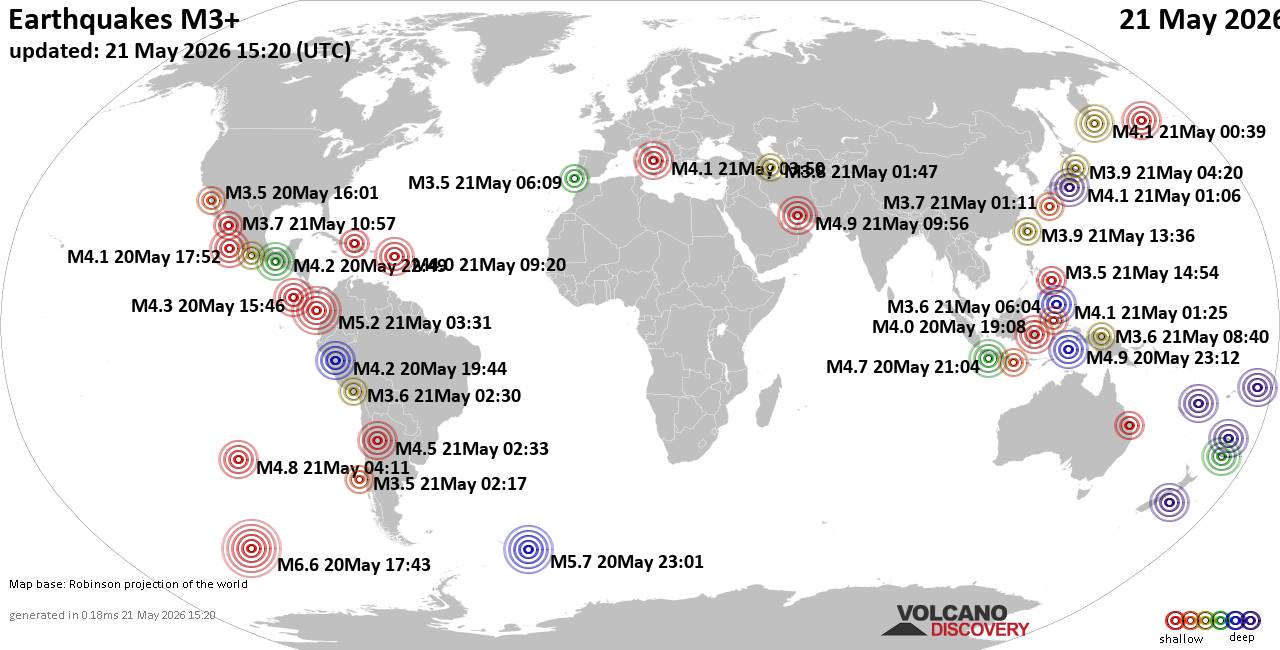
World Earthquake Report for Thursday, 21 May 2026
• Volcano earthquake report for Thursday, 21 May 2026
• Light mag. 3.9 earthquake - 48 km southwest of Coatepeque, Departamento de ...
• Moderate mag. 4.4 earthquake - New Zealand on Friday, May 22, 2026, at 02:1...
• Moderate mag. 4.4 earthquake - Gisborne, New Zealand, on Friday, May 22, 20...
• Moderate mag. 4.0 earthquake - Bay of Plenty, New Zealand, on Friday, May 2...
|

#530912
Tue 15 Oct 2019 10:52:AM
|
Joined: Feb 2001
Posts: 381,904
Launch Director
|
OP

Launch Director
Joined: Feb 2001
Posts: 381,904 |
The gladius was a Roman sword known for its double-edged sides and its superior thrusting tip. Typically the sword was constructed from steel and used as a close range weapon paired with a shield. The sword dates back to the 3rd Century BC where it took the place of a more primitive sword without as much function. There were several different designs of gladius used over the years for Roman soldiers. It's no wonder it was a favorite of Roman soldiers because of its many uses and its sturdy build.
Description
A gladius has two edges for cutting and slashing as well as a thrusting tip that was highly effective in causing mortal wounds to anyone stabbed with it. The handle of the sword was usually ribbed to provide a sturdy grip despite perspiration that’d happen during battle. The pommel of the blade was often round and sometimes ornamented depending on the soldier’s station in the army. Many times generals and other officers would have stones or other embellishments on the pommel of their blade to identify their sword and show their station.
How It Was Used
Typically, a gladius was used as a thrusting weapon. The tapered thrusting tip was capable of producing wounds to the torso that’d completely incapacitate the victim and would cause them to bleed to death. The two edges would be used for slashing at joints, such as the knee caps, and making the victim be forced down onto the ground and thus rendering them useless in battle. When paired with a large shield, the gladius was unbelievably effective as the wielder could use the shield to protect most of their body while the gladius was being thrust forward to cause these mortal wounds.
Construction
A gladius is made by melting down iron ore into blooms that were further worked to remove slag inclusions from the porous surface. These blooms would then be worked into the pieces of the sword. One of the reasons it’s so sturdy is because the blade was made by layering several pieces together while they were still hot and molding them into one blade. Afterwards it was sharpened on a grinder. This construction made it more resistant to rust as well as making it harder to break than swords made before it.
Truly the Weapon Won Against Many Ancient Wars There were several different types of gladius made over the years with four main types being known to current archaeologists. Some of these types were even known for being used side by side during wars. The effectiveness of the weapon is second to none which’s why it was so popular in so many armies throughout history. Source: The Roman Sword of Choice: The Gladius
|
|



CMS The Best Conveyancing solicitors conveyancing quotes throughout the UK
For any webhosting enquiries please email webmaster@aus-city.com
|
|
Entire Thread
|
 The Roman Sword of Choice: The Gladius
|
Webmaster
|
Tue 15 Oct 2019 10:52:AM
|
|
Forums60
Topics776,490
Posts811,285
Members2,960
| |
Most Online22,463
May 9th, 2026
|
|
|
|
|
Copyright 1996 - 2026 by David Cottle. Designed by David Bate Jr. All Rights Reserved.
By using this forum, the user agrees not to transfer any data or technical information received under this agreement to any other entity without the express approval of the AUS-CITY Forum Admins and/or authors of individual posts (Forum Admins and DoD/USSPACECOM for the analysis of satellite tracking data).
Two-line elements (TLE) and all other satellite data presented and distributed via this forum and AUS-CITY mailing lists are distributed with permission from DoD/USSTRATCOM.

|

|