|
0 members (),
2,494
guests, and
26
robots. |
|
Key:
Admin,
Global Mod,
Mod
|
|
S |
M |
T |
W |
T |
F |
S |
|
|
|
|
|
|
1
|
2
|
|
3
|
4
|
5
|
6
|
7
|
8
|
9
|
|
10
|
11
|
12
|
13
|
14
|
15
|
16
|
|
17
|
18
|
19
|
20
|
21
|
22
|
23
|
|
24
|
25
|
26
|
27
|
28
|
29
|
30
|
|
31
|
|
|
|
|
|
|
|
There are no members with birthdays on this day. |
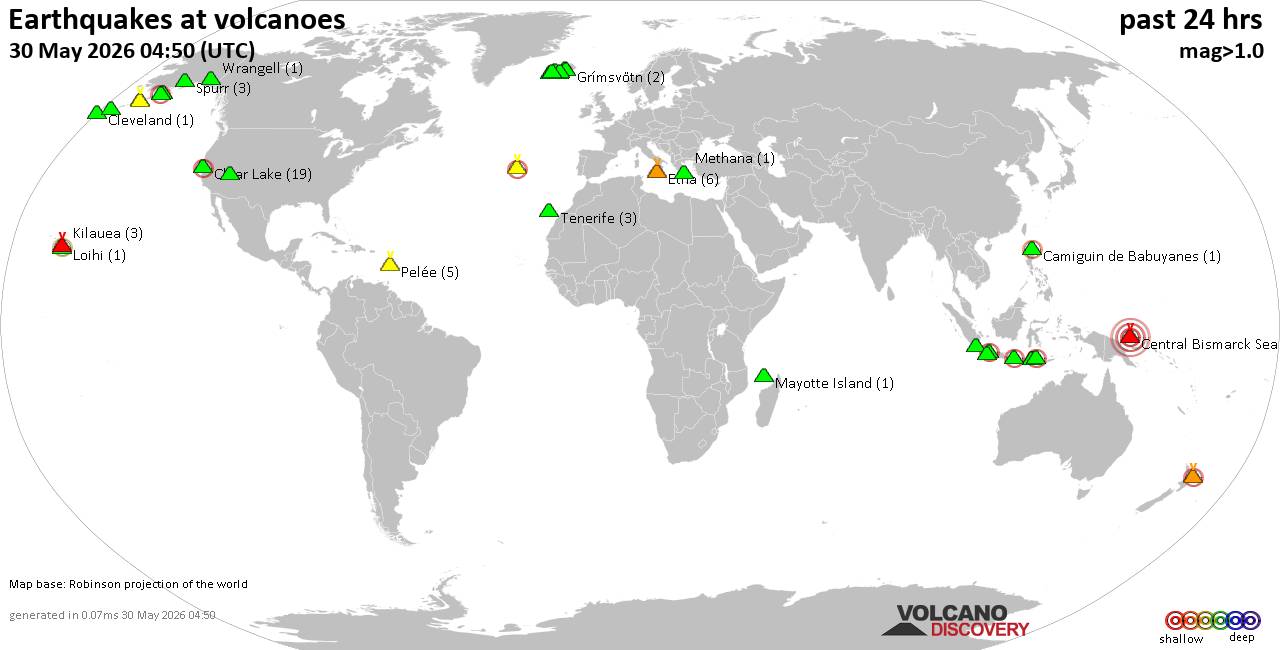
Volcano earthquake report for Saturday, 30 May 2026
• Light mag. 3.9 earthquake - 45 km northeast of Sitia, Lasithi, Crete, Greec...
• Moderate mag. 4.1 earthquake - Sea of Okhotsk, 53 km north of Shikotan Isla...
• Light mag. 3.9 earthquake - 304 km southwest of Yulara, Northern Territory,...
• Strong mag. 5.0 earthquake - South Atlantic Ocean, 18 km southeast of Brist...
• Moderate mag. 4.7 earthquake - Caribbean Sea, 73 km north of Gueiria, Sucre...
|

#64100
Mon 18 Jul 2011 07:28:AM
|
Joined: Feb 2001
Posts: 381,904
Launch Director
|
OP

Launch Director
Joined: Feb 2001
Posts: 381,904 |
07.10.11
4 p.m. CDT Sunday, July 10, 2011
Mission Control Center, Houston, TexasSTATUS REPORT: STS-135-05
STS-135 MCC STATUS REPORT #05
HOUSTON – Atlantis docked with the International Space Station at
10:07 a.m. CDT Sunday with a cargo-carrying module in its payload bay
filled with equipment and supplies for the orbiting laboratory.
“Atlantis arriving,” said Flight Engineer Ron Garan after the
ceremonial ringing of the station’s bell. “Welcome to the
International Space Station for the last time.”
After a pause to let the relative motion between the two spacecraft
dampen out and do leak checks, hatches separating crews were opened
at 11:47 a.m. Shuttle crew members, Commander Chris Ferguson, Pilot
Doug Hurley and Mission Specialists Sandra Magnus and Rex Walheim,
entered the station moments later to begin their week-plus stay.
First came the standard safety briefing for the new arrivals. Then
work began.
Ferguson and Hurley used the shuttle arm to take its 50-foot extension
boom from the station’s Canadarm2 operated by station Flight
Engineers Garan and Satoshi Furukawa. The station arm had plucked the
boom from its stowage position on the shuttle cargo bay sill. The
handoff was to prepare to use the boom for any needed shuttle heat
shield inspection later this week. Magnus worked with TV setup and
Walheim transferred spacewalk gear.
Docking had gone just as planned. Ferguson and the crew of space
shuttle Atlantis began their final approach to the station from about
eight miles distance with the terminal initiation burn at 7:29 a.m.
About 600 feet below the station, Atlantis did a backflip to enable
station crew members to photograph the shuttle’s heat shield. Flight
Engineers Mike Fossum, Satoshi Furukawa and Sergei Volkov used
cameras with 1,000 mm, 800 mm and 400 mm lenses, respectively, to
take high resolution digital photos of the shuttle’s upper and lower
surfaces. The photos were being sent to mission control to be
evaluated by experts on the ground to look for any damage.
Flight controllers began monitoring reports from the Department of
Defense’s U.S. Strategic Command that a piece of orbital debris may
come near the station and shuttle complex about noon on Tuesday. The
debris, part of satellite COSMOS 375, is one of more than 500,000
pieces of debris tracked in Earth’s orbit. The team expected updated
tracking information following today’s docking to help determine if a
maneuver using the shuttle’s thrusters is necessary to avoid the
debris.
The next status report will be issued after crew wakeup or earlier if
warranted. The crew is scheduled to awaken just before 2 a.m. Monday.
David Cottle
UBB Owner & Administrator
|
|



CMS The Best Conveyancing solicitors conveyancing quotes throughout the UK
For any webhosting enquiries please email webmaster@aus-city.com
|
|
Entire Thread
|
 STS-135 MCC STATUS REPORT #05
|
Webmaster
|
Mon 18 Jul 2011 07:28:AM
|
|
Forums60
Topics777,565
Posts812,368
Members2,960
| |
Most Online22,463
May 9th, 2026
|
|
|