|
0 members (),
5,522
guests, and
22
robots. |
|
Key:
Admin,
Global Mod,
Mod
|
|
S |
M |
T |
W |
T |
F |
S |
|
|
|
1
|
2
|
3
|
4
|
5
|
|
6
|
7
|
8
|
9
|
10
|
11
|
12
|
|
13
|
14
|
15
|
16
|
17
|
18
|
19
|
|
20
|
21
|
22
|
23
|
24
|
25
|
26
|
|
27
|
28
|
29
|
30
|
|
|
|
|
There are no members with birthdays on this day. |
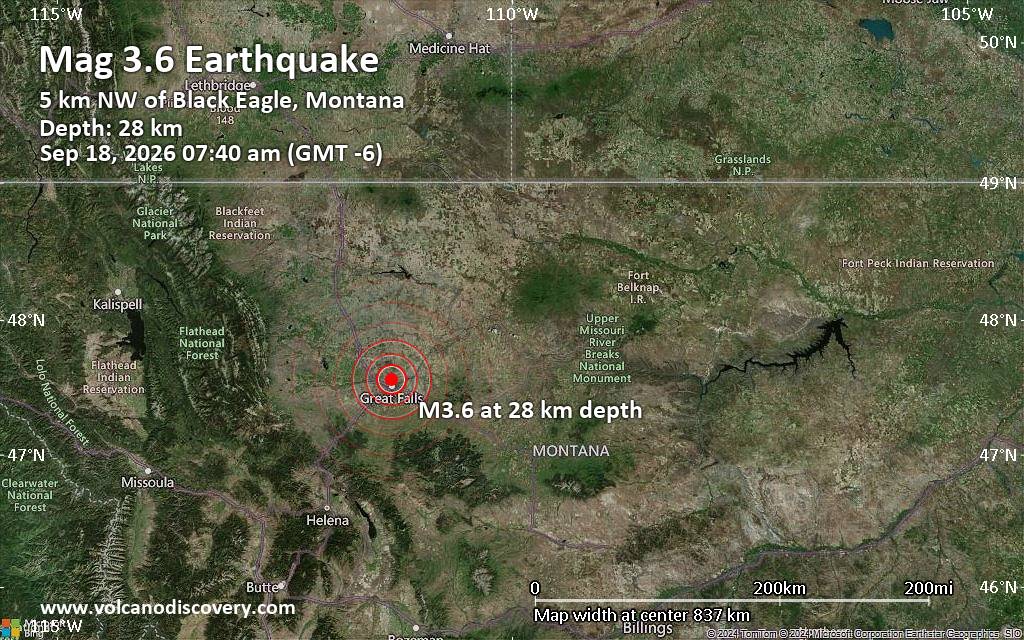
Small magnitude 3.6 earthquake strikes near Great Falls, Cascade County, Montana, USA
• Volcano earthquake report for Friday, 18 September 2026
• Possible earthquake reported minutes ago near Great Falls, Montana, USA
• Magnitude 4.6 earthquake strikes near Ponce, Segundo Barrio, Ponce Municipi...
• Small magnitude 3.4 earthquake strikes near Skegness, Lincolnshire, England...
• World Earthquake Report for Friday, 18 September 2026
|

#201693
Mon 10 Feb 2014 12:07:PM
|
Joined: Feb 2001
Posts: 678,977
Launch Director
|
|
Launch Director
Joined: Feb 2001
Posts: 678,977 |
This week on HST*
HST Programs: January 27 - February 2, 2014
Program Number
Principal Investigator
Program Title
12472
Claus Leitherer, Space Telescope Science Institute
CCC - The Cosmic Carbon Conundrum
12568
Matthew A. Malkan, University of California - Los Angeles
WFC3 Infrared Spectroscopic Parallel Survey WISP: A Survey of Star Formation Across Cosmic Time
12880
Adam Riess, The Johns Hopkins University
The Hubble Constant: Completing HST's Legacy with WFC3
12883
Denis Grodent, Universite de Liege
Unraveling electron acceleration mechanisms in Ganymede's space environment through N-S conjugate imagery of Jupiter's aurora
12903
Luis C. Ho, Carnegie Institution of Washington
The Evolutionary Link Between Type 2 and Type 1 Quasars
12934
Clive N. Tadhunter, University of Sheffield
The importance warm outflows in the most rapidly evolving galaxies in the local Universe
13286
Ryan Foley, University of Illinois at Urbana - Champaign
Understanding the Progenitor Systems, Explosion Mechanisms, and Cosmological Utility of Type Ia Supernovae
13294
Alexander Karim, Universitat Bonn, Argelander Institute for Astronomy
Characterizing the formation of the primordial red sequence
13297
Giampaolo Piotto, Universita degli Studi di Padova
The HST Legacy Survey of Galactic Globular Clusters: Shedding UV Light on Their Populations and Formation
13309
Yicheng Guo, University of California - Santa Cruz
UV Snapshot of Low-redshift Massive Star-forming Galaxies: Searching for the Analogs of High-redshift Clumpy Galaxies
13314
Sanchayeeta Borthakur, The Johns Hopkins University
Characterizing the Elusive Intragroup Medium and Its Role in Galaxy Evolution
13324
Davor Krajnovic, Astrophysikalisches Institut Potsdam
Where cores are no more: assessing the role of dissipation in the assembly of early-type galaxies
13328
Jonathan D. Nichols, University of Leicester
Observing Ganymede's atmosphere and auroras with COS and STIS
13343
David Wittman, University of California - Davis
Probing Dark Matter with a New Class of Merging Clusters
13344
Adam Riess, The Johns Hopkins University
A 1% Measurement of the Distance Scale with Perpendicular Spatial Scanning
13346
Thomas R. Ayres, University of Colorado at Boulder
Advanced Spectral Library II: Hot Stars
13364
Daniela Calzetti, University of Massachusetts - Amherst
LEGUS: Legacy ExtraGalactic UV Survey
13366
Roelof S. de Jong, Astrophysikalisches Institut Potsdam
The vertical disk structure of spiral galaxies and the origin of their thick disks
13382
Mary E. Putman, Columbia University in the City of New York
Warm Gas Flows in the Coma Cluster
13411
Wiphu Rujopakarn, University of Arizona
Dissecting the intensely star-forming clumps in a z ~ 2 Einstein Ring
13423
Ryan J. Cooke, University of California - Santa Cruz
Primordial lithium in z~0, metal-poor damped Lyman alpha systems
13438
William B. Sparks, Space Telescope Science Institute
Probing the atmosphere of a transiting ocean world
13445
Joshua S. Bloom, University of California - Berkeley
Absolute Calibration of the Extragalactic Mira Period-Luminosity Relation
13470
Julio Chaname, Pontificia Universidad Catolica de Chile
Probing Cold Dark Matter Substructure with Wide Binaries in Dwarf Spheroidal Galaxies
13483
Goeran Oestlin, Stockholm University
eLARS - extending the Lyman Alpha Reference Sample
13490
Jason A. Surace, California Institute of Technology
Resolving the Reddest Extragalactic Sources Discovered by Spitzer: Strange Dust-Enshrouded Objects at z~2-3?
13496
Jennifer Lotz, Space Telescope Science Institute
HST Frontier Fields - Observations of MACSJ0416.1-2403
13506
Belinda J. Wilkes, Smithsonian Institution Astrophysical Observatory
Probing dark matter in the luminous radio galaxy 3C220.3 and the structure of the z=2.22 SMG/AGN it is lensing.
13510
Martin C. Weisskopf, NASA Marshall Space Flight Center
Joint Chandra and HST Monitoring and Studies of the Crab Nebula
13516
W. Nielsen Brandt, The Pennsylvania State University
The Variable Absorption and Disrupting X-ray Jet of the Broad Absorption Line Radio-Loud Quasar PG 1004+130
13610
Jian-Yang Li, Planetary Science Institute
Imaging Comet C/2013 A1 {Siding Spring} to Support Risk Assessment for Mars Orbiters during the Close Mars Encounter
13619
Lorenz Roth, Southwest Research Institute
Confirmation of Europa's water vapor plume activity
Selected highlights
* GO 13286: Understanding the Progenitor Systems, Explosion Mechanisms, and Cosmological Utility of Type Ia Supernova
*
Image of the recent supernova in M82, Jan 24th (Katzman Automated Imaging Telescope/LOSS)
Type Ia supernovae are generally believed to be produced by the explosive deflagration of white dwarf star that
exceeds the Chandrasekhar due to accretion from a binary companion, either a hydrogen-burning main-sequence/red giant star or
another degenerate. Besides providing crucial information on stellar evolution and how stars enrich the interstellar
medium, Type Ia supernovae have acquired global importance in recent years through their use as distance indicators. Indeed,
these objects played a crucial role in identifying dark energy and the accelerating universe. In that context, it
is important to understand the distribution of intrinsic properties of these exploding stars, and whether those
properties, particularly lumunisuty, correlate with other parameters, such as metallicity. Relatively nearby supernovae
that can be probed in detail are therefore crucial to the large mapping of the cosmic flow. Astronomers were therefore
delighted with the discovery of a type Ia supernova in the relatively nearby starburst galaxy, M82. This object,
designated SN2014J, was discovered on January 21st by a group of UCL undergraduates and their lecturer in a series of short exposures
taken as a quick test as clouds closed in on London's Mill Hill Observatory. The supernoa is expected
to reach maximum around February 2nd, at which time the supernova is expected to reach ~10th magnitude.
As the second closest Type Ia of recent years (SN 1993J in M81 was
at a similar distance), this object has attracted significant attention, despite the substantial line of sight reddening. The current
program will use STIS to obtain a time series of spectra in the ultraviolet, probing the intrinsic metallicity and the
variation as ejecta permeate the surrounding environment.
* GO 13510: Joint Chandra and HST Monitoring of the Crab Nebula *
The Crab Nebula
Messier 1, the Crab Nebula, provides astronomy with one of its iconic images. The
remnant of a bright supernova observed in 1054 by Arabian and Chinese astronomers,
the Crab was first recorded in 1731 by the English astronomer, John Bevis, thirt-seven
years before Messier compiled his catalogue of non-comets. The energy source for
the gaseous emission is the neutron star that lies in the centre of nebulosity,
and was one of the first pulsars to be identified. The Crab is also a source of high
energy emission, including radiation at X-ray and gamma ray wavelengths. Overall, this
system plays a crucial role in aiding our understanding of post-supernova evolutionary processes.
However, there are still some notable undertainties in the detailed processes within
even this system. In particular, in September of 2010 the Crab surprised the astronomial
community by producing a powerful flare at gamma-ray wavelengths that persisted for 4 days
(see GO 12381 ).A
second flare of similar magnitude occurred in May, 2011.
Observations taken during the 2010 flare by HST and Chandra provided some insight into the effects of the
flare, but analysis was hampered by the absence of a comparison set of pre-outburst images of
comparable resolution and depth. The present program aims to address that issue through coordinated
monitoring of the Crab at X-ray and optical wavelengths. Tne Advanced Camera for Surveys on HST was used
to take images in the F550M filter at 6 epochs in 2012, with the observations timed to be within
10 days of X-ray images taken by Chandra using the AXAF CCD Imaging Spectrometer; the present program
will obtain a further series of observations through 2013 and 2014. These data will
establish a reference set should a further flare occur.
* GO 13344: A 1% Measurement of the Distance Scale with Perpendicular Spatial Scanning *
HST WFPC2 image of NGC 4639, one of the Cepheid-rich spiral galaxies used to calibrate SNe Ia
The cosmic distance scale and dark energy are two key issues in modern astrophysics, and
HST has played a vital role in probing both.
On the one hand, HST has been involved in cosmic distance measurements since its inception, largely
through the H0 Key Project, which used WFPC2 to identify and photometer Cepheids
in 31 spiral galaxies at distances from 60 to 400 Mpc. On the other, HST is the prime instrument
for investigating cosmic acceleration by searching for and following Type Ia supernovae at
moderate and high redshift. These two cosmological parameters are directly related, and
recent years have seen renewed interest in improving the accuracy of
H0 with the realization
that such measurements, when coupled with the improved constraints from the Cosmic
Microwave Background, provide important constraints on cosmic acceleration and the
nature of Dark Energy.
Previous HST programs have focused on identifying and measuring light curves for
cepheids in external galaxies (eg GO 10802 ,
GO 11570 )
or quantifying the effects of variations in intrinsic stellar parameters, such as metallicity
(eg GO 10918 ,
GO 11297 ).
The present program focuses on the Galactic Cepheids that form the foundation for the whole distance
ladder, employing a revived version of an old technique to determine accurate astrometry, and hence
trigonometric parallaxes and reliable distances. The technique is drift-scanning - tracking HST during the
observation so that stars form trails on the detector. This mode of observations was available in the
early years of HST's operations, and has been revived primarily as a means of obtaing
high signal-to-noise grism spectroscolpic data of stars hosting transiting exoplanets. However, the
same technique can be used in imaging mode, and the extended trails allow multiple measurements of position
differences for stars in the field. The net result is a significant improvement in the relative precision of
the final astrometry. The present program, a continuation of Cycle 20 program GO 12879,
targets 11 Galactic cepheids and aims for astrometric accuracies of
20 micro-arcseconds.
* GO 13619: Confirmation of Europa's water vapor plume activity
*
The HST imaaging of a potential water plume around Europa's south pole superimposed on an image of the satellite
Europa is the smallest, and the most intriguing, of the four Galilean satellites of
Jupiter. With a diameter of 3139 km, Europa is almost twice the size of Earth's moon and
significantly larger than Mercury. In 1957, Gerard Kuiper commented that both infrared
spectroscopy and the optical colours and albedo suggested that Jovian satellite II (Europa)
is covered "by H2O snow". Images taken by the Voyager space probes in the late 1970s
(see left) reveal a smooth surface, with only a handful of craters larger than a few kilometres.
These features are consistent with a relatively young, icy surface. Subsequent detailed
investigations by the Galileo satellite strongly suggest that a substantial body of liquid
water, heated by tidal friction, underlies a 5 to 50 km thick icy crust. The presence of this
subterranean (subglacial?) ocean clearly makes Europa one of the two most interesting
astrobiology targets in the Solar System. Most recently, analysis of observations taken by the
Space Telescope imaging Spectrograph (STIS) on Hubble indicated the presence of an extended
cloud of Lyman-alpha emission near the polar regions while Europa was furthest in its orbit from Jupiter,
stongly suggesting that Europa's oceans may be vaporising into space. The present HST program aims
to confirm those observations through obtaining further observations of Europa at the same
orbital phase. The program uses STIS to search for H and O auroral emissions at UV wavelengths.
Past weeks:
[*] Cycle 14 observations
(from March 13 2006 to June 30 2006)
[*] Cycle 15 observations
(from July 1 2006)
[*] Cycle 16 observations
(from July 1 2007)
[*] Cycle 17 observations
(from July 13 2009)
[*] Cycle 18 observations
(from August 30 2010)
[*] Cycle 19 observations
(from October 3 2011)
[*] Cycle 20 observations
(from October 1 2012)
[*] Cycle 21 observations
(from October 1 2013)
David Cottle
UBB Owner & Administrator
|
|



CMS The Best Conveyancing solicitors conveyancing quotes throughout the UK
For any webhosting enquiries please email webmaster@aus-city.com
|
|
Forums60
Topics830,851
Posts865,646
Members2,960
| |
Most Online102,106
Jul 10th, 2026
|
|
|