|
0 members (),
1,543
guests, and
26
robots. |
|
Key:
Admin,
Global Mod,
Mod
|
|
S |
M |
T |
W |
T |
F |
S |
|
1
|
2
|
3
|
4
|
5
|
6
|
7
|
|
8
|
9
|
10
|
11
|
12
|
13
|
14
|
|
15
|
16
|
17
|
18
|
19
|
20
|
21
|
|
22
|
23
|
24
|
25
|
26
|
27
|
28
|
|
29
|
30
|
|
|
|
|
|
|
There are no members with birthdays on this day. |
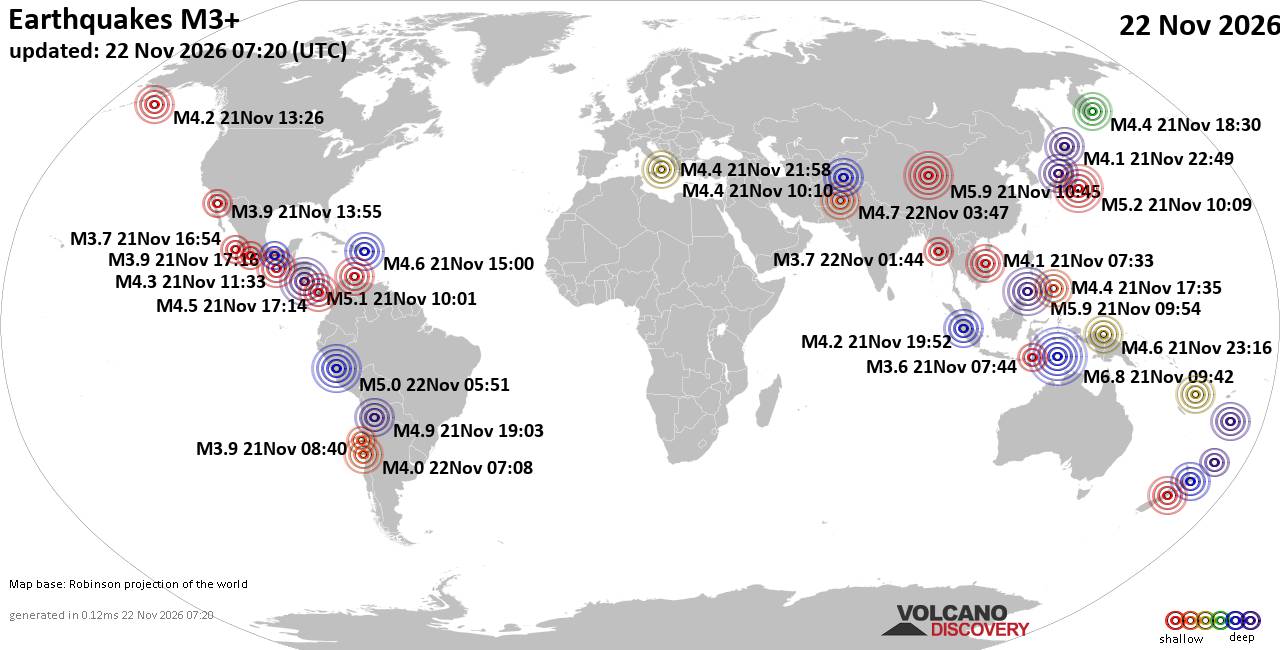
World Earthquake Report for Sunday, 22 November 2026
• M 1.4 - 2 km N of Healdsburg, CA
• M 3.3 - 10 km SSE of San Pedro, CA
• M 3.4 - 0 km W of Lea Hill, Washington
• Moderate mag. 4.1 earthquake - Caribbean Sea, 85 km west of Punta Cardon, F...
• M 6.7 - 9 km NE of Carhuamayo, Peru
|

#31878
Mon 27 Nov 2006 10:19:PM
|
Joined: Feb 2001
Posts: 800,656
Launch Director
|
|
Launch Director
Joined: Feb 2001
Posts: 800,656 |
HUBBLE SPACE TELESCOPE - Continuing to collect World Class Science
DAILY REPORT # 4246
PERIOD COVERED: UT November 22,23,24,25,26, 2006 (DOY 326,327,328,329,330)
OBSERVATIONS SCHEDULED
NIC1/NIC2/NIC3 8793
NICMOS Post-SAA calibration - CR Persistence Part 4
A new procedure proposed to alleviate the CR-persistence problem of
NICMOS. Dark frames will be obtained immediately upon exiting the SAA
contour 23, and every time a NICMOS exposure is scheduled within 50
minutes of coming out of the SAA. The darks will be obtained in parallel
in all three NICMOS Cameras. The POST-SAA darks will be non-standard
reference files available to users with a USEAFTER date/time mark. The
keyword 'USEAFTER=date/time' will also be added to the header of each
POST-SAA DARK frame. The keyword must be populated with the time, in
addition to the date, because HST crosses the SAA ~8 times per day so
each POST-SAA DARK will need to have the appropriate time specified, for
users to identify the ones they need. Both the raw and processed images
will be archived as POST-SAA DARKSs. Generally we expect that all NICMOS
science/calibration observations started within 50 minutes of leaving an
SAA will need such maps to remove the CR persistence from the science
images. Each observation will need its own CRMAP, as different SAA
passages leave different imprints on the NICMOS detectors.
NIC3 11064
CYCLE 15 NICMOS SPECTROPHOTOMETRY CALIBRATION PROGRAM
Now that the spectrophotometric capabilities of the NICMOS grism have
been established, cycle 15 observations are needed to refine the
sensitivity estimates, to check for sensitivity loss with time, to
improve the accuracy of the linearity correction, to improve the
secondary flux standards by re-observation, and to expand the G206 data
set now that the sky subtraction technique has been shown to produce
useful fluxes for some of the fainter secondary standards. These faint
secondary IR standards will be a significant step towards establishing
flux standards for JWST, as well as for SNAP, Spitzer, and SOFIA.
1.Re-observe the 3 primary WDs GD71, G191B2b, & GD153 twice each, once
at the beginning and once near the end of the 18 month cycle. To date,
we have only 2 observation of each star, while the corresponding STIS
data set for these primary standards ranges from 6 to 23 obs. No
observations exist for GD71 or GD153 with G206, so that the current G206
sensitivity is defined solely by G191B2B. Purposes: Refine
sensitivities, measure sens losses. Orbits: 2 for each of 6 visits = 12
2. Re-observe WD1057 & WD1657 plus another P041C lamp-on visit to
improve the scatter in the non-lin measurements per Fig. 8 of NIC ISR
2006-02. The WD stars require 2 orbits each, while the lamp-on test is
done in one. The very faintest and most crucial standard WD1657 has 2
good visits already, so to substantially improve the S/N, two visits of
two orbits are needed. Include G206 for P041C in the lamp-off baseline
part of that orbit. Orbits: WD1057-2, WD1657-4, P041C-1 --> 7 3.
Re-observe 9 secondary standards to improve S/N of the faint ones and to
include G206 for all 9. BD+17 {3 obs} is not repeated in this cycle.
Four are bright enough to do in one orbit: VB8, 2M0036+18, P330E, and
P177D. Orbits:2*5+4=14 Grand Total orbits over 18 month cycle 15 is
12+6+14=32 {Roelof will submit the P041C lamp-on visit in a separate
program.}
ACS/WFC 11045
ACS internal CTE monitor
The charge transfer efficiency {CTE} of the ACS CCD detectors will
decline as damage due to on-orbit radiation exposure accumulates. This
degradation will be closely monitored at regular intervals, because it
is likely to determine the useful lifetime of the CCDs. All the data for
this program is acquired using internal targets {lamps} only, so all of
the exposures should be taken during Earth occultation time {but not
during SAA passages}. This program emulates the ACS pre-flight ground
calibration and post-launch SMOV testing {program 8948}, so that results
from each epoch can be directly compared. Extended Pixel Edge Response
{EPER} and First Pixel Response {FPR} data will be obtained over a range
of signal levels for both the Wide Field Channel {WFC}, and the High
Resolution Channel {HRC}.
ACS/WFC 11003
Mixing It Up : Gas, Stars, Starbirth, and AGN in a Supercluster at z =
0.9
We propose a joint Spitzer/HST program to map the best-studied large
scale structure at high redshift -- a massive twelve-cluster
supercluster at z = 0.9 which extends 15 Mpc x 100 Mpc. Because clusters
are actively forming at this redshift, and significant evolution has
already been observed in their galaxy populations, this survey will
provide the crucial link between large scale structure and galaxy-scale
physics. The supercluster is already the subject of a multi-faceted
program including {1} deep r'i'z'K imaging from the Palomar 5-m to
measure optical/near-IR colors, {2} spectroscopy with DEIMOS on the Keck
10-m to measure stellar content, [OII] equivalent widths, and internal
velocities for over 330 supercluster members, {3}
high-angular-resolution Chandra and VLA observations to study the
starburst and AGN populations, and {4} an 80 ksec XMM observation to
quantify the cluster gas properties and the amount of diffuse emission
from the low-density filaments. The proposed 3.6-24 micron mapping is an
essential complement to this program because it provides more accurate
measures of stellar mass, star formation rate, and nuclear/starburst
activity across the entire structure. The ACS observations will provide
equal detail on galaxy structural properties and morphology. Together,
the deep mid-infrared observations and the high-angular-resolution HST
imagery {along with our coordinated ground and space-based data} will
allow us to measure the stellar mass function, stellar population ages,
and star formation rates over the full range of environmental densities;
use galaxy morphology to determine what type of galaxies host AGN and
which physical processes are responsible for gas-fueling events;
quantify the IR/radio/X-ray correlations at z = 0.9; and determine the
effect of large scale structure on the stellar and gas content of
galaxies in the high-redshift Universe.
FGS 10989
Astrometric Masses of Extrasolar Planets and Brown Dwarfs
We propose observations with HST/FGS to estimate the astrometric
elements {perturbation orbit semi-major axis and inclination} of
extra-solar planets orbiting six stars. These companions were originally
detected by radial velocity techniques. We have demonstrated that FGS
astrometry of even a short segment of reflex motion, when combined with
extensive radial velocity information, can yield useful inclination
information {McArthur et al. 2004}, allowing us to determine companion
masses. Extrasolar planet masses assist in two ongoing research
frontiers. First, they provide useful boundary conditions for models of
planetary formation and evolution of planetary systems. Second, knowing
that a star in fact has a plantary mass companion, increases the value
of that system to future extrasolar planet observation missions such as
SIM PlanetQuest, TPF, and GAIA.
FGS 10929
Calibrating the Mass-Luminosity Relation at the End of the Main Sequence
We propose to use HST-FGS1R to finish calibrating the mass-luminosity
relation for stars less massive than 0.5 Msun, with special emphasis on
objects near the stellar/substellar border. Our goals are to determine
Mv values to 0.05 magnitude and masses to 5%, and thereby build the
fundamental database of stellar masses that we will use to test
theoretical models as never before. This program uses the combination of
HST-FGS3/FGS1R at optical wavelengths, historical infrared speckle data,
ground-based parallax work, metallicity studies, and radial velocity
monitoring to examine nearby, subarcsecond binary systems. The high
precision separation and position angle measurements with HST-FGS3/FGS1R
{to 1 mas in the separations} for these faint {V = 10-15} targets simply
cannot be equaled by any ground-based technique. As a result of these
measurements, we are deriving high quality luminosities and masses for
the components in the systems, and characterizing their spectral energy
distributions from 0.5 to 2.2 microns. One of the objects, GJ 1245 C
with mass 0.074 +/- 0.002 Msun, is the only object known with an
accurate dynamical mass less than 0.10 Msun. The payoff of this proposal
is high because the six systems selected for final observations in
Cycles 15 and 16 have already been resolved during Cycles 5-13 with HST
FGS3/FGS1R and contain most of the reddest objects for which accurate
dynamical masses can be determined.
NIC3/ACS/WFC 10921
Tangential Velocities of Objects in the Orion Nebula and Locating the
Embedded Outflow Sources.
The Orion Nebula is arguably the Rosetta Stone for studying a very young
star cluster and how the radiation and outflowing plasma from its stars
interact with ambient material. It has been the subject of numerous HST
imaging studies, which means that there is good opportunity for
determining tangential velocities by obtaining second epoch images
during Cycle 15, which may be the last cycle for which the WFPC2 is
available. These velocities in the plane-of-the-sky will allow us to
determine the patterns of outflow from micro-jets smaller than the Solar
System to jet driven shocks more than a parsec from their sources.
Combined with radial velocities, we'll obtain spatial velocities, which
are critical to determining where the embedded sources are located that
produce the numerous HH objects coming from the Orion-S and BN-KL
regions. We'll also be able to determine the physics that is operating
in the LL Ori type of outflows {where a bipolar jet is being distorted
by a slow wind coming from the nebula}. We will also be able to search
for runaway stars caused by the disintegration of young multiple-star
systems. All of this is possible because the long-time base of the WFPC2
and ACS observations allow a new level of astrometric precision to be
obtained and to be done efficiently by making coordinated parallel
observations with all images.
ACS/WFC/HRC 10920
High-Resolution Imaging of Nearby Lyman Break Galaxy Analogs in the
GALEX All-Sky Survey
We have used the ultraviolet all-sky imaging survey currently being
conducted by the Galaxy Evolution Explorer {GALEX} to identify for the
first time a rare population of low-redshift starbursts with properties
remarkably similar to high-redshift Lyman Break Galaxies. These compact
UV luminous galaxies {UVLGs} resemble Lyman Break Galaxies in terms of
size, UV luminosity, star-formation rate, surface brightness, mass,
metallicity, kinematics, dust content, and color. They have
characteristic ``ages'' {stellar mass/SFR} of only a few hundred Myr.
This population of galaxies is thus worthy of study in its own right and
as a sample of local analogs of Lyman Break Galaxies. We propose to
image a sample of the 9 nearest and brightest compact UVLGs in the
near-ultraviolet, near-infrared, and H-alpha using ACS. With these
images we will 1} characterize their structure and morphology, 2} look
for signs of interactions and mergers, 3} investigate the distribution
and propogation of star formation over varying time scales, and 4}
quantify the stellar populations and star formation history, in order to
determine whether a previous generation of stars formed long before the
current burst. These data will perfectly complement our existing
Spitzer, GALEX, and SDSS data, and will provide important information on
star-formation in the present-day universe as well as shed light on the
earliest major episodes of star formation in high-redshift galaxies.
WFPC2 10915
ACS Nearby Galaxy Survey
Existing HST observations of nearby galaxies comprise a sparse and
highly non-uniform archive, making comprehensive comparative studies
among galaxies essentially impossible. We propose to secure HST's
lasting impact on the study of nearby galaxies by undertaking a
systematic, complete, and carefully crafted imaging survey of ALL
galaxies in the Local Universe outside the Local Group. The resulting
images will allow unprecedented measurements of: {1} the star formation
history {SFH} of a >100 Mpc^3 volume of the Universe with a time
resolution of Delta[log{t}]=0.25; {2} correlations between spatially
resolved SFHs and environment; {3} the structure and properties of thick
disks and stellar halos; and {4} the color distributions, sizes, and
specific frequencies of globular and disk clusters as a function of
galaxy mass and environment. To reach these goals, we will use a
combination of wide-field tiling and pointed deep imaging to obtain
uniform data on all 72 galaxies within a volume-limited sample extending
to ~3.5 Mpc, with an extension to the M81 group. For each galaxy, the
wide-field imaging will cover out to ~1.5 times the optical radius and
will reach photometric depths of at least 2 magnitudes below the tip of
the red giant branch throughout the limits of the survey volume. One
additional deep pointing per galaxy will reach SNR~10 for red clump
stars, sufficient to recover the ancient SFH from the color-magnitude
diagram. This proposal will produce photometric information for ~100
million stars {comparable to the number in the SDSS survey} and uniform
multi-color images of half a square degree of sky. The resulting archive
will establish the fundamental optical database for nearby galaxies, in
preparation for the shift of high-resolution imaging to the
near-infrared.
ACS/WFC/WFPC2 10890
Morphologies of the Most Extreme High-Redshift Mid-IR-Luminous Galaxies
The formative phase of the most massive galaxies may be extremely
luminous, characterized by intense star- and AGN-formation. Till now,
few such galaxies have been unambiguously identified at high redshift,
restricting us to the study of low-redshift ultraluminous infrared
galaxies as possible analogs. We have recently discovered a sample of
objects which may indeed represent this early phase in galaxy formation,
and are undertaking an extensive multiwavelength study of this
population. These objects are bright at mid-IR wavelengths
{F[24um]>0.8mJy}, but deep ground based imaging suggests extremely faint
{and in some cases extended} optical counterparts {R~24-27}. Deep K-band
images show barely resolved galaxies. Mid-infrared spectroscopy with
Spitzer/IRS reveals that they have redshifts z ~ 2-2.5, suggesting
bolometric luminosities ~10^{13-14}Lsun! We propose to obtain deep ACS
F814W and NIC2 F160W images of these sources and their environs in order
to determine kpc-scale morphologies and surface photometry for these
galaxies. The proposed observations will help us determine whether these
extreme objects are merging systems, massive obscured starbursts {with
obscuration on kpc scales!} or very reddened {locally obscured} AGN
hosted by intrinsically low-luminosity galaxies.
ACS/WFC 10886
The Sloan Lens ACS Survey: Towards 100 New Strong Lenses
As a continuation of the highly successful Sloan Lens ACS {SLACS} Survey
for new strong gravitational lenses, we propose one orbit of ACS-WFC
F814W imaging for each of 50 high- probability strong galaxy-galaxy lens
candidates. These observations will confirm new lens systems and permit
immediate and accurate photometry, shape measurement, and mass modeling
of the lens galaxies. The lenses delivered by the SLACS Survey all show
extended source structure, furnishing more constraints on the projected
lens potential than lensed-quasar image positions. In addition, SLACS
lenses have lens galaxies that are much brighter than their lensed
sources, facilitating detailed photometric and dynamical observation of
the former. When confirmed lenses from this proposal are combined with
lenses discovered by SLACS in Cycles 13 and 14, we expect the final
SLACS lens sample to number 80--100: an approximate doubling of the
number of known galaxy-scale strong gravitational lenses and an
order-of-magnitude increase in the number of optical Einstein rings. By
virtue of its homogeneous selection and sheer size, the SLACS sample
will allow an unprecedented exploration of the mass structure of the
early-type galaxy population as a function of all other observable
quantities. This new sample will be a valuable resource to the
astronomical community by enabling qualitatively new strong lensing
science, and as such we will waive all but a short {3-month} proprietary
period on the observations.
NIC3 10874
Search for Extremely Faint z>7 Galaxy Population with Cosmic Lenses
Deep UDF/NICMOS observations find a significant decrease in the number
of galaxy candidates between redshift z=6 and 7, but the sample at z>7
is too small to draw conclusions. From our observations of 15 clusters
we have found a number of bright z-dropouts, aided by the lensing
amplification. We propose deep NICMOS observations of the best cases of
cluster centers where a rare combination of a significant lensing effect
and the richness in z-band dropouts in background may dramatically
increase the discovery rate. The NICMOS images will reach an
unprecendented depth of AB~27.8, or AB~30 in nonlensed intrinsic
magnitude, and may find many faint {~0.05L*} galaxies at z=7-10, at a
level that the UDF reaches for z~6 objects. We produce precision mass
distribution maps from weak-lensing models, which enable us to derive
the candidates' intrinsic magnitudes and their luminosity function. The
knowledge of such faint galaxy population at z>7 will facilitate the
models of the IGM reionization and future JWST planning.
ACS/HRC 10860
The largest Kuiper belt object
The past year has seen an explosion in the discoveries of Pluto-sized
objects in the Kuiper belt. With the discoveries of the methane-covered
2003 UB313 and 2005 FY9, the multiple satellite system of 2003 EL61, and
the Pluto-Charon analog system of Orcus and its satellite, it is finally
apparent that Pluto is not a unique oddball at the edge of the solar
system, but rather one of a family of similarly large objects in the
Kuiper belt and beyond. HST observations over the past decade have been
critical for understanding the interior, surface, and atmosphere of
Pluto and Charon. We propose here a comprehensive series of observations
designed to similarly expand our knowledge of these recently discovered
Pluto-sized and near-Pluto-sized Kuiper belt objects. These observations
will measure objects' sizes and densities, explore the outcome of
collisions in the outer solar system, and allow the first ever look at
the interior structure of a Kuiper belt object. Our wide field survey
that discovered all of these objects is nearly finished, so after five
years of continuous searching we are finally almost complete in our
tally of these near-Pluto-sized objects. This large HST request is the
culmination of this half-decade search for new planetary-sized objects.
As has been demonstrated repeatedly by the approximately 100 previous
orbits devoted to the study of Pluto, only HST has the resolution and
sensitivity for detailed study of these distant objects.
NIC2 10852
Coronagraphic Polarimetry with NICMOS: Dust grain evolution in T Tauri
stars
The formation of planetary systems is intimately linked to the dust
population in circumstellar disks, thus understanding dust grain
evolution is essential to advancing our understanding of how planets
form. By combining {1} the coronagraphic polarimetry capabilities of
NICMOS, {2} powerful 3-D radiative transfer codes, and {3} observations
of objects known to span the Class II-III stellar evolutionary phases,
we will gain crucial insight into dust grain growth. By observing
objects representative of a known evolutionary sequence of YSOs, we will
be able to investigate how the dust population evolves in size and
distribution during the crucial transition from a star+disk system to a
system containing planetesimals. When combine with our previous study on
dust grain evolution in the Class I-II phase, the proposed study will
help to establish the fundamental time scales for the depletion of
ISM-like grains: the first step in understanding the transformation from
small submicron sized dust grains, to large millimeter sized grains, and
untimely to planetary bodies.
NIC2 10849
Imaging Scattered Light from Debris Disks Discovered by the Spitzer
Space Telescope around 21 Sun-like Stars
We propose to use the high-contrast capability of the NICMOS coronagraph
to image a sample of newly discovered circumstellar disks associated
with Sun-like stars. These systems were identified by their strong
thermal infrared {IR} emission with the Spitzer Space Telescope as part
of the Spitzer Legacy Science program titled "The Formation and
Evolution of Planetary Systems" {FEPS, P.I.: M.Meyer}. Modeling of the
thermal excess emission from the spectral energy distributions alone
cannot distinguish between narrowly confined high-opacity disks and
broadly distributed, low-opacity disks. By resolving light scattered by
the circumstellar material, our proposed NICMOS observations can break
this degeneracy, thus revealing the conditions under which planet
formation processes are occuring or have occured. For three of our
IR-excess stars that have known radial-velocity planets, resolved
imaging of the circumstellar debris disks may further offer an
unprecedented view of planet-disk interactions in an extrasolar
planetary system. Even non-detections of the light scattered by the
circumstellar material will place strong constraints on the disk
geometries, ruling out disk models with high optical depth. Unlike
previous disk imaging programs, our program contains a well-defined
sample of ~1 solar mass stars covering a range of ages from 3 Myr to 3
Gyr, thus allowing us to study the evolution of disks from primordial to
debris for the first time. The results from our program will greatly
improve our understanding of the architecture of debris disks around
Sun-like stars, and will create a morphological context for the
existence of our own solar system. This proposal is for a continuation
of an approved Cycle 14 program {GO/10527, P.I.: D. Hines}.
ACS/WFC 10817
Unveiling Starburst Morphology of Distant Damped Ly-alpha Galaxies
Hosting Gamma-Ray Bursts
The damped Lya systems {DLAs}, `clouds' with high columns of neutral
hydrogen, dominate the neutral gas mass at z>2 and are believed to be
the building blocks of galaxies like the Milky Way. At present, high
resolution spectroscopy of the DLAs provide the only detailed study of
the ISM of young galaxies during early epochs. Yet by the very nature of
their discovery - along bright quasar sightlines - direct imaging of the
stellar counterparts presents a major obstacle. The use of gamma-ray
bursts {GRBs} presents a novel new alternative: GRB afterglows are
temporarily as bright as quasars, allowing for high-quality spectroscopy
to identify and study new DLAs out to redshifts comparable to those
probed by quasars. Afterglows then disappear after a few weeks,
affording a direct and unimpeded view of the faint DLAs free from a
glaring background source. Through an extensive ground-based program in
2005, we have now obtained early-time high-resolution echelle spectra of
several NASA/Swift GRB afterglows. These data reveal that nearly all GRB
host galaxies produce a DLA feature. Furthermore, the associated metal
absorption lines indicate an ISM environment around the GRB progenitors
--- extremely dense gas and warm temperature --- that has never been
seen beyond the local universe. We request ACS late-time imaging of
fields surrounding nine GRBs, all of which exhibit a strong DLA
signature or strong metal absorption lines that indicate a DLA at the
redshift of the host. In concert with our afterglow absorption line
studies and stellar properties of both the GRB host galaxies and
galaxies that give rise to strong intervening absorbers, these proposed
observations will provide an unprecedented glimpse into the nature of
DLAs beyong redshift of unity. As a complete sample, this study will
provide robust measurements of the morphology and luminosity of DLA
galaxies in a manner inaccessible to QSO lines of sight.
NIC2, ACS/WFC 10802
SHOES-Supernovae, HO, for the Equation of State of Dark energy
The present uncertainty in the value of the Hubble constant {resulting
in an uncertainty in Omega_M} and the paucity of Type Ia supernovae at
redshifts exceeding 1 are now the leading obstacles to determining the
nature of dark energy. We propose a single, integrated set of
observations for Cycle 15 that will provide a 40% improvement in
constraints on dark energy. This program will observe known Cepheids in
six reliable hosts of Type Ia supernovae with NICMOS, reducing the
uncertainty in H_0 by a factor of two because of the smaller dispersion
along the instability strip, the diminished extinction, and the weaker
metallicity dependence in the infrared. In parallel with ACS, at the
same time the NICMOS observations are underway, we will discover and
follow a sample of Type Ia supernovae at z > 1. Together, these
measurements, along with prior constraints from WMAP, will provide a
great improvement in HST's ability to distinguish between a static,
cosmological constant and dynamical dark energy. The Hubble Space
Telescope is the only instrument in the world that can make these IR
measurements of Cepheids beyond the Local Group, and it is the only
telescope in the world that can be used to find and follow supernovae at
z > 1. Our program exploits both of these unique capabilities of HST to
learn more about one of the greatest mysteries in science.
ACS/HRC 10800
Kuiper Belt Binaries: Probes of Early Solar System Evolution
Binaries in the Kuiper Belt are a scientific windfall: in them we have
relatively fragile test particles which can be used as tracers of the
early dynamical evolution of the outer Solar System. We propose to
continue a Snapshot program using the ACS/HRC that has a demonstrated
discovery potential an order of magnitude higher than the HST
observations that have already discovered the majority of known
transneptunian binaries. With this continuation we seek to reach the
original goals of this project: to accumulate a sufficiently large
sample in each of the distinct populations collected in the Kuiper Belt
to be able to measure, with statistical significance, how the fraction
of binaries varies as a function of their particular dynamical paths
into the Kuiper Belt. Today's Kuiper Belt bears the imprints of the
final stages of giant-planet building and migration; binaries may offer
some of the best preserved evidence of that long-ago era.
ACS/HRC/WFC 10758
ACS CCDs daily monitor
This program consists of a set of basic tests to monitor, the read
noise, the development of hot pixels and test for any source of noise in
ACS CCD detectors. The files, biases and dark will be used to create
reference files for science calibration. This programme will be for the
entire lifetime of ACS. Changes from cycle 13:- The default gain for WFC
is 2 e-/DN. As before bias frames will be collected for both gain 1 and
gain 2. Dark frames are acquired using the default gain {2}. This
program cover the period May, 31 2006- Oct, 1-2006. The first half of
the program has a different proposal number: 10729.
FGS 10614
Internal Structure and Figures of Binary Asteroids
The goal of this proposal is to obtain very important information on the
internal structure of a number of asteroids, and insight on the
gravitational reaccumulation-process after a catastrophic disruptive
collision. High resolutions observations with the HST/FGS interferometer
are proposed to obtain high precision data for the topographic shape and
size of a number of selected asteroids. Here we focus on objects with
satellites, hence with known masses, so that the bulk density and
porosity will be derived in the most accurate manner. This will yield
plausible estimates on the internal properties of the objects, test
wether they are close or not to figures of equilibrium {in terms of
shape and adimensional rotational frequency}, and provide estimates of
their relative density. The HST/FGS in interferometric mode is an ideal
facility to carry out this program.
ACS/HRC 10556
Neutral Gas at Redshift z=0.5
Damped Lyman-alpha systems {DLAs} are used to track the bulk of the
neutral hydrogen gas in the Universe. Prior to HST UV spectroscopy, they
could only be studied from the ground at redshifts z>1.65. However, HST
has now permitted us to discover 41 DLAs at z<1.65 in our previous
surveys. Followup studies of these systems are providing a wealth of
information about the evolution of the neutral gas phase component of
the Universe. But one problem is that these 41 low-redshift systems are
spread over a wide range of redshifts spanning nearly 70% of the age of
the Universe. Consequently, past surveys for low-redshift DLAs have not
been able to offer very good precision in any small redshift regime.
Here we propose an ACS-HRC- PR200L spectroscopic survey in the redshift
interval z=[0.37, 0.7] which we estimate will permit us to discover
another 41 DLAs. This will not only allow us to double the number of
low-redshift DLAs, but it will also provide a relatively high-precision
regime in the low-redshift Universe that can be used to anchor
evolutionary studies. Fortunately DLAs have high absorption equivalent
width, so ACS-HRC-PR200L has high-enough resoultion to perform this
proposed MgII-selected DLA survey.
ACS/WFC 10494
Imaging the mass structure of distant lens galaxies
The surface brightness distribution of extended gravitationally lensed
arcs and Einstein rings contains super-resolved information about the
lensed object, and, more excitingly, about the smooth and clumpy mass
distribution of the lens galaxies. The source and lens information can
non-parametrically be separated, resulting in a direct
"gravitational-mass image" of the inner mass-distribution of
cosmologically-distant galaxies {Koopmans 2005}. With this goal in mind,
we propose deep HST ACS-F555W/F814W and NICMOS-F160W imaging of 15
gravitational-lens systems with spatially resolved lensed sources,
selected from the 17 new lens systems discovered by the Sloan Lens ACS
Survey {Bolton et al. 2004}. Each system has been selected from the SDSS
and confirmed in a time-efficient HST-ACS snapshot program {cycle-13};
they show highly-magnified arcs or Einstein rings, lensed by a massive
early-type lens galaxy. High- fidelity multi-color HST images are
required {not delivered by the 420-sec snapshot images} to isolate these
lensed images {properly cleaned, dithered and extinction-corrected} from
the lens galaxy surface brightness distribution, and apply our
"gravitational-mass imaging" technique. The sample of galaxy mass
distributions - determined through this method from the arcs and
Einstein ring HST images - will be studied to: {i} measure the smooth
mass distribution of the lens galaxies {Dark and luminous mass are
separated using the HST images and the stellar M/L values derived from a
joint stellar-dynamical analysis of each system}; {ii} quantify
statistically and individually the incidence of mass-substructure {with
or without obvious luminous counter- parts such as dwarf galaxies}.
Since dark-matter substructure should be considerably more prevalent at
higher redshift, both results provide a direct test of this prediction
of the CDM hierarchical structure-formation model.
ACS/WFC 10475
An ACS H-alpha Survey of the Carina Nebula
We propose an H-alpha ACS imaging survey covering 540 square arcminutes
of the Carina Nebula, including an unbiased survey of the bright core,
and several prominent dust pillars in the rich southern region of the
nebula. Carina provides an important link between well-studied nearby H
II regions like Orion, and more distant mini-starbusts like 30 Doradus.
CVZ orbits will allow extremely efficient use of HST to map a large area
of this complex and important region -- more than 95 percent of the
proposed survey will be observed by HST for the first time. This survey
will provide a complete census of microjets, proplyds, and silhouette
disks with diameters as small as 200 AU, enough to spatially resolve
disks like those in Orion, and will provide the first catalog of
outflows {jets} from embedded low-mass stars, thin filamentary shocks,
and wind-wind collisions in Carina. An accurate census of these
phenomena is needed to characterize the star formation activity and gas
dynamics as a function of position in the nebula, and to determine if
models for protoplanetary disk evaporation from Orion are applicable in
more extreme regions. Our previous ground-based optical and IR surveys
have already revealed dozens of candidates for this type of activity --
but this is just the tip of the iceberg. Our proposed HST/ACS survey
promises to be a bonanza for understanding ongoing low-mass star
formation influenced by extremely high-mass stars.
FLIGHT OPERATIONS SUMMARY:
Significant Spacecraft Anomalies: (The following are preliminary reports
of potential non-nominal performance that will be investigated.)
HSTARS:
10523 - GSAcq (1,2,1) failed due to Search Radius Limit Exceeded on FGS 1
GSAcq (1,2,1) failed due to Search Radius Limit Exceeded on FGS 1. At
AOS 327/08:47:35 received 12 486 ESB messages "1805" (FHST Moving Target
Detected). At 327/08:55:09 received 4 486 ESB messages "1805" (FHST
Moving Target Detected). OBAD #1 unavailable due to LOS. OBAD #2 RSS =
179.17. OBAD MAP RSS = 153.54
10526 - GSacq(2,1,1) failed to RGA control
GSacq (2,1,1) scheduled at 328/14:00:30 failed due to search radius
limit exceeded on FGS 1 at 14:04:06. Before the acquisition an ESB
1806(T2G Moving Target Detected) was received at 328/13:57:38. The OBAD
success flag GCHACL09 did not increment to 3 although mnemonic QT2GMST
indicated MapCompl. Also ESB a05 was received at 14:04:14. OBAD1 showed
errors of V1=176.71, V2= -4756.95, V3= 371.09, and RSS= 4774.67. OBAD2
showed errors of V1=-5.32, V2=-0.53, V3=10.26, and RSS= 11.57
10527 - Reacq(2.3.2) failed to RGA hold @ 329/0541z
This occurred during an MA reduction period. All data after 1st OBAD was
retrieved using an engineering dump.
486 STB Error message "A0E" (FGS Sequential Attitude update failed
because error was too large to correct) occurred at 05:45:35 and was
received at AOS.
1st OBAD at 05:27:57 V1 -34.70, V2 -1382.87, V3 -22.66, RSS 1383.49
2nd OBAD at 05:35:52 V1 -1.32, V2 17.69, V3 6.2, RSS 18.80 MAP at
05:48:26 V1 899.06, V2 -2962.28, V3 377.21, RSS 3118.61
COMPLETED OPS REQUEST: (None)
COMPLETED OPS NOTES: (None)
SCHEDULED SUCCESSFUL
FGS GSacq 39 37
FGS REacq 35 34
OBAD with Maneuver 146 146
SIGNIFICANT EVENTS: (None)
David Cottle
UBB Owner & Administrator
|
|



CMS The Best Conveyancing solicitors conveyancing quotes throughout the UK
For any webhosting enquiries please email webmaster@aus-city.com
|
|
Forums60
Topics939,925
Posts974,722
Members2,960
| |
Most Online102,106
Jul 10th, 2026
|
|
|