|
|
|
0 members (),
1,475
guests, and
16
robots. |
|
Key:
Admin,
Global Mod,
Mod
|
|
S |
M |
T |
W |
T |
F |
S |
|
|
|
1
|
2
|
3
|
4
|
5
|
|
6
|
7
|
8
|
9
|
10
|
11
|
12
|
|
13
|
14
|
15
|
16
|
17
|
18
|
19
|
|
20
|
21
|
22
|
23
|
24
|
25
|
26
|
|
27
|
28
|
29
|
30
|
|
|
|
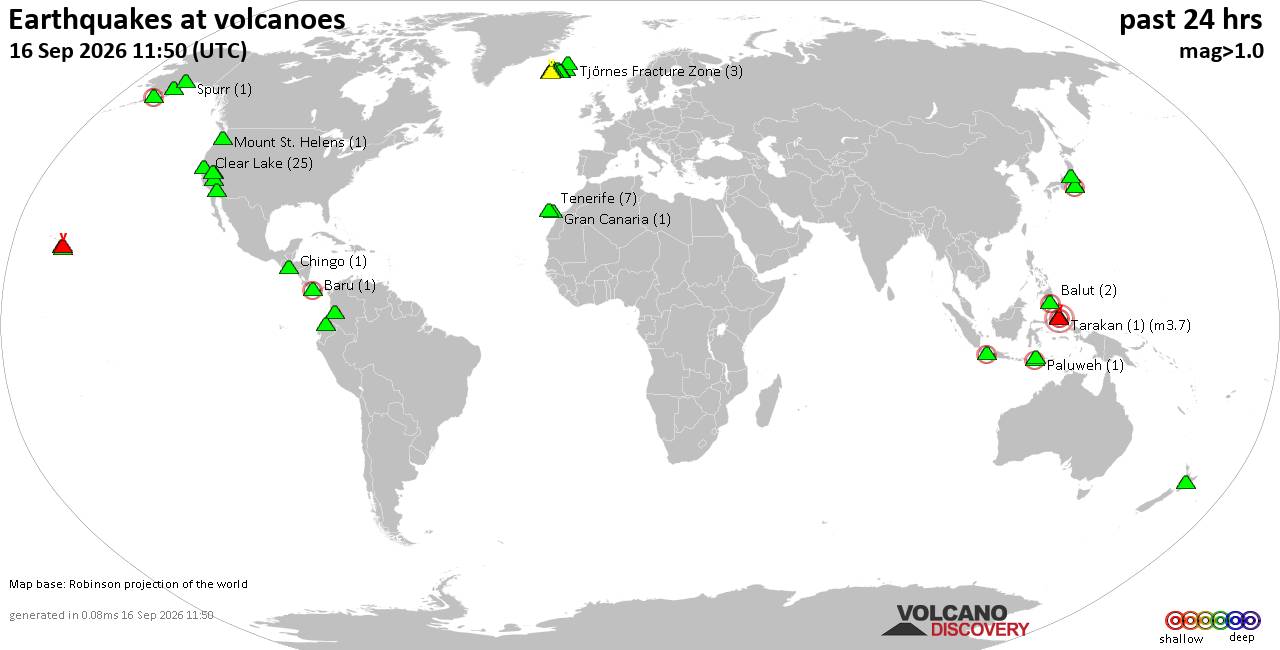
Volcano earthquake report for Wednesday, 16 September 2026
• Strong mag. 5.1 earthquake - New Britain Region, Papua New Guinea, on Wedne...
• World Earthquake Report for Wednesday, 16 September 2026
• Strong mag. 5.0 earthquake - Departamento del Choco, 86 km west of La Union...
• Strong mag. 5.1 earthquake - Hawke's Bay, New Zealand, on Thursday, Sep 17,...
• M 1.6 - 17 km SW of Petersville, Alaska
|

#475839
Mon 24 Sep 2018 06:20:PM
|
Joined: Feb 2001
Posts: 678,977
Launch Director
|
|
Launch Director
Joined: Feb 2001
Posts: 678,977 |
Abstract: One of the key problems in planetary science is the identification of the building blocks of Earth, and whether they exist within our current collection of meteorites. Stable mass independent isotopic anomalies, usually nucleosynthetic in origin, are a key tool in fingerprinting material coming from different accretionary regions within the protoplanetary disk. For a number of isotopic systems such as O, Ni, Ti and Cr, enstatite chondrites (EC) appear to be the strongest candidates for Earth'... Source: Probing Neodymium Isotopic Variations in the Inner Solar System
David Cottle
UBB Owner & Administrator
|
|



CMS The Best Conveyancing solicitors conveyancing quotes throughout the UK
For any webhosting enquiries please email webmaster@aus-city.com
|
|
Forums60
Topics829,271
Posts864,065
Members2,960
| |
Most Online102,106
Jul 10th, 2026
|
|
|
|
|

|