|
1 members (Alisa),
1,235
guests, and
21
robots. |
|
Key:
Admin,
Global Mod,
Mod
|
|
S |
M |
T |
W |
T |
F |
S |
|
|
|
|
|
1
|
2
|
3
|
|
4
|
5
|
6
|
7
|
8
|
9
|
10
|
|
11
|
12
|
13
|
14
|
15
|
16
|
17
|
|
18
|
19
|
20
|
21
|
22
|
23
|
24
|
|
25
|
26
|
27
|
28
|
29
|
30
|
31
|
|
There are no members with birthdays on this day. |
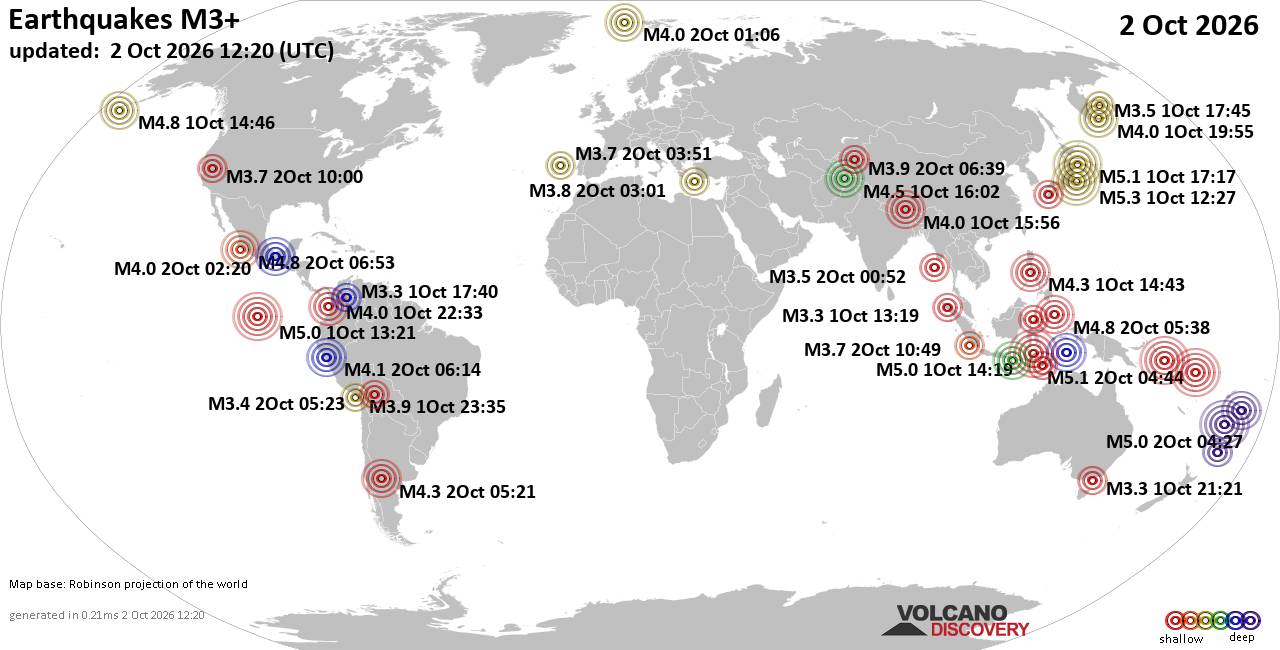
World Earthquake Report for Friday, 2 October 2026
• M 0.5 - 10 km SE of Winchester, CA
• M 1.8 - 65 km SE of Chalkyitsik, Alaska
• M 3.0 - 71 km NE of Punta Cana, Dominican Republic
• M 1.3 - 5 km NNE of Progreso, B.C., MX
• M 0.9 - 22 km ESE of Anza, CA
|

#47888
Tue 16 Mar 2010 11:48:AM
|
Joined: Feb 2001
Posts: 678,977
Launch Director
|
|
Launch Director
Joined: Feb 2001
Posts: 678,977 |
HUBBLE SPACE TELESCOPE - Continuing to Collect World Class Science
DAILY REPORT #5053
PERIOD COVERED: 5am March 15 - 5am March 16, 2010 (DOY 074/10:00z-075/10:00z)
OBSERVATIONS SCHEDULED
ACS/WFC 11995
CCD Daily Monitor (Part 2)
This program comprises basic tests for measuring the read noise and dark
current of the ACS WFC and for tracking the growth of hot pixels. The
recorded frames are used to create bias and dark reference images for
science data reduction and calibration. This program will be executed
four days per week (Mon, Wed, Fri, Sun) for the duration of Cycle 17. To
facilitate scheduling, this program is split into three proposals. This
proposal covers 320 orbits (20 weeks) from 1 February 2010 to 20 June
2010.
ACS/WFC3 11882
CCD Hot Pixel Annealing
All the data for this program is acquired using internal targets (lamps)
only, so all of the exposures should be taken during Earth occultation
time (but not during SAA passages). This program emulates the ACS
pre-flight ground calibration and post launch SMOV testing (program
8948), so that results from each epoch can be directly compared.
Extended Pixel Edge Response (EPER) and First Pixel Response (FPR) data
will be obtained over a range of signal levels for the Wide Field
Channel (WFC). The High Resolution Channel (HRC) visits have been
removed since it could not be repaired during SM4.
ACS/WFC3/STIS/CCD 11889
Photometric Cross-Calibration using Stellar Flux Standards
The purpose of this proposal is to: A) Verify the ACS HRC and WFC
photometric calibrations with a repeat visit to one of the three primary
WDs. B) Measure the change in sensitivity with time for bright stars
(which would include any small CTE contributions). C) Continue to
investigate the ~2% discrepancy between ACS flux calibration and that of
STIS (ACS ISR 2007-06). The goal is to measure any filter bandpass
shifts in ACS or rule out the possibility of shifts as the primary
contributors to the ACS/STIS discrepancy for cool stars.
COS/FUV 11895
FUV Detector Dark Monitor
The purpose of this proposal is to monitor the FUV detector dark rate by
taking long science exposures without illuminating the detector. The
detector dark rate and spatial distribution of counts will be compared
to pre-launch and SMOV data in order to verify the nominal operation of
the detector. Variations of count rate as a function of orbital position
will be analyzed to find dependence of dark rate on proximity to the
SAA. Dependence of dark rate as function of time will also be tracked.
COS/NUV 11894
NUV Detector Dark Monitor
The purpose of this proposal is to measure the NUV detector dark rate by
taking long science exposures with no light on the detector. The
detector dark rate and spatial distribution of counts will be compared
to pre-launch and SMOV data in order to verify the nominal operation of
the detector. Variations of count rate as a function of orbital position
will be analyzed to find dependence of dark rate on proximity to the
SAA. Dependence of dark rate as function of time will also be tracked.
COS/NUV/FUV 11728
The Impact of Starbursts on the Gaseous Halos of Galaxies
Perhaps the most important (yet uncertain) aspects of galaxy evolution
are the processes by which galaxies accrete gas and by which the
resulting star formation and black hole growth affects this accreting
gas. It is believed that both the form of the accretion and the nature
of the feedback change as a function of the galaxy mass. At low mass the
gas comes in cold and the feedback is provided by massive stars. At high
mass, the gas comes in hot, and the feedback is from an AGN. The
changeover occurs near the mass where the galaxy population transitions
from star-forming galaxies to red and dead ones. The population of red
and dead galaxies is building with cosmic time, and it is believed that
feedback plays an important role in this process: shutting down star
formation by heating and/or expelling the reservoir of cold halo gas. To
investigate these ideas, we propose to use COS far-UV spectra of
background QSOs to measure the properties of the halo gas in a sample of
galaxies near the transition mass that have undergone starbursts within
the past 100 Myr to 1 Gyr. The galactic wind associated with the
starburst is predicted to have affected the properties of the gaseous
halo. To test this, we will compare the properties of the halos of the
post-starburst galaxies to those of a control sample of galaxies matched
in mass and QSO impact parameter. Do the halos of the post-starburst
galaxies show a higher incidence rate of Ly-Alpha and metal
absorption-lines? Are the kinematics of the halo gas more disturbed in
the post-starbursts? Has the wind affected the ionization state and/or
the metallicity of the halo? These data will provide fresh new insights
into the role of feedback from massive stars on the evolution of
galaxies, and may also offer clues about the properties of the QSO metal
absorption-line systems at high-redshift .
NIC3/WFC3/IR 11149
Characterizing the Stellar Populations in Lyman-Alpha Emitters and Lyman
Break Galaxies at 5.7<z<7 in the Subaru Deep Field
The epoch of reionization marks a major phase transition of the
Universe, during which the intergalactic space became transparent to UV
photons. Determining when this occurred and the physical processes
involved represents the latest frontier in observational cosmology. Over
the last few years, searches have intensified to identify the population
of high-redshift (z>6) galaxies that might be responsible for this
process, but the progress is hampered partly by the difficulty of
obtaining physical information (stellar mass, age, star formation
rate/history) for individual sources. This is because the number of z>6
galaxies that have both secure spectroscopic redshifts and high-quality
infrared photometry (especially with Spitzer/IRAC) is still fairly
small. Considering that only several photometric points are available
per source, and that many model SEDs are highly degenerate, it is
crucial to obtain as many observational constraints as possible for each
source to ensure the validity of SED modeling. To better understand the
physical properties of high-redshift galaxies, we propose here to
conduct HST/NICMOS (72 orbits) and Spitzer/IRAC (102 hours) imaging of
spectroscopically confirmed, bright (z<26 mag (AB)) Ly-alpha emitters
(LAEs) and Lyman-break galaxies (LBGs) at 5.7<z<7 selected from the
Subaru Deep Field. Spectroscopic redshifts remove one critical free
parameter from SED modeling while bright source magnitudes ensure
high-quality photometric data. By making accurate determinations of
stellar masses, ages, and star-formation histories, we will specifically
address the following major questions: (1) Do LAEs and LBGs represent
physically different galaxy populations at z>6 as suggested recently?
(2) Is Ly-alpha emission systematically suppressed at z>6 with respect
to continuum emission? (i.e., are we reaching the epoch of incomplete
reionization?), and (3) Do we see any sign of abnormally young stellar
population in any of the z>6 galaxies?
S/C 11639
Catching Accreting WDs Moving into Their Instability Strip(s)
Our past HST studies of the temperatures of 9 accreting, pulsating white
dwarfs in cataclysmic variables show that 3 are in the normal
instability strip for single white dwarfs, but the other 6 are much
hotter (15, 000-16, 500K). This dual strip has been proposed to be due
to mass differences in the white dwarfs related to evolutionary history
and driven by the ionization of different elements in their respective
driving regions. In 2007, GW Lib (the brightest and best studied of the
6 hot accreting pulsators) and V455 And (the brightest and best studied
of the 3 cool accreting pulsators) underwent rare large amplitude dwarf
nova outbursts (known to heat the white dwarf) and their pulsations
disappeared. We propose COS observations to: a) take advantage of the
unprecedented opportunity to view the change in pulsation modes due to
cooling of the white dwarf envelope and b) determine the masses of the
white dwarfs to test the dual strip theory. In addition, a nova that had
its outburst 22 yrs ago has begun non-radial pulsations as it returns to
quiescence. We will use COS to determine its temperature in relation to
the instability strip for the pulsating white dwarfs in dwarf novae.
S/C 12046
COS FUV DCE Memory Dump
Whenever the FUV detector high voltage is on, count rate and current
draw information is collected, monitored, and saved to DCE memory. Every
10 msec the detector samples the currents from the HV power supplies
(HVIA, HVIB) and the AUX power supply (AUXI). The last 1000 samples are
saved in memory, along with a histogram of the number of occurrences of
each current value.
In the case of a HV transient (known as a "crackle" on FUSE), where one
of these currents exceeds a preset threshold for a persistence time, the
HV will shut down, and the DCE memory will be dumped and examined as
part of the recovery procedure. However, if the current exceeds the
threshold for less than the persistence time (a "mini-crackle" in FUSE
parlance), there is no way to know without dumping DCE memory. By
dumping and examining the histograms regularly, we will be able to
monitor any changes in the rate of "mini-crackles" and thus learn
something about the state of the detector.
STIS/CC 11845
CCD Dark Monitor Part 2
Monitor the darks for the STIS CCD.
WFC3/ACS/UVIS 11603
A Comprehensive Study of Dust Formation in Type II Supernovae with HST,
Spitzer, and Gemini
The recent discovery of three extremely bright Type II SNe, (2007it,
2007oc, 2007od) gives us a unique opportunity to combine observations
with HST, Spitzer, and Gemini to study the little understood dust
formation process in Type II Sne. Priority 1 Spitzer Cycle 5 and band 1
Gemini 2008A time has already been approved for this project. Since
late-time Type II Sne are faint and tend to be in crowded fields, we
need the high sensitivity and high spatial resolution of ACS and
NICMOS/NIC2 for these observations. This project is motivated by the
recent detection of large amounts of dust in high redshift galaxies. The
dust in these high-z galaxies must come from young, massive stars so
Type II Sne could be potential sources. The mechanism and the efficiency
of dust condensation in Type II SN ejecta are not well understood,
largely due to the lack of observational data. We plan to produce a
unique dataset, combining spectroscopy and imaging in the visible, near-
and mid-IR covering the key phase, 400-700 days after maximum when dust
is known to form in the SN ejecta. Therefore, we are proposing for
coordinated HST/NOAO observations (HST ACS, NICMOS/NIC2 & Gemini/GMOS
and TReCS) which will be combined with our Spitzer Cycle 5 data to study
these new bright Sne. The results of this program will place strong
constraints on the formation of dust seen in young high redshift (z>5)
galaxies.
WFC3/ACS/UVIS/COS/NUV/STIS 11878 /CCD HST Post-SM4 and Cycle 17 Focal
Plane Calibration
This proposal will determine and monitor the SI positions and
orientations in V2, V3 space. Accuracy goals are < 50 mas for position
and between 0.04 and 0.01 degrees for angle (depending on SI). An
astrometric open cluster (M35) is observed using guidestars with
positions determined to ~ 20 mas. One or more astrometric targets are
placed in the available SIs' major channels and POS TARGs can be used if
necessary to step the target(s) over a significant fraction of the
detector. This proposal will serve to update the SI positions and angles
in the SIAF operational database.
WFC3/IR/S/C 11929
IR Dark Current Monitor
Analyses of ground test data showed that dark current signals are more
reliably removed from science data using darks taken with the same
exposure sequences as the science data, than with a single dark current
image scaled by desired exposure time. Therefore, dark current images
must be collected using all sample sequences that will be used in
science observations. These observations will be used to monitor changes
in the dark current of the WFC3-IR channel on a day-to-day basis, and to
build calibration dark current ramps for each of the sample sequences to
be used by Gos in Cycle 17. For each sample sequence/array size
combination, a median ramp will be created and delivered to the
calibration database system (CDBS).
WFC3/UVIS 11657
The Population of Compact Planetary Nebulae in the Galactic Disk
We propose to secure narrow- and broad-band images of compact planetary
nebulae (PNe) in the Galactic Disk to study the missing link of the
early phases of post-AGB evolution. Ejected AGB envelopes become PNe
when the gas is ionized. PNe expand, and, when large enough, can be
studied in detail from the ground. In the interim, only the HST
capabilities can resolve their size, morphology, and central stars. Our
proposed observations will be the basis for a systematic study of the
onset of morphology. Dust properties of the proposed targets will be
available through approved Spitzer/IRS spectra, and so will the
abundances of the alpha- elements. We will be able thus to explore the
interconnection of morphology, dust grains, stellar evolution, and
populations. The target selection is suitable to explore the nebular and
stellar properties across the galactic disk, and to set constraints on
the galactic evolutionary models through the analysis of metallicity and
population gradients.
WFC3/UVIS 11732
The Temperature Profiles of Quasar Accretion Disks
We can now routinely measure the size of quasar accretion disks using
gravitational microlensing of lensed quasars. At optical wavelengths we
observe a size and scaling with black hole mass roughly consistent with
thin disk theory but the sizes are larger than expected from the
observed optical fluxes. One solution would be to use a flatter
temperature profile, which we can study by measuring the wavelength
dependence of the disk size over the largest possible wavelength
baseline. Thus, to understand the size discrepancy and to probe closer
to the inner edge of the disk we need to extend our measurements to UV
wavelengths, and this can only be done with HST. For example, in the UV
we should see significant changes in the optical/UV size ratio with
black hole mass. We propose monitoring 5 lenses spanning a broad range
of black hole masses with well-sampled ground based light curves,
optical disk size measurements and known GALEX UV fluxes during Cycles
17 and 18 to expand from our current sample of two lenses. We would
obtain 5 observations of each target in each Cycle, similar to our
successful strategy for the first two targets.
WFC3/UVIS 11905
WFC3 UVIS CCD Daily Monitor
The behavior of the WFC3 UVIS CCD will be monitored daily with a set of
full-frame, four-amp bias and dark frames. A smaller set of 2Kx4K
subarray biases are acquired at less frequent intervals throughout the
cycle to support subarray science observations. The internals from this
proposal, along with those from the anneal procedure (Proposal 11909),
will be used to generate the necessary superbias and superdark reference
files for the calibration pipeline (CDBS).
WFC3/UVIS 11908
Cycle 17: UVIS Bowtie Monitor
Ground testing revealed an intermittent hysteresis type effect in the
UVIS detector (both CCDs) at the level of ~1%, lasting hours to days.
Initially found via an unexpected bowtie-shaped feature in flatfield
ratios, subsequent lab tests on similar e2v devices have since shown
that it is also present as simply an overall offset across the entire
CCD, i.e., a QE offset without any discernable pattern. These lab tests
have further revealed that overexposing the detector to count levels
several times full well fills the traps and effectively neutralizes the
bowtie. Each visit in this proposal acquires a set of three 3x3 binned
internal flatfields: the first unsaturated image will be used to detect
any bowtie, the second, highly exposed image will neutralize the bowtie
if it is present, and the final image will allow for verification that
the bowtie is gone.
WFC3/UVIS 11912
UVIS Internal Flats
This proposal will be used to assess the stability of the flat field
structure for the UVIS detector throughout the 15 months of Cycle 17.
The data will be used to generate on-orbit updates for the delta-flat
field reference files used in the WFC3 calibration pipeline, if
significant changes in the flat structure are seen.
WFC3/UVIS/IR 11700
Bright Galaxies at z>7.5 with a WFC3 Pure Parallel Survey
The epoch of reionization represents a special moment in the history of
the Universe as it is during this era that the first galaxies and star
clusters are formed. Reionization also profoundly affects the
environment where subsequent generations of galaxies evolve. Our
overarching goal is to test the hypothesis that galaxies are responsible
for reionizing neutral hydrogen. To do so we propose to carry out a pure
parallel WFC3 survey to constrain the bright end of the redshift z>7.5
galaxy luminosity function on a total area of 176 arcmin^2 of sky.
Extrapolating the evolution of the luminosity function from z~6, we
expect to detect about 20 Lyman Break Galaxies brighter than M_* at z~8
significantly improving the current sample of only a few galaxies known
at these redshifts. Finding significantly fewer objects than predicted
on the basis of extrapolation from z=6 would set strong limits to the
brightness of M_*, highlighting a fast evolution of the luminosity
function with the possible implication that galaxies alone cannot
reionize the Universe. Our observations will find the best candidates
for spectroscopic confirmation, that is bright z>7.5 objects, which
would be missed by small area deeper surveys. The random pointing nature
of the program is ideal to beat cosmic variance, especially severe for
luminous massive galaxies, which are strongly clustered. In fact our
survey geometry of 38 independent fields will constrain the luminosity
function like a contiguous single field survey with two times more area
at the same depth. Lyman Break Galaxies at z>7.5 down to m_AB=26.85 (5
sigma) in F125W will be selected as F098M dropouts, using three to five
orbits visits that include a total of four filters (F606W, F098M, F125W,
F160W) optimized to remove low-redshift interlopers and cool stars. Our
data will be highly complementary to a deep field search for high- z
galaxies aimed at probing the faint end of the luminosity function,
allowing us to disentangle the degeneracy between faint end slope and
M_* in a Schechter function fit of the luminosity function. We waive
proprietary rights for the data. In addition, we commit to release the
coordinates and properties of our z>7.5 candidates within one month from
the acquisition of each field.
FLIGHT OPERATIONS SUMMARY:
Significant Spacecraft Anomalies: (The following are preliminary reports
of potential non-nominal performance that will be investigated.)
HSTARS:
12220 - REAcq(1,2,1) scheduled at 074/11:34:25z was observed to have
made multiple attempts to achieve Coarse Track Data Valid.
COMPLETED OPS REQUEST: (None)
COMPLETED OPS NOTES: (None)
SCHEDULED SUCCESSFUL
FGS GSAcq 7 7
FGS REAcq 7 7
OBAD with Maneuver 7 7
SIGNIFICANT EVENTS: (None)
David Cottle
UBB Owner & Administrator
|
|



CMS The Best Conveyancing solicitors conveyancing quotes throughout the UK
For any webhosting enquiries please email webmaster@aus-city.com
|
|
Forums60
Topics853,218
Posts888,013
Members2,960
| |
Most Online102,106
Jul 10th, 2026
|
|
|