|
0 members (),
1,905
guests, and
27
robots. |
|
Key:
Admin,
Global Mod,
Mod
|
|
S |
M |
T |
W |
T |
F |
S |
|
|
|
|
|
1
|
2
|
3
|
|
4
|
5
|
6
|
7
|
8
|
9
|
10
|
|
11
|
12
|
13
|
14
|
15
|
16
|
17
|
|
18
|
19
|
20
|
21
|
22
|
23
|
24
|
|
25
|
26
|
27
|
28
|
29
|
30
|
31
|
|
There are no members with birthdays on this day. |
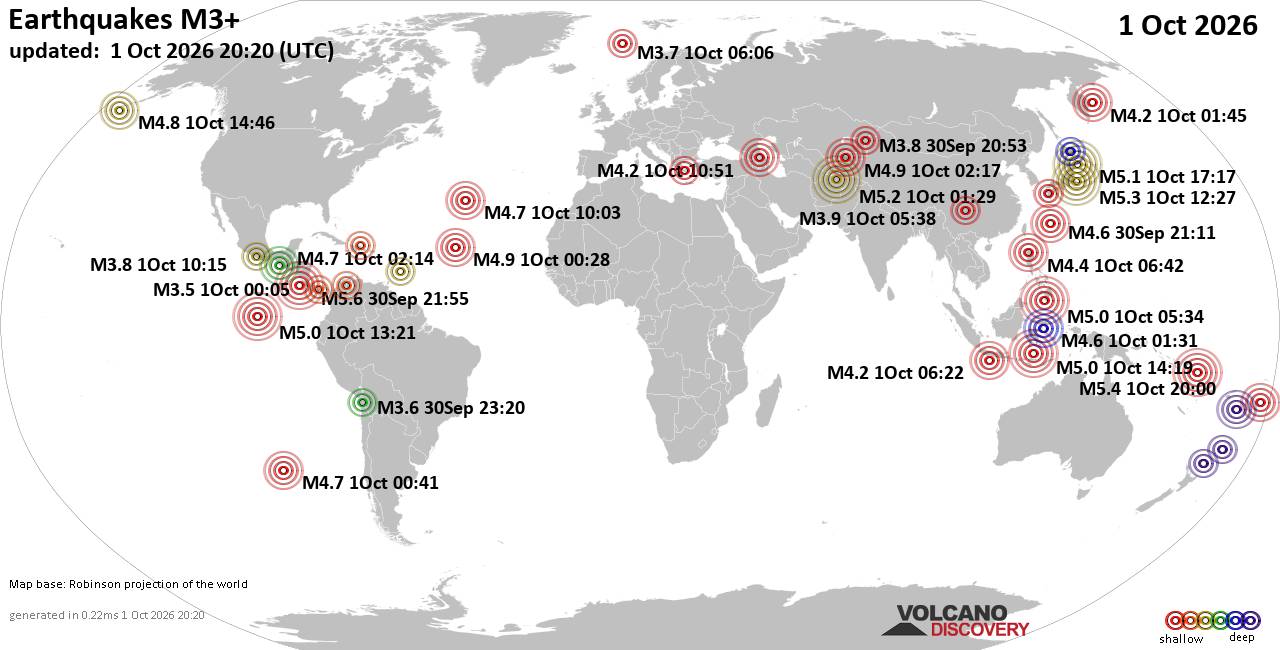
World Earthquake Report for Thursday, 1 October 2026
• M 1.8 - 75 km SE of Pope-Vannoy Landing, Alaska
• M 1.7 - 25 km ESE of Ocotillo Wells, CA
• M 5.1 - 171 km SE of Lata, Solomon Islands
• M 5.1 - 171 km SE of Lata, Solomon Islands
• M 0.9 - 27 km S of Trona, CA
|

#49299
Mon 12 Jul 2010 01:39:PM
|
Joined: Feb 2001
Posts: 678,977
Launch Director
|
|
Launch Director
Joined: Feb 2001
Posts: 678,977 |
HUBBLE SPACE TELESCOPE - Continuing to Collect World Class Science
DAILY REPORT #5135
PERIOD COVERED: 5am July 9 - 5am July 12, 2010 (DOY 190/09:00z-193/09:00z)
FLIGHT OPERATIONS SUMMARY:
Significant Spacecraft Anomalies: (The following are preliminary reports
of potential non-nominal performance that will be investigated.)
HSTARS:
12325 - GSAcq(2,1,1) at 190/17:54:12z resulted in Fine lock Backup on FGS2.
The subsequent REAcqs at 190/19:29:27z and 190/21:05:20z also resulted in
fine lock backup on FGS2.
Observations possibly affected COS 98-109 Proposal ID# 11598;
WFC3 135 Proposal ID# 11908
12326 - GSAcq(1,2,1) at 191/01:33:56z resulted in fine lock backup on
FGS2 after scan step limit exceeded on FGS2. The subsequent REAcq at
191/02:52:29z also resulted in fine lock backup on FGS2.
Observations possibly affected: STIS 36, 37 Proposal ID# 11845;
STIS 38-40 Proposal ID# 11847; WFC3 140-142 Proposal ID# 11661
COMPLETED OPS REQUEST:
18871-0 - Execute ROP NS-12 to Reset STIS FSW Error Count @ 190/1450z
17543-3 - Dump OBAD Tables After Failed OBAD @ 191/2048z, 191/2049z
18870-1 - Eclipse Management for 192/18:26 Eclipse (July 11) @ 192/2141z
COMPLETED OPS NOTES: (None)
SCHEDULED SUCCESSFUL
FGS GSAcq 20 20
FGS REAcq 23 23
OBAD with Maneuver 16 16
SIGNIFICANT EVENTS:
Lunar Solar Eclipse 2010/192
OPS Request 18870 was successfully executed to configure the FSW
processing of CSS data and temporarily disable Rate of Charge (ROC)
safemode test during the moon shadow that occurred from 192/18:16z to
18:54z.
During the eclipse period, the minimum FSW SOC was approximately 438
A-hr, the maximum 482 A-hr and the FSW Benchmark was not reset. However,
the batteries were charged nominally on the following orbit and
benchmark reset was achieved.
OBSERVATIONS SCHEDULED:
S/C 12046
COS FUV DCE Memory Dump
Whenever the FUV detector high voltage is on, count rate and current
draw information is collected, monitored, and saved to DCE memory. Every
10 msec the detector samples the currents from the HV power supplies
(HVIA, HVIB) and the AUX power supply (AUXI). The last 1000 samples are
saved in memory, along with a histogram of the number of occurrences of
each current value.
In the case of a HV transient (known as a "crackle" on FUSE), where one
of these currents exceeds a preset threshold for a persistence time, the
HV will shut down, and the DCE memory will be dumped and examined as
part of the recovery procedure. However, if the current exceeds the
threshold for less than the persistence time (a "mini-crackle" in FUSE
parlance), there is no way to know without dumping DCE memory. By
dumping and examining the histograms regularly, we will be able to
monitor any changes in the rate of "mini-crackles" and thus learn
something about the state of the detector.
ACS/WFC 11996
CCD Daily Monitor (Part 3)
This program comprises basic tests for measuring the read noise and dark
current of the ACS WFC and for tracking the growth of hot pixels. The
recorded frames are used to create bias and dark reference images for
science data reduction and calibration. This program will be executed
four days per week (Mon, Wed, Fri, Sun) for the duration of Cycle 17. To
facilitate scheduling, this program is split into three proposals. This
proposal covers 308 orbits (19.25 weeks) from 21 June 2010 to 1 November
2010.
WFC3/IR 11931
IR Signal Non-Linearity Calibration
These observations will be used to quantify the non-linear signal
behavior of the IR channel, as well as to create the IR channel
non-linearity calibration reference file. The non-linearity behavior of
each pixel in the detector will be investigated through the use of flat
fields, while the photometric behavior of point sources will be studied
using observations of 47 Tuc.
WFC3/IR/S/C 11929
IR Dark Current Monitor
Analyses of ground test data showed that dark current signals are more
reliably removed from science data using darks taken with the same
exposure sequences as the science data, than with a single dark current
image scaled by desired exposure time. Therefore, dark current images
must be collected using all sample sequences that will be used in
science observations. These observations will be used to monitor changes
in the dark current of the WFC3-IR channel on a day-to-day basis, and to
build calibration dark current ramps for each of the sample sequences to
be used by Gos in Cycle 17. For each sample sequence/array size
combination, a median ramp will be created and delivered to the
calibration database system (CDBS).
WFC3/UV 11923
UVIS Filter Wedge Check
The position of each UVIS filter will be checked to verify that the
filters meet the CEI (Contract End Item) specification for image
displacement. We will observe NGC 1850 with all full-frame UVIS filters
using a subarray (UVIS1-C512A) without moving the telescope, as well as
the quad filters with a 512x512 specifically designed subarray. We will
also acquire one grism exposure. The relative displacement of the stars
in each image will be measured from one filter to the next.
WFC3/UV 11918
WFC3 UVIS Image Quality
The UVIS imaging performance over the detector will be assessed
periodically (every 4 months) in two passbands (F275W and F621M) to
check for image stability. The field around star 58 in the open cluster
NGC188 is the chosen target because it is sufficiently dense to provide
good sampling over the FOV while providing enough isolated stars to
permit accurate PSF (point spread function) measurement. It is available
year-round and used previously for ACS image quality assessment. The
field is astrometric, and astrometric guide stars will be used, so that
the plate scale and image orientation may also be determined if
necessary (as in SMOV proposals 11436 and 11442). Full frame images will
be obtained at each of 4 POSTARG offset positions designed to improve
sampling over the detector.
This proposal is a periodic repeat (once every 4 months) of visits
similar to those in SMOV proposal 11436 (activity ID WFC3-23). The data
will be analyzed using the code and techniques described in ISR WFC3
2008-40 (Hartig). Profiles of encircled energy will be monitored and
presented in an ISR. If an update to the SIAF is needed, (V2, V3)
locations of stars will be obtained from the Flight Ops Sensors and
Calibrations group at GSFC, the (V2, V3) of the reference pixel and the
orientation of the detector will be determined by the WFC3 group, and
the Telescopes group will update and deliver the SIAF to the PRDB
branch.
The specific PSF metrics to be examined are encircled energy for
aperture diameter 0.15, 0.20, 0.25, and 0.35 arcsec, FWHM, and
sharpness. (See ISR WFC3 2008-40 tables 2 and 3 and preceding text.)
about 20 stars distributed over the detector will be measured in each
exposure for each filter. The mean, rms, and rms of the mean will be
determined for each metric. The values determined from each of the 4
exposures per filter within a visit will be compared to each other to
see to what extent they are affected by "breathing". Values will be
compared from visit to visit, starting with the values obtained during
SMOV after the fine alignment has been performed, to see if the measures
of the compactness of the PSF indicate degradation over time. The
analysis will be repeated for stars on the inner part of the detector
and stars on the outer part of the detector to check for differential
degradation of the PSF.
As an example of the analysis, one can examine the sharpness of the
F275W PSF exposures made during thermal vacuum testing (ISR WFC3
2008-40). To compare two samples, one can define the PSFs on each CCD
chip as a sample of 8. The mean, rms, and rms of the mean sharpness are
0.0676, 0.0093, and 0.0035 for one chip, and 0.0701, 0.0085, and 0.0032
for the other. The difference of the means is 0.0025 and the statistical
error in that difference is 0.0048, so the difference is not
significant.
WFC3/UVIS 11908
Cycle 17: UVIS Bowtie Monitor
Ground testing revealed an intermittent hysteresis type effect in the
UVIS detector (both CCDs) at the level of ~1%, lasting hours to days.
Initially found via an unexpected bowtie-shaped feature in flatfield
ratios, subsequent lab tests on similar e2v devices have since shown
that it is also present as simply an overall offset across the entire
CCD, i.e., a QE offset without any discernable pattern. These lab tests
have further revealed that overexposing the detector to count levels
several times full well fills the traps and effectively neutralizes the
bowtie. Each visit in this proposal acquires a set of three 3x3 binned
internal flatfields: the first unsaturated image will be used to detect
any bowtie, the second, highly exposed image will neutralize the bowtie
if it is present, and the final image will allow for verification that
the bowtie is gone.
WFC3/UVIS 11905
WFC3 UVIS CCD Daily Monitor
The behavior of the WFC3 UVIS CCD will be monitored daily with a set of
full-frame, four-amp bias and dark frames. A smaller set of 2Kx4K
subarray biases are acquired at less frequent intervals throughout the
cycle to support subarray science observations. The internals from this
proposal, along with those from the anneal procedure (Proposal 11909),
will be used to generate the necessary superbias and superdark reference
files for the calibration pipeline (CDBS).
ACS/WFC3 11882
CCD Hot Pixel Annealing
This program continues the monthly anneal that has taken place every
four weeks for the last three cycles. We now obtain WFC biases and darks
before and after the anneal in the same sequence as is done for the ACS
daily monitor (now done 4 times per week). So the anneal observation
supplements the monitor observation sets during the appropriate week.
Extended Pixel Edge Response (EPER) and First Pixel Response (FPR) data
will be obtained over a range of signal levels for the Wide Field
Channel (WFC). This program emulates the ACS pre-flight ground
calibration and post-launch SMOV testing (program 8948), so that results
from each epoch can be directly compared. The High Resolution Channel
(HRC) visits have been removed since it could not be repaired during
SM4.
This program also assesses the read noise, bias structure, and amplifier
cross-talk of ACS/WFC using the GAIN=1.4 A/D conversion setting. This
investigation serves as a precursor to a more comprehensive study of WFC
performance using GAIN=1.4.
STIS/CC 11847
CCD Bias Monitor-Part 2
Monitor the bias in the 1x1, 1x2, 2x1, and 2x2 bin settings at gain=1,
and 1x1 at gain = 4, to build up high-S/N superbiases and track the
evolution of hot columns.
STIS/CC 11845
CCD Dark Monitor Part 2
Monitor the darks for the STIS CCD.
ACS/WFC 11831
Probing X-Ray Jet Emission Mechanisms in a Complete Blazar Sample
We propose deep (70 ksec) followup Chandra X-ray observations and new
HST ACS/WFC/F475W observations of two quasars, viz., 0106+013 and
1641+399, belonging to the complete flux-limited MOJAVE Chandra blazar
sample. These two quasars have HST WFPC2/F702W data available in the
archive. Combining the existing optical and radio data with the new
Chandra and HST data at an additional optical band we aim to construct a
significantly more accurate multi-waveband (four frequency) spectral
energy distributions for distinct knots in the jets. This will serve as
a first step towards resolving longstanding ambiguities surrounding the
primary X-ray emission mechanisms in a well-defined sample of powerful
FR-II class jets.
COS/NUV/FUV 11727
UV Spectroscopy of Local Lyman Break Galaxy Analogs: New Clues to Galaxy
Formation in the Early Universe
Much of our information about galaxy evolution and the interaction
between galaxies and the IGM at high-z has been provided by the Lyman
Break Galaxies (LBGs). However, it is difficult to investigate these
faint and distant objects in detail. To address this, we have used the
GALEX All-Sky Imaging Survey and the SDSS to identify for the first time
a rare population of low- redshift galaxies with properties remarkably
similar to the high-redshift LBGs. These local "Lyman Break Analogs"
(LBAs) resemble LBGs in terms of morphology, size, UV luminosity, star
formation rate, UV surface brightness, stellar mass, velocity
dispersion, metallicity, and dust content. We are assembling a wide
range of data on these objects with the goal of using them as local
laboratories for better understanding the relevant astrophysical
processes in LBGs. These data include HST imaging (95 orbits in Cy15 and
16), Spitzer photometry and spectroscopy, Chandra and XMM X-ray imaging
and spectroscopy, and near-IR integral field spectroscopy (VLT, Keck,
and Gemini). In this proposal we are requesting the most important
missing puzzle piece: far-UV spectra with a signal-to-noise and spectral
resolution significantly better than available for typical LBGs. We will
use these spectra to study the LBA's galactic winds, probe the processes
that regulate the escape of Ly-a and Lyman continuum radiation,
determine chemical abundances for the stars and gas, and constrain the
form of the high-end of the Initial Mass Function. Adding these new COS
data will give us vital information about these extraordinary sites of
star formation in the local universe. In so-doing it will also shed new
light on the processes that led to the formation of stars, the building
of galaxies, and the enrichment and heating of the IGM in the early
universe.
WFC3/UVIS 11697
Proper Motion Survey of Classical and SDSS Local Group Dwarf Galaxies
Using the superior resolution of HST, we propose to continue our proper
motion survey of Galactic dwarf galaxies. The target galaxies include
one classical dwarf, Leo II, and six that were recently identified in
the Sloan Digital Sky Survey data: Bootes I, Canes Venatici I, Canes
Venatici II, Coma Berenices, Leo IV, and Ursa Major II. We will observe
a total of 16 fields, each centered on a spectroscopically-confirmed
QSO. Using QSOs as standards of rest in measuring absolute proper
motions has proven to be the most accurate and most efficient method.
HST is our only option to quickly determine the space motions of the
SDSS dwarfs because suitable ground-based imaging is only a few years
old and such data need several decades to produce a proper motion. The
two most distant galaxies in our sample will require time baselines of
four years to achieve our goal of a 30-50 km/s uncertainty in the
tangential velocity; given this and the finite lifetime of HST, it is
imperative that first-epoch observations be taken in this cycle. The
SDSS dwarfs have dramatically lower surface brightnesses and
luminosities than the classical dwarfs. Proper motions are crucial for
determining orbits of the galaxies and knowing the orbits will allow us
to test theories for the formation and evolution of these galaxies and,
more generally, for the formation of the Local Group.
WFC3/IR 11696
Infrared Survey of Star Formation Across Cosmic Time
We propose to use the unique power of WFC3 slitless spectroscopy to
measure the evolution of cosmic star formation from the end of the
reionization epoch at z>6 to the close of the galaxy- building era at
z~0.3.Pure parallel observations with the grisms have proven to be
efficient for identifying line emission from galaxies across a broad
range of redshifts. The G102 grism on WFC3 was designed to extend this
capability to search for Ly-alpha emission from the first galaxies.
Using up to 250 orbits of pure parallel WFC3 spectroscopy, we will
observe about 40 deep (4-5 orbit) fields with the combination of G102
and G141, and about 20 shallow (2-3 orbit) fields with G141 alone.
Our primary science goals at the highest redshifts are: (1) Detect Lya
in ~100 galaxies with z>5.6 and measure the evolution of the Lya
luminosity function, independent of of cosmic variance; 2) Determine the
connection between emission line selected and continuum-break selected
galaxies at these high redshifts, and 3) Search for the proposed
signature of neutral hydrogen absorption at re-ionization. At
intermediate redshifts we will (4) Detect more than 1000 galaxies in
Halpha at 0.5<z<1.8 to measure the evolution of the extinction-corrected
star formation density across the peak epoch of star formation. This is
over an order-of-magnitude improvement in the current statistics, from
the NICMOS Parallel grism survey. (5) Trace ``cosmic downsizing" from
0.5<z<2.2; and (6) Estimate the evolution in reddening and metallicty in
star- forming galaxies and measure the evolution of the Seyfert
population. For hundreds of spectra we will be able to measure one or
even two line pair ratios -- in particular, the Balmer decrement and
[OII]/[OIII] are sensitive to gas reddening and metallicity. As a bonus,
the G102 grism offers the possibility of detecting Lya emission at
z=7-8.8.
To identify single-line Lya emitters, we will exploit the wide
0.8--1.9um wavelength coverage of the combined G102+G141 spectra. All
[OII] and [OIII] interlopers detected in G102 will be reliably separated
from true LAEs by the detection of at least one strong line in the G141
spectrum, without the need for any ancillary data. We waive all
proprietary rights to our data and will make high-level data products
available through the ST/ECF.
WFC3/ACS/UVIS 11684
The First Proper Motion Measurement for M31: Dynamics and Mass of the
Local Group
We will perform observations to determine the proper motion of the
Andromeda galaxy M31, which has been sought for almost a century without
success. While challenging, this measurement has now become possible due
to the availability of existing deep ACS/WFC images of several M31
fields. The requested second epoch images will yield the average shift
of the M31 stars with respect to compact galaxies in the background. Our
observing strategy uses six different fields (three primary and three
coordinated parallel) with two different instruments (ACS and WFC3) to
provide a maximum handle on possible systematic effects. The expected
result will be sufficiently accurate to: (a) discriminate between
different histories for the dynamics of the Local Group; (b) constrain
the mass distribution of the Local Group; (c) determine the details of
the expected future merger between M31 and the Milky Way; (d) infer the
past interaction history between M31 and M33; (e) constrain the internal
proper motion kinematics of the M31 spheroid, outer disk, and tidal
stream; and (f) obtain a pilot estimate of the M31 distance through the
method of rotational parallax.
WFC3/UVI 11680
The Main Sequence Luminosity Function of Low-Mass Globular Clusters
Theoretical work indicates that the dynamical evolution of globular
clusters of low mass and low central concentration is strongly
determined by mass-loss processes, such as stellar evaporation and tidal
stripping, that can eventually lead to cluster dissolution. In fact,
mass loss and cluster disruption is now considered to be a viable
explanation for the form of the faint end of the Milky Way globular
cluster luminosity function. A clear observational demonstration of the
prevalence of cluster mass-loss would have ramifications not only for
the dynamical evolution of individual globular clusters and their
internal stellar mass distributions, but also for the relationships
between halo field and cluster stars and the properties of globular
cluster systems in galaxies. Our previous WFPC2 imaging of the low-mass
diffuse halo cluster Palomar 5 revealed a main sequence deficient in
stars compared to other low-concentration globular clusters of much
higher mass, consistent with there having been a considerable loss of
stars from this system. But is Pal 5 typical of low-mass,
low-concentration halo clusters? We propose to place the mass-loss
scenario on a firm observational footing (or otherwise) by using WFC3
imaging to measure the main-sequence stellar mass functions of two of
the lowest-mass lowest-concentration globular clusters in the Milky Way,
AM-4 and Palomar 13, in order to search for analogous evidence of
stellar depletion.
WFC3/UVIS 11661
The Black Hole Mass - Bulge Luminosity Relationship for the Nearest
Reverberation-Mapped AGNs
We propose to obtain WFC3 host galaxy images of the eight nearest AGNs
with masses from reverberation mapping, and one star as a PSF model.
These images will allow us to determine with unprecedented accuracy the
bulge luminosities of the host galaxies, a goal which is not achievable
from the ground due to the blurring of the very bright PSF component
under typical, and even very good, seeing conditions. High-resolution
ACS images of the host galaxies of more luminous AGNs reveal that the
black hole mass-bulge luminosity and black hole mass-bulge mass
relationships for AGNs are not well constrained and arise from what
appear to be fundamentally flawed data sets. With the addition of the
images proposed here to our current sample of ACS images, we will be
able to extend our determinations of the black hole mass- bulge
luminosity and black hole mass-bulge mass relationships for AGNs by an
order of magnitude and test our preliminary results for these
fundamentally important relationships against those previously
determined for quiescent galaxies.
COS/NUV/ACS/WFC/FUV 11658
Probing the Outer Regions of M31 with QSO Absorption Lines
We propose HST-COS spectroscopy of 10 quasars behind M31. Absorption
lines due to MgII, FeII, CIV, and a variety of other lines will be
searched for and measured. Six quasars lie between 1 and 4.2 Holmberg
radii near the major axis on the southwest side, where confusion with
Milky Way gas is minimized. Two lie even farther out on the southwest
side of the major axis. One lies within 1 Holmberg radius. Two of the 10
pass through M31's high velocity clouds seen in a detailed 21 cm
emission map. Exposure time estimates were based on SDSS magnitudes and
available GALEX magnitudes. Thus, using the most well-studied external
spiral galaxy in the sky, our observations will permit us to check,
better than ever before, the standard picture that quasar metal-line
absorption systems such as MgII and CIV arise in an extended gaseous
halo/disk of a galaxy well beyond its observable optical radius. The
observations will yield insights into the nature of the gas and its
connection to the very extended stellar components of M31 that have
recently been studied. Notably the observations have the potential of
extending M31's rotation curve to very large galactocentric distances,
thereby placing new constrants on M31's dark matter halo.
Finally, we also request that the coordinated parallel orbits be
allocated to this program so that we may image the resolved stellar
content of M31's halo and outer disk.
WFC3/IR 11648
WFC3 Spectroscopy of an X-ray Luminous Galaxy Cluster at z>2
We propose to obtain deep WFC3+G141 grism observations to
spectroscopically confirm a remarkable z>2 cluster of galaxy candidate.
Over a 1000 arcmin^2 field imaged with Spitzer's IRAC we have discovered
a compact (<30�� diameter) concentration of extremely red galaxies with
a factor of >40 overdensity over the adjacent field. Among these
galaxies for which we can derive meaningful photometric redshifts, 17
are consistent with zphot=2-2.5, making it very likely that the
concentration is a real cluster at such high redshift. This is further
supported by a 3.5 sigma detection of extended X-Ray emission on
XMM-Newton data, by a likely color magnitude sequence of red galaxies,
and by the presence of a giant galaxy consistent with a BCG at the
cluster redshift. The general faintness of the red galaxies in all
optical bands and their high redshifts prevent confirmation of this
cluster with ordinary optical spectroscopy. The WFC3 camera with G141
grism provides the only way to confirm this record high-z cluster and
measure its redshift from spectral breaks typical of old stellar
populations. Our deep integrations will reveal redshifts for at least 19
ultra-red galaxies in the area and of a similar number of bluer galaxies
at the cluster redshift. Knowledge of the cluster redshift based on the
HST spectra will allow us to reach important scientific aims: find the
most distant Xray emitting evolved galaxy cluster, determine membership
of the other galaxies from photometric SED analysis, study their stellar
population properties, characterize the color-magnitude relation with
constraints on the formation redshift. The proposed observations will
establish a first z>2 benchmark for cluster field comparisons of galaxy
formation at this highest redshift and will firmly establish the
progenitors of local rich Abell clusters.
STIS/CC 11626
Searching for the Upper Mass Limit in NGC 3603, the Nearest Giant H II
Region
What is the mass of the highest mass star? 100Mo? 150Mo? 200Mo? Or
higher? Theory gives us little guidance as to what physics sets the
upper mass limit, presuming one exists. Is it due to limitations in the
highest masses that can coalesce? Or is it due to stability issues in
such a behemoth? Observationally, the upper mass limit is poorly
constrained at present, with the strongest evidence coming from the
K-band luminosity function of the Arches cluster near the Galactic
Center. Here we propose to investigate this question by determining the
Initial Mass Function of NGC 3603, the nearest giant H II region. This
cluster is known to contain a wealth of O3 and hydrogen-rich
Wolf-Rayets, the most luminous and massive of stars. By constructing an
accurate H-R diagram for the cluster, we will construct a present day
mass function using newly computed high mass evolutionary tracks, and
convert this to an initial mass function using the inferred ages. This
will allow us to see whether or not there is a true deficit of high mass
stars, evidence of an upper mass cutoff. At the same time we are likely
to establish good masses for the highest mass stars ever determined. We
have laid the groundwork for this project using the Magellan 6.5-m
telescope and the excellent seeing found on Las Campanas, plus analysis
of archival ACS/HRS frames, but we now need to obtain spectra of the
stars unobservable from the ground. This can only be done with HST and a
reburbished STIS.
COS/NUV/FUV 11598
How Galaxies Acquire their Gas: A Map of Multiphase Accretion and
Feedback in Gaseous Galaxy Halos
We propose to address two of the biggest open questions in galaxy
formation - how galaxies acquire their gas and how they return it to the
IGM - with a concentrated COS survey of diffuse multiphase gas in the
halos of SDSS galaxies at z = 0.15 - 0.35. Our chief science goal is to
establish a basic set of observational facts about the physical state,
metallicity, and kinematics of halo gas, including the sky covering
fraction of hot and cold material, the metallicity of infall and
outflow, and correlations with galaxy stellar mass, type, and color -
all as a function of impact parameter from 10 - 150 kpc. Theory suggests
that the bimodality of galaxy colors, the shape of the luminosity
function, and the mass-metallicity relation are all influenced at a
fundamental level by accretion and feedback, yet these gas processes are
poorly understood and cannot be predicted robustly from first
principles. We lack even a basic observational assessment of the
multiphase gaseous content of galaxy halos on 100 kpc scales, and we do
not know how these processes vary with galaxy properties. This ignorance
is presently one of the key impediments to understanding galaxy
formation in general. We propose to use the high-resolution gratings
G130M and G160M on the Cosmic Origins Spectrograph to obtain sensitive
column density measurements of a comprehensive suite of multiphase ions
in the spectra of 43 z < 1 QSOs lying behind 43 galaxies selected from
the Sloan Digital Sky Survey. In aggregate, these sightlines will
constitute a statistically sound map of the physical state and
metallicity of gaseous halos, and subsets of the data with cuts on
galaxy mass, color, and SFR will seek out predicted variations of gas
properties with galaxy properties. Our interpretation of these data will
be aided by state-of-the-art hydrodynamic simulations of accretion and
feedback, in turn providing information to refine and test such models.
We will also use Keck, MMT, and Magellan (as needed) to obtain optical
spectra of the QSOs to measure cold gas with Mg II, and optical spectra
of the galaxies to measure SFRs and to look for outflows. In addition to
our other science goals, these observations will help place the Milky
Way's population of multiphase, accreting High Velocity Clouds (HVCs)
into a global context by identifying analogous structures around other
galaxies. Our program is designed to make optimal use of the unique
capabilities of COS to address our science goals and also generate a
rich dataset of other absorption-line systems.
WFC3/UVIS 11594
A WFC3 Grism Survey for Lyman Limit Absorption at z=2
We propose to conduct a spectroscopic survey of Lyman limit absorbers at
redshifts 1.8 < z < 2.5, using WFC3 and the G280 grism. This proposal
intends to complete an approved Cycle 15 SNAP program (10878), which was
cut short due to the ACS failure. We have selected 64 quasars at 2.3 < z
< 2.6 from the Sloan Digital Sky Survey Spectroscopic Quasar Sample, for
which no BAL signature is found at the QSO redshift and no strong metal
absorption lines are present at z > 2.3 along the lines of sight. The
survey has three main observational goals. First, we will determine the
redshift frequency dn/dz of the LLS over the column density range 16.0 <
log(NHI) < 20.3 cm^-2. Second, we will measure the column density
frequency distribution f(N) for the partial Lyman limit systems (PLLS)
over the column density range 16.0 < log(NHI) < 17.5 cm^-2. Third, we
will identify those sightlines which could provide a measurement of the
primordial D/H ratio. By carrying out this survey, we can also help
place meaningful constraints on two key quantities of cosmological
relevance. First, we will estimate the amount of metals in the LLS using
the f(N), and ground based observations of metal line transitions.
Second, by determining f(N) of the PLLS, we can constrain the amplitude
of the ionizing UV background at z~2 to a greater precision. This survey
is ideal for a snapshot observing program, because the on-object
integration times are all well below 30 minutes, and follow-up
observations from the ground require minimal telescope time due to the
QSO sample being bright.
COS/FUV/STIS/CCD/MA1 11592
Testing the Origin(s) of the Highly Ionized High-Velocity Clouds: A
Survey of Galactic Halo Stars at z>3 kpc
Cosmological simulation predicts that highly ionized gas plays an
important role in the formation and evolution of galaxies and their
interplay with the intergalactic medium. The NASA HST and FUSE missions
have revealed high-velocity CIV and OVI absorption along extragalactic
sightlines through the Galactic halo. These highly ionized high-velocity
clouds (HVCs) could cover 85% of the sky and have a detection rate
higher than the HI HVCs. Two competing, equally exciting, theories may
explain the origin of these highly ionized HVCs: 1) the "Galactic"
theory, where the HVCs are the result of feedback processes and trace
the disk-halo mass exchange, perhaps including the accretion of matter
condensing from an extended corona; 2) the "Local Group" theory, where
they are part of the local warm-hot intergalactic medium, representing
some of the missing baryonic matter of the Universe. Only direct
distance determinations can discriminate between these models. Our group
has found that some of these highly ionized HVCs have a Galactic origin,
based on STIS observations of one star at z<5.3 kpc. We propose an HST
FUV spectral survey to search for and characterize the high velocity NV,
CIV, and SiIV interstellar absorption toward 24 stars at much larger
distances than any previous searches (4<d<21 kpc, 3<|z|<13 kpc). COS
will provide atomic to highly ionized species (e.g.,OI, CII, CIV, SiIV)
that can be observed at sufficient resolution (R~22, 000) to not only
detect these highly ionized HVCs but also to model their properties and
understand their physics and origins. This survey is only possible
because of the high sensitivity of COS in the FUV spectral range.
WFC3/UVIS 11588
Galaxy-Scale Strong Lenses from the CFHTLS Survey
We aim to investigate the origin and evolution of early-type galaxies
using gravitational lensing, modeling the mass profiles of objects over
a wide range of redshifts. The low redshift (z = 0.2) sample is already
in place following the successful HST SLACS survey; we now propose to
build up and analyze a sample of comparable size (~50 systems) at high
redshift (0.4 < z < 0.9) using HST WFC3 Snapshot observations of lens
systems identified by the SL2S collaboration in the CFHT legacy survey.
WFC3/UVI/IR 11557
The Nature of Low-Ionization BAL QSOs
The rare subclass of optically-selected QSOs known as low-ionization
broad absorption line (LoBAL) QSOs show signs of high-velocity gas
outflows and reddened continua indicative of dust obscuration. Recent
studies show that galaxies hosting LoBAL QSOs tend to be ultraluminous
infrared systems that are undergoing mergers, and that have dominant
young (< 100 Myr) stellar populations. Such studies support the idea
that LoBAL QSOs represent a short- lived phase early in the life of
QSOs, when powerful AGN-driven winds are blowing away the dust and gas
surrounding the QSO. If so, understanding LoBALs would be critical in
the study of phenomena regulating black hole and galaxy evolution, such
as AGN feedback and the early stages of nuclear accretion. These
results, however, come from very small samples that may have serious
selection biases. We are therefore taking a more aggressive approach by
conducting a systematic multiwavelength study of a volume limited sample
of LoBAL QSOs at 0.5 < z < 0.6 drawn from SDSS. We propose to image
their host galaxies in two bands using WFC3/UVIS and WFC3/IR to study
the morphologies for signs of recent tidal interactions and to map their
interaction and star forming histories. We will thus determine whether
LoBAL QSOs are truly exclusively found in young merging systems that are
likely to be in the early stages of nuclear accretion.
NIC2/WFC3/IR 11219
Active Galactic Nuclei in Nearby Galaxies: A New View of the Origin of
the Radio-Loud Radio- Quiet Dichotomy?
Using archival HST and Chandra observations of 34 nearby early-type
galaxies (drawn from a complete radio selected sample) we have found
evidence that the radio-loud/radio-quiet dichotomy is directly connected
to the structure of the inner regions of their host galaxies in the
following sense: [1] Radio-loud AGN are associated with galaxies with
shallow cores in their light profiles [2] Radio-quiet AGN are only
hosted by galaxies with steep cusps. Since the brightness profile is
determined by the galaxy's evolution, through its merger history, our
results suggest that the same process sets the AGN flavor. This provides
us with a novel tool to explore the co-evolution of galaxies and
supermassive black holes, and it opens a new path to understand the
origin of the radio-loud/radio-quiet AGN dichotomy. Currently our
analysis is statistically incomplete as the brightness profile is not
available for 82 of the 116 targets. Most galaxies were not observed
with HST, while in some cases the study is obstructed by the presence of
dust features. We here propose to perform an infrared NICMOS snapshot
survey of these 82 galaxies. This will enable us to i) test the reality
of the dichotomic behavior in a substantially larger sample; ii) extend
the comparison between radio-loud and radio-quiet AGN to a larger range
of luminosities.
WFC3/IR 11202
The Structure of Early-type Galaxies: 0.1-100 Effective Radii
The structure, formation and evolution of early-type galaxies is still
largely an open problem in cosmology: how does the Universe evolve from
large linear scales dominated by dark matter to the highly non-linear
scales of galaxies, where baryons and dark matter both play important,
interacting, roles? To understand the complex physical processes
involved in their formation scenario, and why they have the tight
scaling relations that we observe today (e.g. the Fundamental Plane), it
is critically important not only to understand their stellar structure,
but also their dark-matter distribution from the smallest to the largest
scales. Over the last three years the SLACS collaboration has developed
a toolbox to tackle these issues in a unique and encompassing way by
combining new non-parametric strong lensing techniques, stellar
dynamics, and most recently weak gravitational lensing, with
high-quality Hubble Space Telescope imaging and VLT/Keck spectroscopic
data of early-type lens systems. This allows us to break degeneracies
that are inherent to each of these techniques separately and probe the
mass structure of early-type galaxies from 0.1 to 100 effective radii.
The large dynamic range to which lensing is sensitive allows us both to
probe the clumpy substructure of these galaxies, as well as their
low-density outer haloes. These methods have convincingly been
demonstrated, by our team, using smaller pilot-samples of SLACS lens
systems with HST data. In this proposal, we request observing time with
WFC3 and NICMOS to observe 53 strong lens systems from SLACS, to obtain
complete multi-color imaging for each system. This would bring the total
number of SLACS lens systems to 87 with completed HST imaging and
effectively doubles the known number of galaxy-scale strong lenses. The
deep HST images enable us to fully exploit our new techniques, beat down
low-number statistics, and probe the structure and evolution of early-
type galaxies, not only with a uniform data-set an order of magnitude
larger than what is available now, but also with a fully-coherent and
self-consistent methodological approach!
NIC3/WFC3/IR 11149
Characterizing the Stellar Populations in Lyman-Alpha Emitters and Lyman
Break Galaxies at 5.7<z<7 in the Subaru Deep Field
The epoch of reionization marks a major phase transition of the
Universe, during which the intergalactic space became transparent to UV
photons. Determining when this occurred and the physical processes
involved represents the latest frontier in observational cosmology. Over
the last few years, searches have intensified to identify the population
of high-redshift (z>6) galaxies that might be responsible for this
process, but the progress is hampered partly by the difficulty of
obtaining physical information (stellar mass, age, star formation
rate/history) for individual sources. This is because the number of z>6
galaxies that have both secure spectroscopic redshifts and high-quality
infrared photometry (especially with Spitzer/IRAC) is still fairly
small. Considering that only several photometric points are available
per source, and that many model SEDs are highly degenerate, it is
crucial to obtain as many observational constraints as possible for each
source to ensure the validity of SED modeling. To better understand the
physical properties of high-redshift galaxies, we propose here to
conduct HST/NICMOS (72 orbits) and Spitzer/IRAC (102 hours) imaging of
spectroscopically confirmed, bright (z<26 mag (AB)) Ly-alpha emitters
(LAEs) and Lyman-break galaxies (LBGs) at 5.7<z<7 selected from the
Subaru Deep Field. Spectroscopic redshifts remove one critical free
parameter from SED modeling while bright source magnitudes ensure
high-quality photometric data. By making accurate determinations of
stellar masses, ages, and star-formation histories, we will specifically
address the following major questions: (1) Do LAEs and LBGs represent
physically different galaxy populations at z>6 as suggested recently?
(2) Is Ly-alpha emission systematically suppressed at z>6 with respect
to continuum emission? (i.e., are we reaching the epoch of incomplete
reionization?), and (3) Do we see any sign of abnormally young stellar
population in any of the z>6 galaxies?
David Cottle
UBB Owner & Administrator
|
|



CMS The Best Conveyancing solicitors conveyancing quotes throughout the UK
For any webhosting enquiries please email webmaster@aus-city.com
|
|
Forums60
Topics852,016
Posts886,811
Members2,960
| |
Most Online102,106
Jul 10th, 2026
|
|
|