|
0 members (),
1,166
guests, and
21
robots. |
|
Key:
Admin,
Global Mod,
Mod
|
|
S |
M |
T |
W |
T |
F |
S |
|
|
|
|
1
|
2
|
3
|
4
|
|
5
|
6
|
7
|
8
|
9
|
10
|
11
|
|
12
|
13
|
14
|
15
|
16
|
17
|
18
|
|
19
|
20
|
21
|
22
|
23
|
24
|
25
|
|
26
|
27
|
28
|
29
|
30
|
31
|
|
|
There are no members with birthdays on this day. |
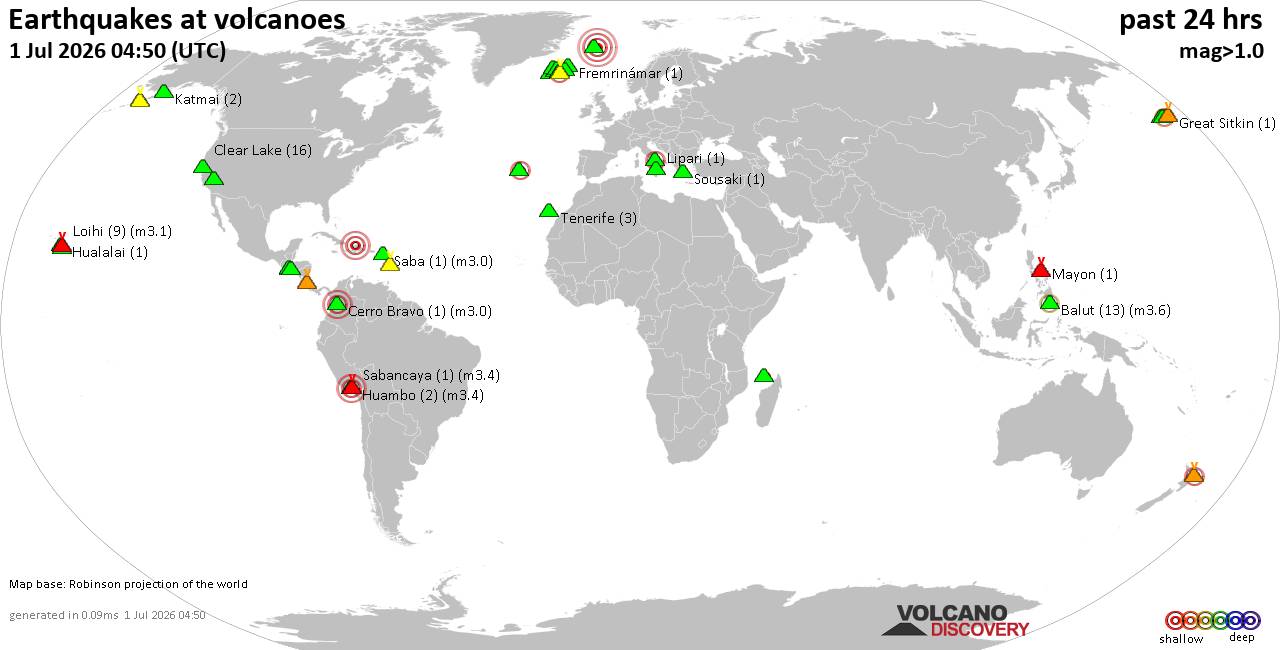
Volcano earthquake report for Wednesday, 1 Jul 2026
• Moderate mag. 4.2 earthquake - Sumbawa Region, Indonesia, on Wednesday, Jul...
• Moderate mag. 4.2 earthquake - Sumbawa Region, Indonesia, on Wednesday, Jul...
• Moderate mag. 4.2 earthquake - Norwegian Sea, 68 km east of Olonkinbyen, Ja...
• Moderate mag. 4.2 earthquake - Norwegian Sea, 68 km east of Olonkinbyen, Ja...
|

#49332
Wed 14 Jul 2010 12:17:PM
|
Joined: Feb 2001
Posts: 678,976
Launch Director
|
OP

Launch Director
Joined: Feb 2001
Posts: 678,976 |
HUBBLE SPACE TELESCOPE - Continuing to Collect World Class Science
DAILY REPORT #5137
PERIOD COVERED: 5am July 13 - 5am July 14, 2010 (DOY 194/09:00z-195/09:00z)
FLIGHT OPERATIONS SUMMARY:
Significant Spacecraft Anomalies: (The following are preliminary reports
of potential non-nominal performance that will be investigated.)
HSTARS: (None)
COMPLETED OPS REQUEST: (None)
COMPLETED OPS NOTES: (None)
SCHEDULED SUCCESSFUL
FGS GSAcq 10 10
FGS REAcq 8 8
OBAD with Maneuver 7 7
SIGNIFICANT EVENTS: (None)
OBSERVATIONS SCHEDULED:
ACS/WFC3 11599
Distances of Planetary Nebulae from SNAPshots of Resolved Companions
Reliable distances to individual planetary nebulae (PNe) in the Milky
Way are needed to advance our understanding of their spatial
distribution, birthrates, influence on galactic chemistry, and the
luminosities and evolutionary states of their central stars (CSPN). Few
PNe have good distances, however. One of the best ways to remedy this
problem is to find resolved physical companions to the CSPN and measure
their distances by photometric main-sequence fitting. We have previously
used HST to identify and measure probable companions to 10 CSPN, based
on angular separations and statistical arguments only. We now propose to
use HST to re-observe 48 PNe from that program for which additional
companions are possibly present. We then can use the added criterion of
common proper motion to confirm our original candidate companions and
identify new ones in cases that could not confidently be studied before.
We will image the region around each CSPN in the V and I bands, and in
some cases in the B band. Field stars that appear close to the CSPN by
chance will be revealed by their relative proper motion during the 13+
years since our original survey, leaving only genuine physical
companions in our improved and enlarged sample. This study will increase
the number of Galactic PNe with reliable distances by 50 percent and
improve the distances to PNe with previously known companions.
COS/FUV 11687
SNAPing Coronal Iron
This is a Snapshot Survey to explore two forbidden lines of highly
ionized iron in late-type coronal sources. Fe XII 1349 (T~ 2 MK) and Fe
XXI 1354 (T~ 10 MK) -- well known to Solar Physics -- have been detected
in about a dozen cool stars, mainly with HST/STIS. The UV coronal
forbidden lines are important because they can be observed with velocity
resolution of better than 15 km/s, whereas even the state-of-the-art
X-ray spectrometers on Chandra can manage only 300 km/s in the kilovolt
band where lines of highly ionized iron more commonly are found. The
kinematic properties of hot coronal plasmas, which are of great interest
to theorists and modelers, thus only are accessible in the UV at
present. The bad news is that the UV coronal forbidden lines are faint,
and were captured only in very deep observations with STIS. The good
news is that 3rd-generation Cosmic Origins Spectrograph, slated for
installation in HST by SM4, in a mere 25 minute exposure with its G130M
mode can duplicate the sensitivity of a landmark 25-orbit STIS E140M
observation of AD Leo, easily the deepest such exposure of a late-type
star so far. Our goal is to build up understanding of the properties of
Fe XII and Fe XXI in additional objects beyond the current limited
sample: how the lineshapes depend on activity, whether large scale
velocity shifts can be detected, and whether the dynamical content of
the lines can be inverted to map the spatial morphology of the stellar
corona (as in "Doppler Imaging''). In other words, we want to bring to
bear in the coronal venue all the powerful tricks of spectroscopic
remote sensing, well in advance of the time that this will be possible
exploiting the corona's native X-ray radiation. The 1290-1430 band
captured by side A of G130M also contains a wide range of key plasma
diagnostics that form at temperatures from below 10, 000 K (neutral
lines of CNO), to above 200, 000 K (semi-permitted O V 1371), including
the important bright multiplets of C II at 1335 and Si IV at 1400;
yielding a diagnostic gold mine for the subcoronal atmosphere. Because
of the broad value of the SNAP spectra, beyond the coronal iron project,
we waive the normal proprietary rights.
STIS/CC 11845
CCD Dark Monitor Part 2
Monitor the darks for the STIS CCD.
STIS/CC 11847
CCD Bias Monitor-Part 2
Monitor the bias in the 1x1, 1x2, 2x1, and 2x2 bin settings at gain=1,
and 1x1 at gain = 4, to build up high-S/N superbiases and track the
evolution of hot columns.
STIS/CCD 11721
Verifying the Utility of Type Ia Supernovae as Cosmological Probes:
Evolution and Dispersion in the Ultraviolet Spectra
The study of distant type Ia supernova (SNe Ia) offers the most
practical and immediate discriminator between popular models of dark
energy. Yet fundamental questions remain over possible
redshift-dependent trends in their observed and intrinsic properties.
High-quality Keck spectroscopy of a representative sample of 36
intermediate redshift SNe Ia has revealed a surprising, and unexplained,
diversity in their rest-frame UV fluxes. One possible explanation is
hitherto undiscovered variations in the progenitor metallicity.
Unfortunately, this result cannot be compared to local UV data as only
two representative SNe Ia have been studied near maximum light. Taking
advantage of two new `rolling searches' and the restoration of STIS, we
propose a non-disruptive TOO campaign to create an equivalent comparison
local sample. This will allow us to address possible evolution in the
mean UV spectrum and its diversity, an essential precursor to the study
of SNe beyond z~1.
STIS/CCD 11849
STIS CCD Hot Pixel Annealing
This purpose of this activity is to repair radiation induced hot pixel
damage to the STIS CCD by warming the CCD to the ambient instrument
temperature and annealing radiation-damaged pixels.
Radiation damage creates hot pixels in the STIS CCD Detector. Many of
these hot pixels can be repaired by warming the CCD from its normal
operating temperature near -83 deg. C to the ambient instrument
temperature (~ +5 deg. C) for several hours. The number of hot pixels
repaired is a function of annealing temperature. The effectiveness of
the CCD hot pixel annealing process is assessed by measuring the dark
current behavior before and after annealing and by searching for any
window contamination effects.
WFC3/IR 11931
IR Signal Non-Linearity Calibration
These observations will be used to quantify the non-linear signal
behavior of the IR channel, as well as to create the IR channel
non-linearity calibration reference file. The non-linearity behavior of
each pixel in the detector will be investigated through the use of flat
fields, while the photometric behavior of point sources will be studied
using observations of 47 Tuc.
WFC3/IR/S/C 11929
IR Dark Current Monitor
Analyses of ground test data showed that dark current signals are more
reliably removed from science data using darks taken with the same
exposure sequences as the science data, than with a single dark current
image scaled by desired exposure time. Therefore, dark current images
must be collected using all sample sequences that will be used in
science observations. These observations will be used to monitor changes
in the dark current of the WFC3-IR channel on a day-to-day basis, and to
build calibration dark current ramps for each of the sample sequences to
be used by Gos in Cycle 17. For each sample sequence/array size
combination, a median ramp will be created and delivered to the
calibration database system (CDBS).
WFC3/UV 12090
WFC3/UVIS Photometric Calibration - The Spatial Stability of the
Detector
The current WFC3 UVIS and IR calibrations are almost entirely based on
observations taken in small subarrays at the corners of UVIS1 and UVIS2,
and at the center of the IR detector. One of our filters, F336W, shows
higher than expected throughput in this filter by 4%. The source of this
has not been narrowed down and we need to determine whether the
photometry is consistent over the detector or if it is just the region
of the subarray (corner) that is showing higher counts. A preliminary
investigation suggests significant structure in the flat field for this
filter. We request two orbits to move a spectrophotometric standard,
GD153, in a small subarray over 23 dither positions on UVIS1 and UVIS2.
We note that F336W is one of the most popular filters on WFC3.
WFC3/UV/ACS/WFC/IR 12057
A Panchromatic Hubble Andromeda Treasury - I
We propose to image the north east quadrant of M31 to deep limits in the
UV, optical, and near-IR. HST imaging should resolve the galaxy into
more than 100 million stars, all with common distances and foreground
extinctions. UV through NIR stellar photometry (F275W, F336W with
WFC3/UVIS, F475W and F814W with ACS/WFC, and F110W and F160W with
WFC3/NIR) will provide effective temperatures for a wide range of
spectral types, while simultaneously mapping M31's extinction. Our
central science drivers are to: understand high-mass variations in the
stellar IMF as a function of SFR intensity and metallicity; capture the
spatially-resolved star formation history of M31; study a vast sample of
stellar clusters with a range of ages and metallicities. These are
central to understanding stellar evolution and clustered star formation;
constraining ISM energetics; and understanding the counterparts and
environments of transient objects (novae, SNe, variable stars, x-ray
sources, etc.). As its legacy, this survey adds M31 to the Milky Way and
Magellanic Clouds as a fundamental calibrator of stellar evolution and
star-formation processes for understanding the stellar populations of
distant galaxies. Effective exposure times are 977s in F275W, 1368s in
F336W, 4040s in F475W, 4042s in F814W, 699s in F110W, and 1796s in
F160W, including short exposures to avoid saturation of bright sources.
These depths will produce photon-limited images in the UV. Images will
be crowding-limited in the optical and NIR, but will reach below the red
clump at all radii. The images will reach the Nyquist sampling limit in
F160W, F475W, and F814W.
WFC3/UVIS 11905
WFC3 UVIS CCD Daily Monitor
The behavior of the WFC3 UVIS CCD will be monitored daily with a set of
full-frame, four-amp bias and dark frames. A smaller set of 2Kx4K
subarray biases are acquired at less frequent intervals throughout the
cycle to support subarray science observations. The internals from this
proposal, along with those from the anneal procedure (Proposal 11909),
will be used to generate the necessary superbias and superdark reference
files for the calibration pipeline (CDBS).
WFC3/UVIS 11908
Cycle 17: UVIS Bowtie Monitor
Ground testing revealed an intermittent hysteresis type effect in the
UVIS detector (both CCDs) at the level of ~1%, lasting hours to days.
Initially found via an unexpected bowtie-shaped feature in flatfield
ratios, subsequent lab tests on similar e2v devices have since shown
that it is also present as simply an overall offset across the entire
CCD, i.e., a QE offset without any discernable pattern. These lab tests
have further revealed that overexposing the detector to count levels
several times full well fills the traps and effectively neutralizes the
bowtie. Each visit in this proposal acquires a set of three 3x3 binned
internal flatfields: the first unsaturated image will be used to detect
any bowtie, the second, highly exposed image will neutralize the bowtie
if it is present, and the final image will allow for verification that
the bowtie is gone.
WFC3/UVIS/IR 11644
A Dynamical-Compositional Survey of the Kuiper Belt: A New Window Into
the Formation of the Outer Solar System
The eight planets overwhelmingly dominate the solar system by mass, but
their small numbers, coupled with their stochastic pasts, make it
impossible to construct a unique formation history from the dynamical or
compositional characteristics of them alone. In contrast, the huge
numbers of small bodies scattered throughout and even beyond the
planets, while insignificant by mass, provide an almost unlimited number
of probes of the statistical conditions, history, and interactions in
the solar system. To date, attempts to understand the formation and
evolution of the Kuiper Belt have largely been dynamical simulations
where a hypothesized starting condition is evolved under the
gravitational influence of the early giant planets and an attempt is
made to reproduce the current observed populations. With little
compositional information known for the real Kuiper Belt, the test
particles in the simulation are free to have any formation location and
history as long as they end at the correct point. Allowing compositional
information to guide and constrain the formation, thermal, and
collisional histories of these objects would add an entire new dimension
to our understanding of the evolution of the outer solar system. While
ground based compositional studies have hit their flux limits already
with only a few objects sampled, we propose to exploit the new
capabilities of WFC3 to perform the first ever large-scale
dynamical-compositional study of Kuiper Belt Objects (KBOs) and their
progeny to study the chemical, dynamical, and collisional history of the
region of the giant planets. The sensitivity of the WFC3 observations
will allow us to go up to two magnitudes deeper than our ground based
studies, allowing us the capability of optimally selecting a target list
for a large survey rather than simply taking the few objects that can be
measured, as we have had to do to date. We have carefully constructed a
sample of 120 objects which provides both overall breadth, for a general
understanding of these objects, plus a large enough number of objects in
the individual dynamical subclass to allow detailed comparison between
and within these groups. These objects will likely define the core
Kuiper Belt compositional sample for years to come. While we have many
specific results anticipated to come from this survey, as with any
project where the field is rich, our current knowledge level is low, and
a new instrument suddenly appears which can exploit vastly larger
segments of the population, the potential for discovery -- both
anticipated and not -- is extraordinary.
David Cottle
UBB Owner & Administrator
|
|



CMS The Best Conveyancing solicitors conveyancing quotes throughout the UK
For any webhosting enquiries please email webmaster@aus-city.com
|
|
Forums60
Topics785,917
Posts820,686
Members2,960
| |
Most Online22,463
May 9th, 2026
|
|
|