|
1 members (Alisa),
3,074
guests, and
25
robots. |
|
Key:
Admin,
Global Mod,
Mod
|
|
S |
M |
T |
W |
T |
F |
S |
|
|
|
|
1
|
2
|
3
|
4
|
|
5
|
6
|
7
|
8
|
9
|
10
|
11
|
|
12
|
13
|
14
|
15
|
16
|
17
|
18
|
|
19
|
20
|
21
|
22
|
23
|
24
|
25
|
|
26
|
27
|
28
|
29
|
30
|
31
|
|
|
There are no members with birthdays on this day. |
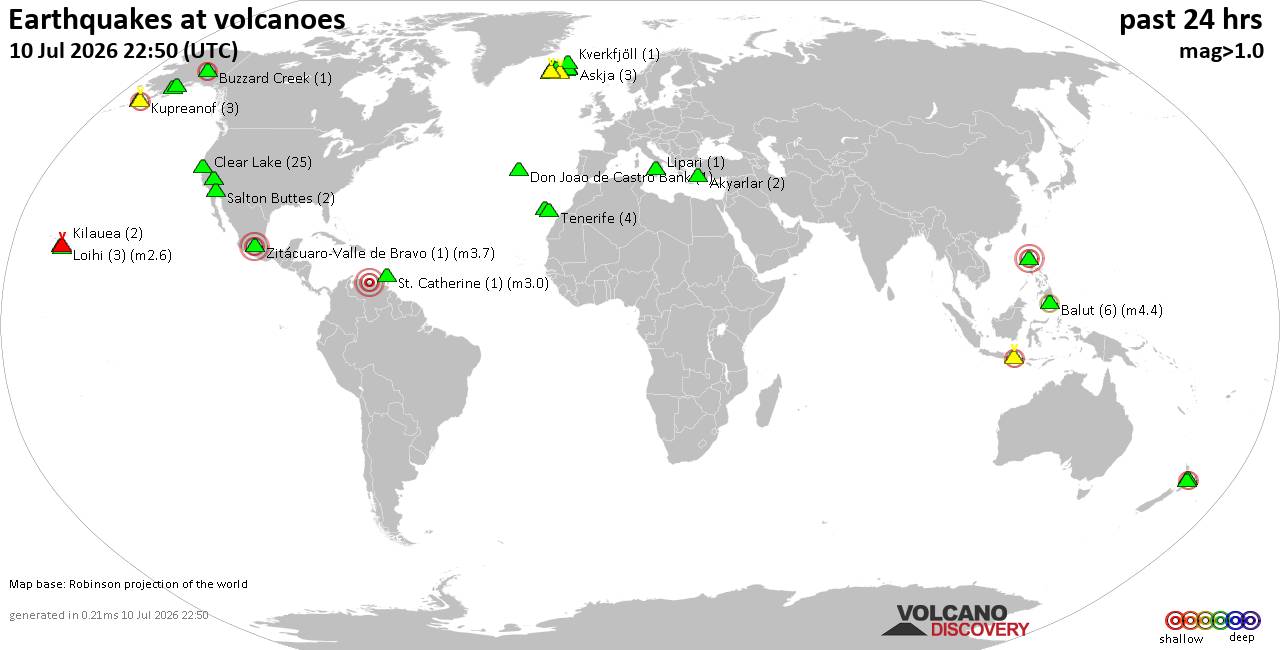
Volcano earthquake report for Friday, 10 Jul 2026
• Moderate mag. 4.2 earthquake - 133 km northwest of Ternate, Kota Ternate, N...
• World Earthquake Report for Friday, 10 July 2026
• Moderate mag. 4.6 earthquake - 17 km southwest of Comalapa, Estado de Chiap...
• Moderate mag. 4.1 earthquake - Olyutorskiy Rayon, 47 km northwest of Tilich...
• Moderate mag. 4.0 earthquake - Hawke's Bay, New Zealand, on Saturday, Jul 1...
|

#49430
Mon 26 Jul 2010 12:55:PM
|
Joined: Feb 2001
Posts: 678,976
Launch Director
|
OP

Launch Director
Joined: Feb 2001
Posts: 678,976 |
HUBBLE SPACE TELESCOPE - Continuing to Collect World Class Science
DAILY REPORT #5145
PERIOD COVERED: 5am July 23 - 5am July 26, 2010 (DOY 204/09:00z-207/09:00z)
FLIGHT OPERATIONS SUMMARY:
Significant Spacecraft Anomalies: (The following are preliminary reports
of potential non-nominal performance that will be investigated.)
HSTARS:
12337 - REAcq(2,1,1) scheduled at 205/09:14:55z failed to RGA control at 205/09:21:09z.
Observations affected: ACS 102-107 Proposal ID# 11887, WFC3 202 Proposal ID# 11905,
WFC3 203-204 Proposal ID# 11929.
COMPLETED OPS REQUEST: (None)
COMPLETED OPS NOTES: (None)
SCHEDULED SUCCESSFUL
FGS GSAcq 22 22
FGS REAcq 21 20
OBAD with Maneuver 22 22
SIGNIFICANT EVENTS: (None)
OBSERVATIONS SCHEDULED:
WFC3/UV/ACS/WFC/IR 12058
A Panchromatic Hubble Andromeda Treasury - I
We propose to image the north east quadrant of M31 to deep limits in the
UV, optical, and near-IR. HST imaging should resolve the galaxy into
more than 100 million stars, all with common distances and foreground
extinctions. UV through NIR stellar photometry (F275W, F336W with
WFC3/UVIS, F475W and F814W with ACS/WFC, and F110W and F160W with
WFC3/NIR) will provide effective temperatures for a wide range of
spectral types, while simultaneously mapping M31's extinction. Our
central science drivers are to: understand high-mass variations in the
stellar IMF as a function of SFR intensity and metallicity; capture the
spatially-resolved star formation history of M31; study a vast sample of
stellar clusters with a range of ages and metallicities. These are
central to understanding stellar evolution and clustered star formation;
constraining ISM energetics; and understanding the counterparts and
environments of transient objects (novae, SNe, variable stars, x-ray
sources, etc.). As its legacy, this survey adds M31 to the Milky Way and
Magellanic Clouds as a fundamental calibrator of stellar evolution and
star-formation processes for understanding the stellar populations of
distant galaxies. Effective exposure times are 977s in F275W, 1368s in
F336W, 4040s in F475W, 4042s in F814W, 699s in F110W, and 1796s in
F160W, including short exposures to avoid saturation of bright sources.
These depths will produce photon-limited images in the UV. Images will
be crowding-limited in the optical and NIR, but will reach below the red
clump at all radii. The images will reach the Nyquist sampling limit in
F160W, F475W, and F814W.
S/C 12046
COS FUV DCE Memory Dump
Whenever the FUV detector high voltage is on, count rate and current
draw information is collected, monitored, and saved to DCE memory. Every
10 msec the detector samples the currents from the HV power supplies
(HVIA, HVIB) and the AUX power supply (AUXI). The last 1000 samples are
saved in memory, along with a histogram of the number of occurrences of
each current value.
In the case of a HV transient (known as a "crackle" on FUSE), where one
of these currents exceeds a preset threshold for a persistence time, the
HV will shut down, and the DCE memory will be dumped and examined as
part of the recovery procedure. However, if the current exceeds the
threshold for less than the persistence time (a "mini-crackle" in FUSE
parlance), there is no way to know without dumping DCE memory. By
dumping and examining the histograms regularly, we will be able to
monitor any changes in the rate of "mini-crackles" and thus learn
something about the state of the detector.
WFC3/IR 12005
Unveiling the Dusty Starburst Galaxy Hosting GRB080607
GRB 080607 at redshift z = 3.0363 is a unique case of a highly
extinguished (A_V ~ 3 mag) afterglow that was yet sufficiently bright
for high-quality spectroscopy. The ISM properties revealed by our
afterglow spectrum are unprecedented among GRB host galaxies, including
an enormous dust and gas surface mass density (~ 400 M_sun/pc^2), the
first detection of CO molecules, and roughly solar metallicity. Contrary
to the common expectation of GRBs occurring preferentially in low-mass
and low-metallicity environments, the observed large metal and dust
content, together with the mass-metallicity relation known for z=2-3
galaxies, imply that the host galaxy is massive and intrinsically
luminous. Identifying the host galaxy of this event is critical for
connecting our spectroscopy to the rest of the poorly-understood dark
burst population with suppressed optical afterglow light. Despite our
large investments in optical and NIR imaging at ground-based telescopes
to date, the host of GRB 080607 has eluded detection to an unobscured
limiting UV luminosity of ~ 0.07 L*. The lack of bright emission
suggests that the dust seen in the afterglow spectrum reflects the
global dust content throughout the host ISM. Otherwise, it would imply
the presence of highly metal-enriched regions in a low-mass galaxy,
challenging the validity of our current understanding of star formation
at high redshift.
The low sky background and high spatial resolution make HST and WFC3/IR
the only instrument available to unveil the morphology and stellar
counterpart of the dusty host galaxy of GRB 080607. Here we request
Director's Discretionary time to obtain deep near-infrared images of the
field surrounding GRB 080607, using WFC3 and the IR channel with the
F160W filter. The proposed imaging program will allow us to investigate
whether the host of GRB 080607 is a dusty luminous galaxy or a faint
dwarf galaxy with patchy dust clouds, and to examine the significance of
dust enshrouded star formation at z~3.
The extraordinary ISM properties observed around GRB 080607 have
stimulated a considerable amount of interest not only in the GRB
community but also among observers and theorists who study star
formation both in the nearby universe and at high redshift. We believe
the proposed WFC3/IR imaging data will have high impact in the broader
astrophysics community.
ACS/WFC 11996
CCD Daily Monitor (Part 3)
This program comprises basic tests for measuring the read noise and dark
current of the ACS WFC and for tracking the growth of hot pixels. The
recorded frames are used to create bias and dark reference images for
science data reduction and calibration. This program will be executed
four days per week (Mon, Wed, Fri, Sun) for the duration of Cycle 17. To
facilitate scheduling, this program is split into three proposals. This
proposal covers 308 orbits (19.25 weeks) from 21 June 2010 to 1 November
2010.
WFC3/IR 11933
IR Rate Dependent Non-linearity
The NICMOS non-linearity known as the Bohlin Effect has revealed that
the apparent flux of a source observed by NICMOS is not a simple, linear
function of count rate. The effect has been characterized by
observations of star clusters observed with and without additional
background from the internal lamps. As WFC3 lacks internal lamps which
can be used to add background, we will rely on the bright Earth limb to
provide additional background. We will observe a star cluster, 47 Tuc,
repeatedly throughout a complete HST orbit which has been chosen to put
the closest approach to the bright Earth to be 13.5 degrees, the closest
approach allowed while retaining FGS guiding. Another set will be done
with the BE limb closest approach of 15.5 degrees. The observations will
be done with the two most commonly used filters, F110W and F160W and at
two different bright Earth limb angles to test the linearity of the
non-linearity. We have also included an orbit on NGC 1850 to repeat the
NICMOS field for which the linearity of the field has been established.
WFC3/IR/S/C 11929
IR Dark Current Monitor
Analyses of ground test data showed that dark current signals are more
reliably removed from science data using darks taken with the same
exposure sequences as the science data, than with a single dark current
image scaled by desired exposure time. Therefore, dark current images
must be collected using all sample sequences that will be used in
science observations. These observations will be used to monitor changes
in the dark current of the WFC3-IR channel on a day-to-day basis, and to
build calibration dark current ramps for each of the sample sequences to
be used by Gos in Cycle 17. For each sample sequence/array size
combination, a median ramp will be created and delivered to the
calibration database system (CDBS).
WFC3/IR 11917
IR Earth Flats Pathfinder
This program is an experimental path finder for Cycle 18 calibration.
(The WFC3 UVIS version of this is program 11914 and contains additional
detail in its description). Infrared-wavelength flat fields will be
obtained by observing the dark side of the Earth during periods of full
moon illumination. The observations will consist of full-frame streaked
WFC3 IR imagery: per single "dark-sky" orbit, we anticipate achieving
Poisson S/N > 100 per pixel in each of three to five exposures,
depending on sample sequence (SPARS25 or SPARS50).
Why not use the Sunlit Earth? It is too bright for WFC3 IR full-frame
minimum exposure time of 3 sec. Similarly, for NICMOS the sunlit-Earth
is too bright which saturates the detector too quickly and/or induces
abnormal behaviors such as super-shading (Gilmore 1998, NIC 098-011). In
the narrowband IR filters the sunlit earth sometimes is faint enough to
not saturate immediately, but based upon predictions (Cox et al. 1987
"Standard Astronomical Sources for HST: 6. Spatially Flat Fields.") and
observations (Gilmore 1998), we consider sunlit Earth unlikely to be
successful unless it is twilight.
Other possibilities? Cox et al.'s Section II.D addresses many other
possible sources for flat fields, rejecting them for a variety of
reasons. A remaining possibility would be the totally eclipsed moon.
Such eclipses provide approximately 2 hours (1 HST orbit) of opportunity
per year, so they are too rare to be generically useful. An advantage of
the moon over the Earth is that the moon subtends less than 0.25 square
degree, whereas the Earth subtends a steradian or more, so scattered
light and light prior to the unshuttered exposure presents additional
problems for the Earth. Also, we're unsure if HST can point 180 deg from
the Sun.
WFC3/IR 11915
IR Internal Flat Fields
This program is the same as 11433 (SMOV) and depends on the completion
of the IR initial alignment (Program 11425). This version contains three
instances of 37 internal orbits: to be scheduled early, middle, and near
the end of Cycle 17, in order to use the entire 110-orbit allocation.
In this test, we will study the stability and structure of the IR
channel flat field images through all filter elements in the WFC3-IR
channel. Flats will be monitored, i.e. to capture any temporal trends in
the flat fields and delta flats produced. High signal observations will
provide a map of the pixel-to-pixel flat field structure, as well as
identify the positions of any dust particles.
WFC3/UVIS 11914
UVIS Earth Flats
This program is an experimental path finder for Cycle 18 calibration.
Visible-wavelength flat fields will be obtained by observing the dark
side of the Earth during periods of full moon illumination. The
observations will consist of full-frame streaked WFC3 UVIS imagery: per
22-min total exposure time in a single "dark-sky" orbit, we anticipate
collecting 7000 e/pix in F606W or 4500 e/pix in F814W. To achieve
Poisson S/N > 100 per pixel, we require at least 2 orbits of F606W and 3
orbits of F814W.
For UVIS narrowband filters, exposures of 1 sec typically do not
saturate on the sunlit Earth, so we will take sunlit Earth flats for
three of the more-commonly used narrowband filters in Cycle 17 plus the
also-popular long-wavelength quad filters, for which we get four filters
at once.
Why not use the Sunlit Earth for the wideband visible-light filters? It
is too bright in the visible for WFC3 UVIS minimum exposure time of 0.5
sec. Similarly, for NICMOS the sunlit-Earth is too bright which
saturates the detector too quickly and/or induces abnormal behaviors
such as super- shading (Gilmore 1998, NIC 098-011). In the narrowband
visible and broadband near-UV its not too bright (predictions in Cox et
al. 1987 "Standard Astronomical Sources for HST: 6. Spatially Flat
Fields." and observations in ACS Program 10050).
Other possibilities? Cox et al.'s Section II.D addresses many other
possible sources for flat fields, rejecting them for a variety of
reasons. A remaining possibility would be the totally eclipsed moon.
Such eclipses provide approximately 2 hours (1 HST orbit) of opportunity
per year, so they are too rare to be generically useful. An advantage of
the moon over the Earth is that the moon subtends less than 0.25 square
degree, whereas the Earth subtends a steradian or more, so scattered
light and light potentially leaking around the shutter presents
additional problems for the Earth. Also, we're unsure if HST can point
180 deg from the Sun.
WFC3/UVIS 11908
Cycle 17: UVIS Bowtie Monitor
Ground testing revealed an intermittent hysteresis type effect in the
UVIS detector (both CCDs) at the level of ~1%, lasting hours to days.
Initially found via an unexpected bowtie-shaped feature in flatfield
ratios, subsequent lab tests on similar e2v devices have since shown
that it is also present as simply an overall offset across the entire
CCD, i.e., a QE offset without any discernable pattern. These lab tests
have further revealed that overexposing the detector to count levels
several times full well fills the traps and effectively neutralizes the
bowtie. Each visit in this proposal acquires a set of three 3x3 binned
internal flatfields: the first unsaturated image will be used to detect
any bowtie, the second, highly exposed image will neutralize the bowtie
if it is present, and the final image will allow for verification that
the bowtie is gone.
WFC3/UVIS 11905
WFC3 UVIS CCD Daily Monitor
The behavior of the WFC3 UVIS CCD will be monitored daily with a set of
full-frame, four-amp bias and dark frames. A smaller set of 2Kx4K
subarray biases are acquired at less frequent intervals throughout the
cycle to support subarray science observations. The internals from this
proposal, along with those from the anneal procedure (Proposal 11909),
will be used to generate the necessary superbias and superdark reference
files for the calibration pipeline (CDBS).
ACS/WFC3 11887
CCD Stability Monitor
This program will verify that the low frequency flat fielding, the
photometry, and the geometric distortion are stable in time and across
the field of view of the CCD arrays. A moderately crowded stellar field
in the cluster 47 Tuc is observed with the ACS (at the cluster core) and
WFC3 (6 arcmin West of the cluster core) using the full suite of broad
and narrow band imaging filters. The positions and magnitudes of objects
will be used to monitor local and large scale variations in the plate
scale and the sensitivity of the detectors and to derive an independent
measure of the detector CTE. The UV sensitivity for the SBC and ACS will
be addressed in the UV contamination monitor program (11886, PI=Smith).
One additional orbit will be obtained at the beginning of the cycle will
allow a verification of the CCD gain ratios for WFC3 using gain 2.0,
1.4, 1.0, 0.5 and for ACS using gain 4.0 and 2.0. In addition, one
subarray exposure with the WFC3 will allow a verification that
photometry obtained in full-frame and in sub-array modes are repeatable
to better than 1%. This test is important for the ACS Photometric
Cross-Calibration program (11889, PI=Bohlin) which uses sub-array
exposures.
STIS/CC 11847
CCD Bias Monitor-Part 2
Monitor the bias in the 1x1, 1x2, 2x1, and 2x2 bin settings at gain=1,
and 1x1 at gain = 4, to build up high-S/N superbiases and track the
evolution of hot columns.
STIS/CC 11845
CCD Dark Monitor Part 2
Monitor the darks for the STIS CCD.
ACS/WFC3 11735
The LSD Project: Dynamics, Merging and Stellar Populations of a Sample
of Well-Studied LBGs at z~3
A large observational effort with the ground-based ESO/VLT telescopes
allowed us to obtain deep, spatially-resolved, near-IR spectra of
complete sample of 11 Lyman-Break Galaxies at z~3.1. These observations
were used to obtain, for the first time, the metallicity and the
dynamical properties of a sample of objects that, albeit small, is
representative of the total population of the LBGs. We propose to use
HST to obtain high-resolution optical and near-IR images of this sample
of LBGs in order to study the broad-band morphology and the stellar
light distribution of these galaxies. These images, exploiting the
superior spatial resolution of HST images and the low-background : 1-
will allow a precise measure of the dynamical mass from the velocity
field derived with spectroscopy; 2- will permit a comparison of the
distribution of star formation (from the line emission) with the
underlying stellar population, and, 3- will be used to check if the
complex velocity field and the multiple line-emitting regions detected
in most targets can be ascribed to on-going mergers. This accurate study
will shed light on a number of unsolved problems still affecting the
knowledge of the LBGs.
WFC3/UVIS 11732
The Temperature Profiles of Quasar Accretion Disks
We can now routinely measure the size of quasar accretion disks using
gravitational microlensing of lensed quasars. At optical wavelengths we
observe a size and scaling with black hole mass roughly consistent with
thin disk theory but the sizes are larger than expected from the
observed optical fluxes. One solution would be to use a flatter
temperature profile, which we can study by measuring the wavelength
dependence of the disk size over the largest possible wavelength
baseline. Thus, to understand the size discrepancy and to probe closer
to the inner edge of the disk we need to extend our measurements to UV
wavelengths, and this can only be done with HST. For example, in the UV
we should see significant changes in the optical/UV size ratio with
black hole mass. We propose monitoring 5 lenses spanning a broad range
of black hole masses with well-sampled ground based light curves,
optical disk size measurements and known GALEX UV fluxes during Cycles
17 and 18 to expand from our current sample of two lenses. We would
obtain 5 observations of each target in each Cycle, similar to our
successful strategy for the first two targets.
WFC3/UVIS 11730
Continued Proper Motions of the Magellanic Clouds: Orbits, Internal
Kinematics, and Distance
In Cycles 11 and 13 we obtained two epochs of ACS/HRC data for fields in
the Magellanic Clouds centered on background quasars. We used these data
to determine the proper motions of the LMC and SMC to better than 5% and
15% respectively. The results had a number of unexpected implications
for the Milky Way-LMC-SMC system and received considerable attention in
the literature and in the press. The implied three-dimensional
velocities are larger than previously believed and close to the escape
velocity in a standard 10^12 solar mass Milky Way dark halo. Our orbit
calculations suggest the Clouds may not be bound to the Milky Way or may
just be on their first passage, both of which are unexpected in view of
traditional interpretations of the Magellanic Stream. Alternatively, the
Milky Way dark halo may be a factor two more massive than previously
believed, which would be surprising in view of other observational
constraints. Also, the relative velocity between the LMC and SMC was
larger than expected, leaving open the possibility that the Clouds may
not be bound to each other. To further verify and refine our results we
requested an additional epoch data in Cycle 16 which is being executed
with WFPC2/PC due to the failure of ACS. A detailed analysis of one LMC
field shows that the field proper motion using all three epochs of data
is consistent within 1-sigma with the two- epoch data, thus verifying
that there are no major systematic effects in our previous measurements.
The random errors, however, are only smaller by a factor of 1.4 because
of the relatively large errors in the WFPC2 data. A prediction for a
fourth epoch with measurement errors similar to epochs 1 and 2 shows
that the uncertainties will improve by a factor of 3. This will allow us
to better address whether the Clouds are indeed bound to each other and
to the Milky Way. It will also allow us to constrain the internal
motions of various populations within the Clouds, and to determine a
distance to the LMC using rotational parallax. Continuation of this
highly successful program is therefore likely to provide important
additional insights. Execution in SNAPshot mode guarantees maximally
efficient use of HST resources.
ACS/WFC3 11670
The Host Environments of Type Ia Supernovae in the SDSS Survey
The Sloan Digital Sky Survey Supernova Survey has discovered nearly 500
type Ia supernovae and created a large, unique, and uniform sample of
these cosmological tools. As part of a comprehensive study of the
supernova hosts, we propose to obtain Hubble ACS images of a large
fraction of these galaxies. Integrated colors and spectra will be
measured from the ground, but we require high-resolution HST imaging to
provide accurate morphologies and color information at the site of the
explosion. This information is essential in determining the systematic
effects of population age on type Ia supernova luminosities and
improving their reliability in measuring dark energy. Recent studies
suggest two populations of type Ia supernovae: a class that explodes
promptly after star-formation and one that is delayed by billions of
years. Measuring the star-formation rate at the site of the supernova
from colors in the HST images may be the best way to differentiate
between these classes.
WFC3/UVIS/IR 11662
Improving the Radius-Luminosity Relationship for Broad-Lined AGNs with a
New Reverberation Sample
The radius-luminosity (R-L) relationship is currently the fundamental
basis for all techniques used to estimate black hole masses in AGNs, in
both the nearby and distant universe. However, the current R-L
relationship is based on 34 objects that cover a limited range in black
hole mass and luminosity. To improve our understanding of black hole
growth and evolution, the R-L relationship must be extended to cover a
broader range of black hole masses using the technique known as
reverberation mapping. To this end, we have been awarded an
unprecedented 64 nights on the Lick Observatory 3-m telescope between
March 24 and May 31, 2008, to spectroscopically monitor 12 AGNs in order
to measure their black hole masses. To properly determine the
luminosities of these 12 AGNs, we must correct them for their
host-galaxy starlight contributions using high-resolution images.
Previous work by Bentz et al. (2006) has shown that the starlight
correction to AGN luminosity measurements is an essential component to
interpreting the R-L relationship. The correction will be substantial
for each of the 12 sources we will monitor, as the AGNs are relatively
faint and embedded in nearby, bright galaxies. Starlight corrections are
not possible with ground-based images, as the PSF and bulge
contributions become indistinguishable under typical seeing conditions,
and adaptive optics are not yet operational in the spectral range where
the corrections are needed. In addition, spectral decompositions are
very model-dependent and are limited by the degree of accuracy to which
we understand emission processes and stellar populations in galaxies.
Without correcting for starlight, we will be unable to apply the results
of our Spring 2008 campaign to the body of knowledge from previous
reverberation mapping work. Therefore, we propose to obtain high
resolution, high dynamic range images of the host galaxies of the 12
AGNs in our ground-based monitoring sample, as well as one white dwarf
which will be used as a PSF model.
WFC3/UVIS 11657
The Population of Compact Planetary Nebulae in the Galactic Disk
We propose to secure narrow- and broad-band images of compact planetary
nebulae (PNe) in the Galactic Disk to study the missing link of the
early phases of post-AGB evolution. Ejected AGB envelopes become PNe
when the gas is ionized. PNe expand, and, when large enough, can be
studied in detail from the ground. In the interim, only the HST
capabilities can resolve their size, morphology, and central stars. Our
proposed observations will be the basis for a systematic study of the
onset of morphology. Dust properties of the proposed targets will be
available through approved Spitzer/IRS spectra, and so will the
abundances of the alpha- elements. We will be able thus to explore the
interconnection of morphology, dust grains, stellar evolution, and
populations. The target selection is suitable to explore the nebular and
stellar properties across the galactic disk, and to set constraints on
the galactic evolutionary models through the analysis of metallicity and
population gradients.
WFC3/UVIS/IR 11644
A Dynamical-Compositional Survey of the Kuiper Belt: A New Window Into
the Formation of the Outer Solar System
The eight planets overwhelmingly dominate the solar system by mass, but
their small numbers, coupled with their stochastic pasts, make it
impossible to construct a unique formation history from the dynamical or
compositional characteristics of them alone. In contrast, the huge
numbers of small bodies scattered throughout and even beyond the
planets, while insignificant by mass, provide an almost unlimited number
of probes of the statistical conditions, history, and interactions in
the solar system. To date, attempts to understand the formation and
evolution of the Kuiper Belt have largely been dynamical simulations
where a hypothesized starting condition is evolved under the
gravitational influence of the early giant planets and an attempt is
made to reproduce the current observed populations. With little
compositional information known for the real Kuiper Belt, the test
particles in the simulation are free to have any formation location and
history as long as they end at the correct point. Allowing compositional
information to guide and constrain the formation, thermal, and
collisional histories of these objects would add an entire new dimension
to our understanding of the evolution of the outer solar system. While
ground based compositional studies have hit their flux limits already
with only a few objects sampled, we propose to exploit the new
capabilities of WFC3 to perform the first ever large-scale
dynamical-compositional study of Kuiper Belt Objects (KBOs) and their
progeny to study the chemical, dynamical, and collisional history of the
region of the giant planets. The sensitivity of the WFC3 observations
will allow us to go up to two magnitudes deeper than our ground based
studies, allowing us the capability of optimally selecting a target list
for a large survey rather than simply taking the few objects that can be
measured, as we have had to do to date. We have carefully constructed a
sample of 120 objects which provides both overall breadth, for a general
understanding of these objects, plus a large enough number of objects in
the individual dynamical subclass to allow detailed comparison between
and within these groups. These objects will likely define the core
Kuiper Belt compositional sample for years to come. While we have many
specific results anticipated to come from this survey, as with any
project where the field is rich, our current knowledge level is low, and
a new instrument suddenly appears which can exploit vastly larger
segments of the population, the potential for discovery -- both
anticipated and not -- is extraordinary.
WFC3/UVIS 11643
A Timeline for Early-Type Galaxy Formation: Mapping the Evolution of
Star Formation, Globular Clusters, Dust, and Black Holes
While considerable effort has been devoted to statistical studies of the
origin of the red sequence of galaxies, there has been relatively little
direct exploration of galaxies transforming from late to early types.
Such galaxies are identified by their post-starburst spectra, bulge-
dominated, tidally-disturbed morphologies, and current lack of gas. We
are constructing the first detailed timeline of their evolution onto the
red sequence, pinpointing when star formation ends, nuclear activity
ceases, globular clusters form, and the bulk of the merging progenitors'
dust disappears. Here we propose to obtain HST and Chandra imaging of
nine galaxies, whose wide range of post-starburst ages we have precisely
dated with a new UV-optical technique and for which we were awarded
Spitzer time. We will address 1) whether the black hole-bulge mass
relation arises from nuclear feedback, 2) whether the bimodality of
globular cluster colors is due to young clusters produced in galaxy
mergers, and 3) what happens to the dust when late types merge to form
an early type.
WFC3/IR 11631
Binary Brown Dwarfs and the L/T Transition
Brown dwarfs traverse spectral types M, L and T as their atmospheric
structure evolves and they cool into oblivion. This SNAPSHOT program
will obtain WFC3-IR images of 45 nearby late-L and early-T dwarfs to
investigate the nature of the L/T transition. Recent analyses have
suggested that a substantial proportion of late-L and early-T dwarfs are
binaries, comprised of an L dwarf primary and T dwarf secondary. WFC3-IR
observations will let us quantify this suggestion by expanding coverage
to a much larger sample, and permitting comparison of the L/T binary
fraction against �normal� ultracool dwarfs. Only eight L/T binaries are
currently known, including several that are poorly resolved: we
anticipate at least doubling the number of resolved systems. The
photometric characteristics of additional resolved systems will be
crucial to constraining theoretical models of these late-type ultracool
dwarfs. Finally, our data will also be eminently suited to searching for
extremely low luminosity companions, potentially even reaching the Y
dwarf regime.
WFC3/IR 11591
Are Low-Luminosity Galaxies Responsible for Cosmic Reionization?
Our group has demonstrated that massive clusters, acting as powerful
cosmic lenses, can constrain the abundance and properties of
low-luminosity star-forming sources beyond z~6; such sources are thought
to be responsible for ending cosmic reionization. The large
magnification possible in the critical regions of well-constrained
clusters brings sources into view that lie at or beyond the limits of
conventional exposures such as the UDF. We have shown that the
combination of HST and Spitzer is particularly effective in delivering
the physical properties of these distant sources, constraining their
mass, age and past star formation history. Indirectly, we therefore gain
a valuable glimpse to yet earlier epochs. Recognizing the result (and
limitations) of blank field surveys, we propose a systematic search
through 10 lensing clusters with ACS/F814W and WFC3/[F110W+F160W] (in
conjunction with existing deep IRAC data). Our goal is to measure with
great accuracy the luminosity function at z~7 over a range of at least 3
magnitude, based on the identification of about 50 lensed galaxies at
6.5<z<8. Our survey will mitigate cosmic variance and extend the search
both to lower luminosities and, by virtue of the WFC3/IRAC combination,
to higher redshift. Thanks to the lensing amplification spectroscopic
follow-up will be possible and make our findings the most robust prior
to the era of JWST and the ELTs.
WFC3/ACS/UVIS/IR 11570
Narrowing in on the Hubble Constant and Dark Energy
A measurement of the Hubble constant to a precision of a few percent
would be a powerful aid to the investigation of the nature of dark
energy and a potent "end-to end" test of the present cosmological model.
In Cycle 15 we constructed a new streamlined distance ladder utilizing
high- quality type Ia supernova data and observations of Cepheids with
HST in the near-IR to minimize the dominant sources of systematic
uncertainty in past measurements of the Hubble constant and reduce its
total uncertainty to a little under 5%. Here we propose to exploit this
new route to reduce the remaining uncertainty by more than 30%,
translating into an equal reduction in the uncertainty of the equation
of state of dark energy. We propose three sets of observations to reach
this goal: a mosaic of NGC 4258 with WFC3 in F160W to triple its sample
of long period Cepheids, WFC3/F160W observations of the 6 ideal SN Ia
hosts to triple their samples of Cepheids, and observations of NGC 5584
the host of a new SN Ia, SN 2007af, to discover and measure its Cepheids
and begin expanding the small set of SN Ia luminosity calibrations.
These observations would provide the bulk of a coordinated program aimed
at making the measurement of the Hubble constant one of the leading
constraints on dark energy.
WFC3/UV 11556
Investigations of the Pluto System
We propose a set of high SNR observations of the Pluto system that will
provide improved lightcurves, orbits, and photometric properties of Nix
and Hydra. The key photometric result for Nix and Hydra will be a vastly
improved lightcurve shape and rotation period to test if the objects are
in synchronous rotation or not. A second goal of this program will be to
retrieve a new epoch of albedo map for the surface of Pluto. These
observations will also improve masses and in some case densities for the
bodies in the Pluto system.
David Cottle
UBB Owner & Administrator
|
|



CMS The Best Conveyancing solicitors conveyancing quotes throughout the UK
For any webhosting enquiries please email webmaster@aus-city.com
|
|
Forums60
Topics789,867
Posts824,645
Members2,960
| |
Most Online102,106
Jul 10th, 2026
|
|
|