|
0 members (),
1,567
guests, and
21
robots. |
|
Key:
Admin,
Global Mod,
Mod
|
|
S |
M |
T |
W |
T |
F |
S |
|
1
|
2
|
3
|
4
|
5
|
6
|
7
|
|
8
|
9
|
10
|
11
|
12
|
13
|
14
|
|
15
|
16
|
17
|
18
|
19
|
20
|
21
|
|
22
|
23
|
24
|
25
|
26
|
27
|
28
|
|
There are no members with birthdays on this day. |
2 things
by Webmaster - Tue 17 Feb 2026 08:00:AM
|
|
|
|
|
|
|
|
|
|
|
|
|
|
|
|
|
|
|

#1022
Wed 30 Apr 2003 05:12:PM
|
Joined: Feb 2001
Posts: 3,536
Mission Commander
|
OP

Mission Commander
Joined: Feb 2001
Posts: 3,536 |
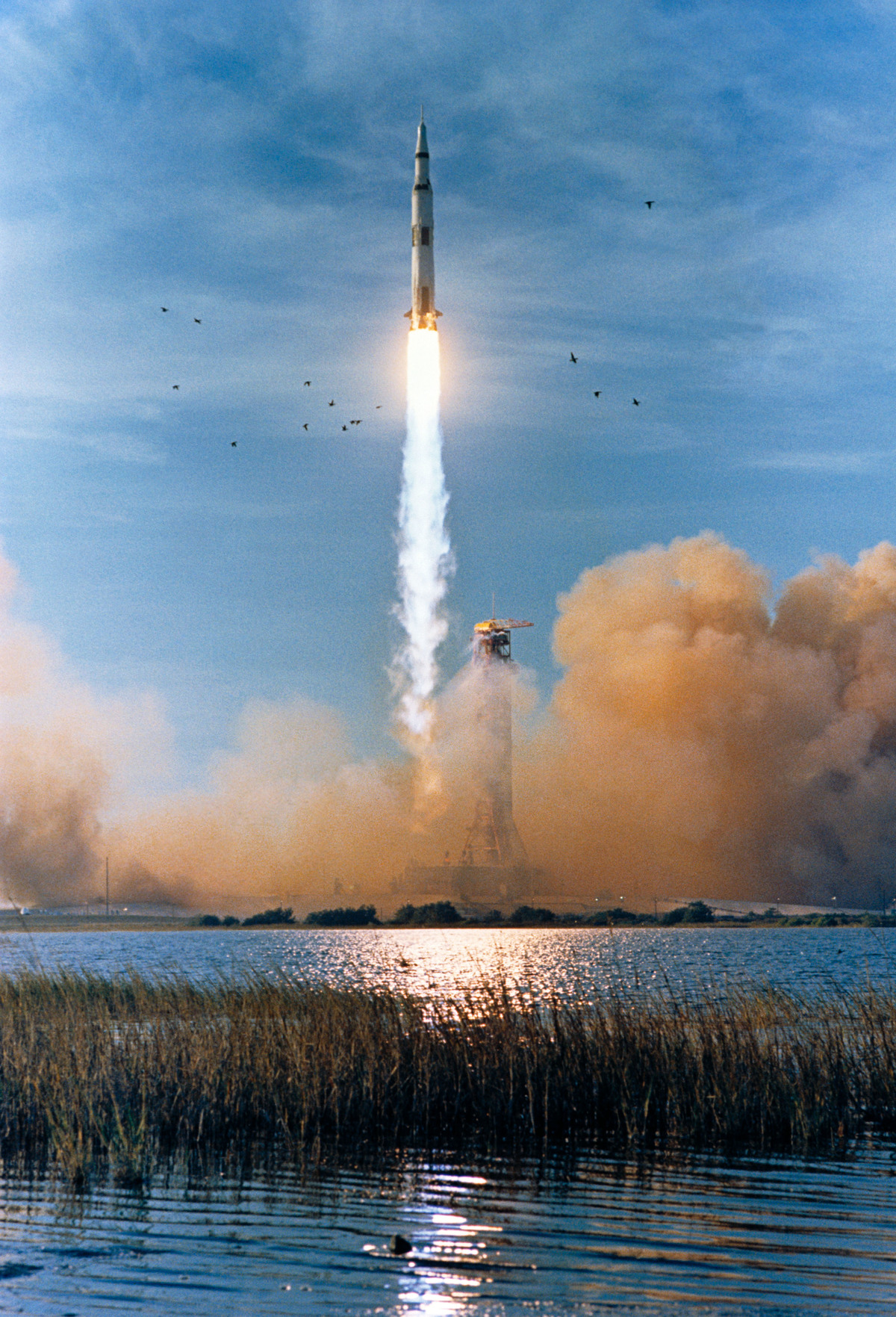
OFFICIAL PRESS RELEASE<br />about the Soyuz TMA-2<br />manned transport spacecraft launch to the ISS<br /><br /><br />April 26, 2003. Korolev, Moscow Region.<br />The Russian Soyuz TMA-2 manned transport spacecraft was launched. It is the<br />second spacecraft of a new modification developed on the basis of the Soyuz<br />TM spacecraft in accordance with the intergovernmental agreement between<br />Russia and the USA.<br />The launch of the Souyz-FG integrated launch vehicle with the Soyuz TMA-2<br />manned spacecraft was accomplished at 07:53:52 Moscow summer time.<br />The launch is intended to deliver the seventh prime crew (ISS-7) to the<br />International Space Station, to carry out a planned replacement of the Soyuz<br />TMA-1, which has been operating within the International Space Station since<br />November 1, 2002 performing functions of the crew rescue vehicle.<br />The crash of the U.S. Columbia Orbiter followed by the NASA Administration<br />decision to suspend launches of U.S. Shuttles required revision of the<br />orbital complex flight program by the countries involved in the ISS project.<br />As a result, till Shuttle flight resumption the station manned flight<br />implementation is placed on Russian Soyuz TMA manned spacecraft and Progress<br />cargo vehicles with an appropriate change of the ISS crew number and the<br />complement of ascent and descent cargoes.<br />The Soyuz TMA-2 spacecraft crew includes Russian cosmonaut Yuri Malenchenko,<br />(commander, instructor-test cosmonaut of Yu.A. Gagarin RGNII TsPK, 3rd space<br />flight) and NASA's astronaut Edward Lu (flight engineer, 3rd space flight).<br />Yuri Malenchenko and Edward Lu already performed a joint space flight in<br />September 2000 within the U.S. Atlantis Shuttle crew (STS-106).<br />In accordance with the ISS flight program the spacecraft flight is<br />designated as 6S.<br />The main tasks of the expedition are: replacement of the ISS sixth prime<br />crew, providing the station manned flight mode till arrival of the next<br />prime crew, including implementation of operations on docking and undocking<br />of Russian Soyuz TMA, Progress M, Progress M1 spacecraft of<br />transport-engineering servicing in line with the program of 2003,<br />implementation of research-application studies and experiments, as well as<br />contact commercial activities, performance of work under the visiting crew<br />(VC-5) program.<br />The spacecraft has been injected into a near-earth orbit with an inclination<br />of 51.67?, minimum and maximum altitudes of 200.02 km and 250.15 km,<br />respectively, the revolution is 88.72 min.<br />The Expedition crew ISS-6: U.S. astronauts Kenneth Bowersocks (commander)<br />and Donald Pettit (flight engineer), Russian cosmonaut Nikolai Mikhailovich<br />Budarin (flight engineer, test cosmonaut of S.P. Korolev RSC Energia)<br />implemented the Orbital Complex preparation for docking.<br />The spacecraft docking is slated on 28 April 2003.<br />The contact to the Pirs module docking compartment port of the ISS orbital<br />complex is at approximately 09:56.<br />The Soyuz-FG/Soyuz TMA-2 complex preparation was supervised by the Technical<br />Management ( Technical Manager - Yu.P. Semenov, academician of RAS, General<br />Designer of S.P. Korolev RSC Energia).<br />The decision on its launch was made by the State Board (co-chairmen: N.F<br />Moiseev, State Secretary, First Deputy Director General of Rosaviakosmos;<br />V.A. Grin, Deputy General Director of TsNII of Machinebuilding) based on the<br />conclusion of the Technical Management on the readiness of the complex and<br />ground infrastructure elements involved in the ISS program implementation.<br />The Technical Management includes General designers and directors of prime<br />contractors - developers and manufacturers of the complex's main components,<br />systems and units.<br />The launch was watched by S.M. Mironov, Chairman of the Federation Board of<br />the Federal Assembly of RF, delegates of the State Duma of the Federal<br />Assembly of RF, Yu.N. Koptev, General Director of Rosaviakosmos,<br />representatives of NASA and other foreign space agencies, as well as<br />representatives of the leading Russian and foreign information agencies and<br />TV companies.<br />The spacecraft flight is commanded by the Lead Operational Control Team<br />(LOCT) at the Mission Control Center (MCC-M), Moscow area, working in close<br />cooperation with the specialists of the U.S. Mission Control Center<br />(Houston). The LOCT includes the managers and leading specialists from S.P.<br />Korolev RSC Energia, experts from other enterprises and organizations. The<br />Flight Director is Pilot-Cosmonaut V.A. Soloviev.
|
|



CMS The Best Conveyancing solicitors conveyancing quotes throughout the UK
For any webhosting enquiries please email webmaster@aus-city.com
|
|
Entire Thread
|
 Press release about the Soyuz TMA-2 launch
|
VA3DBJ
|
Wed 30 Apr 2003 05:12:PM
|
|
Forums60
Topics762,054
Posts796,783
Members2,957
| |
Most Online17,963
Jan 15th, 2026
|
|
|