|
0 members (),
1,472
guests, and
25
robots. |
|
Key:
Admin,
Global Mod,
Mod
|
|
S |
M |
T |
W |
T |
F |
S |
|
1
|
2
|
3
|
4
|
5
|
6
|
7
|
|
8
|
9
|
10
|
11
|
12
|
13
|
14
|
|
15
|
16
|
17
|
18
|
19
|
20
|
21
|
|
22
|
23
|
24
|
25
|
26
|
27
|
28
|
|
29
|
30
|
|
|
|
|
|
|
There are no members with birthdays on this day. |
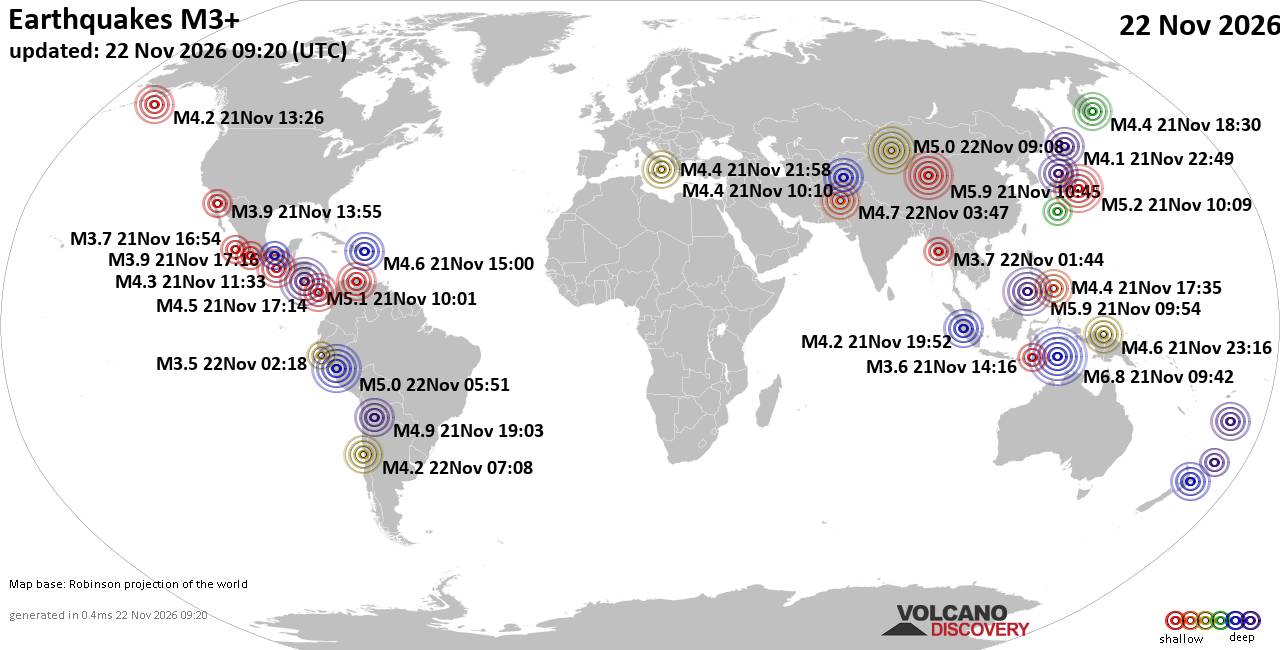
World Earthquake Report for Sunday, 22 November 2026
• M 2.8 - 152 km S of Cordova, Alaska
• M 5.4 - 159 km E of Masohi, Indonesia
• M 4.2 - south of the Fiji Islands
• M 0.7 - 5 km WNW of The Geysers, CA
• Strong mag. 5.0 earthquake - 47 km southeast of Ürümqi, Xinjiang, China, ...
|

#2662
Sat 21 Feb 2004 05:41:PM
|
Joined: Feb 2001
Posts: 800,656
Launch Director
|
|
Launch Director
Joined: Feb 2001
Posts: 800,656 |
Gretchen Cook-Anderson <br />Headquarters, Washington February 19, 2004<br />(Phone: 202/358-0836)<br /><br /><br />Martin Jensen<br />Marshall Space Flight Center, Huntsville, Ala.<br />(Phone: 256/544-0034)<br /><br /><br />RELEASE: 04-062<br /><br /><br />NASA'S NEW VISION INSPIRES STUDENTS IN GREAT MOONBUGGY RACE<br /><br /><br /> Student teams from New Jersey to Arizona are creating <br />human-powered vehicles, similar to the first vehicles that <br />roamed the lunar surface in the 1960s, to compete in NASA's <br />Great Moonbuggy Race in Huntsville, Ala., April 2-3.<br /><br /><br />On Jan. 14, as President Bush announced new goals for America's <br />space program to return to the Moon and explore beyond, <br />students across the nation were already working to support the <br />new NASA vision for space exploration. Students are undertaking <br />their moonbuggy projects hoping the skills they learn now may <br />one day put them on the Moon, or that their designs someday may <br />be used on the lunar or Martian surface.<br /><br /><br />Their challenge, and the Great Moonbuggy competition, is <br />inspired by the first lunar roving vehicles, created more than <br />40 years ago at NASA's Marshall Space Flight Center (MSFC) in <br />Huntsville, Ala. Building a racing buggy gives students hands-<br />on experience that could pay off in returning humans to the <br />Moon, and journeying to Mars and beyond.<br /><br /><br />"The Great Moonbuggy Race is an excellent example of how NASA <br />is inspiring young people and at the same time aligning its <br />education outreach with the President's new vision," said Dr. <br />Adena Williams Loston, NASA's Associate Administrator for <br />Education.<br /><br /><br />The teams competing in the Great Moonbuggy Race encounter some <br />of the same challenges conquered by the original Lunar Rover <br />team in the 1960s. That team was challenged to design a vehicle <br />that was compact, durable and able to handle the rigors of a <br />tough, unflinching environment.<br /><br /><br />Team members met that challenge. Astronauts used separate Lunar <br />Rovers on the final three Moon missions -- Apollo 15, 16 and 17 <br />-- to travel 52.51 miles (84.5 kilometers), gather 620.6 pounds <br />(281.5 kilograms) of rock and soil samples, and return them to <br />Earth.<br /><br /><br />"This competition prepares young men and women to study <br />science, technology, engineering and technology needed to take <br />explorers to the Moon and Mars," said Durlean Bradford, <br />Moonbuggy Race coordinator in MSFC's education department. <br />"Some of these moonbuggy racers could be chosen to make the <br />trips or design and build the machines that will help our <br />nation reach those goals. That's something to be excited <br />about."<br /><br /><br />The student's Moonbuggy challenge is to design a human-powered <br />vehicle able to fit into a space no more than 4-feet by 4-feet <br />by 4-feet that also must be quickly unfolded and ready to ride, <br />yet light enough for its two drivers to carry. During the race, <br />the two operators -- one male, one female -- power and drive <br />the vehicle over a half-mile obstacle course of simulated <br />moonscape terrain.<br /><br /><br />Although the moonbuggy racers don't haul soil and rock, they do <br />encounter many of the same design and engineering problems <br />faced by that original lunar rover team. In addition to working <br />issues of design, fabrication and teamwork, the budding student <br />engineers must make sure the buggies work and can withstand the <br />punishment of the rigorous course obstacles. In addition, <br />riders must be in top physical condition to pedal the tough <br />course.<br /><br /><br />In 2003, 55 teams from 20 states and Puerto Rico participated. <br />This year, high school teams will race April 2 and college <br />teams will compete April 3.<br /><br /><br />But it's more than just a race. It's the continuation of a <br />challenge faced more than 30 years ago. "For some schools, this <br />challenge has become part of their curriculum," Bradford said. <br />"They work on their moonbuggies for several months before <br />making the trip to Huntsville to compete. We're expecting big <br />fields this year, both in the high school and college races."<br /><br /><br />Prizes are awarded not only for the fastest vehicles, but also <br />to the team whose design represents the best technical approach <br />to solving the engineering problem of navigating a simulated <br />lunar surface.<br /><br /><br />For more event details, race rules, information on the course <br />and photos from previous competitions, visit:<br /><br /><br /> http://moonbuggy.msfc.nasa.gov<br /><br /><br />For information about other NASA education programs on the <br />Internet, visit:<br /><br /><br /> http://education.nasa.gov<br /><br /><br />For information about NASA on the Internet, visit:<br /><br /><br /> http://www.nasa.gov/
|
|



CMS The Best Conveyancing solicitors conveyancing quotes throughout the UK
For any webhosting enquiries please email webmaster@aus-city.com
|
|
Entire Thread
|
 NASA'S NEW VISION INSPIRES STUDENTS IN GREAT MOONBUGGY RACE |
Webmaster
|
Sat 21 Feb 2004 05:41:PM
|
|
Forums60
Topics940,015
Posts974,812
Members2,960
| |
Most Online102,106
Jul 10th, 2026
|
|
|