|
0 members (),
1,404
guests, and
28
robots. |
|
Key:
Admin,
Global Mod,
Mod
|
|
S |
M |
T |
W |
T |
F |
S |
|
|
|
|
|
|
|
1
|
|
2
|
3
|
4
|
5
|
6
|
7
|
8
|
|
9
|
10
|
11
|
12
|
13
|
14
|
15
|
|
16
|
17
|
18
|
19
|
20
|
21
|
22
|
|
23
|
24
|
25
|
26
|
27
|
28
|
29
|
|
30
|
31
|
|
|
|
|
|
|
There are no members with birthdays on this day. |
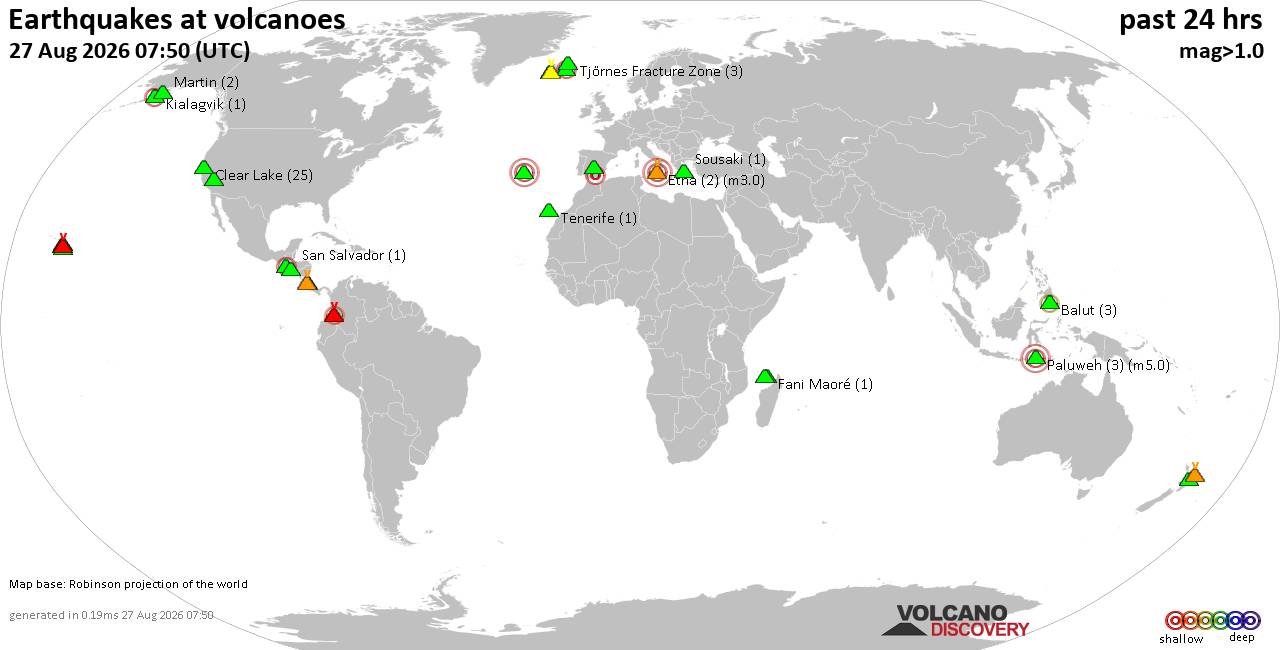
Volcano earthquake report for Thursday, 27 Aug 2026
• Strong mag. 5.2 earthquake - 334 km south of Ogasawara, Tokyo, Japan, on Th...
• Seismic-like event, possible earthquake, reported minutes ago near Granada,...
• World Earthquake Report for Thursday, 27 August 2026
• Possible earthquake reported near Acapulco de Juárez, Guerrero, Mexico, a ...
• Moderate mag. 4.3 earthquake - 16 km southeast of Acapulco de Juárez, Esta...
|

#31389
Sun 05 Nov 2006 10:41:AM
|
Joined: Feb 2001
Posts: 678,977
Launch Director
|
|
Launch Director
Joined: Feb 2001
Posts: 678,977 |
HUBBLE SPACE TELESCOPE - Continuing to collect World Class Science
DAILY REPORT # 4233
PERIOD COVERED: UT November 02, 2006 (DOY 306)
OBSERVATIONS SCHEDULED
ACS/HRC 10556
Neutral Gas at Redshift z=0.5
Damped Lyman-alpha systems {DLAs} are used to track the bulk of the
neutral hydrogen gas in the Universe. Prior to HST UV spectroscopy, they
could only be studied from the ground at redshifts z>1.65. However, HST
has now permitted us to discover 41 DLAs at z<1.65 in our previous
surveys. Followup studies of these systems are providing a wealth of
information about the evolution of the neutral gas phase component of
the Universe. But one problem is that these 41 low-redshift systems are
spread over a wide range of redshifts spanning nearly 70% of the age of
the Universe. Consequently, past surveys for low-redshift DLAs have not
been able to offer very good precision in any small redshift regime.
Here we propose an ACS-HRC- PR200L spectroscopic survey in the redshift
interval z=[0.37, 0.7] which we estimate will permit us to discover
another 41 DLAs. This will not only allow us to double the number of
low-redshift DLAs, but it will also provide a relatively high-precision
regime in the low-redshift Universe that can be used to anchor
evolutionary studies. Fortunately DLAs have high absorption equivalent
width, so ACS-HRC-PR200L has high-enough resoultion to perform this
proposed MgII-selected DLA survey.
ACS/HRC 10860
The largest Kuiper belt object
The past year has seen an explosion in the discoveries of Pluto-sized
objects in the Kuiper belt. With the discoveries of the methane-covered
2003 UB313 and 2005 FY9, the multiple satellite system of 2003 EL61, and
the Pluto-Charon analog system of Orcus and its satellite, it is finally
apparent that Pluto is not a unique oddball at the edge of the solar
system, but rather one of a family of similarly large objects in the
Kuiper belt and beyond. HST observations over the past decade have been
critical for understanding the interior, surface, and atmosphere of
Pluto and Charon. We propose here a comprehensive series of observations
designed to similarly expand our knowledge of these recently discovered
Pluto-sized and near-Pluto-sized Kuiper belt objects. These observations
will measure objects' sizes and densities, explore the outcome of
collisions in the outer solar system, and allow the first ever look at
the interior structure of a Kuiper belt object. Our wide field survey
that discovered all of these objects is nearly finished, so after five
years of continuous searching we are finally almost complete in our
tally of these near-Pluto-sized objects. This large HST request is the
culmination of this half-decade search for new planetary-sized objects.
As has been demonstrated repeatedly by the approximately 100 previous
orbits devoted to the study of Pluto, only HST has the resolution and
sensitivity for detailed study of these distant objects.
ACS/WFC 10843
Deep Imaging of Extremely Metal-Poor Galaxies
Conflicting evidence exists regarding whether the most metal-poor and
actively star-forming galaxies in the local universe such as I Zw 18
contain evolved stars. We propose to help settle this issue by obtaining
deep ACS/HRC U, narrow-V, I, and H-alpha images of nine nearby {z <
0.01} extremely metal-poor {12 + O/H < 7.65} galaxies selected from the
Sloan Digital Sky Survey. These objects are only marginally resolved
from the ground and appear uniformly blue, strongly motivating HST
imaging. The continuum images will establish: 1.} If underlying
populations of evolved stars are present, by revealing the objects'
colors on scales ~10 pc, and 2.} The presence of any faint tidal
features, dust lanes, and globular or super star clusters, all of which
constrain the objects' evolutionary states. The H-alpha images, in
combination with ground-based echelle spectroscopy, will reveal 1.}
Whether the objects are producing "superwinds" that are depleting them
of their metals; ground-based images of some of them indeed show large
halos of ionized gas, and 2.} The correspondence of their nebular and
stellar emission on scales of a few parsecs, which is important for
understanding the "feedback" process by which supernovae and stellar
winds regulate star formation. One of the sample objects, CGCG 269-049,
lies only ~2 Mpc away, allowing the detection of individual red giant
stars in it if any are present. We have recently obtained Spitzer images
and spectra of this galaxy to determine its dust content and star
formation history, which will complement the proposed HST observations.
ACS/WFC 10886
The Sloan Lens ACS Survey: Towards 100 New Strong Lenses
As a continuation of the highly successful Sloan Lens ACS {SLACS} Survey
for new strong gravitational lenses, we propose one orbit of ACS-WFC
F814W imaging for each of 50 high- probability strong galaxy-galaxy lens
candidates. These observations will confirm new lens systems and permit
immediate and accurate photometry, shape measurement, and mass modeling
of the lens galaxies. The lenses delivered by the SLACS Survey all show
extended source structure, furnishing more constraints on the projected
lens potential than lensed-quasar image positions. In addition, SLACS
lenses have lens galaxies that are much brighter than their lensed
sources, facilitating detailed photometric and dynamical observation of
the former. When confirmed lenses from this proposal are combined with
lenses discovered by SLACS in Cycles 13 and 14, we expect the final
SLACS lens sample to number 80--100: an approximate doubling of the
number of known galaxy-scale strong gravitational lenses and an
order-of-magnitude increase in the number of optical Einstein rings. By
virtue of its homogeneous selection and sheer size, the SLACS sample
will allow an unprecedented exploration of the mass structure of the
early-type galaxy population as a function of all other observable
quantities. This new sample will be a valuable resource to the
astronomical community by enabling qualitatively new strong lensing
science, and as such we will waive all but a short {3-month} proprietary
period on the observations.
ACS/WFC 10911
Calibration of ACS F814W Surface Brightness Fluctuations
The surface brightness fluctuations {SBF} method has emerged as the
primary distance indicator for mapping local large-scale structures
{Virgo, Fornax}, as well as the velocity field out to nearly 15,000 km/s
{z < 0.05}. This is because other precision distance indicators either
lack the requisite depth {Cepheids, TRGB} or are too rare for adequate
sampling {supernovae}, while more traditional methods {Tully-Fisher,
fundamental plane} lack the necessary precision. The SBF method is now
being used with great success in several major ACS Wide Field Camera
programs. However, whereas the band of choice for the nearby structure
studies has been F850LP, for the distant large-scale flow studies it is
F814W because of its much greater throughput. As a result, the current
calibration for the more distant studies is inadequate. We propose to
establish the first systematic calibration of the SBF method in the
important F814W ACS WFC bandpass. We will do this by measuring SBF in an
optimized sample of galaxies in the nearby compact Fornax cluster. Given
the large amount of effort and HST time being dedicated to F814W SBF
measurements, it is imperative that we correct this outstanding
calibration problem while time remains. For an extremely modest
expenditure of orbits, we will remove a significant systematic error and
vastly improve the overall accuracy of the ongoing ACS F814W SBF work.
These data will also greatly enhance the legacy value of the HST archive
for future SBF studies.
NIC1/NIC2/NIC3 8794
NICMOS Post-SAA calibration - CR Persistence Part 5
A new procedure proposed to alleviate the CR-persistence problem of
NICMOS. Dark frames will be obtained immediately upon exiting the SAA
contour 23, and every time a NICMOS exposure is scheduled within 50
minutes of coming out of the SAA. The darks will be obtained in parallel
in all three NICMOS Cameras. The POST-SAA darks will be non-standard
reference files available to users with a USEAFTER date/time mark. The
keyword 'USEAFTER=date/time' will also be added to the header of each
POST-SAA DARK frame. The keyword must be populated with the time, in
addition to the date, because HST crosses the SAA ~8 times per day so
each POST-SAA DARK will need to have the appropriate time specified, for
users to identify the ones they need. Both the raw and processed images
will be archived as POST-SAA DARKSs. Generally we expect that all NICMOS
science/calibration observations started within 50 minutes of leaving an
SAA will need such maps to remove the CR persistence from the science
images. Each observation will need its own CRMAP, as different SAA
passages leave different imprints on the NICMOS detectors.
NIC3 10792
Quasars at Redshift z=6 and Early Star Formation History
We propose to observe four high-redshift quasars {z=6} in the NIR in
order to estimate relative Fe/Mg abundances and the central black hole
mass. The results of this study will critically constrain models of
joint quasar and galaxy formation, early star formation, and the growth
of supermassive black holes. Different time scales and yields for
alpha-elements {like O or Mg} and for iron result into an iron
enrichment delay of ~0.3 to 0.6 Gyr. Hence, despite the well-known
complexity of the FeII emission line spectrum, the ratio iron/alpha -
element is a potentially useful cosmological clock. The central black
hole mass will be estimated based on a recently revised back hole mass -
luminosity relationship. The time delay of the iron enrichment and the
time required to form a supermassive black hole {logM>8 Msol, tau
~0.5Gyr} as evidenced by quasar activity will be used to date the
beginning of the first intense star formation, marking the formation of
the first massive galaxies that host luminous quasars, and to constrain
the epoch when supermassive black holes start to grow by accretion.
FLIGHT OPERATIONS SUMMARY:
Significant Spacecraft Anomalies: (The following are preliminary reports
of potential non-nominal performance that will be investigated.)
HSTARS: (None)
COMPLETED OPS REQUEST: (None)
COMPLETED OPS NOTES: (None)
SCHEDULED SUCCESSFUL
FGS GSacq 09 09
FGS REacq 06 06
OBAD with Maneuver 32 32
SIGNIFICANT EVENTS: (None)
David Cottle
UBB Owner & Administrator
|
|



CMS The Best Conveyancing solicitors conveyancing quotes throughout the UK
For any webhosting enquiries please email webmaster@aus-city.com
|
|
Entire Thread
|
 HST DAILY REPORT # 4233
|
Webmaster
|
Sun 05 Nov 2006 10:41:AM
|
|
Forums60
Topics813,588
Posts848,381
Members2,960
| |
Most Online102,106
Jul 10th, 2026
|
|
|