|
0 members (),
1,417
guests, and
29
robots. |
|
Key:
Admin,
Global Mod,
Mod
|
|
S |
M |
T |
W |
T |
F |
S |
|
|
1
|
2
|
3
|
4
|
5
|
6
|
|
7
|
8
|
9
|
10
|
11
|
12
|
13
|
|
14
|
15
|
16
|
17
|
18
|
19
|
20
|
|
21
|
22
|
23
|
24
|
25
|
26
|
27
|
|
28
|
29
|
30
|
|
|
|
|
|
There are no members with birthdays on this day. |
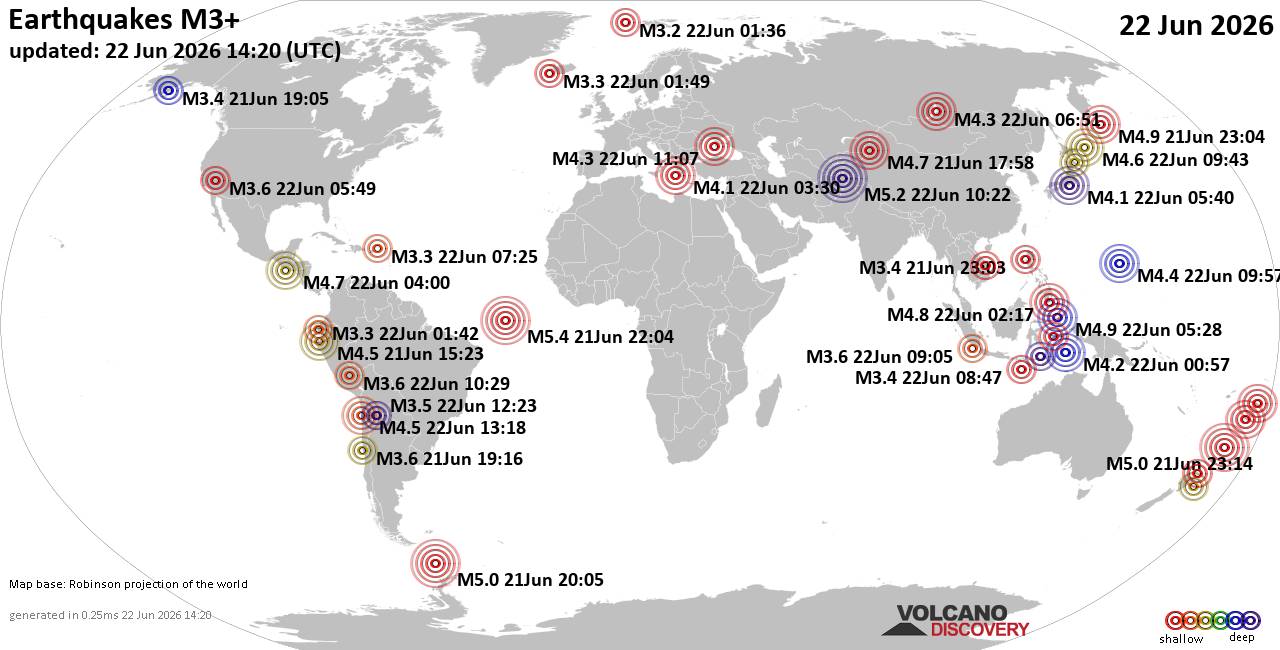
World Earthquake Report for Monday, 22 June 2026
• Moderate mag. 4.9 earthquake - Fiji Islands Region on Monday, Jun 22, 2026,...
• Moderate mag. 4.1 earthquake - South Pacific Ocean, 491 km northeast of Tau...
• Volcano earthquake report for Monday, 22 Jun 2026
• Moderate mag. 4.6 earthquake - 42 km south of Tocopilla, Provincia de Tocop...
• Moderate mag. 4.9 earthquake - South Pacific Ocean, 277 km south of Nuku'al...
|

#39308
Sun 14 Sep 2008 08:55:PM
|
Joined: Feb 2001
Posts: 678,976
Launch Director
|
OP

Launch Director
Joined: Feb 2001
Posts: 678,976 |
HUBBLE SPACE TELESCOPE - Continuing to collect World Class Science
DAILY REPORT #4691
PERIOD COVERED: 5am September 8 - 5am September 9, 2008 (DOY 252/0900z-253/0900z)
OBSERVATIONS SCHEDULED
NIC1/NIC2 11818
NICMOS Confirmation of an Extrasolar Panet Candidate Directly Detected
with ACS
With ACS/HRC coronagraphy, we have achieved the direct detection of a
planet candidate in F606W and F814W around a bright nearby star with a
debris belt. The planet candidate lies 18 astronomical units interior to
the dust belt and we detect counterclockwise orbital motion in
observations separated by 1.75 years. The candidate has mass no greater
than three Jupiter masses based on an analysis of its luminosity and the
dynamical argument that a significantly more massive object would
disrupt the dust belt. Using recent model predictions for 100-300 Myr
old planetary atmospheres, the planet candidate has a temperature of
~400 K and a mass 1.6 - 3.4 M_J. Variability at optical wavelengths
suggests additional sources of luminosity such as H-alpha emission or
the episodic accretion of cometary material. A key surprise is that the
planet candidate is NOT detected in Keck adaptive optics observations at
1.6 microns. Two model atmospheres predict a flux a few times greater
than our detection limit, though the model predictions disagree with
each other by a factor of five due to theoretical uncertainty in the
strength of CH4 vibrational bands. These models predict the strongest
emission centered on the F110W passband of NICMOS such that the F814W -
F110W color will be red. Here we propose follow-up NICMOS observations
to verify that the emission observed in F814W is due to the emergent
flux from passive cooling of the planet, as opposed to other
explanations, such as reflected light from a Saturn analog with a
circumplanetary debris disk that would produce a bluer F814W - F110W
color. Additional deep images in and and out of the 1.14 micron water
trough using NIC1 narrowband filters will test whether or not the
emission is produced from the passive cooling of a young massive planet.
NIC1/NIC2/NIC3 11820
NICMOS Post-SAA Calibration - CR Persistence Part 7
Internals for CR persistence
NIC2 11548
NICMOS Imaging of Protostars in the Orion A Cloud: The Role of
Environment in Star Formation
We propose NICMOS observations of a sample of 252 protostars identified
in the Orion A cloud with the Spitzer Space Telescope. These
observations will image the scattered light escaping the protostellar
envelopes, providing information on the shapes of outflow cavities, the
inclinations of the protostars, and the overall morphologies of the
envelopes. In addition, we ask for Spitzer time to obtain 55-95 micron
spectra of 75 of the protostars. Combining these new data with existing
3.6 to 70 micron photometry and forthcoming 5-40 micron spectra measured
with the Spitzer Space Telescope, we will determine the physical
properties of the protostars such as envelope density, luminosity,
infall rate, and outflow cavity opening angle. By examining how these
properties vary with stellar density (i.e. clusters vs groups vs
isolation) and the properties of the surrounding molecular cloud; we can
directly measure how the surrounding environment influences protostellar
evolution, and consequently, the formation of stars and planetary
systems. Ultimately, this data will guide the development of a theory of
protostellar evolution.
WFPC2 11113
Binaries in the Kuiper Belt: Probes of Solar System Formation and
Evolution
The discovery of binaries in the Kuiper Belt and related small body
populations is powering a revolutionary step forward in the study of
this remote region. Three quarters of the known binaries in the Kuiper
Belt have been discovered with HST, most by our snapshot surveys. The
statistics derived from this work are beginning to yield surprising and
unexpected results. We have found a strong concentration of binaries
among low-inclination Classicals, a possible size cutoff to binaries
among the Centaurs, an apparent preference for nearly equal mass
binaries, and a strong increase in the number of binaries at small
separations. We propose to continue this successful program in Cycle 16;
we expect to discover at least 13 new binary systems, targeted to
subgroups where these discoveries can have the greatest impact.
WFPC2 11130
AGNs with Intermediate-mass Black Holes: Testing the Black Hole-Bulge
Paradigm, Part II
The recent progress in the study of central black holes in galactic
nuclei has led to a general consensus that supermassive {10^6-10^9 solar
mass} black holes are closely connected with the formation and
evolutionary history of large galaxies, especially their bulge
component. Two outstanding issues, however, remain unresolved. Can
central black holes form in the absence of a bulge? And does the mass
function of central black holes extend below 10^6 solar masses?
Intermediate-mass black holes {<10^6 solar masses}, if they exist, may
offer important clues to the nature of the seeds of supermassive black
holes. Using the SDSS, our group has successfully uncovered a new
population of AGNs with intermediate-mass black holes that reside in
low-luminosity galaxies. However, very little is known about the
detailed morphologies or structural parameters of the host galaxies
themselves, including the crucial question of whether they have bulges
or not. Surprisingly, the majority of the targets of our Cycle 14 pilot
program have structural properties similar to dwarf elliptical galaxies.
The statistics from this initial study, however, are really too sparse
to reach definitive conclusions on this important new class of black
holes. We wish to extend this study to a larger sample, by using the
Snapshot mode to obtain WFPC2 F814W images from a parent sample of 175
AGNs with intermediate- mass black holes selected from our final SDSS
search. We are particularly keen to determine whether the hosts contain
bulges, and if so, how the fundamental plane properties of the host
depend on the mass of their central black holes. We will also
investigate the environment of this unique class of AGNs.
WFPC2 11218
Snapshot Survey for Planetary Nebulae in Globular Clusters of the Local
Group
Planetary nebulae {PNe} in globular clusters {GCs} raise a number of
interesting issues related to stellar and galactic evolution. The number
of PNe known in Milky Way GCs, 4, is surprisingly low if one assumes
that all stars pass through a PN stage. However, it is likely that the
remnants of stars now evolving in Galactic GCs leave the AGB so slowly
that any ejected nebula dissipates long before the star becomes hot
enough to ionize it. Thus there should not be ANY PNe in Milky Way
GCs--but there are four! It has been suggested that these PNe are the
result of mergers of binary stars within GCs, i.e., that they are
descendants of blue stragglers. The frequency of occurrence of PNe in
external galaxies poses more questions, because it shows a range of
almost an order of magnitude. I propose a Snapshot survey aimed at
discovering PNe in the GC systems of Local Group galaxies more distant
than the Magellanic Clouds. These clusters, some of which may be much
younger than their counterparts in the Milky Way, might contain many
more PNe than those of our own galaxy. I will use the standard technique
of emission-line and continuum imaging, which easily discloses PNe.
WFPC2 11291
Following Eta Carinae's Change of State
Eta Carinae is now known to be undergoing some unusually rapid changes
on a timescale of several years. They are probably essential for
modeling the star's long-term recovery from its Giant Eruption 160 years
ago -- the prototype "supernova impostor" event. Since high spatial
resolution is needed to isolate the central star, and the present state
will probably not recur in the future, it is important to obtain HST
data during the next two years. We propose a cost- effective set of ACS
observations with three goals: {1} to obtain a continuing record of the
star's rapid UV and visual brightening; {2} to lengthen the temporal
baseline of ACS images enough to settle an important question concerning
ejecta ages; and {3} to extend the record of morphological changes in
the inner ejecta past the midpoint of eta Car's 5.5-year cycle.
WFPC2 11302
WFPC2 CYCLE 16 Standard Darks - Part III
This dark calibration program obtains dark frames every week in order to
provide data for the ongoing calibration of the CCD dark current rate,
and to monitor and characterize the evolution of hot pixels. Over an
extended period these data will also provide a monitor of radiation
damage to the CCDs.
WFPC2 11793
WFPC2 Cycle 16 Internal Monitor
This calibration proposal is the Cycle 15 routine internal monitor for
WFPC2, to be run weekly to monitor the health of the cameras. A variety
of internal exposures are obtained in order to provide a monitor of the
integrity of the CCD camera electronics in both bays (both gain 7 and
gain 15 -- to test stability of gains and bias levels), a test for
quantum efficiency in the CCDs, and a monitor for possible buildup of
contaminants on the CCD windows. These also provide raw data for
generating annual super-bias reference files for the calibration
pipeline.
FLIGHT OPERATIONS SUMMARY:
Significant Spacecraft Anomalies: (The following are preliminary reports
of potential non-nominal performance that will be investigated.)
HSTARS: (None)
COMPLETED OPS REQUEST: (None)
COMPLETED OPS NOTES: (None)
SCHEDULED SUCCESSFUL
FGS GSacq 13 13
FGS REacq 01 01
OBAD with Maneuver 28 28
SIGNIFICANT EVENTS: (None)
David Cottle
UBB Owner & Administrator
|
|



CMS The Best Conveyancing solicitors conveyancing quotes throughout the UK
For any webhosting enquiries please email webmaster@aus-city.com
|
|
Entire Thread
|
 DAILY REPORT #4691
|
Webmaster
|
Sun 14 Sep 2008 08:55:PM
|
|
Forums60
Topics783,548
Posts818,310
Members2,960
| |
Most Online22,463
May 9th, 2026
|
|
|