|
0 members (),
2,515
guests, and
20
robots. |
|
Key:
Admin,
Global Mod,
Mod
|
|
S |
M |
T |
W |
T |
F |
S |
|
|
|
|
1
|
2
|
3
|
4
|
|
5
|
6
|
7
|
8
|
9
|
10
|
11
|
|
12
|
13
|
14
|
15
|
16
|
17
|
18
|
|
19
|
20
|
21
|
22
|
23
|
24
|
25
|
|
26
|
27
|
28
|
29
|
30
|
31
|
|
|
There are no members with birthdays on this day. |
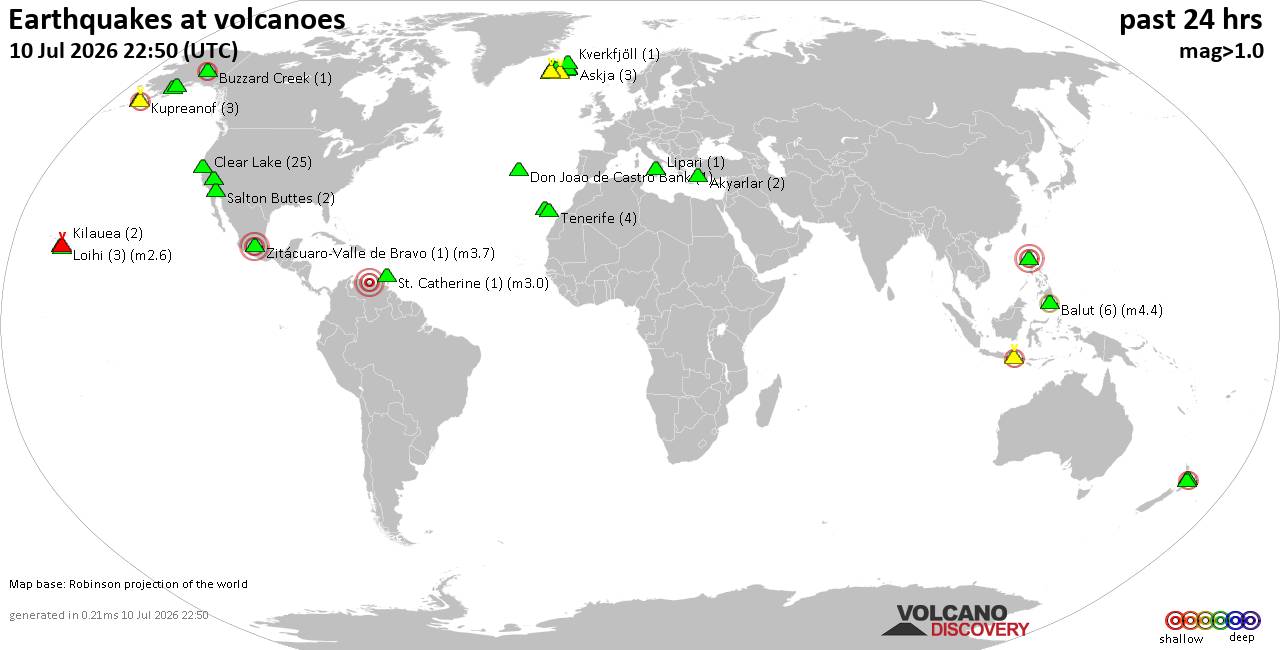
Volcano earthquake report for Friday, 10 Jul 2026
• Moderate mag. 4.2 earthquake - 133 km northwest of Ternate, Kota Ternate, N...
• World Earthquake Report for Friday, 10 July 2026
• Moderate mag. 4.6 earthquake - 17 km southwest of Comalapa, Estado de Chiap...
• Moderate mag. 4.1 earthquake - Olyutorskiy Rayon, 47 km northwest of Tilich...
• Moderate mag. 4.0 earthquake - Hawke's Bay, New Zealand, on Saturday, Jul 1...
|

#4538
Mon 27 Feb 2006 01:16:PM
|
Joined: Feb 2001
Posts: 3,536
Mission Commander
|
OP

Mission Commander
Joined: Feb 2001
Posts: 3,536 |
Press Office<br />University of St Andrews<br />Fife, U.K.<br /><br />Contact:<br />***le Cook, Press Officer<br />01334 467227 / 462529<br /><br />13 Feb 2006<br /><br />Einstein's Theory 'Improved'?<br /><br />Research from the University of St Andrews has revealed that a 'simple'<br />fine-tuning in Einstein's theory of gravity could solve a dark mystery in<br />galaxies that has baffled astrophysicists for three- quarters of a<br />century.<br /><br />By refining the law of gravity, Chinese astronomer Dr HongSheng Zhao and<br />his Belgian collaborator Dr Benoit Famaey of the Free University of<br />Brussels (ULB), aim to improve Einstein's theory and prove whether the<br />mysterious Dark Matter actually exists in galaxies.<br /><br />Theories of the physics of gravity were first developed by Isaac Newton in<br />1687 and refined by Albert Einstein's general theory of relativity in 1905<br />so that the speed of gravity is equal to the speed of light. While it is<br />the earliest-known force, gravity is still very much a mystery with<br />theories still unconfirmed by astronomical observations in space.<br /><br />The 'problem' with the golden laws of Newton and Einstein is that they do<br />not explain the accelerations of stars in galaxies where there is more<br />gravity observed than predicted.<br /><br />Legend has it that Newton began thinking about gravity when an apple fell<br />on his head, but according to Dr Zhao: "It is not obvious how an apple<br />would fall in a galaxy. Mr Newton's theory would be off by a large margin;<br />his apple would fly out of the galaxy."<br /><br />Astronomers believe that these stars move so fast they would fly apart if<br />they were not being held together by the gravitational attraction of a<br />huge amount of unseen material, first noted by Fritz Zwicky in 1933 and<br />now commonly referred to as Dark Matter (or DM).<br /><br />Though astronomers cannot detect Dark Matter directly because it emits no<br />light or radiation, it is thought to account for up to 90% of the<br />Universe. Not all scientists believe in the DM theory however, with some<br />preferring to believe the theory proposed by Moti Milgrom in 1983 (and<br />backed up by Jacob Bekenstein in 2004) that a boost in the gravity of<br />ordinary matter is the cause of this acceleration.<br /><br />Dr Zhao, a lecturer at the School of Physics and Astronomy at St Andrews<br />and member of the Scottish Universities Physics Alliance (SUPA),<br />continued: "Efforts to restore the apple on a nice orbit around the galaxy<br />has over the years led to two schools of thoughts: Dark Matter versus<br />non-Newtonian gravity. There has always been a fair chance that<br />astronomers might rewrite the law of gravity. We have tested a new formula<br />for gravity, which allows gravity to be boosted gradually from the<br />Einstein/Newtonian prediction further away from the solar system.<br /><br />"Our 'simple formula', which is actually a refinement of Bekenstein's, is<br />consistent with galaxy data so far, and if further verified for solar<br />system and cosmology, it could solve the Dark Matter mystery. We may be<br />able to answer common questions such as whether Einstein's theory of<br />gravity is right and whether the so-called Dark Matter actually exists in<br />galaxies.<br /><br />"A non-Newtonian gravity formula is now fully specified on all scales by a<br />smooth continuous function; it is ready for fellow scientists to falsify.<br />It is time to keep an open mind while we continue our search for Dark<br />Matter."<br /><br />The new formula will be presented to an international audience of experts<br />at Edinburgh's Royal Observatory in April, which will be given the<br />opportunity to test and debate the reworked theory. Drs Zhao and Famaey<br />will demonstrate their new formula to an audience of Dark Matter and<br />gravity experts from ten different countries.<br /><br />Dr Famaey commented: "It is possible that neither the modified gravity<br />theory, nor the DM theory, as they are formulated today, will solve all<br />the problems of galactic dynamics or cosmology.<br /><br />"The truth could in principle lie in between, but it is very plausible<br />that we are missing something fundamental about gravity, and that a<br />radically new theoretical approach will be needed to solve all these<br />problems.<br /><br />"Nevertheless, our formula is so attractively simple that it is tempting<br />to see it as part of a yet unknown fundamental theory. All galaxy data<br />seem to be explained effortlessly."<br /><br />The results are published in the US-based Astrophysical Journal Letters.<br /><br />ENDS<br /><br />NOTE TO EDITORS:<br /><br />THE RESEARCHERS ARE AVAILABLE FOR INTERVIEW:<br /><br />UK HongSheng Zhao, University of St Andrews<br />01334 463135<br /><br />Belgium - Benoit Famaey , Université Libre de Bruxelles (ULB)<br />+32-2-6502833<br /><br />Dr Zhao is a PPARC (Particle Physics and Astronomy Research Council)<br />Advanced Fellow. For further info contact: Julia Maddock, Tel 01793 442094<br /><br />Dr. Zhao also holds a NSF Overseas Outstanding Young Scholarship from<br />National Astronomical Observatory of China (contact Dr. B. Qin at Beijing<br />Observatory, qinbo @ bao.ac.cn)<br /><br />The paper is available on line at:<br /><br /> http://adsabs.harvard.edu/cgi-bin/nph-bib_query?bibcode=2006ApJ...638...<br /><br />IMAGE CAPTION:<br />[http://calvin.st-andrews.ac.uk/external_relations/down_loads/gravity%...<br />(8KB)]<br />HongSheng Zhao and the 'simple formula'. CREDIT: Tim Fitzpatrick.
|
|



CMS The Best Conveyancing solicitors conveyancing quotes throughout the UK
For any webhosting enquiries please email webmaster@aus-city.com
|
|
Entire Thread
|
 Einstein's Theory 'Improved'?
|
VA3DBJ
|
Mon 27 Feb 2006 01:16:PM
|
|
Forums60
Topics789,850
Posts824,628
Members2,960
| |
Most Online102,106
Jul 10th, 2026
|
|
|