|
0 members (),
717
guests, and
24
robots. |
|
Key:
Admin,
Global Mod,
Mod
|
|
S |
M |
T |
W |
T |
F |
S |
|
|
1
|
2
|
3
|
4
|
5
|
6
|
|
7
|
8
|
9
|
10
|
11
|
12
|
13
|
|
14
|
15
|
16
|
17
|
18
|
19
|
20
|
|
21
|
22
|
23
|
24
|
25
|
26
|
27
|
|
28
|
29
|
30
|
|
|
|
|
|
There are no members with birthdays on this day. |
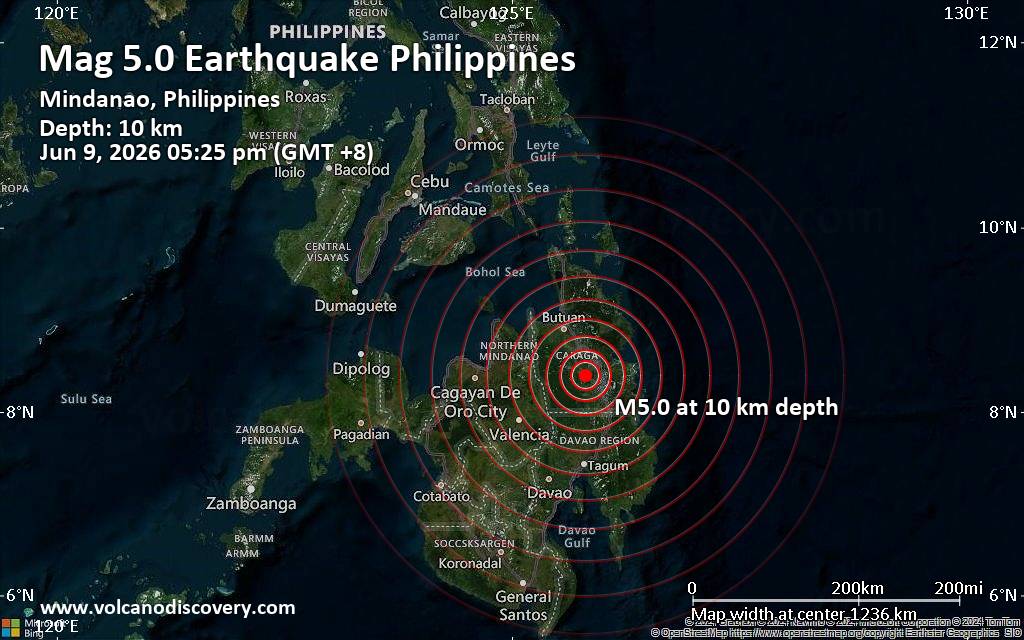
Significant earthquake of magnitude 5.0 just reported 22 km southwest of Prosperidad, Philippines
• Strong mag. 5.0 earthquake - Mindanao, Philippines, on Tuesday, Jun 9, 2026...
• World Earthquake Report for Tuesday, 9 June 2026
• Moderate magnitude 4.8 earthquake 110 km southwest of Tambolaka, Indonesia
• Moderate mag. 4.8 earthquake - South of Sumbawa, Indonesia, on Tuesday, Jun...
• Volcano earthquake report for Tuesday, 9 Jun 2026
|

#46341
Wed 14 Oct 2009 06:21:AM
|
Joined: Feb 2001
Posts: 678,976
Launch Director
|
OP

Launch Director
Joined: Feb 2001
Posts: 678,976 |
HUBBLE SPACE TELESCOPE - Continuing to Collect World Class Science
�
DAILY REPORT��� ���#4950
�
PERIOD COVERED: 5am October 13 - 5am October 14, 2009 (DOY 286/09:00z 287/09:00z)
�
OBSERVATIONS SCHEDULED
�
NIC1/NIC2/NIC3 11947
�
Extended Dark Monitoring
�
This program takes a series of darks to obtain darks (including
amplifier glow, dark current, and shading profiles) for all three
cameras in the read-out sequences used in Cycle 17. A set of 12 orbits
will be observed every two months for a total of 72 orbits for a 12
month Cycle 17. This is a continuation of Cycle 16 program 11330 scaled
down by ~80%.
�
The first orbit (Visit A0) should be scheduled in the NICMOS SMOV after
the DC Transfer Test (11406) and at least 36h before the Filter Wheel
Test (11407). Data download using fast track.
�
The following 28 orbits (visit A1-N2) should be scheduled AFTER the SMOV
Proposal 11407 (Filter Wheel Test). This is done in order to monitor the
dark current following an adjustment of the NCS set-point. These visits
should be executed until the final temperature is reached during SMOV.
�
NIC1/NIC2/NIC3 8795
�
NICMOS Post-SAA Calibration - CR Persistence Part 6
�
This is a new procedure proposed to alleviate the CR-persistence problem
of NICMOS. Dark frames will be obtained immediately upon exiting the SAA
contour 23, and every time a NICMOS exposure is scheduled within 50
minutes of coming out of the SAA. The darks will be obtained in parallel
in all three NICMOS cameras. The post-SAA darks will be non-standard
reference files available to users with a 'Use After' date/time mark.
The keyword 'UseAfter=date/time' will also be added to the header of
each post-SAA dark frame. The keyword must be populated with the time,
in addition to the date, because HST crosses the SAA ~8 times per day,
so each post-SAA dark will need to have the appropriate time specified,
for users to identify the ones they need. Both the raw and processed
images will be archived as post-SAA darks. Generally we expect that all
NICMOS science/calibration observations started within 50 minutes of
leaving an SAA will need such MAPs to remove the CR persistence from the
science images. Each observation will need its own CRMAP, as different
SAA passages leave different imprints on the NICMOS detectors.
�
NIC2/WFC3/IR 11548
�
Infrared Imaging of Protostars in the Orion A Cloud: The Role of
Environment in Star Formation
�
We propose NICMOS and WFC3/IR observations of a sample of 252 protostars
identified in the Orion A cloud with the Spitzer Space Telescope. These
observations will image the scattered light escaping the protostellar
envelopes, providing information on the shapes of outflow cavities, the
inclinations of the protostars, and the overall morphologies of the
envelopes. In addition, we ask for Spitzer time to obtain 55-95 micron
spectra of 75 of the protostars. Combining these new data with existing
3.6 to 70 micron photometry and forthcoming 5-40 micron spectra measured
with the Spitzer Space Telescope, we will determine the physical
properties of the protostars such as envelope density, luminosity,
infall rate, and outflow cavity opening angle. By examining how these
properties vary with stellar density (i.e. clusters vs. groups vs.
isolation) and the properties of the surrounding molecular cloud; we can
directly measure how the surrounding environment influences protostellar
evolution, and consequently, the formation of stars and planetary
systems. Ultimately, this data will guide the development of a theory of
protostellar evolution.
�
STIS/CCD 11844
�
CCD Dark Monitor Part 1
�
The purpose of this proposal is to monitor the darks for the STIS CCD.
�
STIS/CCD 11846
�
CCD Bias Monitor-Part 1
�
The purpose of this proposal is to monitor the bias in the 1x1, 1x2,
2x1, and 2x2 bin settings at gain=1, and 1x1 at gain = 4, to build up
high-S/N superbiases and track the evolution of hot columns.
�
WFC3/ACS/IR 11142
�
Revealing the Physical Nature of Infrared Luminous Galaxies at 0.3<z<2.7
Using HST and Spitzer
�
We aim to determine physical properties of IR luminous galaxies at
0.3<z<2.7 by requesting coordinated HST/NIC2 and MIPS 70um observations
of a unique, 24um flux-limited sample with complete Spitzer mid-IR
spectroscopy. The 150 sources investigated in this program have S(24um)
> 0.8mJy and their mid-IR spectra have already provided the majority
targets with spectroscopic redshifts (0.3<z<2.7). The proposed
150~orbits of NIC2 and 66~hours of MIPS 70um will provide the physical
measurements of the light distribution at the rest-frame ~8000A and
better estimates of the bolometric luminosity. Combining these
parameters together with the rich suite of spectral diagnostics from the
mid-IR spectra, we will (1) measure how common mergers are among LIRGs
and ULIRGs at 0.3<z<2.7, and establish if major mergers are the drivers
of z>1 ULIRGs, as in the local Universe, (2) study the co-evolution of
star formation and blackhole accretion by investigating the relations
between the fraction of starburst/AGN measured from mid-IR spectra vs.
HST morphologies, L(bol) and z, and (3) obtain the current best
estimates of the far-IR emission, thus L(bol) for this sample, and
establish if the relative contribution of mid-to-far IR dust emission is
correlated with morphology (resolved vs. unresolved).
�
WFC3/IR 11202
�
The Structure of Early-type Galaxies: 0.1-100 Effective Radii
�
The structure, formation and evolution of early-type galaxies is still
largely an open problem in cosmology: how does the Universe evolve from
large linear scales dominated by dark matter to the highly non-linear
scales of galaxies, where baryons and dark matter both play important,
interacting, roles? To understand the complex physical processes
involved in their formation scenario, and why they have the tight
scaling relations that we observe today (e.g. the Fundamental Plane), it
is critically important not only to understand their stellar structure,
but also their dark-matter distribution from the smallest to the largest
scales. Over the last three years the SLACS collaboration has developed
a toolbox to tackle these issues in a unique and encompassing way by
combining new non-parametric strong lensing techniques, stellar
dynamics, and most recently weak gravitational lensing, with
high-quality Hubble Space Telescope imaging and VLT/Keck spectroscopic
data of early-type lens systems. This allows us to break degeneracies
that are inherent to each of these techniques separately and probe the
mass structure of early-type galaxies from 0.1 to 100 effective radii.
The large dynamic range to which lensing is sensitive allows us both to
probe the clumpy substructure of these galaxies, as well as their
low-density outer haloes. These methods have convincingly been
demonstrated, by our team, using smaller pilot-samples of SLACS lens
systems with HST data. In this proposal, we request observing time with
WFC3 and NICMOS to observe 53 strong lens systems from SLACS, to obtain
complete multi-color imaging for each system. This would bring the total
number of SLACS lens systems to 87 with completed HST imaging and
effectively doubles the known number of galaxy-scale strong lenses. The
deep HST images enable us to fully exploit our new techniques, beat down
low-number statistics, and probe the structure and evolution of early-
type galaxies, not only with a uniform data-set an order of magnitude
larger than what is available now, but also with a fully-coherent and
self-consistent methodological approach!
�
WFC3/IR 11618
�
WFC3 Observations of VeLLOs and the Youngest Star Forming Environments
�
The Cores-to-Disks Spitzer Legacy team has discovered a number of
extremely low luminosity sources embedded deep within nearby (< 300 pc)
cores previously thought to be starless. With substellar masses, these
low luminosity sources represent either the youngest low-mass protostars
yet detected or the first embedded brown dwarfs. In either case, they
represent a new observed class of sources referred to as VeLLOs (Very
Low Luminosity Objects). We propose WFC3 F160W observations of a small
sample of these sources, to be combined with deep ground-based
observations at Ks, to address a broad set of issues concerning VeLLOs
and the environments within which they are forming. First, the
morphology of their outflow cavities will be traced, yielding estimates
of the inclinations and opening angles of the cavities and the
evolutionary stages of the VeLLOs. Second, our observations will reveal
background stars seen through the densest regions of cores harboring
these VeLLOs. The color-excesses of the background stars will yield the
highest angular resolution extinction maps necessary to directly probe
the inner density structure of these cores, found very soon after the
onset of collapse, which would constrain the initial conditions of
collapse within these isolated environments. In addition, we will
construct similar maps of the dense pre-protostellar core L694-2 and the
protostellar core B335. These maps will provide a snapshot of the
evolution of the inner density structure of a core prior to low-mass
star formation and soon thereafter, for comparison with the inner
density structure of cores that have formed VeLLOs. Finally, these
extinction maps will enable us to determine the core "centers", or
positions of peak column densities. Comparison of these centers with the
positions of the VeLLOs may yield insight regarding potential
differences between the formation of low-mass stars and brown dwarfs.
�
WFC3/IR/S/C 11929
�
IR Dark Current Monitor
�
Analyses of ground test data showed that dark current signals are more
reliably removed from science data using darks taken with the same
exposure sequences as the science data, than with a single dark current
image scaled by desired exposure time. Therefore, dark current images
must be collected using all sample sequences that will be used in
science observations. These observations will be used to monitor changes
in the dark current of the WFC3-IR channel on a day-to-day basis, and to
build calibration dark current ramps for each of the sample sequences to
be used by GOs in Cycle 17. For each sample sequence/array size
combination, a median ramp will be created and delivered to the
calibration database system (CDBS).
�
WFC3/UVIS 11630
�
Monitoring Active Atmospheres on Uranus and Neptune
�
We propose Snapshot observations of Uranus and Neptune to monitor
changes in their atmospheres on time scales of weeks and months, as we
have been doing for the past seven years. Previous Hubble Space
Telescope observations (including previous Snapshot programs 8634,
10170, 10534, and 11156), together with near-IR images obtained using
adaptive optics on the Keck Telescope, reveal both planets to be dynamic
worlds which change on time scales ranging from hours to (terrestrial)
years. Uranus equinox occurred in December 2007, and the northern
hemisphere is becoming fully visible for the first time since the early
1960s. HST observations during the past several years (Hammel et al.
2005, Icarus 175, 284 and references therein) have revealed strongly
wavelength-dependent latitudinal structure, the presence of numerous
visible-wavelength cloud features in the northern hemisphere, at least
one very long- lived discrete cloud in the southern hemisphere, and in
2006 the first clearly defined dark spot seen on Uranus. Long term
ground-based observations (Lockwood and Jerzekiewicz, 2006, Icarus 180,
442; Hammel and Lockwood 2007, Icarus 186, 291) reveal seasonal
brightness changes that seem to demand the appearance of a bright
northern polar cap within the next few years. Recent HST and Keck
observations of Neptune (Sromovsky et al. 2003, Icarus 163, 256 and
references therein) show a general increase in activity at south
temperate latitudes until 2004, when Neptune returned to a rather
Voyager-like appearance with discrete bright spots rather than active
latitude bands. Further Snapshot observations of these two dynamic
planets will elucidate the nature of long-term changes in their zonal
atmospheric bands and clarify the processes of formation, evolution, and
dissipation of discrete albedo features.
�
WFC3/UVIS 11905
�
WFC3 UVIS CCD Daily Monitor
�
The behavior of the WFC3 UVIS CCD will be monitored daily with a set of
full-frame, four-amp bias and dark frames. A smaller set of 2Kx4K
subarray biases are acquired at less frequent intervals throughout the
cycle to support subarray science observations. The internals from this
proposal, along with those from the anneal procedure (Proposal 11909),
will be used to generate the necessary superbias and superdark reference
files for the calibration pipeline (CDBS).
�
WFC3/UVIS/IR 11644
�
A Dynamical-Compositional Survey of the Kuiper Belt: A New Window Into
the Formation of the Outer Solar System
�
The eight planets overwhelmingly dominate the solar system by mass, but
their small numbers, coupled with their stochastic pasts, make it
impossible to construct a unique formation history from the dynamical or
compositional characteristics of them alone. In contrast, the huge
numbers of small bodies scattered throughout and even beyond the
planets, while insignificant by mass, provide an almost unlimited number
of probes of the statistical conditions, history, and interactions in
the solar system. To date, attempts to understand the formation and
evolution of the Kuiper Belt have largely been dynamical simulations
where a hypothesized starting condition is evolved under the
gravitational influence of the early giant planets and an attempt is
made to reproduce the current observed populations. With little
compositional information known for the real Kuiper Belt, the test
particles in the simulation are free to have any formation location and
history as long as they end at the correct point. Allowing compositional
information to guide and constrain the formation, thermal, and
collisional histories of these objects would add an entire new dimension
to our understanding of the evolution of the outer solar system. While
ground based compositional studies have hit their flux limits already
with only a few objects sampled, we propose to exploit the new
capabilities of WFC3 to perform the first ever large-scale
dynamical-compositional study of Kuiper Belt Objects (KBOs) and their
progeny to study the chemical, dynamical, and collisional history of the
region of the giant planets. The sensitivity of the WFC3 observations
will allow us to go up to two magnitudes deeper than our ground based
studies, allowing us the capability of optimally selecting a target list
for a large survey rather than simply taking the few objects that can be
measured, as we have had to do to date. We have carefully constructed a
sample of 120 objects which provides both overall breadth, for a general
understanding of these objects, plus a large enough number of objects in
the individual dynamical subclass to allow detailed comparison between
and within these groups. These objects will likely define the core
Kuiper Belt compositional sample for years to come. While we have many
specific results anticipated to come from this survey, as with any
project where the field is rich, our current knowledge level is low, and
a new instrument suddenly appears which can exploit vastly larger
segments of the population, the potential for discovery -- both
anticipated and not -- is extraordinary.
�
FLIGHT OPERATIONS SUMMARY:
�
Significant Spacecraft Anomalies: (The following are preliminary reports
of potential non-nominal performance that will be investigated.)
�
HSTARS: (None)
�
COMPLETED OPS REQUEST: (None)
�
COMPLETED OPS NOTES: (None)
�
�������������� ��������SCHEDULED����� SUCCESSFUL
FGS GSAcq�������� ������8������������� ������8��������������������
FGS REAcq��������� �����7������������� ������7����������������
OBAD with Maneuver 5������������ �������5���������������
�
SIGNIFICANT EVENTS: (None)
David Cottle
UBB Owner & Administrator
|
|



CMS The Best Conveyancing solicitors conveyancing quotes throughout the UK
For any webhosting enquiries please email webmaster@aus-city.com
|
|
Entire Thread
|
 DAILY REPORT #4950
|
Webmaster
|
Wed 14 Oct 2009 06:21:AM
|
|
Forums60
Topics780,264
Posts815,022
Members2,960
| |
Most Online22,463
May 9th, 2026
|
|
|