|
0 members (),
868
guests, and
25
robots. |
|
Key:
Admin,
Global Mod,
Mod
|
|
S |
M |
T |
W |
T |
F |
S |
|
|
1
|
2
|
3
|
4
|
5
|
6
|
|
7
|
8
|
9
|
10
|
11
|
12
|
13
|
|
14
|
15
|
16
|
17
|
18
|
19
|
20
|
|
21
|
22
|
23
|
24
|
25
|
26
|
27
|
|
28
|
29
|
30
|
|
|
|
|
|
There are no members with birthdays on this day. |
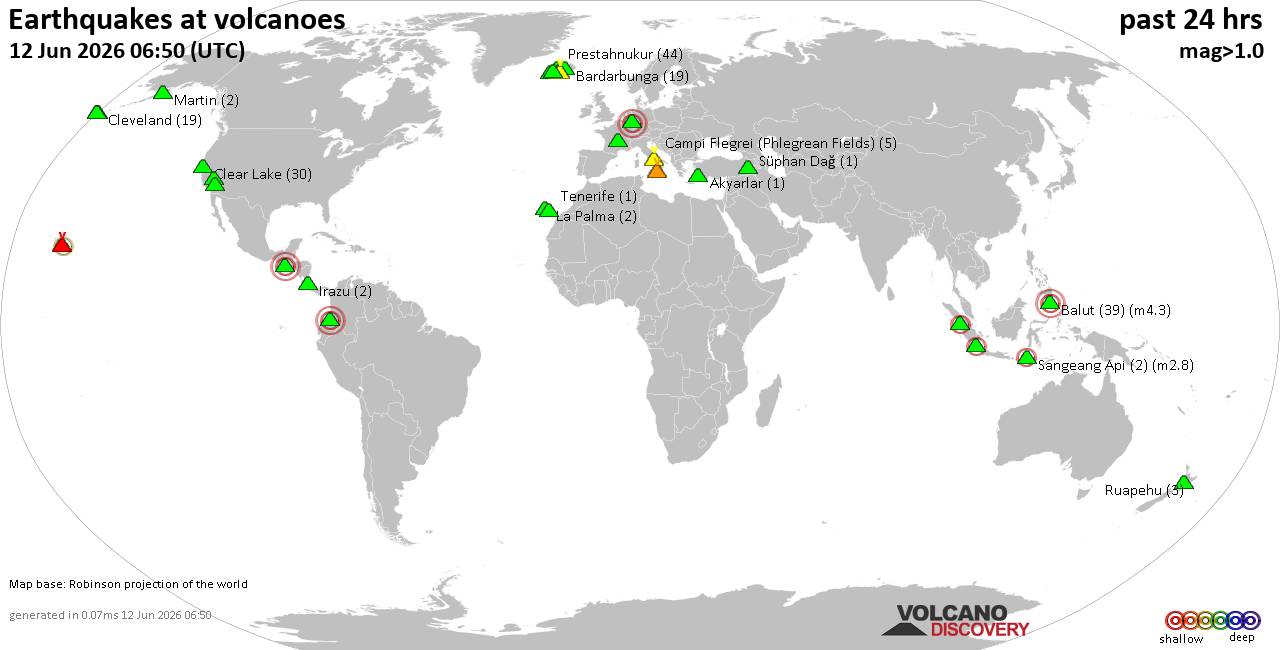
Volcano earthquake report for Friday, 12 Jun 2026
• Moderate mag. 4.0 earthquake - 26 km west of Gjirokaster, Qarku i Gjirokast...
• Moderate mag. 4.8 earthquake - Otago, New Zealand, on Friday, Jun 12, 2026,...
• Moderate mag. 4.5 earthquake - Madang Province, 24 km north of Goroka, Papu...
• Moderate mag. 4.2 earthquake - 20 km northwest of Blenheim, Marlborough, Ne...
• Moderate mag. 4.0 earthquake - Banda Sea, 43 km northwest of Tiakur, Indone...
|

#49728
Mon 30 Aug 2010 11:27:AM
|
Joined: Feb 2001
Posts: 678,976
Launch Director
|
OP

Launch Director
Joined: Feb 2001
Posts: 678,976 |
HUBBLE SPACE TELESCOPE - Continuing to Collect World Class Science
�
DAILY REPORT #5170
�
PERIOD COVERED: 5am August 27 - 5am August 30, 2010 (DOY 239/09:00z-242/09:00z)
�
FLIGHT OPERATIONS SUMMARY:
�
Significant Spacecraft Anomalies: (The following are preliminary reports
of potential non-nominal performance that will be investigated.)
�
HSTARS:
12365 - GSAcq(1,2,1) at 240/23:21:19z took 2 attempts to acquire Fine Lock.
�
������� �� Observations possibly affected: WFC3 204 Proposal ID#11908, WFC3 205-206
������� �� & ACS 44-47 Proposal ID#11613, STIS 45 Proposal ID#11845, STIS 46-47
������� �� Proposal ID#11847.
�
�
COMPLETED OPS REQUEST: (None)
�
COMPLETED OPS NOTES:
2066-0 - Update CCS SOI after COS FSW 4.11 installation @ 241/2345z
2061-0 - HST486/NSSC-1 SOI Configuration -- PRD 7.3 (closed) @ 241/2359z
2067-0 - COS EEPROM & Exec SOIs out of synch between install & active (closed) @ 242/0001z
�
������� ������ �������SCHEDULED SUCCESSFUL
FGS GSAcq �� �����������19������ ��� 19
FGS REAcq �� �����������28������ ��� 28
OBAD with Maneuver 16������ ��� 16
�
SIGNIFICANT EVENTS:
�
Flash Report: COS FSW 4.11 installation complete
COS successfully transition down to boot and back-up to Operate (COS CS
FSW 4.11 was active at 242/02:50z).
�
�
OBSERVATIONS SCHEDULED:
�
S/C 12046
�
COS FUV DCE Memory Dump
�
Whenever the FUV detector high voltage is on, count rate and current
draw information is collected, monitored, and saved to DCE memory. Every
10 msec the detector samples the currents from the HV power supplies
(HVIA, HVIB) and the AUX power supply (AUXI). The last 1000 samples are
saved in memory, along with a histogram of the number of occurrences of
each current value.
�
In the case of a HV transient (known as a "crackle" on FUSE), where one
of these currents exceeds a preset threshold for a persistence time, the
HV will shut down, and the DCE memory will be dumped and examined as
part of the recovery procedure. However, if the current exceeds the
threshold for less than the persistence time (a "mini-crackle" in FUSE
parlance), there is no way to know without dumping DCE memory. By
dumping and examining the histograms regularly, we will be able to
monitor any changes in the rate of "mini-crackles" and thus learn
something about the state of the detector.
�
COS/NUV 12042
�
COS-GTO: Pluto
�
We seek to measure Pluto's albedo below 2100, to better constrain
surface composition. COS observations will provide a substantial
improvement in the S/N of Pluto spectra from <1800 to 2100. Accumulation
of past HST/FOS spectra yields extremely low S/N below 2000 (S/N of only
1-3 in 100 bins; Krasnopolsky 2001). We expect to achieve S/N=5 at 1950
with 10 binning. In addition to spectrally broad albedo measurements,
these observations could reveal line or molecular band emission, such as
C I 1931 or CO 1993.
�
ACS/WFC 11996
�
CCD Daily Monitor (Part 3)
�
This program comprises basic tests for measuring the read noise and dark
current of the ACS WFC and for tracking the growth of hot pixels. The
recorded frames are used to create bias and dark reference images for
science data reduction and calibration. This program will be executed
four days per week (Mon, Wed, Fri, Sun) for the duration of Cycle 17. To
facilitate scheduling, this program is split into three proposals. This
proposal covers 308 orbits (19.25 weeks) from 21 June 2010 to 1 November
2010.
�
WFC3/IR/S/C 11929
�
IR Dark Current Monitor
�
Analyses of ground test data showed that dark current signals are more
reliably removed from science data using darks taken with the same
exposure sequences as the science data, than with a single dark current
image scaled by desired exposure time. Therefore, dark current images
must be collected using all sample sequences that will be used in
science observations. These observations will be used to monitor changes
in the dark current of the WFC3-IR channel on a day-to-day basis, and to
build calibration dark current ramps for each of the sample sequences to
be used by Gos in Cycle 17. For each sample sequence/array size
combination, a median ramp will be created and delivered to the
calibration database system (CDBS).
�
WFC3/UV 11922
�
UVIS Fringing
�
Multiple pointing observations of the globular cluster Omega Centauri
(NGC 5139) in the narrow band filters F656N and F953N will be used to
verify the fringing model developed during various tests (TV3) and its
impact on photometric accuracy. By measuring the relative changes in
brightness of a star at different positions on the detector, we will
determine the local variations induced by the fringing pattern.
�
WFC3/UVIS 11908
�
Cycle 17: UVIS Bowtie Monitor
�
Ground testing revealed an intermittent hysteresis type effect in the
UVIS detector (both CCDs) at the level of ~1%, lasting hours to days.
Initially found via an unexpected bowtie- shaped feature in flatfield
ratios, subsequent lab tests on similar e2v devices have since shown
that it is also present as simply an overall offset across the entire
CCD, i.e., a QE offset without any discernable pattern. These lab tests
have further revealed that overexposing the detector to count levels
several times full well fills the traps and effectively neutralizes the
bowtie. Each visit in this proposal acquires a set of three 3x3 binned
internal flatfields: the first unsaturated image will be used to detect
any bowtie, the second, highly exposed image will neutralize the bowtie
if it is present, and the final image will allow for verification that
the bowtie is gone.
�
WFC3/UVIS 11905
�
WFC3 UVIS CCD Daily Monitor
�
The behavior of the WFC3 UVIS CCD will be monitored daily with a set of
full-frame, four-amp bias and dark frames. A smaller set of 2Kx4K
subarray biases are acquired at less frequent intervals throughout the
cycle to support subarray science observations. The internals from this
proposal, along with those from the anneal procedure (Proposal 11909),
will be used to generate the necessary superbias and superdark reference
files for the calibration pipeline (CDBS).
�
STIS/CCD 11847
�
CCD Bias Monitor-Part 2
�
Monitor the bias in the 1x1, 1x2, 2x1, and 2x2 bin settings at gain=1,
and 1x1 at gain = 4, to build up high-S/N superbiases and track the
evolution of hot columns.
�
STIS/CCD 11845
�
CCD Dark Monitor Part 2
�
Monitor the darks for the STIS CCD.
�
WFC3/IR 11738
�
SPIDERWEBS AND FLIES: OBSERVING MASSIVE GALAXY FORMATION IN ACTION
�
Distant luminous radio galaxies are among the brightest known galaxies
in the early Universe, pinpoint likely progenitors of dominant cluster
galaxies and are unique laboratories for studying massive galaxy
formation. Spectacular images with the ACS and NICMOS of one such
object, the "Spiderweb Galaxy" at z = 2.2, show in exquisite detail,
hierarchical merging occurring 11 Gyr ago. By imaging 3 additional
Spiderweb-like galaxies we wish to study this potentially crucial phase
of massive galaxy evolution, when hierarchical merging, galaxy
downsizing and AGN feedback are all likely to be occurring. Properties
of the complete sample of Spiderweb galaxies will be used to (i)
constrain models for the formation and evolution of the most massive
galaxies that dominate rich clusters and (ii) investigate the nature of
chain and tadpole galaxies, a fundamental but poorly understood
constituent of the early Universe.
�
We shall image rest-frame UV and optical continuum emission from 3 radio
galaxies with 2.4 < z < 3.8 that appear clumpy and large in shallow
WFPC/PC observations. The new observations will typically reach ~2
magnitudes fainter over 20-40 times larger area than previously.
Photometric and morphological parameters will be measured for satellite
galaxies ("flies") in the clumpy massive hosts and for galaxies in ~ 1.5
Mpc x 1.5 Mpc regions of surrounding protoclusters. Locations, sizes,
elongations, clumpiness, masses, and star formation rates of the merging
satellite and protocluster galaxies will be compared with new state of
the art simulations. Combination of ACS and WFC3 images will help
disentangle the properties of the young and old populations.
�
Specific goals include: (i) investigating star formation histories of
the satellite galaxies and the extended emission,
�
(ii) studying "downsizing" and merging scenarios and (iii) measuring the
statistics of linear galaxies and relating them to models for the
formation of massive galaxies and to the properties of the important but
enigmatic class of chain/tadpole galaxies in the HUDF.
�
STIS/CCD/MA1 11737
�
The Distance Dependence of the Interstellar N/O Abundance Ratio: A Gould
Belt Influence?
�
The degree of elemental abundance homogeneity in the interstellar medium
is a function of the enrichment and mixing processes that govern
galactic chemical evolution. Observations of young stars and the
interstellar gas within ~500 pc of the Sun have revealed a local ISM
that is so well-mixed it is having an impact on ideas regarding the
formation of extrasolar planets. However, the situation just beyond the
local ISM is not so clear. Sensitive UV absorption line measurements
have recently revealed a pattern of inhomogeneities in the interstellar
O, N, and Kr gas-phase abundances at distances of ~500 pc and beyond
that appear nucleosynthetic in origin rather than due to dust depletion.
In particular, based on a sample of 13 sightlines, Knauth et al. (2006)
have found that the nearby stars (d < 500 pc) exhibit a mean
interstellar N/O abundance ratio that is significantly higher (0.18 dex)
than that toward the more distant stars. Interestingly, all of their
sightlines lie in the sky vicinity of the Gould Belt of OB associations,
molecular clouds, and diffuse gas encircling the Sun at a distance of
~400 pc. Is it possible that mixing processes have not yet smoothed out
the recent ISM enrichment by massive stars in the young Belt region? By
measuring the interstellar N/O ratios in a strategic new sample of
sightlines with STIS, we propose to test the apparent N/O homogeneity
inside the Gould Belt and determine if the apparent decline in the N/O
ratio with distance is robust and associated with the Belt region.
�
ACS/WFC3 11734
�
The Hosts of High Redshift Gamma-Ray Bursts
�
Gamma-ray bursts are the most luminous explosive events known, acting as
beacons to the high redshift universe. Long duration GRBs have their
origin in the collapse of massive stars and thus select star forming
galaxies across a wide range of redshift. Due to their bright afterglows
we can study the details of GRB host galaxies via absorption
spectroscopy, providing redshifts, column densities and metallicities
for galaxies far too faint to be accessible directly with current
technology. We have already obtained deep ground based observations for
many hosts and here propose ACS/WFC3 and WFC3 observations of the fields
of bursts at z>3 which are undetected in deep ground based images. These
observations will study the hosts in emission, providing luminosities
and morphologies and will enable the construction of a sample of high-z
galaxies with more detailed physical properties than has ever been
possible before.
�
WFC3/IR 11708
�
Determining the Sub-stellar IMF in the Most Massive Young Milky Way
Cluster, Westerlund 1
�
Despite over 50 years of active research, a key question in galactic
astronomy remains unanswered: is the initial mass function (IMF) of
stars and sub-stellar objects universal, or does it depend on initial
conditions? The answer has profound consequences for the evolution of
galaxies as well as a predictive theory of star formation. Work to date
suggests that certain environments (high densities, e.g. Elmegreen 2004;
low metallicity, e.g. Larson 2005) should produce a top-heavy IMF, and
there are hints from unresolved star-bursts that this might be the case.
Yet, there is no clear evidence for an IMF that differs from that
characterizing the Galactic field stars in a resolved stellar population
down to one solar mass. Westerlund 1 is the most massive young star
cluster known in the Milky Way. With an estimated mass of 5x10^4 Msun,
an age of 3-5 Myr, and located at a distance of 3-4 kpc, it presents a
unique opportunity to test whether the IMF in such a cluster deviates
from the norm well down into the brown dwarf regime. We propose WFC3
near-IR imaging to probe the IMF down to 40 Jupiter masses. The data
will enable use to: 1) provide a stringent test of the universality of
the IMF under conditions approximating those of star-bursts; 2) search
for primordial or dynamic mass segregation in the clusters; and 3)
assess whether the cluster is likely to remain bound (as a massive open
cluster) or disperse into the field. We will obtain images in the F125W,
F160W, and F139M filters. The F139M filter covers a strong water
absorption feature and the color F125W/F139M is a powerful temperature
diagnostic in the range 2800-4000 K. This information will enable us to:
a) confirm membership for low mass stars suspected on the basis of their
position in the color-magnitude diagram; b) place the members in the HR
diagram; and c) estimate the masses and ages of cluster members for
low-mass stars and sub-stellar objects. This new capability offered with
the WFC3 (through a novel combination of filter complement, high spatial
resolution, and large field of view) will enable us to make a
fundamental test of whether the IMF is universal on a unique resolved
stellar population, as well as assess the clusters structure, dynamics,
and ultimate fate.
�
WFC3/IR 11694
�
Mapping the Interaction Between High-Redshift Galaxies and the
Intergalactic Environment
�
With the commissioning of the high-throughput large-area camera WFC3/IR,
it is possible for the first time to undertake an efficient survey of
the rest-frame optical morphologies of galaxies at the peak epoch of
star formation in the universe. We therefore propose deep WFC3/IR
imaging of over 320 spectroscopically confirmed galaxies between
redshift 1.6 < z < 3.4 in well-studied fields which lie along the line
of sight to bright background QSOs. The spectra of these bright QSOs
probe the IGM in the vicinity of each of the foreground galaxies along
the line of sight, providing detailed information on the physical state
of the gas at large galactocentric radii. In combination with our
densely sampled UV/IR spectroscopy, stellar population models, and
kinematic data in these fields, WFC3/IR imaging data will permit us to
construct a comprehensive picture of the structure, dynamics, and star
formation properties of a large population of galaxies in the early
universe and their effect upon their cosmological environment.
�
WFC3/UV/IR 11664
�
The WFC3 Galactic Bulge Treasury Program: Populations, Formation
History, and Planets
�
Exploiting the full power of the Wide Field Camera 3 (WFC3), we propose
deep panchromatic imaging of four fields in the Galactic bulge. These
data will enable a sensitive dissection of its stellar populations,
using a new set of reddening-free photometric indices we have
constructed from broad-band filters across UV, optical, and near-IR
wavelengths. These indices will provide accurate temperatures and
metallicities for hundreds of thousands of individual bulge stars.
Proper motions of these stars derived from multi-epoch observations will
allow separation of pure bulge samples from foreground disk
contamination. Our catalogs of proper motions and panchromatic
photometry will support a wide range of bulge studies.
�
Using these photometric and astrometric tools, we will reconstruct the
detailed star-formation history as a function of position within the
bulge, and thus differentiate between rapid- and extended-formation
scenarios. We will also measure the dependence of the stellar mass
function on metallicity, revealing how the characteristic mass of star
formation varies with chemistry. Our sample of bulge stars with accurate
metallicities will include 12 candidate hosts of extrasolar planets.
Planet frequency is correlated with metallicity in the solar
neighborhood; our measurements will extend this knowledge to a remote
environment with a very distinct chemistry.
�
Our proposal also includes observations of six well-studied globular and
open star clusters; these observations will serve to calibrate our
photometric indices, provide empirical population templates, and
transform the theoretical isochrone libraries into the WFC3 filter
system. Besides enabling our own program, these products will provide
powerful new tools for a host of other stellar-population investigations
with HST/WFC3. We will deliver all of the products from this Treasury
Program to the community in a timely fashion.
�
WFC3/UVIS 11630
�
Monitoring Active Atmospheres on Uranus and Neptune
�
We propose Snapshot observations of Uranus and Neptune to monitor
changes in their atmospheres on time scales of weeks and months, as we
have been doing for the past seven years. Previous Hubble Space
Telescope observations (including previous Snapshot programs 8634,
10170, 10534, and 11156), together with near-IR images obtained using
adaptive optics on the Keck Telescope, reveal both planets to be dynamic
worlds which change on time scales ranging from hours to (terrestrial)
years. Uranus equinox occurred in December 2007, and the northern
hemisphere is becoming fully visible for the first time since the early
1960s. HST observations during the past several years (Hammel et al.
2005, Icarus 175, 284 and references therein) have revealed strongly
wavelength-dependent latitudinal structure, the presence of numerous
visible-wavelength cloud features in the northern hemisphere, at least
one very long-lived discrete cloud in the southern hemisphere, and in
2006 the first clearly defined dark spot seen on Uranus. Long term
ground-based observations (Lockwood and Jerzekiewicz, 2006, Icarus 180,
442; Hammel and Lockwood 2007, Icarus 186, 291) reveal seasonal
brightness changes that seem to demand the appearance of a bright
northern polar cap within the next few years. Recent HST and Keck
observations of Neptune (Sromovsky et al. 2003, Icarus 163, 256 and
references therein) show a general increase in activity at south
temperate latitudes until 2004, when Neptune returned to a rather
Voyager-like appearance with discrete bright spots rather than active
latitude bands. Further Snapshot observations of these two dynamic
planets will elucidate the nature of long-term changes in their zonal
atmospheric bands and clarify the processes of formation, evolution, and
dissipation of discrete albedo features.
�
STIS/CCD/MA1/MA2 11616
�
The Disks, Accretion, and Outflows (DAO) of T Tau Stars
�
Classical T Tauri stars undergo magnetospheric accretion, power
outflows, and possess the physical and chemical conditions in their
disks to give rise to planet formation. Existing high resolution FUV
spectra verify that this spectral region offers unique diagnostics of
these processes, which have the potential to significantly advance our
understanding of the interaction of a star and its accretion disk. To
date the limited results are intriguing, with dramatic differences in
kinematic structure in lines ranging from C IV to H2 among the few stars
that have been observed. We propose to use HST/COS to survey the disks,
outflows, and accretion (the DAO) of 26 CTTS and 6 WTTS in the FUV at
high spectral resolution. A survey of this size is essential to
establish how properties of accretion shocks, winds and disk irradiation
depend on disk accretion rate. Specifically, our goals are to (1)
measure the radiation from and understand the physical properties of the
gas very near the accretion shock as a function of accretion rate using
emission line profiles of hot lines (C IV, Si IV, N V, and He II); (2)
measure the opacity, velocity, and temperature at the base of the
outflow to constrain outflow models using wind absorption features; and
(3) characterize the radiation incident on disks and protoplanetary
atmospheres using H2 line and continuum emission and reconstructed
bright Ly-alpha line emission.
�
WFC3/ACS/UVIS 11613
�
GHOSTS: Stellar Outskirts of Massive Spiral Galaxies
�
We propose to continue our highly successful GHOSTS HST survey of the
resolved stellar populations of nearby, massive disk galaxies using
SNAPs. These observations provide star counts and color-magnitude
diagrams 2-3 magnitudes below the tip of the Red Giant Branch of the
outer disk and halo of each galaxy. We will measure the metallicity
distribution functions and stellar density profiles from star counts
down to very low average surface brightnesses, equivalent to ~32 V-mag
per square arcsec.
�
This proposal will substantially improve our unique sampling of galaxy
outskirts. Our targets cover a range in galaxy mass, luminosity,
inclination, and morphology. As a function of these galaxy properties,
this survey provides: - the most extensive, systematic measurement of
radial light profiles and axial ratios of the diffuse stellar halos and
outer disks of spiral galaxies; - a comprehensive analysis of halo
metallicity distributions as function of galaxy type and position within
the galaxy; - an unprecedented study of the stellar metallicity and age
distribution in the outer disk regions where the disk truncations occur;
- the first comparative study of globular clusters and their field
stellar populations.
�
We will use these fossil records of the galaxy assembly process to test
halo formation models within the hierarchical galaxy formation scheme.
�
ACS/WFC3 11604
�
The Nuclear Structure of OH Megamaser Galaxies
�
We propose a snapshot survey of a complete sample of 80 OH megamaser
galaxies. Each galaxy will be imaged with the ACS/WFC through F814W and
a linear ramp filter (FR656N or FR716N or FR782N or FR853N) allowing us
to study both the spheroid and the gas morphology in Halpha + [N II]. We
will use the 9% ramps FR647M (5370-7570 angstroms) centered at 7000
angstroms and FR914M (7570-10, 719 angstroms) 8000 angstroms for
continuum subtraction for the high and low z objects respectively. OH
megamaser galaxies (OHMG) form an important class of ultraluminous
IR-galaxies (ULIRGs) whose maser lines emit QSO-like luminosities.
ULIRGs in general are associated with recent mergers but it is often
unclear whether their power output is dominated by starbursts or a
hidden QSO because of the high absorbing columns which hide their nuclei
even at X-ray wavelengths. In contrast, OHMG exhibit strong evidence for
the presence of an energetically important and recently triggered active
nucleus. In particular it is clear that much of the gas must have
already collapsed to form a nuclear disk which may be the progenitor of
a circum-nuclear torus, a key element of the unified scheme of AGN. A
great advantage of studying OHMG systems over the general ULIRG
population, is that the circum-nuclear disks are effectively "fixed" at
an inner, edge on, orientation, eliminating varying inclination as a
nuisance parameter. We will use the HST observations in conjunction with
existing maser and spectroscopic data to construct a detailed picture of
the circum-nuclear regions of a hitherto relatively neglected class of
galaxy that may hold the key to understanding the relationship between
galaxy mergers, nuclear star- formation, and the growth of massive black
holes and the triggering of nuclear activity.
David Cottle
UBB Owner & Administrator
|
|



CMS The Best Conveyancing solicitors conveyancing quotes throughout the UK
For any webhosting enquiries please email webmaster@aus-city.com
|
|
Entire Thread
|
 Daily Report #5170
|
Webmaster
|
Mon 30 Aug 2010 11:27:AM
|
|
Forums60
Topics781,222
Posts815,980
Members2,960
| |
Most Online22,463
May 9th, 2026
|
|
|