|
0 members (),
868
guests, and
25
robots. |
|
Key:
Admin,
Global Mod,
Mod
|
|
S |
M |
T |
W |
T |
F |
S |
|
|
1
|
2
|
3
|
4
|
5
|
6
|
|
7
|
8
|
9
|
10
|
11
|
12
|
13
|
|
14
|
15
|
16
|
17
|
18
|
19
|
20
|
|
21
|
22
|
23
|
24
|
25
|
26
|
27
|
|
28
|
29
|
30
|
|
|
|
|
|
There are no members with birthdays on this day. |
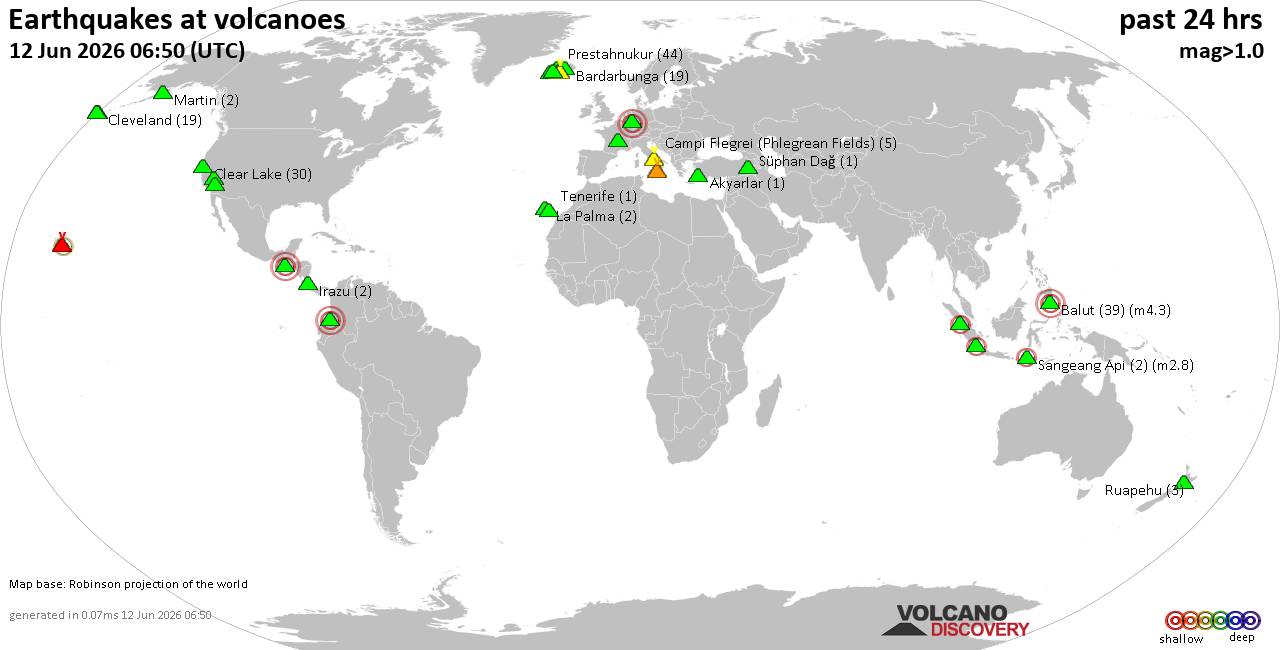
Volcano earthquake report for Friday, 12 Jun 2026
• Moderate mag. 4.0 earthquake - 26 km west of Gjirokaster, Qarku i Gjirokast...
• Moderate mag. 4.8 earthquake - Otago, New Zealand, on Friday, Jun 12, 2026,...
• Moderate mag. 4.5 earthquake - Madang Province, 24 km north of Goroka, Papu...
• Moderate mag. 4.2 earthquake - 20 km northwest of Blenheim, Marlborough, Ne...
• Moderate mag. 4.0 earthquake - Banda Sea, 43 km northwest of Tiakur, Indone...
|

#49745
Tue 31 Aug 2010 12:23:PM
|
Joined: Feb 2001
Posts: 678,976
Launch Director
|
OP

Launch Director
Joined: Feb 2001
Posts: 678,976 |
HUBBLE SPACE TELESCOPE - Continuing to Collect World Class Science
�
DAILY REPORT #5171
�
PERIOD COVERED: 5am August 30 - 5am August 31, 2010 (DOY 242/09:00z-243/09:00z)
�
FLIGHT OPERATIONS SUMMARY:
�
Significant Spacecraft Anomalies: (The following are preliminary reports
of potential non-nominal performance that will be investigated.)
�
HSTARS:
�
12367 - GSAcq(2,1,1) at 242/18:55:15z failed to gyro control due to search radius limit
������� �� exceeded on FGS2.
�
������� �� Observations affected WFC3 17-18 Proposal ID#11644
�
�
12369 - GSAcq(2,1,1) at 243/06:33:18z and REAcq(1,2,1) at 243/07:47:55z acquired Fine Lock
������� �� Backup on FGS 1 Due to Search Radius Limit Exceeded on FGS 2.
�
������� �� Observations possibly affected WFC3 32-25 Proposal ID#11840 and WFC3 36 Proposal ID#11929.
�
�
�
COMPLETED OPS REQUEST: (None)
�
COMPLETED OPS NOTES:
2072-0 - Battery Pressure and FSW SOC Ground Limit Update
�
������������������� ���SCHEDULED����� SUCCESSFUL
FGS GSAcq������������� ��8�������������� ��� 7
FGS REAcq������������ ���8��������������� ��� 8
OBAD with Maneuver� 6��������������� ��� 6
�
SIGNIFICANT EVENTS:
�
Flash Report:
At approximately DOY 2010/242 16:52 GMT (12:52pm local), the EPS FSW SOC
parameters and Battery Pressure (PSI) safing test limits were modified
by 15 AH to accommodate the increase in battery capacity.
�
�
OBSERVATIONS SCHEDULED:
�
ACS/WFC 11996
�
CCD Daily Monitor (Part 3)
�
This program comprises basic tests for measuring the read noise and dark
current of the ACS WFC and for tracking the growth of hot pixels. The
recorded frames are used to create bias and dark reference images for
science data reduction and calibration. This program will be executed
four days per week (Mon, Wed, Fri, Sun) for the duration of Cycle 17. To
facilitate scheduling, this program is split into three proposals. This
proposal covers 308 orbits (19.25 weeks) from 21 June 2010 to 1 November
2010.
�
COS/FUV 11895
�
FUV Detector Dark Monitor
�
Monitor the FUV detector dark rate by taking long science exposures
without illuminating the detector. The detector dark rate and spatial
distribution of counts will be compared to pre-launch and SMOV data in
order to verify the nominal operation of the detector. Variations of
count rate as a function of orbital position will be analyzed to find
dependence of dark rate on proximity to the SAA. Dependence of dark rate
as function of time will also be tracked.
�
COS/FUV 11897
�
FUV Spectroscopic Sensitivity Monitoring
�
The purpose of this proposal is to monitor sensitivity in each FUV
grating mode to detect any changes due to contamination or other causes.
�
COS/FUV/STIS/CCD/MA1 11592
�
Testing the Origin(s) of the Highly Ionized High-Velocity Clouds: A
Survey of Galactic Halo Stars at z>3 kpc
�
Cosmological simulation predicts that highly ionized gas plays an
important role in the formation and evolution of galaxies and their
interplay with the intergalactic medium. The NASA HST and FUSE missions
have revealed high-velocity CIV and OVI absorption along extragalactic
sightlines through the Galactic halo. These highly ionized high-velocity
clouds (HVCs) could cover 85% of the sky and have a detection rate
higher than the HI HVCs. Two competing, equally exciting, theories may
explain the origin of these highly ionized HVCs: 1) the "Galactic"
theory, where the HVCs are the result of feedback processes and trace
the disk-halo mass exchange, perhaps including the accretion of matter
condensing from an extended corona; 2) the "Local Group" theory, where
they are part of the local warm-hot intergalactic medium, representing
some of the missing baryonic matter of the Universe. Only direct
distance determinations can discriminate between these models. Our group
has found that some of these highly ionized HVCs have a Galactic origin,
based on STIS observations of one star at z<5.3 kpc. We propose an HST
FUV spectral survey to search for and characterize the high velocity NV,
CIV, and SiIV interstellar absorption toward 24 stars at much larger
distances than any previous searches (4<d<21 kpc, 3<|z|<13 kpc). COS
will provide atomic to highly ionized species (e.g.,OI, CII, CIV, SiIV)
that can be observed at sufficient resolution (R~22, 000) to not only
detect these highly ionized HVCs but also to model their properties and
understand their physics and origins. This survey is only possible
because of the high sensitivity of COS in the FUV spectral range.
�
COS/NUV 11894
�
NUV Detector Dark Monitor
�
The purpose of this proposal is to measure the NUV detector dark rate by
taking long science exposures with no light on the detector. The
detector dark rate and spatial distribution of counts will be compared
to pre-launch and SMOV data in order to verify the nominal operation of
the detector. Variations of count rate as a function of orbital position
will be analyzed to find dependence of dark rate on proximity to the
SAA. Dependence of dark rate as function of time will also be tracked.
�
COS/NUV 11896
�
NUV Spectroscopic Sensitivity Monitoring
�
The purpose of this proposal is to monitor sensitivity of each NUV
grating mode to detect any changes due to contamination or other causes.
�
COS/NUV/FUV 12034
�
COS-GTO: Brown Dwarf Activity Part 2
�
Based on the Findings in our Cycle 17 program, we will focus on M-stars
in Cycle 18.
�
S/C 11639
�
Catching Accreting WDs Moving into Their Instability Strip(s)
�
Our past HST studies of the temperatures of 9 accreting, pulsating white
dwarfs in cataclysmic variables show that 3 are in the normal
instability strip for single white dwarfs, but the other 6 are much
hotter (15, 000-16, 500K). This dual strip has been proposed to be due
to mass differences in the white dwarfs related to evolutionary history
and driven by the ionization of different elements in their respective
driving regions. In 2007, GW Lib (the brightest and best studied of the
6 hot accreting pulsators) and V455 And (the brightest and best studied
of the 3 cool accreting pulsators) underwent rare large amplitude dwarf
nova outbursts (known to heat the white dwarf) and their pulsations
disappeared. We propose COS observations to: a) take advantage of the
unprecedented opportunity to view the change in pulsation modes due to
cooling of the white dwarf envelope and b) determine the masses of the
white dwarfs to test the dual strip theory. In addition, a nova that had
its outburst 22 yrs ago has begun non-radial pulsations as it returns to
quiescence. We will use COS to determine its temperature in relation to
the instability strip for the pulsating white dwarfs in dwarf novae.
�
STIS/CCD/MA 11668
�
Cosmo-chronometry and Elemental Abundance Distribution of the Ancient
Star HE1523-0901
�
We propose to obtain near-UV HST/STIS spectroscopy of the extremely
metal-poor, highly r-process-enhanced halo star HE 1523-0901, in order
to produce the most complete abundance distribution of the heaviest
stable elements, including platinum, osmium, and lead. These HST
abundance data will then be used to estimate the initial abundances of
the long-lived radioactive elements thorium and uranium, and by
comparison with their observed abundances, enable an accurate age
determination of this ancient star. The use of radioactive chronometers
in stars provides an independent lower limit on the age of the Galaxy,
which can be compared with alternative limits set by globular clusters
and by analysis from WMAP. Our proposed observations of HE1523-0901 will
also provide significant new information about the early chemical
history of the Galaxy, specifically, the nature of the first generations
of stars and the types of nucleosynthetic processes that occurred at the
onset of Galactic chemical evolution.
�
STIS/CCD 11845
�
CCD Dark Monitor Part 2
�
Monitor the darks for the STIS CCD.
�
STIS/CCD 11847
�
CCD Bias Monitor-Part 2
�
Monitor the bias in the 1x1, 1x2, 2x1, and 2x2 bin settings at gain=1,
and 1x1 at gain = 4, to build up high-S/N superbiases and track the
evolution of hot columns.
�
STIS/CCD 11853
�
Cycle 17 STIS CCD Imaging Flats
�
This program periodically monitors the STIS CCD imaging mode flat fields
by using the tungsten lamps.
�
STIS/CCD/FGS 11848
�
CCD Read Noise Monitor
�
This proposal measures the read noise of all the amplifiers (A, B, C, D)
on the STIS CCD using pairs of bias frames. Full-frame and binned
observations are made in both Gain 1 and Gain 4, with binning factors of
1x1, 1x2, 2x1, and 2x2. All exposures are internals. Pairs of visits are
scheduled monthly for the first four months and then bi-monthly after
that.
�
WFC3/ACS/IR 11840
�
Identifying the Host Galaxies for Optically Dark Gamma-Ray Bursts
�
We propose to use the high spatial resolution of Chandra to obtain
precise positions for a sample of Gamma-Ray Bursts (GRBs) with no
optical afterglows, where the optical light is suppressed relative to
the X-ray flux. These bursts are likely to be highly obscured and may
have different environments from the optically bright GRBs. Our Chandra
observations will (unlike Swift XRT positions) allow for the unique
identification of a host galaxy. To locate these host galaxies we will
follow up our Chandra positions with deep optical and IR observations
with HST. The ultimate aim is to understand any differences between the
host galaxies of optically dark and bright GRBs, and how these affect
the use of GRBs as tracers of starformation and galaxy evolution at high
redshift.
�
WFC3/ACS/IR 11563
�
Galaxies at z~7-10 in the Reionization Epoch: Luminosity Functions to
<0.2L* from Deep IR Imaging of the HUDF and HUDF05 Fields
�
The first generations of galaxies were assembled around redshifts
z~7-10+, just 500-800 Myr after recombination, in the heart of the
reionization of the universe. We know very little about galaxies in this
period. Despite great effort with HST and other telescopes, less than
~15 galaxies have been reliably detected so far at z>7, contrasting with
the ~1000 galaxies detected to date at z~6, just 200-400 Myr later, near
the end of the reionization epoch. WFC3 IR can dramatically change this
situation, enabling derivation of the galaxy luminosity function and its
shape at z~7-8 to well below L*, measurement of the UV luminosity
density at z~7-8 and z~8-9, and estimates of the contribution of
galaxies to reionization at these epochs, as well as characterization of
their properties (sizes, structure, colors). A quantitative leap in our
understanding of early galaxies, and the timescales of their buildup,
requires a total sample of ~100 galaxies at z~7-8 to ~29 AB mag. We can
achieve this with 192 WFC3 IR orbits on three disjoint fields
(minimizing cosmic variance): the HUDF and the two nearby deep fields of
the HUDF05. Our program uses three WFC3 IR filters, and leverages over
600 orbits of existing ACS data, to identify, with low contamination, a
large sample of over 100 objects at z~7-8, a very useful sample of ~23
at z~8-9, and limits at z~10. By careful placement of the WFC3 IR and
parallel ACS pointings, we also enhance the optical ACS imaging on the
HUDF and a HUDF05 field. We stress (1) the need to go deep, which is
paramount to define L*, the shape, and the slope alpha of the luminosity
function (LF) at these high redshifts; and (2) the far superior
performance of our strategy, compared with the use of strong lensing
clusters, in detecting significant samples of faint z~7-8 galaxies to
derive their luminosity function and UV ionizing flux. Our recent z~7.4
NICMOS results show that wide-area IR surveys, even of GOODS-like depth,
simply do not reach faint enough at z~7-9 to meet the LF and UV flux
objectives. In the spirit of the HDF and the HUDF, we will waive any
proprietary period, and will also deliver the reduced data to STScI. The
proposed data will provide a Legacy resource of great value for a wide
range of archival science investigations of galaxies at redshifts z~2-
9. The data are likely to remain the deepest IR/optical images until
JWST is launched, and will provide sources for spectroscopic follow up
by JWST, ALMA and EVLA.
�
WFC3/IR/S/C 11929
�
IR Dark Current Monitor
�
Analyses of ground test data showed that dark current signals are more
reliably removed from science data using darks taken with the same
exposure sequences as the science data, than with a single dark current
image scaled by desired exposure time. Therefore, dark current images
must be collected using all sample sequences that will be used in
science observations. These observations will be used to monitor changes
in the dark current of the WFC3-IR channel on a day-to-day basis, and to
build calibration dark current ramps for each of the sample sequences to
be used by Gos in Cycle 17. For each sample sequence/array size
combination, a median ramp will be created and delivered to the
calibration database system (CDBS).
�
WFC3/IR/S/C 12089
�
Persistence - Part 2
�
The IR detectors on WFC3, like other IR detectors, trap charge when
exposed to sources near or above the full well of the detector diodes.
This charge leaks out, producing detectable afterglow images for periods
which can last for several hours, depending on the amount of over
exposure. These visits, which consist of tungsten lamp exposures of
varying durations followed by darks, are intended to provide a better
calibration of persistence over the full area of the IR detector of
WFC3.
�
WFC3/UV 12091
�
WFC3/UVIS Fringe Calibration - Part 2
�
Fringing has been observed in flat fields of 12 narrowband filters (4
full-frame and 3 quad spectral elements) longer than 600 nm, with
peak-to-peak fringe amplitude variations ranging from 0.5% to 14.2%
(WFC3 ISR 2010-04). Two filters (F953N and F656N) will be tested in
program 11922, supporting 88 Cycle 17 GO exposures in these filters.
Here we propose to observe globular cluster Omega Centauri (NGC 5139) in
the other 10 filters affected by fringing, supporting 319 Cycle 17 GO
exposures in these filters. By measuring the relative changes in
brightness of stars at different positions on the detector, we will
determine the local variations induced by the fringing pattern.
�
The data will serve two purposes: characterize the effect of fringing on
photometry of on-orbit data, and verify models used to correct for
fringing effects. The models rely on Thermal Vacuum Test 3 (TV3) data
between 845-990 nm and NASA/GSFC Detector Characterization Laboratory
(DCL) test data from 700-1060 nm. Only the F953N filter in program 11922
overlaps with the test data wavelength range, making it difficult to
compare the efficacy of fringe models. This program will expand the
on-orbit fringing data so that we can compare models at 6 new
wavelengths within the ground test data wavelength range, as well as 4
new wavelengths not covered by the ground test data. Flight data in
these 4 filters can be corrected by extrapolating the model beyond the
wavelength range of the test data used to create the model.
�
WFC3/UVIS 11657
�
The Population of Compact Planetary Nebulae in the Galactic Disk
�
We propose to secure narrow- and broad-band images of compact planetary
nebulae (PNe) in the Galactic Disk to study the missing link of the
early phases of post-AGB evolution. Ejected AGB envelopes become PNe
when the gas is ionized. PNe expand, and, when large enough, can be
studied in detail from the ground. In the interim, only the HST
capabilities can resolve their size, morphology, and central stars. Our
proposed observations will be the basis for a systematic study of the
onset of morphology. Dust properties of the proposed targets will be
available through approved Spitzer/IRS spectra, and so will the
abundances of the alpha- elements. We will be able thus to explore the
interconnection of morphology, dust grains, stellar evolution, and
populations. The target selection is suitable to explore the nebular and
stellar properties across the galactic disk, and to set constraints on
the galactic evolutionary models through the analysis of metallicity and
population gradients.
�
WFC3/UVIS 11905
�
WFC3 UVIS CCD Daily Monitor
�
The behavior of the WFC3 UVIS CCD will be monitored daily with a set of
full-frame, four-amp bias and dark frames. A smaller set of 2Kx4K
subarray biases are acquired at less frequent intervals throughout the
cycle to support subarray science observations. The internals from this
proposal, along with those from the anneal procedure (Proposal 11909),
will be used to generate the necessary superbias and superdark reference
files for the calibration pipeline (CDBS).
�
WFC3/UVIS 11908
�
Cycle 17: UVIS Bowtie Monitor
�
Ground testing revealed an intermittent hysteresis type effect in the
UVIS detector (both CCDs) at the level of ~1%, lasting hours to days.
Initially found via an unexpected bowtie- shaped feature in flatfield
ratios, subsequent lab tests on similar e2v devices have since shown
that it is also present as simply an overall offset across the entire
CCD, i.e., a QE offset without any discernable pattern. These lab tests
have further revealed that overexposing the detector to count levels
several times full well fills the traps and effectively neutralizes the
bowtie. Each visit in this proposal acquires a set of three 3x3 binned
internal flatfields: the first unsaturated image will be used to detect
any bowtie, the second, highly exposed image will neutralize the bowtie
if it is present, and the final image will allow for verification that
the bowtie is gone.
�
WFC3/UVIS 11914
�
UVIS Earth Flats
�
This program is an experimental path finder for Cycle 18 calibration.
Visible-wavelength flat fields will be obtained by observing the dark
side of the Earth during periods of full moon illumination. The
observations will consist of full-frame streaked WFC3 UVIS imagery: per
22- min total exposure time in a single "dark-sky" orbit, we anticipate
collecting 7000 e/pix in F606W or 4500 e/pix in F814W. To achieve
Poisson S/N > 100 per pixel, we require at least 2 orbits of F606W and 3
orbits of F814W.
�
For UVIS narrowband filters, exposures of 1 sec typically do not
saturate on the sunlit Earth, so we will take sunlit Earth flats for
three of the more-commonly used narrowband filters in Cycle 17 plus the
also-popular long-wavelength quad filters, for which we get four filters
at once.
�
Why not use the Sunlit Earth for the wideband visible-light filters? It
is too bright in the visible for WFC3 UVIS minimum exposure time of 0.5
sec. Similarly, for NICMOS the sunlit-Earth is too bright which
saturates the detector too quickly and/or induces abnormal behaviors
such as super-shading (Gilmore 1998, NIC 098-011). In the narrowband
visible and broadband near- UV its not too bright (predictions in Cox et
al. 1987 "Standard Astronomical Sources for HST: 6. Spatially Flat
Fields." and observations in ACS Program 10050).
�
Other possibilities? Cox et al.'s Section II.D addresses many other
possible sources for flat fields, rejecting them for a variety of
reasons. A remaining possibility would be the totally eclipsed moon.
Such eclipses provide approximately 2 hours (1 HST orbit) of opportunity
per year, so they are too rare to be generically useful. An advantage of
the moon over the Earth is that the moon subtends less than 0.25 square
degree, whereas the Earth subtends a steradian or more, so scattered
light and light potentially leaking around the shutter presents
additional problems for the Earth. Also, we're unsure if HST can point
180 deg from the Sun.
�
WFC3/UVIS/IR 11644
�
A Dynamical-Compositional Survey of the Kuiper Belt: A New Window Into
the Formation of the Outer Solar System
�
The eight planets overwhelmingly dominate the solar system by mass, but
their small numbers, coupled with their stochastic pasts, make it
impossible to construct a unique formation history from the dynamical or
compositional characteristics of them alone. In contrast, the huge
numbers of small bodies scattered throughout and even beyond the
planets, while insignificant by mass, provide an almost unlimited number
of probes of the statistical conditions, history, and interactions in
the solar system. To date, attempts to understand the formation and
evolution of the Kuiper Belt have largely been dynamical simulations
where a hypothesized starting condition is evolved under the
gravitational influence of the early giant planets and an attempt is
made to reproduce the current observed populations. With little
compositional information known for the real Kuiper Belt, the test
particles in the simulation are free to have any formation location and
history as long as they end at the correct point. Allowing compositional
information to guide and constrain the formation, thermal, and
collisional histories of these objects would add an entire new dimension
to our understanding of the evolution of the outer solar system. While
ground based compositional studies have hit their flux limits already
with only a few objects sampled, we propose to exploit the new
capabilities of WFC3 to perform the first ever large-scale
dynamical-compositional study of Kuiper Belt Objects (KBOs) and their
progeny to study the chemical, dynamical, and collisional history of the
region of the giant planets. The sensitivity of the WFC3 observations
will allow us to go up to two magnitudes deeper than our ground based
studies, allowing us the capability of optimally selecting a target list
for a large survey rather than simply taking the few objects that can be
measured, as we have had to do to date. We have carefully constructed a
sample of 120 objects which provides both overall breadth, for a general
understanding of these objects, plus a large enough number of objects in
the individual dynamical subclass to allow detailed comparison between
and within these groups. These objects will likely define the core
Kuiper Belt compositional sample for years to come. While we have many
specific results anticipated to come from this survey, as with any
project where the field is rich, our current knowledge level is low, and
a new instrument suddenly appears which can exploit vastly larger
segments of the population, the potential for discovery -- both
anticipated and not -- is extraordinary.
David Cottle
UBB Owner & Administrator
|
|



CMS The Best Conveyancing solicitors conveyancing quotes throughout the UK
For any webhosting enquiries please email webmaster@aus-city.com
|
|
Entire Thread
|
 Daily Report #5171
|
Webmaster
|
Tue 31 Aug 2010 12:23:PM
|
|
Forums60
Topics781,222
Posts815,980
Members2,960
| |
Most Online22,463
May 9th, 2026
|
|
|