|
0 members (),
868
guests, and
25
robots. |
|
Key:
Admin,
Global Mod,
Mod
|
|
S |
M |
T |
W |
T |
F |
S |
|
|
1
|
2
|
3
|
4
|
5
|
6
|
|
7
|
8
|
9
|
10
|
11
|
12
|
13
|
|
14
|
15
|
16
|
17
|
18
|
19
|
20
|
|
21
|
22
|
23
|
24
|
25
|
26
|
27
|
|
28
|
29
|
30
|
|
|
|
|
|
There are no members with birthdays on this day. |
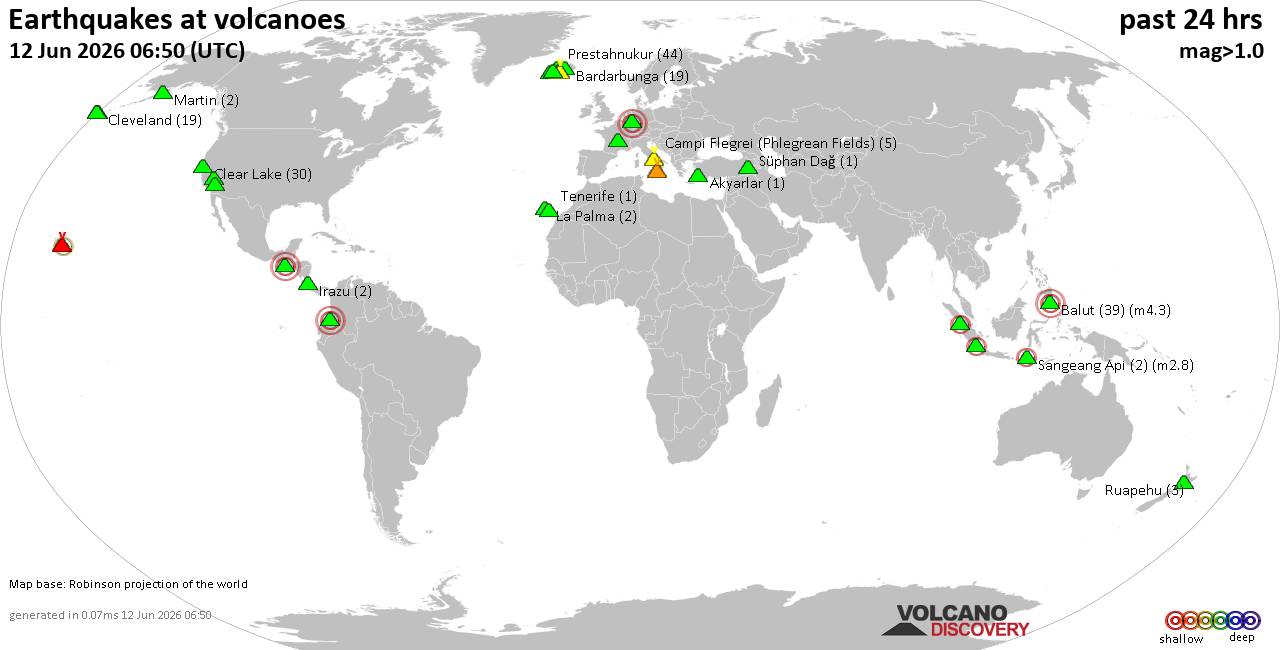
Volcano earthquake report for Friday, 12 Jun 2026
• Moderate mag. 4.0 earthquake - 26 km west of Gjirokaster, Qarku i Gjirokast...
• Moderate mag. 4.8 earthquake - Otago, New Zealand, on Friday, Jun 12, 2026,...
• Moderate mag. 4.5 earthquake - Madang Province, 24 km north of Goroka, Papu...
• Moderate mag. 4.2 earthquake - 20 km northwest of Blenheim, Marlborough, Ne...
• Moderate mag. 4.0 earthquake - Banda Sea, 43 km northwest of Tiakur, Indone...
|

#49770
Fri 03 Sep 2010 11:28:AM
|
Joined: Feb 2001
Posts: 678,976
Launch Director
|
OP

Launch Director
Joined: Feb 2001
Posts: 678,976 |
HUBBLE SPACE TELESCOPE - Continuing to Collect World Class Science
�
DAILY REPORT #5174
�
PERIOD COVERED: 5am September 2 - 5am September 3, 2010 (DOY 245/09:00z-246/09:00z)
�
FLIGHT OPERATIONS SUMMARY:
�
Significant Spacecraft Anomalies: (The following are preliminary reports
of potential non-nominal performance that will be investigated.)
�
HSTARS: (None)
�
COMPLETED OPS REQUEST: (None)
�
COMPLETED OPS NOTES: (None)
�
������� ���� ���������SCHEDULED� SUCCESSFUL
FGS GSAcq �� �����������8 ���� ����������8������
FGS REAcq �� �����������8 ���� ����������8������
OBAD with Maneuver 6 ���� ����������6������
�
SIGNIFICANT EVENTS: (None)
�
�
OBSERVATIONS SCHEDULED:
�
ACS/WFC3 11599
�
Distances of Planetary Nebulae from SNAPshots of Resolved Companions
�
Reliable distances to individual planetary nebulae (PNe) in the Milky
Way are needed to advance our understanding of their spatial
distribution, birthrates, influence on galactic chemistry, and the
luminosities and evolutionary states of their central stars (CSPN). Few
PNe have good distances, however. One of the best ways to remedy this
problem is to find resolved physical companions to the CSPN and measure
their distances by photometric main- sequence fitting. We have
previously used HST to identify and measure probable companions to 10
CSPN, based on angular separations and statistical arguments only. We
now propose to use HST to re-observe 48 PNe from that program for which
additional companions are possibly present. We then can use the added
criterion of common proper motion to confirm our original candidate
companions and identify new ones in cases that could not confidently be
studied before. We will image the region around each CSPN in the V and I
bands, and in some cases in the B band. Field stars that appear close to
the CSPN by chance will be revealed by their relative proper motion
during the 13+ years since our original survey, leaving only genuine
physical companions in our improved and enlarged sample. This study will
increase the number of Galactic PNe with reliable distances by 50
percent and improve the distances to PNe with previously known
companions.
�
STIS/CCD 11845
�
CCD Dark Monitor Part 2
�
Monitor the darks for the STIS CCD.
�
STIS/CCD 11847
�
CCD Bias Monitor-Part 2
�
Monitor the bias in the 1x1, 1x2, 2x1, and 2x2 bin settings at gain=1,
and 1x1 at gain = 4, to build up high-S/N superbiases and track the
evolution of hot columns.
�
STIS/CCD/MA/WFC3/UV 11665
�
The Formation Mechanisms of Extreme Horizontal Branch Stars
�
Blue hook stars are a class of hot (~35, 000 K) subluminous extreme
horizontal branch (EHB) stars that have been recently discovered using
HST ultraviolet images of the massive globular clusters omega Cen and
NGC 2808. These stars occupy a region of the HR diagram that is
unexplained by canonical stellar evolution theory. Using new theoretical
evolutionary and atmospheric models, we have shown that the blue hook
stars are very likely the progeny of stars that undergo extensive
internal mixing during a late helium core flash on the white dwarf
cooling curve. This "flash mixing" produces an enormous enhancement of
the surface helium and carbon abundances (relative to the abundance
pattern that existed on the main sequence), which suppresses the
observed flux in the far-UV. Because stars born with a high helium
abundance are more likely to evolve into hot horizontal branch stars,
flash mixing is more likely to occur in those massive clusters capable
of helium self-enrichment. However, a high initial helium abundance, by
itself, is not sufficient to explain the presence of a blue hook
population - flash mixing of the envelope is also required.
�
We propose far-UV spectroscopy of normal and subluminous EHB stars in
NGC 2808 that will unambiguously test this new formation mechanism.
These observations will easily detect the helium and carbon enhancements
predicted by flash mixing and will therefore determine if flash mixing
represents a new evolutionary channel for populating the hot end of the
EHB. More generally, our observations will help to clarify the role of
helium self-enrichment in producing blue horizontal branch morphologies
and multiple main sequences in massive globular clusters. Finally, these
results will provide new insight into the origin and abundance anomalies
of the hot helium-rich subdwarf B and O stars in the Galactic field.
�
WFC3/ACS/IR 11563
�
Galaxies at z~7-10 in the Reionization Epoch: Luminosity Functions to
<0.2L* from Deep IR Imaging of the HUDF and HUDF05 Fields
�
The first generations of galaxies were assembled around redshifts
z~7-10+, just 500-800 Myr after recombination, in the heart of the
reionization of the universe. We know very little about galaxies in this
period. Despite great effort with HST and other telescopes, less than
~15 galaxies have been reliably detected so far at z>7, contrasting with
the ~1000 galaxies detected to date at z~6, just 200-400 Myr later, near
the end of the reionization epoch. WFC3 IR can dramatically change this
situation, enabling derivation of the galaxy luminosity function and its
shape at z~7-8 to well below L*, measurement of the UV luminosity
density at z~7-8 and z~8-9, and estimates of the contribution of
galaxies to reionization at these epochs, as well as characterization of
their properties (sizes, structure, colors). A quantitative leap in our
understanding of early galaxies, and the timescales of their buildup,
requires a total sample of ~100 galaxies at z~7-8 to ~29 AB mag. We can
achieve this with 192 WFC3 IR orbits on three disjoint fields
(minimizing cosmic variance): the HUDF and the two nearby deep fields of
the HUDF05. Our program uses three WFC3 IR filters, and leverages over
600 orbits of existing ACS data, to identify, with low contamination, a
large sample of over 100 objects at z~7-8, a very useful sample of ~23
at z~8-9, and limits at z~10. By careful placement of the WFC3 IR and
parallel ACS pointings, we also enhance the optical ACS imaging on the
HUDF and a HUDF05 field. We stress (1) the need to go deep, which is
paramount to define L*, the shape, and the slope alpha of the luminosity
function (LF) at these high redshifts; and (2) the far superior
performance of our strategy, compared with the use of strong lensing
clusters, in detecting significant samples of faint z~7-8 galaxies to
derive their luminosity function and UV ionizing flux. Our recent z~7.4
NICMOS results show that wide-area IR surveys, even of GOODS-like depth,
simply do not reach faint enough at z~7-9 to meet the LF and UV flux
objectives. In the spirit of the HDF and the HUDF, we will waive any
proprietary period, and will also deliver the reduced data to STScI. The
proposed data will provide a Legacy resource of great value for a wide
range of archival science investigations of galaxies at redshifts z~2-
9. The data are likely to remain the deepest IR/optical images until
JWST is launched, and will provide sources for spectroscopic follow up
by JWST, ALMA and EVLA.
�
WFC3/ACS/IR 11840
�
Identifying the Host Galaxies for Optically Dark Gamma-Ray Bursts
�
We propose to use the high spatial resolution of Chandra to obtain
precise positions for a sample of Gamma-Ray Bursts (GRBs) with no
optical afterglows, where the optical light is suppressed relative to
the X-ray flux. These bursts are likely to be highly obscured and may
have different environments from the optically bright GRBs. Our Chandra
observations will (unlike Swift XRT positions) allow for the unique
identification of a host galaxy. To locate these host galaxies we will
follow up our Chandra positions with deep optical and IR observations
with HST. The ultimate aim is to understand any differences between the
host galaxies of optically dark and bright GRBs, and how these affect
the use of GRBs as tracers of starformation and galaxy evolution at high
redshift.
�
WFC3/ACS/UVIS 11877
�
HST Cycle 17 and Post-SM4 Optical Monitor
�
This program is the Cycle 17 implementation of the HST Optical
Monitoring Program.
�
The 36 orbits comprising this proposal will utilize ACS (Wide Field
Channel) and WFC3 (UVIS Channel) to observe stellar cluster members in
parallel with multiple exposures over an orbit. Phase retrieval
performed on the PSF in each image will be used to measure primarily
focus, with the ability to explore apparent coma, and astigmatism
changes in WFC3.
�
The goals of this program are to: 1) monitor the overall OTA focal
length for the purposes of maintaining focus within science tolerances
2) gain experience with the relative effectiveness of phase retrieval on
WFC3/UVIS PSFs 3) determine focus offset between the imagers and
identify any SI-specific focus behavior and dependencies
�
If need is determined, future visits will be modified to interleave
WFC3/IR channel and STIS/CCD focii measurements.
�
WFC3/IR 11678
�
Resolved H alpha star formation in two lensed galaxies at z=0.9
�
We will obtain H alpha narrow-band images of two galaxies at z=0.912
that have been gravitationally lensed by the galaxy cluster Abell 2390.
H alpha falls squarely into the F126N filter, and both galaxies fit in a
single WFC3 field of view. Because these two galaxies are magnified by
factors of 6.7 (+-0.4) and 12.6 (+-0.8), WFC3 IR pixels probe spatial
scales of 150 and 80 pc. (Without lensing, the WFC3 pixels probe 1 kpc
scales at these redshifts.) Thus, these two galaxies provide a rare
chance to examine, in detail and at high S/N, the spatial distribution
of star formation in average galaxies at z=1.
�
After lensing deprojection, we will study the spatial distribution of
star formation, the star-forming disk properties and nuclear
contribution, as well as the distribution of extinction (from the
archival F55W to H-alpha ratio map). We will also compare integrated
extinction--corrected H alpha to Spitzer-derived diagnostics of star
formation rate.
�
WFC3/UV 12296
�
HST Observations of Astrophysically Important Visual Binaries
�
We propose to continue three long-term programs. All three consist of
astrometry of close visual binaries, with the primary goal of
determining dynamical masses for 3 important main-sequence stars and 6
white dwarfs (WDs). A secondary aim is to set limits on third bodies in
the systems down to planetary mass. Since all 3 programs needed to be
proposed for Cycle 18 continuation, we are simplifying the review
process by combining them into a single proposal. Three of our 5 targets
are naked-eye stars with much fainter companions that are very difficult
to image from the ground. Our other 2 targets are double WDs, whose
small separations and faintness likewise make them difficult to measure
using ground-based techniques.
�
The bright stars, to be imaged with WFC3, are: (1) Procyon (P = 40.9
yr), for which our first HST images yielded an accurate angular
separation of the bright F star and its much fainter WD companion.
Combined with ground-based astrometry of the bright star, our
observation significantly revised downward the derived masses, and
brought Procyon A into much better agreement with theoretical
evolutionary masses. With the continued monitoring proposed here, we
will obtain masses to an accuracy of better than 1%, providing a testbed
for theories of both Sun-like stars and WDs. (2) Sirius (P = 50.1 yr),
an A-type star also having a faint WD companion, Sirius B, the nearest
and brightest of all WDs. (3) Mu Cas (P = 21.0 yr), a nearby
metal-deficient G dwarf for which accurate masses will lead to the
stars' helium contents, with cosmological implications.
�
The faint double WDs, to be observed with FGS, are: (1) G 107-70 (P =
18.8 yr), and (2) WD 1818+126 (P = 12.7 yr). Our astrometry of these
systems will add 4 accurate masses to the handful of WD masses that are
directly known from dynamical measurements. The FGS measurements will
also provide precise parallaxes for the systems, a necessary ingredient
in the mass determinations.
�
WFC3/UVIS 11905
�
WFC3 UVIS CCD Daily Monitor
�
The behavior of the WFC3 UVIS CCD will be monitored daily with a set of
full-frame, four-amp bias and dark frames. A smaller set of 2Kx4K
subarray biases are acquired at less frequent intervals throughout the
cycle to support subarray science observations. The internals from this
proposal, along with those from the anneal procedure (Proposal 11909),
will be used to generate the necessary superbias and superdark reference
files for the calibration pipeline (CDBS).
�
WFC3/UVIS 11914
�
UVIS Earth Flats
�
This program is an experimental path finder for Cycle 18 calibration.
Visible-wavelength flat fields will be obtained by observing the dark
side of the Earth during periods of full moon illumination. The
observations will consist of full-frame streaked WFC3 UVIS imagery: per
22- min total exposure time in a single "dark-sky" orbit, we anticipate
collecting 7000 e/pix in F606W or 4500 e/pix in F814W. To achieve
Poisson S/N > 100 per pixel, we require at least 2 orbits of F606W and 3
orbits of F814W.
�
For UVIS narrowband filters, exposures of 1 sec typically do not
saturate on the sunlit Earth, so we will take sunlit Earth flats for
three of the more-commonly used narrowband filters in Cycle 17 plus the
also-popular long-wavelength quad filters, for which we get four filters
at once.
�
Why not use the Sunlit Earth for the wideband visible-light filters? It
is too bright in the visible for WFC3 UVIS minimum exposure time of 0.5
sec. Similarly, for NICMOS the sunlit-Earth is too bright which
saturates the detector too quickly and/or induces abnormal behaviors
such as super-shading (Gilmore 1998, NIC 098-011). In the narrowband
visible and broadband near- UV its not too bright (predictions in Cox et
al. 1987 "Standard Astronomical Sources for HST: 6. Spatially Flat
Fields." and observations in ACS Program 10050).
�
Other possibilities? Cox et al.'s Section II.D addresses many other
possible sources for flat fields, rejecting them for a variety of
reasons. A remaining possibility would be the totally eclipsed moon.
Such eclipses provide approximately 2 hours (1 HST orbit) of opportunity
per year, so they are too rare to be generically useful. An advantage of
the moon over the Earth is that the moon subtends less than 0.25 square
degree, whereas the Earth subtends a steradian or more, so scattered
light and light potentially leaking around the shutter presents
additional problems for the Earth. Also, we're unsure if HST can point
180 deg from the Sun.
�
WFC3/UVIS 11924
�
WFC3/UVIS External and Internal CTE Monitor
�
CCD detector Charge Transfer Inefficiency (CTI)-induced losses in
photometry and astrometry will be measured using observations of the
rich open cluster NGC6791 and with the EPER (Extended Pixel Edge
Response) method using tungsten lamp flat field exposures. Although we
do not expect to see CTE effects at the outset of Cycle 17, this CTE
monitoring program is the first of a multi-cycle program to monitor and
establish CTE-induced losses with time. We expect to measure CTE effects
with a precision comparable to the ACS measurements.
David Cottle
UBB Owner & Administrator
|
|



CMS The Best Conveyancing solicitors conveyancing quotes throughout the UK
For any webhosting enquiries please email webmaster@aus-city.com
|
|
Entire Thread
|
 Daily Report #5174
|
Webmaster
|
Fri 03 Sep 2010 11:28:AM
|
|
Forums60
Topics781,222
Posts815,980
Members2,960
| |
Most Online22,463
May 9th, 2026
|
|
|