|
0 members (),
2,324
guests, and
25
robots. |
|
Key:
Admin,
Global Mod,
Mod
|
|
S |
M |
T |
W |
T |
F |
S |
|
1
|
2
|
3
|
4
|
5
|
6
|
7
|
|
8
|
9
|
10
|
11
|
12
|
13
|
14
|
|
15
|
16
|
17
|
18
|
19
|
20
|
21
|
|
22
|
23
|
24
|
25
|
26
|
27
|
28
|
|
29
|
30
|
|
|
|
|
|
|
There are no members with birthdays on this day. |
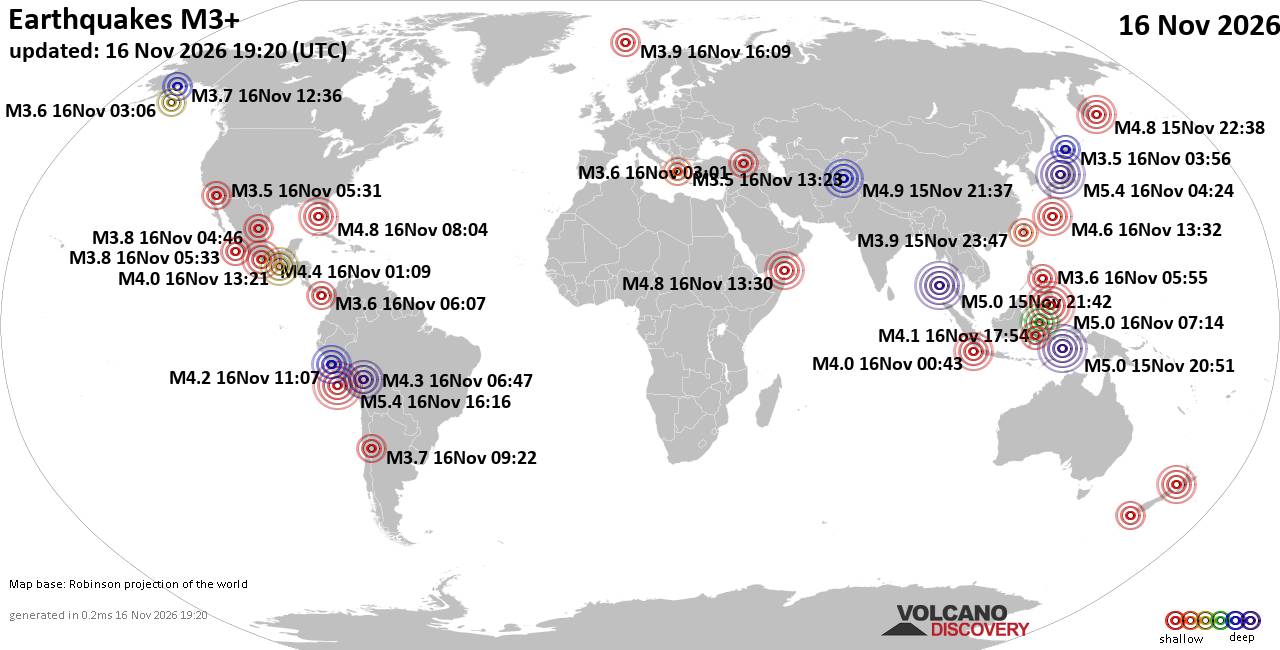
World Earthquake Report for Monday, 16 November 2026
• Moderate mag. 4.5 earthquake - 160 km northwest of Kavieng, New Ireland Pro...
• M 4.4 - off the coast of Oregon
• M 2.3 - 14 km ESE of Clam Gulch, Alaska
• M 3.9 - Rat Islands, Aleutian Islands, Alaska
• M 1.8 - 8 km NW of Round Valley, CA
• M 0.7 - 9 km S of Idyllwild, CA
|

#1768
Sat 19 Apr 2003 08:18:AM
|
Joined: Feb 2001
Posts: 3,536
Mission Commander
|
|
Mission Commander
Joined: Feb 2001
Posts: 3,536 |
For Immediate Release<br />CAIB PA 21-03<br /><br />Date: April 17, 2003<br />Contact: Lt. Col Woody Woodyard, 281-283-7520 or 713-301-2244<br />Contact: Terry N. Williams or Patricia Brach, 281-283-7520<br /><br /><br />Columbia Accident Investigation Board Issues Preliminary Recommendations to<br />Improve Inspection and Testing of RCC Components, Shuttle Imaging on Orbit<br /><br />Houston, Texas -- The Columbia Accident Investigation Board today issued two<br />preliminary recommendations to NASA. Additionally, the Board issued several<br />facts regarding the shuttle program.<br /><br />Recommendation One: Prior to return to flight, NASA should develop and<br />implement a comprehensive inspection plan to determine the structural<br />integrity of all Reinforce Carbon-Carbon (RCC) system components. This<br />inspection plan should take advantage of advanced non-destructive inspection<br />technology.<br /><br />This recommendation was issued because of the board's finding that current<br />inspection techniques are not adequate to assess structural integrity of<br />RCC, supporting structure, and attaching hardware.<br /><br />Recommendation Two: Prior to return to flight, NASA should modify its<br />Memorandum of Agreement with National Imagery and Mapping Agency (NIMA) to<br />make on-orbit imaging for each Shuttle flight a standard requirement.<br /><br />This recommendation was issued because of the board's finding that the full<br />capabilities of the United States Government to image the Shuttle on orbit<br />were not utilized.<br /><br />Facts Regarding RCC Components -- The board will include the following facts<br />in its final report:<br />The Reinforced Carbon-Carbon (RCC) system (including all RCC, supporting<br />structure and attaching hardware) is an essential component of the Space<br />Shuttle Orbiter Thermal Protection System (TPS) and has a Criticality Rating<br />of 1 (loss of crew - loss of vehicle).<br /><br /><br />The RCC composite consists of a reinforced carbon-carbon substrate that<br />carries the structural loads, a tetraethyl orthosilicate impregnation that<br />reduces inherent substrate porosity, a silicon carbide treatment that<br />protects the substrate from oxidation, and a sealant coating that provides<br />additional oxidation protection. These composite structures are attached to<br />the shuttle by a metal support system.<br /><br /><br />During initial manufacturing acceptance, the integrity of production<br />composites used in the RCC system is checked at various points in production<br />by physical tap, ultrasonic, radiographic, eddy current, weight gain, and<br />visual tests. In addition, a flat plate control panel made in parallel with<br />the production piece is destructively tested at various points in the<br />production process.<br /><br /><br />A projected design mission life has been established for each RCC component.<br />These projections are based on analysis correlated to simulated flight load<br />testing, and assume the presence of sound composite material and metal<br />support structure.<br /><br /><br />Visual external inspections and tactile checks are the only specified post<br />flight inspections of RCC composite components. The planned interval for<br />removing RCC composite components for more thorough inspection is typically<br />many flights, unless their removal is dictated by an observed visual surface<br />condition or necessitated by the requirement to provide access for other<br />operations.<br /><br /><br />Non-destructive testing of some post-flight RCC components has shown<br />indications of RCC material defects not previously identified by visual<br />inspection methods currently employed.<br /><br /><br />Facts Regarding Shuttle Imaging -- The board will include the following<br />facts in its final report:<br />The U.S. Government has the capability to image the Shuttle on orbit.<br /><br /><br />A Memorandum of Agreement exists between NASA and NIMA regarding on-orbit<br />imaging of the Shuttle.<br /><br /><br />During the flight of STS-107, there were no on-orbit images taken of<br />sufficient resolution to assess the Orbiter's condition.<br /><br /><br />The CAIB issued these recommendations and findings in advance of their<br />appearance in the final report. The board's final report will be issued<br />later this summer. It will include the probable cause of the accident,<br />contributing factors, findings and additional recommendations.
|
|



CMS The Best Conveyancing solicitors conveyancing quotes throughout the UK
For any webhosting enquiries please email webmaster@aus-city.com
|
|
Forums60
Topics930,716
Posts965,513
Members2,960
| |
Most Online102,106
Jul 10th, 2026
|
|
|