|
0 members (),
1,375
guests, and
22
robots. |
|
Key:
Admin,
Global Mod,
Mod
|
|
S |
M |
T |
W |
T |
F |
S |
|
|
|
|
|
1
|
2
|
3
|
|
4
|
5
|
6
|
7
|
8
|
9
|
10
|
|
11
|
12
|
13
|
14
|
15
|
16
|
17
|
|
18
|
19
|
20
|
21
|
22
|
23
|
24
|
|
25
|
26
|
27
|
28
|
29
|
30
|
31
|
|
There are no members with birthdays on this day. |
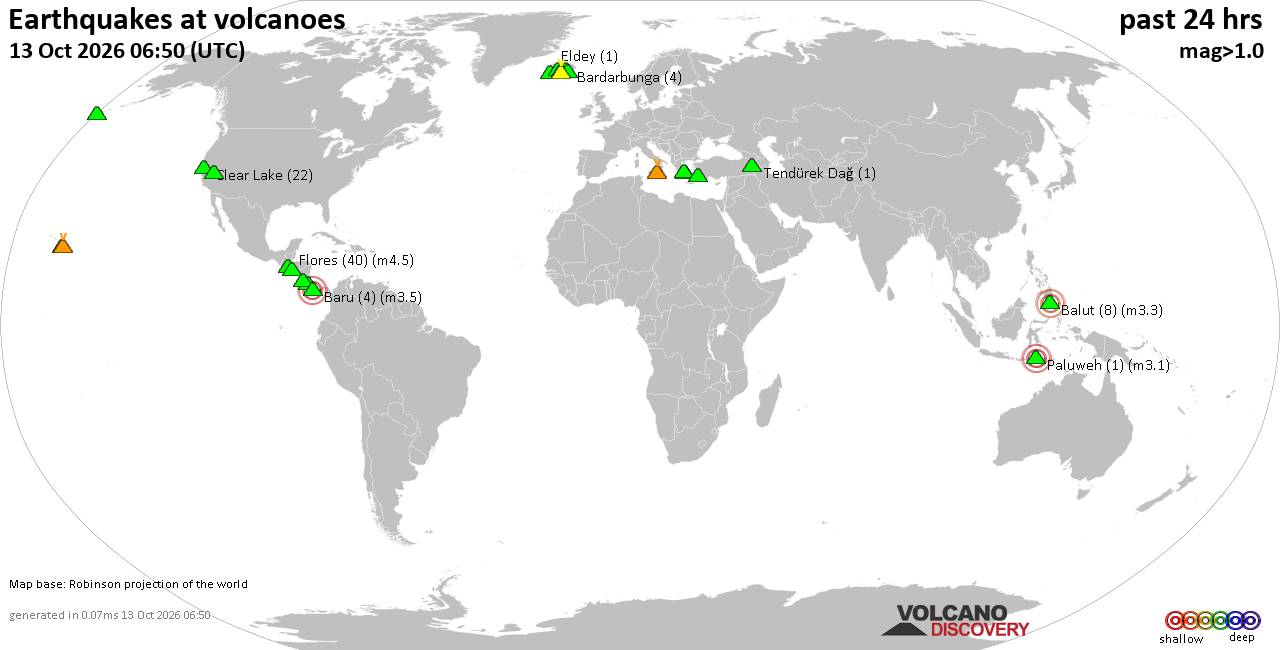
Volcano earthquake report for Tuesday, 13 October 2026
• M 1.4 - 26 km S of Cantwell, Alaska
• M 2.0 - 111 km N of Yakutat, Alaska
• M 1.7 - 4 km N of Kalifornsky, Alaska
• M 1.0 - 7 km SW of Salton City, CA
• M 1.3 - 15 km NE of Milford, Utah
|

#2179
Sat 02 Aug 2003 10:27:PM
|
Joined: Feb 2001
Posts: 678,977
Launch Director
|
|
Launch Director
Joined: Feb 2001
Posts: 678,977 |
David E. Steitz<br />Headquarters, Washington July 29, 2003<br />(Phone: 202/358-1730)<br /><br /><br />Chris Rink/Julia Cole<br />Langley Research Center, Hampton, Va.<br />(Phone: 757/864-6887/4052)<br /><br /><br />RELEASE: 03-253<br /><br /><br />NASA OBSERVATIONS CONFIRM EXPECTED OZONE LAYER RECOVERY<br /><br /><br /> NASA satellite observations have provided the first <br />evidence the rate of ozone depletion in the Earth's upper <br />atmosphere is decreasing. This may indicate the first stage <br />of ozone layer recovery.<br /><br /><br />>From an analysis of ozone observations from NASA's first and <br />second Stratospheric Aerosol and Gas Experiment (SAGE) and <br />the Halogen Occultation Experiment (HALOE) satellite <br />instruments, scientists have found less ozone depletion in <br />the upper stratosphere (22-28 miles altitude) after 1997. <br />The American Geophysical Union Journal of Geophysical <br />Research has accepted a paper for publication on these <br />results.<br /><br /><br />This decrease in the rate of ozone depletion is consistent <br />with the decline in the atmospheric abundance of man-made <br />chorine and bromine-containing chemicals that have been <br />documented by satellite, balloon, aircraft and ground based <br />measurements.<br /><br /><br />Concerns about ozone depletion in the upper atmosphere or <br />stratosphere led to ratification of the Montreal Protocol on <br />Substances that Deplete the Ozone Layer by the international <br />community in 1987. The protocol restricts the manufacture <br />and use of human-made, ozone-depleting compounds, such as <br />chlorofluorocarbons and halons.<br /><br /><br />"Ozone is still decreasing but just not as fast," said Mike <br />Newchurch, associate professor at the University of Alabama, <br />Huntsville, Ala., and lead scientist on the study. "We are <br />still decades away from total ozone recovery. There are a <br />number of remaining uncertainties such as the effect of <br />climate change on ozone recovery. Hence, there is a need to <br />continue this precise long-term ozone data record," he said.<br /><br /><br />"This finding would have been impossible had either SAGE II <br />or HALOE not lasted so long past their normal mission <br />lifetime," said Joe Zawodny, scientist on the SAGE II <br />satellite instrument science team at NASA's Langley Research <br />Center, Hampton, Va.<br /><br /><br />SAGE II is approaching the 19th anniversary of its launch, <br />and HALOE has been returning data for 11 years. Scientists <br />also used international ground networks to confirm these <br />data from satellite results.<br /><br /><br />SAGE I was launched on the Applications Explorer Mission-B <br />spacecraft in 1979; the Earth Radiation Budget Satellite <br />carried SAGE II into orbit in 1984. The Space Shuttle <br />Discovery carried HALOE into space on the Upper Atmosphere <br />Research Satellite in 1991.<br /><br /><br />NASA's Earth Science Enterprise funded this research in an <br />effort to better understand and protect our home planet. The <br />ozone layer protects the Earth's surface from the sun's <br />harmful ultraviolet rays. Ultraviolet radiation can <br />contribute to skin cancer and cataracts in humans and harm <br />other animals and plants. Ozone depletion in the <br />stratosphere also causes the ozone hole that occurs each <br />spring over Antarctica.<br /><br /><br />For information about NASA on the Internet, visit:<br /><br /><br /> http://www.nasa.gov <br /><br /><br />For information about NASA's Earth Science Enterprise on the <br />Internet, visit:<br /><br /><br /> www.earth.nasa.gov<br /><br /><br />For information about this research on the Internet, visit: <br /><br /><br /> http://oea.larc.nasa.gov/news_rels/2003/
|
|



CMS The Best Conveyancing solicitors conveyancing quotes throughout the UK
For any webhosting enquiries please email webmaster@aus-city.com
|
|
Forums60
Topics872,992
Posts907,788
Members2,960
| |
Most Online102,106
Jul 10th, 2026
|
|
|