|
0 members (),
2,324
guests, and
25
robots. |
|
Key:
Admin,
Global Mod,
Mod
|
|
S |
M |
T |
W |
T |
F |
S |
|
1
|
2
|
3
|
4
|
5
|
6
|
7
|
|
8
|
9
|
10
|
11
|
12
|
13
|
14
|
|
15
|
16
|
17
|
18
|
19
|
20
|
21
|
|
22
|
23
|
24
|
25
|
26
|
27
|
28
|
|
29
|
30
|
|
|
|
|
|
|
There are no members with birthdays on this day. |
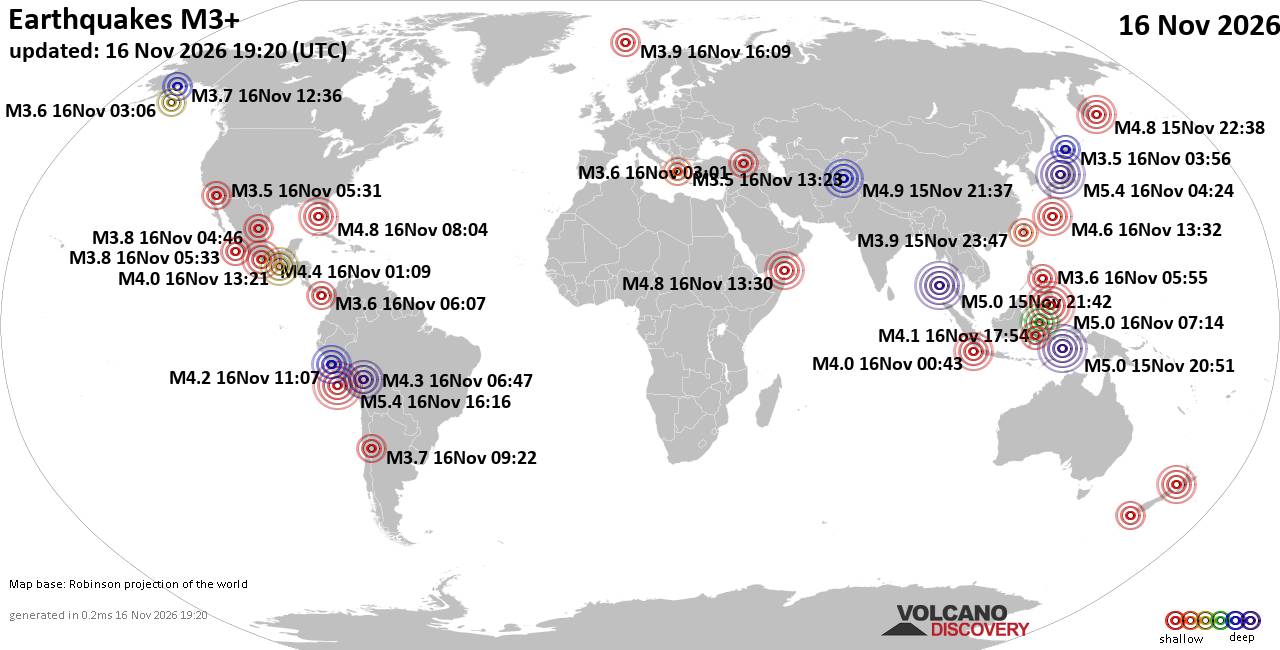
World Earthquake Report for Monday, 16 November 2026
• Moderate mag. 4.5 earthquake - 160 km northwest of Kavieng, New Ireland Pro...
• M 4.4 - off the coast of Oregon
• M 2.3 - 14 km ESE of Clam Gulch, Alaska
• M 3.9 - Rat Islands, Aleutian Islands, Alaska
• M 1.8 - 8 km NW of Round Valley, CA
• M 0.7 - 9 km S of Idyllwild, CA
|

#2319
Thu 09 Oct 2003 05:22:PM
|
Joined: Feb 2001
Posts: 800,656
Launch Director
|
|
Launch Director
Joined: Feb 2001
Posts: 800,656 |
Michael Braukus<br />Headquarters, Washington<br />(Phone: 202/358-1979) October 8, 2003<br /><br /><br />Keith Henry<br />Langley Research Center, Hampton, Va.<br />(Phone: 757/864-6120)<br /><br /><br />Leslie Williams<br />Dryden Flight Research Center, Edwards, Calif.<br />(Phone: 661/276-3893)<br /><br /><br />RELEASE: C03-ll<br /><br /><br />NASA SELECTS ALLIED TEAM TO PROVIDE HYPERSONIC VEHICLES<br /><br /><br /> NASA has selected Allied Aerospace Industries of <br />Tullahoma, Tenn., to provide three flight-ready experimental <br />demonstrator vehicles that will fly approximately 5,000 miles <br />per hour or seven times the speed of sound. The multi-year <br />project, called X-43C, will expand the hypersonic flight <br />envelope for air-breathing engines.<br /><br /><br />The cost-plus-fixed-fee completion type contract carries <br />performance incentives and is valued at nearly $150 million <br />over 66 months. The base activity covers all work through <br />completion of the Preliminary Design Review, and the optional <br />effort covers the final design, hardware fabrication and all <br />associated support activities.<br /><br /><br />The X-43C is the next logical step, following the Hyper-X (X-<br />43A), vehicle that aims at demonstrating short duration <br />scramjet powered flight at Mach 7 and Mach 10. The X-43C will <br />demonstrate free flight of a scramjet-powered vehicle with <br />acceleration capability from Mach 5 to Mach 7, as well as <br />operation of a hydrocarbon fuel-cooled scramjet.<br /><br /><br />NASA's Langley Research Center (LaRC), Hampton, Va. is <br />leading a combined U.S. Air Force/industry team in the design <br />and development of the X-43C demonstrator vehicle and its <br />propulsion system. The engine, which will be provided by the <br />Air Force, will be a dual-mode scramjet capable of running as <br />a ramjet or scramjet.<br /><br /><br />Allied Aerospace, Flight Systems Division, will team with <br />Pratt & Whitney, West Palm Beach, Fla.; Boeing Phantom Works, <br />Huntington Beach, Calif.; and RJK Technologies, Blacksburg, <br />Va.<br /><br /><br />Work will be performed primarily in Tullahoma and West Palm <br />Beach. Some contract work will also take place at Huntington <br />Beach, Blacksburg, St. Louis, LaRC and NASA's Dryden Flight <br />Research Center (DFRC), Edwards, Calif.<br /><br /><br />Future air-breathing space access vehicles offer advantages <br />over conventional rocket-powered vehicles that must carry all <br />of the oxidizer needed to burn their fuel. Air-breathing <br />engine-powered vehicles obtain oxygen from the atmosphere in <br />flight. By minimizing the need to carry oxidizer, smaller and <br />more efficient vehicles can be designed for space access <br />missions.<br /><br /><br />'When fully developed, these advanced propulsion systems will <br />offer increased safety, payload capacity and economy of <br />operation for future, reusable space access vehicles," said <br />Paul Moses, manager of the X-43C project. "The X-43C project <br />will validate advanced technologies, design tools and test <br />techniques that will enable design of such vehicles in the <br />future," he said.<br /><br /><br />For the three demonstration flights, a Pegasus-derived rocket <br />booster will be air-launched by a carrier aircraft to boost <br />the X-43C demonstrator vehicles to Mach 5 at approximately <br />80,000 feet. The X-43C will separate from the booster and <br />continue to accelerate to Mach 7 under its own power and <br />autonomous control.<br /><br /><br />Flights will originate from DFRC. Flight paths of the <br />vehicles will be over water within the Pacific Test Range.<br /><br /><br />For more information about NASA on the Internet, visit:<br /><br /><br /> http://www.nasa.gov
|
|



CMS The Best Conveyancing solicitors conveyancing quotes throughout the UK
For any webhosting enquiries please email webmaster@aus-city.com
|
|
Forums60
Topics930,716
Posts965,513
Members2,960
| |
Most Online102,106
Jul 10th, 2026
|
|
|