|
1 members (Alisa),
5,012
guests, and
23
robots. |
|
Key:
Admin,
Global Mod,
Mod
|
|
S |
M |
T |
W |
T |
F |
S |
|
|
|
|
1
|
2
|
3
|
4
|
|
5
|
6
|
7
|
8
|
9
|
10
|
11
|
|
12
|
13
|
14
|
15
|
16
|
17
|
18
|
|
19
|
20
|
21
|
22
|
23
|
24
|
25
|
|
26
|
27
|
28
|
29
|
30
|
31
|
|
|
There are no members with birthdays on this day. |
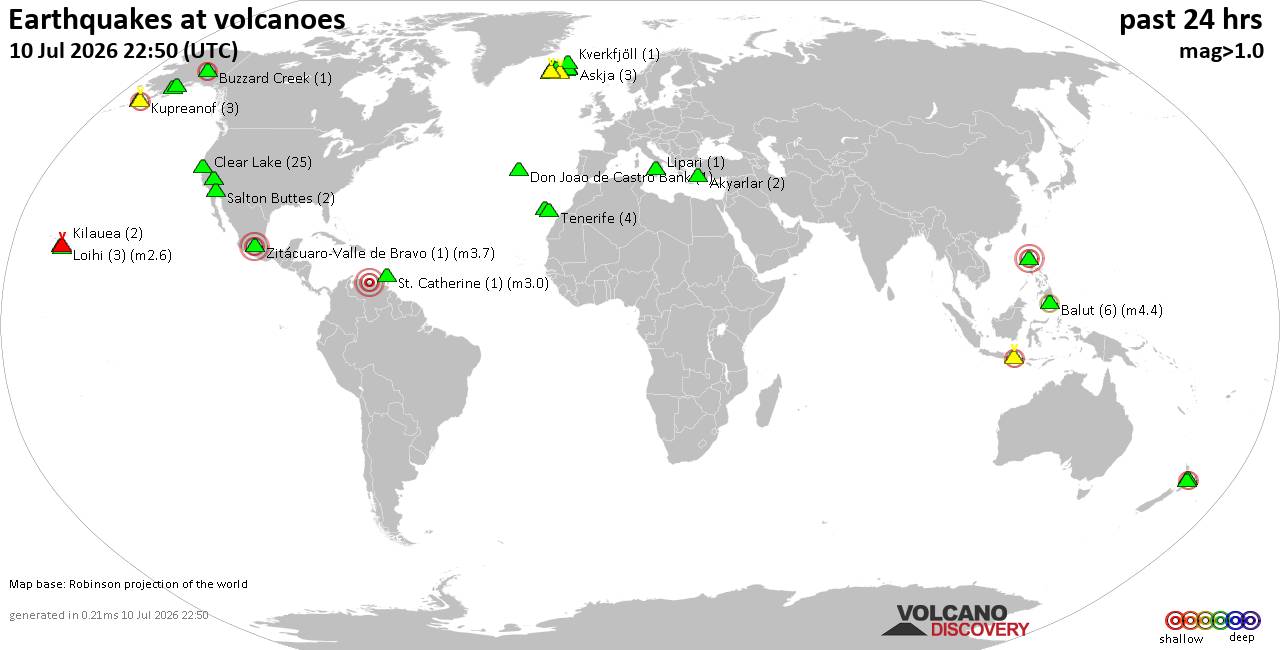
Volcano earthquake report for Friday, 10 Jul 2026
• Moderate mag. 4.2 earthquake - 133 km northwest of Ternate, Kota Ternate, N...
• World Earthquake Report for Friday, 10 July 2026
• Moderate mag. 4.6 earthquake - 17 km southwest of Comalapa, Estado de Chiap...
• Moderate mag. 4.1 earthquake - Olyutorskiy Rayon, 47 km northwest of Tilich...
• Moderate mag. 4.0 earthquake - Hawke's Bay, New Zealand, on Saturday, Jul 1...
|

#35755
Wed 10 Oct 2007 01:06:PM
|
Joined: Feb 2001
Posts: 678,976
Launch Director
|
OP

Launch Director
Joined: Feb 2001
Posts: 678,976 |
HUBBLE SPACE TELESCOPE - Continuing to collect World Class Science
DAILY REPORT # 4463
PERIOD COVERED: UT October 05,06,07,08, 2007 (DOY 278,279,280,281)
OBSERVATIONS SCHEDULED
NIC1/NIC2/NIC3 8795
NICMOS Post-SAA calibration - CR Persistence Part 6
A new procedure proposed to alleviate the CR-persistence problem of
NICMOS. Dark frames will be obtained immediately upon exiting the SAA
contour 23, and every time a NICMOS exposure is scheduled within 50
minutes of coming out of the SAA. The darks will be obtained in parallel
in all three NICMOS Cameras. The POST-SAA darks will be non- standard
reference files available to users with a USEAFTER date/time mark. The
keyword 'USEAFTER=date/time' will also be added to the header of each
POST-SAA DARK frame. The keyword must be populated with the time, in
addition to the date, because HST crosses the SAA ~8 times per day so
each POST-SAA DARK will need to have the appropriate time specified, for
users to identify the ones they need. Both the raw and processed images
will be archived as POST-SAA DARKSs. Generally we expect that all NICMOS
science/calibration observations started within 50 minutes of leaving an
SAA will need such maps to remove the CR persistence from the science i
mages. Each observation will need its own CRMAP, as different SAA
passages leave different imprints on the NICMOS detectors.
NIC1/NIC2/NIC3 8793
NICMOS Post-SAA calibration - CR Persistence Part 4
A new procedure proposed to alleviate the CR-persistence problem of
NICMOS. Dark frames will be obtained immediately upon exiting the SAA
contour 23, and every time a NICMOS exposure is scheduled within 50
minutes of coming out of the SAA. The darks will be obtained in parallel
in all three NICMOS Cameras. The POST-SAA darks will be non- standard
reference files available to users with a USEAFTER date/time mark. The
keyword 'USEAFTER=date/time' will also be added to the header of each
POST-SAA DARK frame. The keyword must be populated with the time, in
addition to the date, because HST crosses the SAA ~8 times per day so
each POST-SAA DARK will need to have the appropriate time specified, for
users to identify the ones they need. Both the raw and processed images
will be archived as POST-SAA DARKSs. Generally we expect that all NICMOS
science/calibration observations started within 50 minutes of leaving an
SAA will need such maps to remove the CR persistence from the science
images. Each observation will need its own CRMAP, as different SAA
passages leave different imprints on the NICMOS detectors.
WFPC2 11352
Mass and distance of the sub-Saturn microlensing planet
OGLE-2007-BLG-349Lb
OGLE-2007-BLG-349Lb is the seventh planet discovered using gravitational
microlensing, with planet/star mass ratio 2.8e-4. These microlensing
planets lie in the cold, outer reaches of their solar systems and are
difficult to detect by other techniques because of their long periods.
However, microlensing detections by themselves generally give only the
planet/star mass ratio, not the absolute planet mass. HST observations
have yielded host star masses and distances for two previous
microlensing planets. Here, we propose to apply a proven technique to
measure the mass and distance of the newest microlensing planet, which
was discovered only two weeks ago. We will use WFPC2 observations to
unambiguously determine whether the blended light seen during the event
is due to the host star (rather than a random interloper) and a
combination of WFPC2 and NICMOS observations to obtain photometric
estimates of the mass and distance. Two epochs of observations are
required, one at high magnification (in the very near future) and the
other at baseline (but not too late -- to avoid having the lens move
substantially away from the source).
S/C 11320
NICMOS Focus Monitoring Cycle 16
This program is a version of the standard focus sweep used since cycle
7. It has been modified to go deeper and uses more narrow filters for
improved focus determination. A new source was added in Cycle 14 in
order to accommodate 2-gyro mode: the open cluster NGC1850. This source
is part of the current proposal. The old target, the open cluster
NGC3603, will be used whenever available and the new target used to fill
the periods when NGC3603 is not visible. Steps: a) Use refined target
field positions as determined from cycle 7 calibrations b) Use
MULTIACCUM sequences of sufficient dynamic range to account for defocus
c) Do a 17-point focus sweep, +/- 8mm about the PAM mechanical zeropoint
for each cameras 1 and 2, in 1.0mm steps. For NIC3 we step from -0.5mm
to -9.5mm relative to mechanical zero, in steps of 1.0mm. d) Use PAM X/Y
tilt and OTA offset slew compensations refined from previous focus
monitoring/optical alignment activities
FGS 11295
Trigonometric Calibration of the Distance Scale for Classical Novae
The distance scale for classical novae is important for understanding
the stellar physics of their thermonuclear runaways, their contribution
to Galactic nucleosynthesis, and their use as extragalactic standard
candles. Although it is known that there is a relationship between their
absolute magnitudes at maximum light and their subsequent rates of
decline--the well-known maximum-magnitude rate-of-decline {MMRD}
relation--it is difficult to set the zero-point for the MMRD because of
the very uncertain distances of Galactic novae. We propose to measure
precise trigonometric parallaxes for the quiescent remnants of the four
nearest classical novae. We will use the Fine Guidance Sensors, which
are proven to be capable of measuring parallaxes with errors of ~0.2
mas, well below what is possible from the ground.
WFPC2 11289
SL2S: The Strong Lensing Legacy Survey
Recent systematic surveys of strong galaxy-galaxy lenses {CLASS, SLACS,
GOODS, etc.} are producing spectacular results for galaxy masses roughly
below a transition mass M~10^13 Mo. The observed lens properties and
their evolution up to z~0.2, consistent with numerical simulations, can
be described by isothermal elliptical potentials. In contrast, modeling
of giant arcs in X-ray luminous clusters {halo masses M >~10^13 Mo}
favors NFW mass profiles, suggesting that dark matter halos are not
significantly affected by baryon cooling. Until recently, lensing
surveys were neither deep nor extended enough to probe the intermediate
mass density regime, which is fundamental for understanding the assembly
of structures. The CFHT Legacy Survey now covers 125 square degrees, and
thus offers a large reservoir of strong lenses probing a large range of
mass densities up to z~1. We have extracted a list of 150 strong lenses
using the most recent CFHTLS data release via automated procedures.
Following our first SNAPSHOT proposal in cycle 15, we propose to
continue the Hubble follow-up targeting a larger list of 130 lensing
candidates. These are intermediate mass range candidates {between
galaxies and clusters} that are selected in the redshift range of 0.2-1
with no a priori X-ray selection. The HST resolution is necessary for
confirming the lensing candidates, accurate modeling of the lenses, and
probing the total mass concentration in galaxy groups up to z~1 with the
largest unbiased sample available to date.
WFPC2 11227
The orbital period for an ultraluminous X-ray source in NGC1313
The ultraluminous X-ray sources {ULXs} are extragalactic point sources
with luminosities that exceed the Eddington luminosity for conventional
stellar-mass black holes by factors of 10 - 100. It has been hotly
debated whether the ULXs are just common stellar-mass black hole sources
with beamed emission or whether they are sub-Eddington sources that are
powered by the long-sought intermediate mass black holes {IMBH}. To
firmly decide this question, one must obtain dynamical mass measurements
through photometric and spectroscopic monitoring of the secondaries of
these system. The crucial first step is to establish the orbital period
of a ULX, and arguably the best way to achieve this goal is by
monitoring its ellipsoidal light curve. The extreme ULX NGC1313 X-2
provides an outstanding target for an orbital period determination
because its relatively bright optical counterpart {V = 23.5} showed a
15% variation between two HST observations separated by three months.
This level of variability is consistent with that expected for a tidally
distorted secondary star. Here we propose a set of 20 imaging
observations with HST/WFPC2 to define the orbital period. This would be
the first photometric measurement of the orbital period of a ULX binary.
Subsequently, we will propose to obtain spectroscopic observations to
obtain its radial velocity amplitude and thereby a dynamical estimate of
its mass.
NIC2 11219
Active Galactic Nuclei in nearby galaxies: a new view of the origin of
the radio-loud radio- quiet dichotomy?
Using archival HST and Chandra observations of 34 nearby early-type
galaxies {drawn from a complete radio selected sample} we have found
evidence that the radio-loud/radio-quiet dichotomy is directly connected
to the structure of the inner regions of their host galaxies in the
following sense: [1] Radio-loud AGN are associated with galaxies with
shallow cores in their light profiles [2] Radio-quiet AGN are only
hosted by galaxies with steep cusps. Since the brightness profile is
determined by the galaxy's evolution, through its merger history, our
results suggest that the same process sets the AGN flavour. This
provides us with a novel tool to explore the co-evolution of galaxies
and supermassive black holes, and it opens a new path to understand the
origin of the radio-loud/radio-quiet AGN dichotomy. Currently our
analysis is statistically incomplete as the brightness profile is not
available for 82 of the 116 targets. Most galaxies were not observed
with HST, while in some cases the study is obstructed by the presence of
dust features. We here propose to perform an infrared NICMOS snapshot
survey of these 82 galaxies. This will enable us to i} test the reality
of the dichotomic behaviour in a substantially larger sample; ii} extend
the comparison between radio-loud and radio-quiet AGN to a larger range
of luminosities.
FGS 11212
Filling the Period Gap for Massive Binaries
The current census of binaries among the massive O-type stars is
seriously incomplete for systems in the period range from years to
millennia because the radial velocity variations are too small and the
angular separations too close for easy detection. Here we propose to
discover binaries in this observational gap through a Faint Guidance
Sensor SNAP survey of relatively bright targets listed in the Galactic O
Star Catalog. Our primary goal is to determine the binary frequency
among those in the cluster/association, field, and runaway groups. The
results will help us assess the role of binaries in massive star
formation and in the processes that lead to the ejection of massive
stars from their natal clusters. The program will also lead to the
identification of new, close binaries that will be targets of long term
spectroscopic and high angular resolution observations to determine
their masses and distances. The results will also be important for the
interpretation of the spectra of suspected and newly identified binary
and multiple systems.
WFPC2 11206
At the cradle of the Milky Way: Formation of the most massive field disk
galaxies at z>1
We propose to obtain 2 orbit WFPC2 F814W images of a sample of the 15
most massive galaxies found at $1 < z < 1.3$. These were culled from
over 20,000 Keck spectra collected as part of DEEP and are unique among
high redshift massive galaxy samples in being kinematically selected.
Through a recent HST NICMOS-2 imaging program {GO- 10532}, we have
confirmed that these galaxies have regular stellar disks, and their
emission line kinematics are not due to gradients from merging
components. These potentially very young galaxies are likely precursors
to massive local disks, assuming no further merging. The proposed WFPC2
and existing NIC-2 data provide colors, stellar masses, and ages of
bulge and disk subcomponents, to assess whether old stellar bulges and
disks are in place at that time or still being built, and constrain
their formation epochs. Finally, this sample will yield the first
statistically significant results on the $z > 1$ evolution of the
size-velocity-luminosity scaling relations, for massive galaxies at
different wavelengths, and constrain whether this evolution reflects
stellar mass growth, or passive evolution, of either bulge or disk
components.
WFPC2 11203
A Search for Circumstellar Disks and Planetary-Mass Companions around
Brown Dwarfs in Taurus
During a 1-orbit program in Cycle 14, we used WFPC2 to obtain the first
direct image of a circumstellar disk around a brown dwarf. These data
have provided fundamental new constraints on the formation process of
brown dwarfs and the properties of their disks. To search for additional
direct detections of disks around brown dwarfs and to search for
planetary-mass companions to these objects, we propose a WFPC2 survey of
32 brown dwarfs in the Taurus star-forming region.
WFPC2 11202
The Structure of Early-type Galaxies: 0.1-100 Effective Radii
The structure, formation and evolution of early-type galaxies is still
largely an open problem in cosmology: how does the Universe evolve from
large linear scales dominated by dark matter to the highly non-linear
scales of galaxies, where baryons and dark matter both play important,
interacting, roles? To understand the complex physical processes
involved in their formation scenario, and why they have the tight
scaling relations that we observe today {e.g. the Fundamental Plane}, it
is critically important not only to understand their stellar structure,
but also their dark-matter distribution from the smallest to the largest
scales. Over the last three years the SLACS collaboration has developed
a toolbox to tackle these issues in a unique and encompassing way by
combining new non-parametric strong lensing techniques, stellar
dynamics, and most recently weak gravitational lensing, with
high-quality Hubble Space Telescope imaging and VLT/Keck spectroscopic
data of early-type lens systems. This allows us to break degeneracies
that are inherent to each of these techniques separately and probe the
mass structure of early-type galaxies from 0.1 to 100 effective radii.
The large dynamic range to which lensing is sensitive allows us both to
probe the clumpy substructure of these galaxies, as well as their
low-density outer haloes. These methods have convincingly been
demonstrated, by our team, using smaller pilot-samples of SLACS lens
systems with HST data. In this proposal, we request observing time with
WFPC2 and NICMOS to observe 53 strong lens systems from SLACS, to obtain
complete multi-color imaging for each system. This would bring the total
number of SLACS lens systems to 87 with completed HST imaging and
effectively doubles the known number of galaxy-scale strong lenses. The
deep HST images enable us to fully exploit our new techniques, beat down
low-number statistics, and probe the structure and evolution of
early-type galaxies, not only with a uniform data-set an order of
magnitude larger than what is available now, but also with a fully
coherent and self-consistent methodological approach!
WFPC2 11178
Probing Solar System History with Orbits, Masses, and Colors of
Transneptunian Binaries
The recent discovery of numerous transneptunian binaries {TNBs} opens a
window into dynamical conditions in the protoplanetary disk where they
formed as well as the history of subsequent events which sculpted the
outer Solar System and emplaced them onto their present day heliocentric
orbits. To date, at least 47 TNBs have been discovered, but only about a
dozen have had their mutual orbits and separate colors determined,
frustrating their use to investigate numerous important scientific
questions. The current shortage of data especially cripples scientific
investigations requiring statistical comparisons among the ensemble
characteristics. We propose to obtain sufficient astrometry and
photometry of 23 TNBs to compute their mutual orbits and system masses
and to determine separate primary and secondary colors, roughly tripling
the sample for which this information is known, as well as extending it
to include systems of two near-equal size bodies. To make the most
efficient possible use of HST, we will use a Monte Carlo technique to
optimally schedule our observations.
WFPC2 11176
Location and the Origin of Short Gamma-Ray Bursts
During the past decade extraordinary progress has been made in
determining the origin of long-duration gamma-ray bursts. It has been
conclusively shown that these objects derive from the deaths of massive
stars. Nonetheless, the origin of their observational cousins,
short-duration gamma-ray bursts {SGRBs} remains a mystery. While SGRBs
are widely thought to result from the inspiral of compact binaries, this
is a conjecture. A number of hosts of SGRBs have been identified, and
have been used by some to argue that SGRBs derive primarily from an
ancient population {~ 5 Gyr}; however, it is not known whether this
conclusion more accurately reflects selection biases or astrophysics.
Here we propose to employ a variant of a technique that we pioneered and
used to great effect in elucidating the origins of long-duration bursts.
We will examine the degree to which SGRB locations trace the red or blue
light of their hosts, and thus old or young stellar populations. This
approach will allow us to study the demographics of the SGRB population
in a manner largely free of the distance dependent selection effects
which have so far bedeviled this field, and should give direct insight
into the age of the SGRB progenitor population.
ACS/SBC WFPC2 11175
UV Imaging to Determine the Location of Residual Star Formation in
Galaxies Recently Arrived on the Red Sequence
We have identified a sample of low-redshift {z = 0.04 - 0.10} galaxies
that are candidates for recent arrival on the red sequence. They have
red optical colors indicative of old stellar populations, but blue
UV-optical colors that could indicate the presence of a small quantity
of continuing or very recent star formation. However, their spectra lack
the emission lines that characterize star-forming galaxies. We propose
to use ACS/SBC to obtain high- resolution imaging of the UV flux in
these galaxies, in order to determine the spatial distribution of the
last episode of star formation. WFPC2 imaging will provide B, V, and I
photometry to measure the main stellar light distribution of the galaxy
for comparison with the UV imaging, as well as to measure color
gradients and the distribution of interstellar dust. This detailed
morphological information will allow us to investigate the hypothesis
that these galaxies have recently stopped forming stars and to compare
the observed distribution of the last star formation with predictions
for several different mechanisms that may quench star formation in
galaxies.
NIC2 11152
Probing the compact dust disk of a nearby Classical T Tauri Star
BP Psc is a high Galactic latitude {b = -57}, bright, IRAS source that
generally has been classified as a T Tauri star but little studied to
date. We have carried out a multiwavelength ground-based study of this
object and find that it is most likely a ~10 Myr classical T Tauri star
surrounded by a gas and dust disk, and less than 100 pc from Earth,
making it one of the oldest and closest such stars known. Near-IR AO
images and IR photometry show it is surrounded by an compact {0.2"},
almost-edge-on, optically thick disk of dust with a wide range of
temperatures. We propose a multiwavelength polarimetric study of the
compact disk to support quantitative modeling to recover disk and dust
parameters. We also propose coronagraphic imaging to search for
larger-scale dust structures invisible in ground-based images, and
narrowband imaging of an outflow jet and associated Herbig- Haro objects
to study their structure and determine a kinematic distance of the
system. A massive compact disk surrounding an isolated 10 Myr star is a
unique environment for planet formation, and its proximity to Earth
allows HST to study it in detail.
ACS/SBC 11151
Evaluating the Role of Photoevaporation of Protoplanetary Disk Dispersal
Emission produced by accretion onto the central star leads to
photoevaporation, which may play a fundamental role in disk dispersal.
Models of disk photoevaporation by the central star are challenged by
two potential problems: the emission produced by accretion will be
substantially weaker for low-mass stars, and photoevaporation must
continue as accretion slows. Existing FUV spectra of CTTSs are biased to
solar-mass stars with high accretion rates, and are therefore
insufficient to address these problems. We propose use HST/ACS SBC
PR130L to obtain FUV spectra of WTTSs and of CTTSs at low masses and
mass accretion rates to provide crucial data to evaluate
photoevaporation models. We will estimate the FUV and EUV luminosities
of low-mass CTTSs with small mass accretion rates, CTTSs with transition
disks and slowed accretion, and of magnetically-active WTTSs.
NIC2 11143
NICMOS imaging of submillimeter galaxies with CO and PAH redshifts
We propose to obtain F110W and F160W imaging of 10 z~2.4 submillimeter
galaxies {SMGs} whose optical redshifts have been confirmed by the
detection of millimeter CO and/or mid-infrared PAH emission. With the
4000A break falling within/between the two imaging filters, we will be
able to study these sources' spatially resolved stellar populations
{modulo extinction} in the rest-frame optical. SMGs' large luminosities
appear to be due largely to merger-triggered starbursts; high-resolution
NICMOS imaging will help us understand the stellar masses, mass ratios,
and other properties of the merger progenitors, valuable information in
the effort to model the mass assembly history of the universe.
WFPC2 11134
WFPC2 Tidal Tail Survey: Probing Star Cluster Formation on the Edge
The spectacular HST images of the interiors of merging galaxies such as
the Antennae and NGC 7252 have revealed rich and diverse populations of
star clusters created over the course of the interaction. Intriguingly,
our WFPC2 study of tidal tails in these and other interacting pairs has
shown that star cluster birth in the tails does not follow a similarly
straightforward evolution. In fact, cluster formation in these
relatively sparse environments is not guaranteed -- only one of six
tails in our initial study showed evidence for a significant population
of young star clusters. The tail environment thus offers the opportunity
to probe star cluster formation on the edge of the physical parameter
space {e.g., of stellar and gas mass, density, and pressure} that
permits it to occur. We propose to significantly extend our pilot sample
of optically bright, gas-rich tidal tails by a factor of 4 in number to
include a more diverse population of tails, encompassing major and minor
mergers, gas-rich and gas-poor tails, as well as early, late, and merged
interaction stages. With 21 orbits of HST WFPC2 imaging in the F606W and
F814W filters, we can identify, roughly age-date, and measure sizes of
star clusters to determine what physical parameters affect star cluster
formation. WFPC2 imaging has been used effectively in our initial study
of four mergers, and it will be possible in this program to reach
similar limits of Mv=-8.5 for each of 16 more tails. With the much
larger sample we expect to isolate which factors, such as merger stage,
HI content, and merger mass ratio, drive the formation of star clusters.
WFPC2 11130
AGNs with Intermediate-mass Black Holes: Testing the Black Hole-Bulge
Paradigm, Part II
The recent progress in the study of central black holes in galactic
nuclei has led to a general consensus that supermassive {10^6-10^9 solar
mass} black holes are closely connected with the formation and
evolutionary history of large galaxies, especially their bulge
component. Two outstanding issues, however, remain unresolved. Can
central black holes form in the absence of a bulge? And does the mass
function of central black holes extend below 10^6 solar masses?
Intermediate-mass black holes {<10^6 solar masses}, if they exist, may
offer important clues to the nature of the seeds of supermassive black
holes. Using the SDSS, our group has successfully uncovered a new
population of AGNs with intermediate-mass black holes that reside in
low-luminosity galaxies. However, very little is known about the
detailed morphologies or structural parameters of the host galaxies
themselves, including the crucial question of whether they have bulges
or not. Surprisingly, the majority of the targets of our Cycle 14 pilot
program have structural properties similar to dwarf elliptical galaxies.
The statistics from this initial study, however, are really too sparse
to reach definitive conclusions on this important new class of black
holes. We wish to extend this study to a larger sample, by using the
Snapshot mode to obtain WFPC2 F814W images from a parent sample of 175
AGNs with intermediate-mass black holes selected from our final SDSS
search. We are particularly keen to determine whether the hosts contain
bulges, and if so, how the fundamental plane properties of the host
depend on the mass of their central black holes. We will also
investigate the environment of this unique class of AGNs.
WFPC2 11129
The Star Formation History of the Fornax Dwarf Spheroidal Galaxy
The Fornax dwarf spheroidal galaxy is one of the most luminous dwarf
satellites of the Milky Way. It is unusual in many ways: it hosts 5
globular clusters, shows some relatively young stars, and has faint
sub-structures which have been interpreted as signs of recent
interactions. It is thus of great interest to learn the complete star
formation history {SFH} of Fornax to establish a link between its
evolutionary path and the predictions from numerical simulations, as a
test of our understanding of dwarf galaxy evolution. Yet many questions
remain open. Is the old stellar population made up of stars formed in a
very early burst, perhaps before the epoch of reionisation, or the
result of a more continuous star formation between 13 and 9 Gyr ago ?
How quickly did Fornax increase its metallicity during its initial
assembly and during subsequent episodes of star formation ? Are
accretion episodes required to explain the age-metallicity history of
Fornax ? However, there has never been a comprehensive study of the
global SFH of the Fornax field based on data of sufficient depth to
unambiguously measure the age mixture of the stellar populations and
their spatial variation. We propose to use the WFPC2 to obtain very deep
images in several fields across the central region of Fornax in order to
reach the oldest main-sequence turnoffs. The number of fields is
determined by the need to measure the SFH over different regions with
distinct kinematics and metallicity. The resolution achievable with HST
is crucial to answer these questions because, to derive the age
distribution of the oldest stars, we are interested in I magnitude
differences of the order 0.2 mag in crowded fields at V=24.5. We will
directly measure the time variation in star-formation rate over the
entire galaxy history, from first stars coeval with the Milky Way halo
to the youngest populations 200 Myr ago. The combination of detailed CMD
analysis with WFPC2 with our existing metallicity and kinematic
information will allow us to trace out the early phases of its
evolution.
NIC3 11107
Imaging of Local Lyman Break Galaxy Analogs: New Clues to Galaxy
Formation in the Early Universe
We have used the ultraviolet all-sky imaging survey currently being
conducted by the Galaxy Evolution Explorer {GALEX} to identify for the
first time a rare population of low- redshift starbursts with properties
remarkably similar to high-redshift Lyman Break Galaxies {LBGs}. These
"compact UV luminous galaxies" {UVLGs} resemble LBGs in terms of size,
SFR, surface brightness, mass, metallicity, kinematics, dust, and color.
The UVLG sample offers the unique opportunity of investigating some very
important properties of LBGs that have remained virtually inaccessible
at high redshift: their morphology and the mechanism that drives their
star formation. Therefore, in Cycle 15 we have imaged 7 UVLGs using ACS
in order to 1} characterize their morphology and look for signs of
interactions and mergers, and 2} probe their star formation histories
over a variety of timescales. The images show a striking trend of
small-scale mergers turning large amounts of gas into vigorous
starbursts {a process referred to as dissipational or "wet" merging}.
Here, we propose to complete our sample of 31 LBG analogs using the
ACS/SBC F150LP {FUV} and WFPC2 F606W {R} filters in order to create a
statistical sample to study the mechanism that triggers star formation
in UVLGs and its implications for the nature of LBGs. Specifically, we
will 1} study the trend between galaxy merging and SFR in UVLGs, 2}
artificially redshift the FUV images to z=1-4 and compare morphologies
with those in similarly sized samples of LBGs at the same rest-frame
wavelengths in e.g. GOODS, UDF, and COSMOS, 3} determine the presence
and morphology of significant stellar mass in "pre-burst" stars, and 4}
study their immediate environment. Together with our Spitzer
{IRAC+MIPS}, GALEX, SDSS and radio data, the HST observations will form
a unique union of data that may for the first time shed light on how the
earliest major episodes of star formation in high redshift galaxies came
about. This proposal was adapted from an ACS HRC+WFC proposal to meet
the new Cycle 16 observing constraints, and can be carried out using the
ACS/SBC and WFPC2 without compromising our original science goals.
WFPC2 11079
Treasury Imaging of Star Forming Regions in the Local Group:
Complementing the GALEX and NOAO Surveys
We propose to use WFPC2 to image the most interesting star-forming
regions in the Local Group galaxies, to resolve their young stellar
populations. We will use a set of filters including F170W, which is
critical to detect and characterize the most massive stars, to whose hot
temperatures colors at longer wavelengths are not sensitive. WFPC2's
field of view ideally matches the typical size of the star-forming
regions, and its spatial resolution allows us to measure individual
stars, given the proximity of these galaxies. The resulting H-R diagrams
will enable studies of star-formation properties in these regions, which
cover largely differing metallicities {a factor of 17, compared to the
factor of 4 explored so far} and characteristics. The results will
further our understanding of the star-formation process, of the
interplay between massive stars and environment, the properties of dust,
and will provide the key to interpret integrated measurements of
star-formation indicators {UV, IR, Halpha} available for several
hundreds more distant galaxies. Our recent deep surveys of these
galaxies with GALEX {FUV, NUV} and ground-based imaging {UBVRI, Halpha,
[OIII] and [SII]} provided the identification of the most relevant SF
sites. In addition to our scientific analysis, we will provide catalogs
of HST photometry in 6 bands, matched corollary ground-based data, and
UV, Halpha and IR integrated measurements of the associations, for
comparison of integrated star-formation indices to the resolved
populations. We envisage an EPO component.
WFPC2 11029
WFPC2 CYCLE 15 Intflat Linearity Check and Filter Rotation Anomaly
Monitor
Intflat observations will be taken to provide a linearity check: the
linearity test consists of a series of intflats in F555W, in each gain
and each shutter. A combination of intflats, visflats, and earthflats
will be used to check the repeatability of filter wheel motions.
{Intflat sequences tied to decons, visits 1-18 in prop 10363, have been
moved to the cycle 15 decon proposal xxxx for easier scheduling.} Note:
long-exposure WFPC2 intflats must be scheduled during ACS anneals to
prevent stray light from the WFPC2 lamps from contaminating long ACS
external exposures.
WFPC2 11024
WFPC2 CYCLE 15 INTERNAL MONITOR
This calibration proposal is the Cycle 15 routine internal monitor for
WFPC2, to be run weekly to monitor the health of the cameras. A variety
of internal exposures are obtained in order to provide a monitor of the
integrity of the CCD camera electronics in both bays {both gain 7 and
gain 15 -- to test stability of gains and bias levels}, a test for
quantum efficiency in the CCDs, and a monitor for possible buildup of
contaminants on the CCD windows. These also provide raw data for
generating annual super-bias reference files for the calibration
pipeline.
WFPC2 11023
WFPC2 CYCLE 15 Standard Darks - part 1
This dark calibration program obtains dark frames every week in order to
provide data for the ongoing calibration of the CCD dark current rate,
and to monitor and characterize the evolution of hot pixels. Over an
extended period these data will also provide a monitor of radiation
damage to the CCDs.
FGS 10929
Calibrating the Mass-Luminosity Relation at the End of the Main Sequence
We propose to use HST-FGS1R to finish calibrating the mass-luminosity
relation for stars less massive than 0.5 Msun, with special emphasis on
objects near the stellar/substellar border. Our goals are to determine
Mv values to 0.05 magnitude and masses to 5%, and thereby build the
fundamental database of stellar masses that we will use to test
theoretical models as never before. This program uses the combination of
HST- FGS3/FGS1R at optical wavelengths, historical infrared speckle
data, ground-based parallax work, metallicity studies, and radial
velocity monitoring to examine nearby, subarcsecond binary systems. The
high precision separation and position angle measurements with
HST-FGS3/FGS1R {to 1 mas in the separations} for these faint {V = 10-15}
targets simply cannot be equaled by any ground-based technique. As a
result of these measurements, we are deriving high quality luminosities
and masses for the components in the systems, and characterizing their
spectral energy distributions from 0.5 to 2.2 microns. One of the
objects, GJ 1245 C with mass 0.074 +/- 0.002 Msun, is the only object
known with an accurate dynamical mass less than 0.10 Msun. The payoff of
this proposal is high because the six systems selected for final
observations in Cycles 15 and 16 have already been resolved during
Cycles 5-13 with HST FGS3/FGS1R and contain most of the reddest objects
for which accurate dynamical masses can be determined.
ACS/SBC 10872
Lyman Continuum Emission in Galaxies at z=1.2
Lyman continuum photons produced in massive starbursts may have played a
dominant role in the reionization of the Universe. Starbursts are
important contributors to the ionizing metagalactic background at lower
redshifts as well. However, their contribution to the background depends
upon the fraction of ionizing radiation that escapes from the intrinsic
opacity of galaxies below the Lyman limit. Current surveys suggest
escape fractions of a few percent, up to 10%, with very few detections
{as opposed to upper limits} having been reported. No detections have
been reported in the epochs between z=0.1 and z=2. We propose to measure
the fraction of escaping Lyman continuum radiation from 15 luminous
z~1.2 galaxies in the GOODS fields. Using the tremendous sensitivity of
the ACS Solar- blind Channel, we will reach AB=30 mag., allowing us to
detect an escape fraction of 1%. We will correlate the amount of
escaping radiation with the photometric and morphological properties of
the galaxies. A non-detection in all sources would imply that QSOs
provide the overwhelming majority of ionizing radiation at z=1.3, and it
would strongly indicate that the properties of galaxies at higher
redshift have to be significantly different for galaxies to dominate
reionization. The deep FUV images will also be useful for extending the
FUV study of other galaxies in the GOODS fields.
ACS/SBC 10864
Mapping the Gaseous Content of Protoplanetary and Young Planetary
Systems with ACS
One of the key problems in planetary system formation is understanding
how rapidly, and over what time interval Jovian planets can form. Dust
in the protoplanetary disk is critical in planetesimal formation, but it
is the gas which produces giant planets, and which is essential for
their migration. However, compared to data on the circumstellar dust,
information on the gas component is sparse, especially in the
planet-formation zone. This severely limits our ability to put
observational constraints on giant planet formation, except to note that
the process must be largely complete by 12 Myr, given the paucity of
Herbig Ae or classical T Tauri stars older than 10-12 Myr. In the FUV,
photo-excited molecular hydrogen transitions have the requisite contrast
to the stellar photosphere, accretion shock, and reflection nebulosity,
and can be traced 50-100 AU from the exciting stars in both envelopes
and outflow cavities and protoplanetary disks. Central disk cavities, an
expected consequence of planet formation, larger than 0.1" are directly
detectable in HST FUV spectra, while smaller cavities may be detected by
comparison with protoplanetary disks which are still accreting onto
their stars. We propose augmenting existing HST coronagraphic imagery of
6 Herbig Fe and T Tauri disks with ACS Solar-Blind Channel Lyman alpha
imagery and slitless spectroscopy simultaneously sampling the disk in
molecular hydrogen and small-grain reflection nebulosity. These data
will be used to quantify the amount of vertical stratification in these
disks, to map the mass-loss geometry from the star, and to determine
whether removal of molecular material precedes, lags, or is contemporary
with clearing of the dust.
WFPC2 10798
Dark Halos and Substructure from Arcs & Einstein Rings
The surface brightness distribution of extended gravitationally lensed
arcs and Einstein rings contains super-resolved information about the
lensed object, and, more excitingly, about the smooth and clumpy mass
distribution of the lens galaxies. The source and lens information can
non-parametrically be separated, resulting in a direct "gravitational
image" of the inner mass-distribution of cosmologically-distant galaxies
{Koopmans 2005; Koopmans et al. 2006 [astro-ph/0601628]}. With this goal
in mind, we propose deep HST ACS-F555W/F814W and NICMOS-F160W WFC
imaging of 20 new gravitational-lens systems with spatially resolved
lensed sources, of the 35 new lens systems discovered by the Sloan Lens
ACS Survey {Bolton et al. 2005} so far, 15 of which are being imaged in
Cycle-14. Each system has been selected from the SDSS and confirmed in
two time- efficient HST-ACS snapshot programs {cycle 13&14}.
High-fidelity multi-color HST images are required {not delivered by the
420s snapshots} to isolate these lensed images {properly cleaned,
dithered and extinction-corrected} from the lens galaxy surface
brightness distribution, and apply our "gravitational maging" technique.
Our sample of 35 early-type lens galaxies to date is by far the largest,
still growing, and most uniformly selected. This minimizes selection
biases and small-number statistics, compared to smaller, often
serendipitously discovered, samples. Moreover, using the WFC provides
information on the field around the lens, higher S/N and a better
understood PSF, compared with the HRC, and one retains high spatial
resolution through drizzling. The sample of galaxy mass distributions -
determined through this method from the arcs and Einstein ring HST
images - will be studied to: {i} measure the smooth mass distribution of
the lens galaxies {dark and luminous mass are separated using the HST
images and the stellar M/L values derived from a joint stellar-dynamical
analysis of each system}; {ii} quantify statistically and individually
the incidence of mass-substructure {with or without obvious luminous
counter- parts such as dwarf galaxies}. Since dark-matter substructure
could be more prevalent at higher redshift, both results provide a
direct test of this prediction of the CDM hierarchical
structure-formation model.
FLIGHT OPERATIONS SUMMARY:
Significant Spacecraft Anomalies: (The following are preliminary reports
of potential non-nominal performance that will be investigated.)
HSTARS:
11013 - GSAcq(1,3,1) failed to RGA Hold (Gyro Control)
The GSAcq(1,3,1) scheduled at 278/12:53:30 - 13:01:34 failed to RGA Hold
due to a Search Radius Limit Exceeded Error on FGS-1. During OBAD2 at
278/12:45:03 attitude correction ESB 1806(T2G_OPEN_LOOP_TIMEOUT) was
received at 278/12:47:14 resulting in unplanned M2G transition at
278/12:47:08. Pre-acq OBAD2 had (RSS) value of 3.38 arcseconds. At
278/12:48:55 Equation F2SOB flagged indicating Stuck-on-Bottom, then
back in bounds at 278/12:49:43. Unable to execute FHST Stuck-on-Bottom
Macro due to OBAD acquisition. One (FGS Coarse Track failed -Search
Radius Limit Exceeded) was received at 278/12:59:46.
11014 - Loss of LOCK
REacq(2,3,3) at 280/09:06:48 was successful. At 09:20:02 REacq(2,3,3)
loss lock. A this time the vehicle was performing a T3 slew. The
scheduled TERM EXP was 10:00:32.
11016 - Early Loss of Lock @281/2022z
HST lost fine lock on FGS 1 and 2 at 21:14:57. P4TAKDAT (Take Data Flag)
went down at that time, causing an ACS 779 Status Buffer Message ("Fold
Mechanism Move Was Blocked") to occur at 21:15:08.
GSACQ(1,2,2) at 20:31:50 was successful but mnemonics FSUBLOL and FGSLOL
underwent a long series of limit violations beginning at 20:36:17. Both
of these are derived mnemonics based on QDFGSWT and P4CNTLST ("ST
Control Status"). P4CNTLST toggled between "RGA Only" and "FGS/RGA"
frequently from 20:38:01 to 21:14:49. Extracts for all of these
mnemonics are attached.
REACQ(1,2,2) at 22:07:11 failed while vehicle was LOS. Upon AOS at
22:47:15 QF1STOPF and QSTOP flags were set and 4 more ACS 779 messages
were received.
COMPLETED OPS REQUEST: (None)
COMPLETED OPS NOTES: (None)
SCHEDULED SUCCESSFUL FAILURE
FGS GSacq 28 27
FGS REacq 27 26
OBAD with Maneuver 110 110
LOSS of LOCK 2
SIGNIFICANT EVENTS: (None)
David Cottle
UBB Owner & Administrator
|
|



CMS The Best Conveyancing solicitors conveyancing quotes throughout the UK
For any webhosting enquiries please email webmaster@aus-city.com
|
|
Forums60
Topics789,850
Posts824,628
Members2,960
| |
Most Online102,106
Jul 10th, 2026
|
|
|