|
0 members (),
2,518
guests, and
27
robots. |
|
Key:
Admin,
Global Mod,
Mod
|
|
S |
M |
T |
W |
T |
F |
S |
|
|
|
1
|
2
|
3
|
4
|
5
|
|
6
|
7
|
8
|
9
|
10
|
11
|
12
|
|
13
|
14
|
15
|
16
|
17
|
18
|
19
|
|
20
|
21
|
22
|
23
|
24
|
25
|
26
|
|
27
|
28
|
29
|
30
|
|
|
|
|
There are no members with birthdays on this day. |
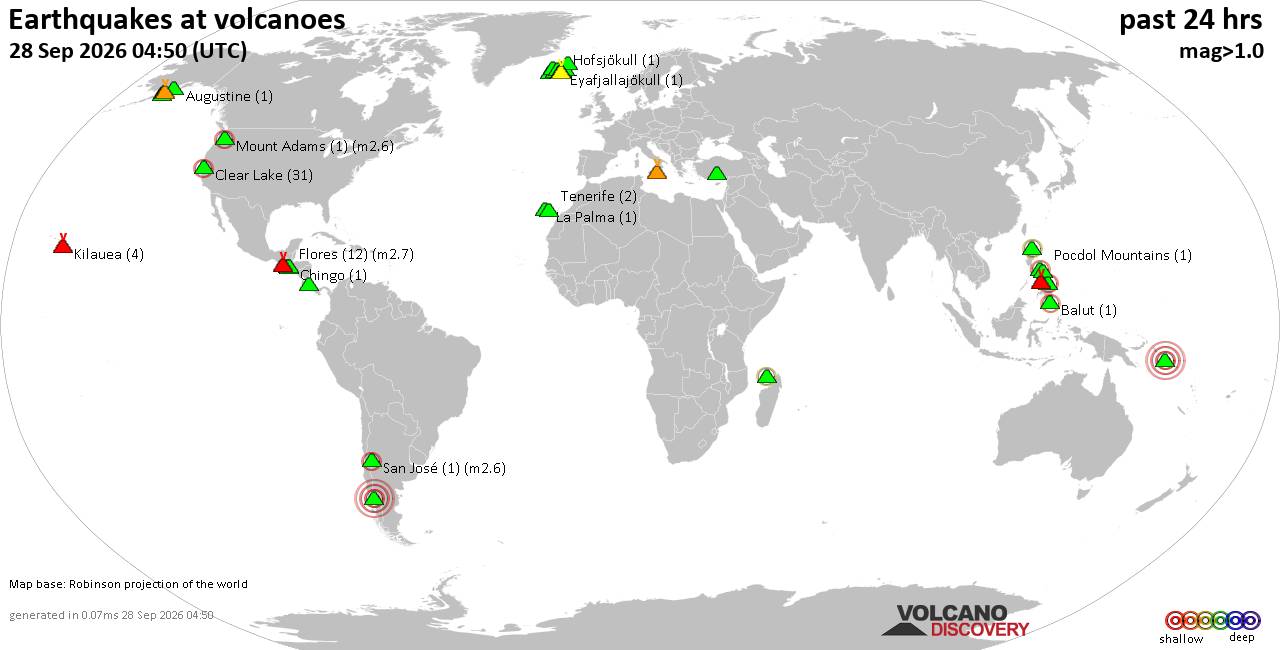
Volcano earthquake report for Monday, 28 September 2026
• M 5.4 - north of Svalbard
• M 2.4 - 70 km SSW of Nikolski, Alaska
• M 4.1 - 105 km SSW of Nikolski, Alaska
• M 1.3 - 11 km SSE of Portola Valley, CA
• M 1.5 - 28 km WNW of Enoch, Utah
|

#4337
Fri 06 Feb 2004 03:30:PM
|
Joined: Feb 2001
Posts: 678,977
Launch Director
|
|
Launch Director
Joined: Feb 2001
Posts: 678,977 |
HUBBLE SPACE TELESCOPE - Continuing to collect World Class Science<br /><br /><br />DAILY REPORT # 3545<br /><br /><br />PERIOD COVERED: DOY 35<br /><br /><br />OBSERVATIONS SCHEDULED<br /><br /><br />ACS 9984<br /><br /><br />Cosmic Shear With ACS Pure Parallels<br /><br /><br />Small distortions in the shapes of background galaxies by foreground mass<br />provide a powerful method of directly measuring the amount and distribution of<br />dark matter. Several groups have recently detected this weak lensing by<br />large-scale structure, also called cosmic shear. The high resolution and<br />sensitivity of HST/ACS provide a unique opportunity to measure cosmic shear<br />accurately on small scales. Using 260 parallel orbits in Sloan textiti {F775W}<br />we will measure for the first time: beginlistosetlength sep0cm setlengthemsep0cm<br />setlength opsep0cm em the cosmic shear variance on scales <0.7 arcmin, em the<br />skewness of the shear distribution, and em the magnification effect. endlist Our<br />measurements will determine the amplitude of the mass power spectrum<br />sigma_8Omega_m^0.5, with signal-to-noise {s/n} ~ 20, and the mass density<br />Omega_m with s/n=4. They will be done at small angular scales where non-linear<br />effects dominate the power spectrum, providing a test of the gravitational<br />instability paradigm for structure formation. Measurements on these scales are<br />not possible from the ground, because of the systematic effects induced by PSF<br />smearing from seeing. Having many independent lines of sight reduces the<br />uncertainty due to cosmic variance, making parallel observations ideal.<br /><br /><br />ACS/HRC/WFC 10059<br /><br /><br />CCD Daily Monitor<br /><br /><br />This program consists of basic tests to monitor, the read noise, the development<br />of hot pixels and test for any source of noise in ACS CCD detectors. This<br />programme will be executed once a day for the entire lifetime of ACS.<br /><br /><br />ACS/HRC/WFC 9919<br /><br /><br />The Morphological, Photometric, and Spectroscopic Properties of Intermediate<br />Redshift Cluster Galaxies:<br /><br /><br />New and fundamental constraints on the evolutionary state of high redshift<br />clusters will be made by obtaining deep, multiband images {SDSS r, i, z} over<br />the central 1.5 Mpc regions of seven distant clusters in the range 0.76 < z <<br />1.27. The ACS data will allow us to {1} definitively establish the morphological<br />composition and star formation rates as functions of clustercentric radius,<br />local density, x-ray luminosity {obtained from accompanying Chandra, and XMM<br />data}, {2} explore the relationship between substructure, kinematics, and<br />morphology, {3} strongly constrain the galaxy merger frequency and the origins<br />of elliptical and S0 galaxies, {4} measure the mass distribution independently<br />from the light {via gravitational lensing} enabling comparisons with<br />kinematically derived masses, and {5} study the evolution of the structure of<br />the brightest cluster members. The clusters selected for this program already<br />have extensive spectroscopic observations and NIR imaging is either in hand or<br />underway from approved ground based programs. To date, the lower part of this<br />redshift range has only been marginally studied with HST. Our sample includes<br />the two most distant, spectroscopically confirmed superclusters and will<br />significantly increase the baseline over which evolutionary effects can be<br />studied. The data will also be used to identify very high-z galaxies via their<br />unique spectral properties.<br /><br /><br />HST 9382<br /><br /><br />A Large Targeted Survey for z < 1.6 Damped Lyman Alpha Lines in SDSS QSO<br />MgII-FeII Systems.<br /><br /><br />We have searched the first public release of SDSS QSO spectra for low-z {z<1.65}<br />metal absorption lines and found over 200 large rest equivalent width MgII-FeII<br />systems. Previously, we empirically showed that such systems are good tracers of<br />large neutral gas columns, with ~50% being classical damped Lyman alpha {DLA}<br />systems {N_HI>=2*10^20 cm^-2}. Here we propose to follow up a well-defined<br />subset of 79 of them to search for DLAs with 0.47<z<1.60. Only QSOs brighter<br />than g'=19 were selected. The QSO emission and DLA absorption redshifts were<br />constrained to virtually eliminate data loss due to intervening Lyman limit<br />absorption. Consequently, we expect to discover ~40 new DLAs, which is a<br />three-fold increase in this redshift interval. This will significantly improve<br />our earlier low-z DLA statistical results on their incidence, cosmological mass<br />density, and N_HI distribution. The results will also allow us to better<br />quantify the empirical DLA -- metal-line correlation. With this improved<br />understanding, the need for follow-up UV spectroscopy will lessen and, with the<br />release of the final database of SDSS QSO spectra {an ~25-fold increase}, the<br />number of low-z DLAs could be increased arbitrarily. Thus, the power of the<br />large and statistically-sound SDSS database in combination with a proven<br />technique for finding low-z DLAs will, over the next few years, essentially<br />solve the problem of making an accurate determination of the cosmic evolution of<br />the neutral gas component down to z~0.4.<br /><br /><br />NIC/NIC3 9865<br /><br /><br />The NICMOS Parallel Observing Program<br /><br /><br />We propose to continue managing the NICMOS pure parallel program. Based on our<br />experience, we are well prepared to make optimal use of the parallel<br />opportunities. The improved sensitivity and efficiency of our observations will<br />substantially increase the number of line-emitting galaxies detected. As our<br />previous work has demonstrated, the most frequently detected line is Halpha at<br />0.7<z<1.9, which provides an excellent measure of current star formation rate.<br />We will also detect star-forming and active galaxies in other redshift ranges<br />using other emission lines. The grism observations will produce by far the best<br />available Halpha luminosity functions over the crucial--but poorly<br />observed--redshift range where galaxies appear to have assembled most of their<br />stellar mass. This key process of galaxy evolution needs to be studied with IR<br />data; we found that observations at shorter wavelengths appear to have missed a<br />large fraction of the star-formation in galaxies, due to dust reddening. We will<br />also obtain deep F110W and F160W images, to examine the space densities and<br />morphologies of faint red galaxies. In addition to carrying out the public<br />parallels, we will make the fully reduced and calibrated images and spectra<br />available on-line, with some ground-based data for the deepest parallel fields<br />included.<br /><br /><br />NICMOS 8791<br /><br /><br />NICMOS Post-SAA calibration - CR Persistence Part 2<br /><br /><br />A new procedure proposed to alleviate the CR-persistence problem of NICMOS. Dark<br />frames will be obtained immediately upon exiting the SAA contour 23, and every<br />time a NICMOS exposure is scheduled within 50 minutes of coming out of the SAA.<br />The darks will be obtained in parallel in all three NICMOS Cameras. The POST-SAA<br />darks will be non-standard reference files available to users with a USEAFTER<br />date/time mark. The keyword 'USEAFTER=date/time' will also be added to the<br />header of each POST-SAA DARK frame. The keyword must be populated with the time,<br />in addition to the date, because HST crosses the SAA ~8 times per day so each<br />POST-SAA DARK will need to have the appropriate time specified, for users to<br />identify the ones they need. Both the raw and processed images will be archived<br />as POST-SAA DARKSs. Generally we expect that all NICMOS science/calibration<br />observations started within 50 minutes of leaving an SAA will need such maps to<br />remove the CR persistence from the science images. Each observation will need<br />its own CRMAP, as different SAA passages leave different imprints on the NICMOS<br />detectors.<br /><br /><br />NICMOS 9375<br /><br /><br />The Host Galaxies of Time Delay Lenses: , An Independent Route to the Hubble<br />Constant<br /><br /><br />Because of its importance in setting the distance scale, the time scale and in<br />estimating cosmological parameters from the CMB, astronomy needs an estimate of<br />the Hubble constant independent of the local distance scale and its systematic<br />problems. This can be achieved using gravitational lenses with time delay<br />measurements given enough constraints on the gravitational potential of the<br />lens. We will use deep NICMOS observations of the lensed quasar host galaxies in<br />7 gravitational lenses with time delay measurements to obtain the necessary<br />constraints, determine the dark matter distribution and estimate H_0. Analysis<br />of the existing images and the well-developed theory for analyzing Einstein ring<br />images of host galaxies suggest the new data will break the familiar<br />degeneracies between lens mass distributions and the Hubble constant. We also<br />request 30 ksec Chandra ACIS images for each of the 2 systems lacking them<br />{B1608+656 and B1600+434} to measure the mass in nearby or surrounding groups<br />and clusters.<br /><br /><br />STIS/CCD 10017<br /><br /><br />CCD Dark Monitor-Part 1<br /><br /><br />Monitor the darks for the STIS CCD.<br /><br /><br />STIS/CCD 10019<br /><br /><br />CCD Bias Monitor - Part 1<br /><br /><br />Monitor the bias in the 1x1, 1x2, 2x1, and 2x2 bin settings at gain=1, and 1x1<br />at gain = 4, to build up high-S/N superbiases and track the evolution of hot<br />columns.<br /><br /><br />STIS/CCD 10085<br /><br /><br />STIS Pure Parallel Imaging Program: Cycle 12<br /><br /><br />This is the default archival pure parallel program for STIS during cycle 12.<br /><br /><br />STIS/CCD/MA1 9759<br /><br /><br />Confirmation of New Candidates for the Study of Intergalactic Helium<br /><br /><br />The reionization of intergalactic helium is believed to take place between<br />redshift 3 and 4. The study of HeII Lyman-alpha absorption in four quasars at<br />2.7<z<3.3 demonstrates the great potential of such an intergalactic-medium {IGM}<br />probe and suggests that the reionization epoch is at higher redshifts. Clean<br />quasar sightlines may be found only from massive pre-selection processes in the<br />optical and UV, because of random, severe absorption by intervening Lyman-limit<br />systems. The SDSS has discovered approximately 36000 quasars, and we propose to<br />verify the UV detectability in 70 top candidates for helium studies extending to<br />even higher redshift. Our proposed approach has already proven successful, and<br />additional positive confirmations will allow follow-up observations, with STIS<br />or COS, to pinpoint the epoch of reionization of the IGM, and the evolution of<br />its properties near that period.<br /><br /><br />STIS/MA1 9790<br /><br /><br />Separating Activity and Accretion in T Tauri Stars<br /><br /><br />Due to their unique evolutionary state, the naked {non-accreting} T Tauri stars<br />{NTTS} are the only real proxies for what the underlying magnetically active<br />star of a classical TTS {CTTS} system looks like. Comparative analysis then<br />allows us to separate stellar properties from accretion properties in CTTS. In<br />addition, the late-type NTTS are excellent candidates for studying<br />rotation-activity relationships in fully convective stars and probing the<br />properties of turbulent dynamos. With the limited data currently available, NTTS<br />appear to be very magnetically active stars with higher than expected<br />H-alpha/X-ray flux ratios but lower transition region fluxes relative to other<br />active stars. However, the data are very incomplete. We will use HST-STIS<br />observations of transition region line fluxes on 11 fully convective NTTS to<br />establish the level and structure of dynamo generated emission in these young<br />stars. In principal, these far ultraviolet emission lines are sensitive<br />diagnostics of mass accretion onto CTTS, since accretion shocks on the stellar<br />surface should produce substantial emission measure at 10^5 - 10^6 K. However,<br />it is imperative that we first understand the emissions from NTTS before we can<br />use these lines to study accretion onto CTTS.<br /><br /><br />WFPC2 10070<br /><br /><br />WFPC2 CYCLE 12 Supplemental Darks Part 2/3<br /><br /><br />This dark calibration program obtains 3 dark frames every day to provide data<br />for monitoring and characterizing the evolution of hot pixels.<br /><br /><br />WFPC2 10082<br /><br /><br />POMS Test Proposal: WFII backup parallel archive proposal<br /><br /><br />This is a POMS test proposal designed to simulate scientific plans<br /><br /><br />WFPC2 10084<br /><br /><br />WFII parallel archive proposal<br /><br /><br />This is the generic target version of the WFPC2 Archival Pure Parallel program.<br />The program will be used to take parallel images of random areas of the sky,<br />following the recommendations of the 2002 Parallels Working Group.<br /><br /><br />FLIGHT OPERATIONS SUMMARY:<br /><br /><br />Significant Spacecraft Anomalies: [The following are preliminary reports of<br />potential non-nominal performance that will be investigated.)<br /><br /><br />HSTAR 9315: GS Acquisition [3,2,3) @ 035/21:08:54Z resulted in FL backup using<br /> FGS 2 due to SSLEX on FGS 3. Prior FHST FM Updates @ 035/21:02Z and<br /> 21:05Z showed good attitude error vector. No FHST Maps scheduled to<br /> follow the GS acquisition. A FAD could not be generated due to<br /> slewing and TERM EXP. Under investigation.<br /><br /><br />COMPLETED OPS REQs: NONE<br /><br /><br />OPS NOTES EXECUTED:<br />1195-0 FSW SOC Ground System Limits @ 035/16:50z<br /><br /><br /> SCHEDULED SUCCESSFUL FAILURE TIMES<br />FGS GSacq 07 07<br />FGS REacq 09 09<br />FHST Update 15 15<br />LOSS of LOCK<br /><br /><br />SIGNIFICANT EVENTS:<br /><br /><br />HST Command Timing testing scheduled 036/12:00Z - 22:00Z with GDOC, SOC, HITT, and<br />CCS using CCS "F" String with CCS Release 5.0.3.1 and PRD O06300ST. The purpose<br />of this testing is to check the command timing for CCS Release 5.0.3.1 with<br />historical, base-lined numbers.
|
|



CMS The Best Conveyancing solicitors conveyancing quotes throughout the UK
For any webhosting enquiries please email webmaster@aus-city.com
|
|
Forums60
Topics844,570
Posts879,365
Members2,960
| |
Most Online102,106
Jul 10th, 2026
|
|
|