|
0 members (),
799
guests, and
35
robots. |
|
Key:
Admin,
Global Mod,
Mod
|
|
S |
M |
T |
W |
T |
F |
S |
|
|
1
|
2
|
3
|
4
|
5
|
6
|
|
7
|
8
|
9
|
10
|
11
|
12
|
13
|
|
14
|
15
|
16
|
17
|
18
|
19
|
20
|
|
21
|
22
|
23
|
24
|
25
|
26
|
27
|
|
28
|
29
|
30
|
|
|
|
|
|
There are no members with birthdays on this day. |
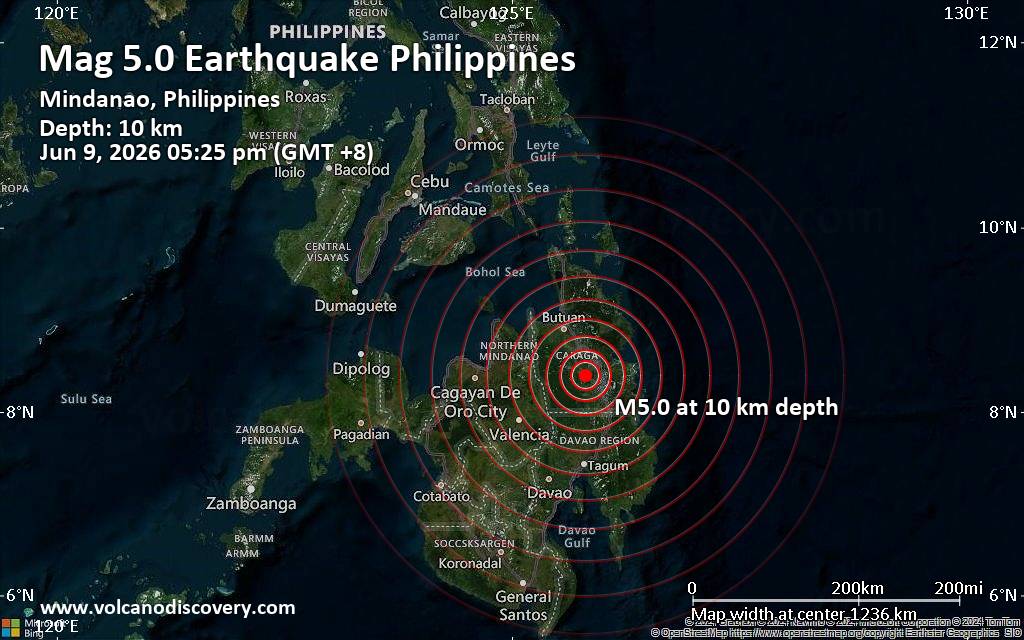
Significant earthquake of magnitude 5.0 just reported 22 km southwest of Prosperidad, Philippines
• Strong mag. 5.0 earthquake - Mindanao, Philippines, on Tuesday, Jun 9, 2026...
• World Earthquake Report for Tuesday, 9 June 2026
• Moderate magnitude 4.8 earthquake 110 km southwest of Tambolaka, Indonesia
• Moderate mag. 4.8 earthquake - South of Sumbawa, Indonesia, on Tuesday, Jun...
• Volcano earthquake report for Tuesday, 9 Jun 2026
|

#47528
Sat 06 Feb 2010 11:25:AM
|
Joined: Feb 2001
Posts: 678,976
Launch Director
|
OP

Launch Director
Joined: Feb 2001
Posts: 678,976 |
HUBBLE SPACE TELESCOPE - Continuing to Collect World Class Science
�
DAILY REPORT��� ��#5027
�
PERIOD COVERED: 5am February 4 - 5am February 5, 2010 (DOY 035/10:00z-036/10:00z)
�
OBSERVATIONS SCHEDULED
�
COS/NUV 11894
�
NUV Detector Dark Monitor
�
The purpose of this proposal is to measure the NUV detector dark rate by
taking long science exposures with no light on the detector. The
detector dark rate and spatial distribution of counts will be compared
to pre-launch and SMOV data in order to verify the nominal operation of
the detector. Variations of count rate as a function of orbital position
will be analyzed to find dependence of dark rate on proximity to the
SAA. Dependence of dark rate as function of time will also be tracked.
�
COS/NUV 11896
�
NUV Spectroscopic Sensitivity Monitoring
�
The purpose of this proposal is to monitor sensitivity of each NUV
grating mode to detect any changes due to contamination or other causes.
�
NIC3/WFC3/IR 11153
�
The Physical Nature and Age of Lyman Alpha Galaxies
�
In the simplest scenario, strong Lyman alpha emission from high redshift
galaxies would indicate that stellar populations younger than 10 Myrs
dominate the UV. This does not, however, constrain the stellar
populations older than 100 Myrs, which do not contribute to UV light.
Also, the Lyman alpha line can be boosted if the interstellar medium is
both clumpy and dusty. Different studies with small samples have reached
different conclusions about the presence of dust and old stellar
populations in Lyman alpha emitters. We propose HST-NICMOS and
Spitzer-IRAC photometry of 35 Lyman-alpha galaxies at redshift
4.5<z<6.5, in order to determine their spectral energy distribution
(SED) extending through rest-frame optical. This will allow us to
measure accurately (1) The total stellar mass in these objects,
including old stars which may have formed at redshifts (z > 8) not
easily probed by any other means. (2) The dust extinction in the rest-
frame UV, and therefore a correction to their present star-formation
rates. Taken together, these two quantities will yield the
star-formation histories of Lyman alpha galaxies, which form fully half
of the known galaxies at z=4-6. They will tell us whether these are
young or old galaxies by straddling the 4000A break. Data from NICMOS is
essential for these compact and faint (i=25- 26th magnitude AB) high
redshift galaxies, which are too faint for good near-IR photometry from
the ground.
�
STIS/CC/MA 11516
�
COS-GTO: Cold ISM
�
With the COS, we will be able to observe interstellar spectra in a new
regime, translucent clouds, for atomic, ionic, and molecular lines and
bands, and extinction curves. The COS will allow us to observe stars
with total visual extinctions up to 10 magnitudes, and the grain size
indicator Rv up to 4.5. In translucent clouds we expect to see the
transition from neutral and ionized carbon to mostly C I, and then from
there, we should expect to see carbon increasingly locked up in
molecular form, as CO. Other species are expected to make similar
transitions, so we should find detectable abundances of molecules such
as H2O, OH, CS, CH2, SiO, and others; also, lower ionization fractions
of the metallic elements - and higher depletions of those elements as
well. Given that we expect to find higher depletions, we should see an
altered grain size distribution, which may show up in the extinction
curves, probably as lower far-UV extinction than in diffuse clouds.
Finally, we will search for neutral PAHs in absorption, as diffuse bands
in the UV, paralleling the optical DIBs (which are thought by some
scientists to be formed by singly-ionized PAHs). In translucent clouds,
models show that the PAHs will be neutral, not in cationic form.
�
STIS/CC/MA 11608
�
How Far Does H2 Go: Constraining FUV Variability in the Gaseous Inner
Holes of Protoplanetary Disks
�
By studying the innermost, planet-forming regions of circumstellar disks
around low-mass pre-main sequence stars we can refine theories of planet
formation and develop timescales for the evolution of disks and their
planets. Spitzer infrared observations of T Tauri stars have given us an
unprecedented look at dust evolution in young objects, particularly the
transitional disks. However, despite this ground breaking progress in
studying the dust in young disks, the relationship between the dust and
gas properties in the inner disk remains essentially unknown. Using STIS
on HST, we propose to quantify the variability of H2 emission
originating within the inner holes of transitional disks and explore its
implications on dust distribution and planet formation.
�
STIS/CCD 11606
�
Dynamical Hypermassive Black Hole Masses
�
We will use STIS spectra to derive the masses of 5 hypermassive black
holes (HMBHs). From the observed scaling relations defined by less
massive spheroids, these objects are expected to reside at the nuclei of
host galaxies with stellar velocity dispersions greater than 320 km/s.
These 5 targets have confirmed regular gas distributions on the scales
of the black hole sphere of influence. It is essential that the sphere
of influence is resolved for accurate determinations of black hole mass
(0.1"). These scales cannot be effectively observed from the ground.
Only two HMBHs have had their masses modeled so far; it is impossible to
draw any general conclusions about the connections between HMBH mass and
their massive host galaxies. With these 5 targets we will determine
whether these HMBHs deviate from the scaling relations defined by less
massive spheroids. A larger sample will allow us to firmly anchor the
high mass end of the correlation between black hole mass and stellar
velocity dispersion, and other scaling relations. Therefore we are also
conducting a SNAPshot program with which we expect to detect a further
24 HMBH candidates for STIS observation in future cycles. At the
completion of this project we will have populated the high mass end of
the scaling relations with the sample sizes enjoyed by less massive
spheroids.
�
STIS/CCD 11844
�
CCD Dark Monitor Part 1
�
The purpose of this proposal is to monitor the darks for the STIS CCD.
�
STIS/CCD 11846
�
CCD Bias Monitor-Part 1
�
The purpose of this proposal is to monitor the bias in the 1x1, 1x2,
2x1, and 2x2 bin settings at gain=1, and 1x1 at gain = 4, to build up
high-S/N superbiases and track the evolution of hot columns.
�
STIS/CCD/MA1/MA2 11616
�
The Disks, Accretion, and Outflows (DAO) of T Tau Stars
�
Classical T Tauri stars undergo magnetospheric accretion, power
outflows, and possess the physical and chemical conditions in their
disks to give rise to planet formation. Existing high resolution FUV
spectra verify that this spectral region offers unique diagnostics of
these processes, which have the potential to significantly advance our
understanding of the interaction of a star and its accretion disk. To
date the limited results are intriguing, with dramatic differences in
kinematic structure in lines ranging from C IV to H2 among the few stars
that have been observed. We propose to use HST/COS to survey the disks,
outflows, and accretion (the DAO) of 26 CTTS and 6 WTTS in the FUV at
high spectral resolution. A survey of this size is essential to
establish how properties of accretion shocks, winds and disk irradiation
depend on disk accretion rate. Specifically, our goals are to (1)
measure the radiation from and understand the physical properties of the
gas very near the accretion shock as a function of accretion rate using
emission line profiles of hot lines (C IV, Si IV, N V, and He II); (2)
measure the opacity, velocity, and temperature at the base of the
outflow to constrain outflow models using wind absorption features; and
(3) characterize the radiation incident on disks and protoplanetary
atmospheres using H2 line and continuum emission and reconstructed
bright Ly-alpha line emission.
�
STIS/CCD/MA2 11568
�
A SNAPSHOT Survey of the Local Interstellar Medium: New NUV Observations
of Stars with Archived FUV Observations
�
We propose to obtain high-resolution STIS E230H SNAP observations of
MgII and FeII interstellar absorption lines toward stars within 100
parsecs that already have moderate or high-resolution far-UV (FUV),
900-1700 A, observations available in the MAST Archive. Fundamental
properties, such as temperature, turbulence, ionization, abundances, and
depletions of gas in the local interstellar medium (LISM) can be
measured by coupling such observations. Due to the wide spectral range
of STIS, observations to study nearby stars also contain important data
about the LISM embedded within their spectra. However, unlocking this
information from the intrinsically broad and often saturated FUV
absorption lines of low-mass ions, (DI, CII, NI, OI), requires first
understanding the kinematic structure of the gas along the line of
sight. This can be achieved with high resolution spectra of high-mass
ions, (FeII, MgII), which have narrow absorption lines, and can resolve
each individual velocity component (interstellar cloud). By obtaining
short (~10 minute) E230H observations of FeII and MgII, for stars that
already have moderate or high- resolution FUV spectra, we can increase
the sample of LISM measurements, and thereby expand our knowledge of the
physical properties of the gas in our galactic neighborhood. STIS is the
only instrument capable of obtaining the required high resolution data
now or in the foreseeable future.
�
STIS/MA1/MA2 11857
�
STIS Cycle 17 MAMA Dark Monitor
�
This proposal monitors the behavior of the dark current in each of the
MAMA detectors.
�
The basic monitor takes two 1380s ACCUM darks each week with each
detector. However, starting Oct 5, pairs are only included for weeks
that the LRP has external MAMA observations planned. The weekly pairs of
exposures for each detector are linked so that they are taken at
opposite ends of the same SAA free interval. This pairing of exposures
will make it easier to separate long and short term temporal variability
from temperature dependent changes.
�
For both detectors, additional blocks of exposures are taken once every
six months. These are groups of five 1314s FUV-MAMA Time-Tag darks or
five 3x315s NUV ACCUM darks distributed over a single SAA-free interval.
This will give more information on the brightness of the FUV MAMA dark
current as a function of the amount of time that the HV has been on, and
for the NUV MAMA will give a better measure of the short term
temperature dependence.
�
WFC3/UVIS 11905
�
WFC3 UVIS CCD Daily Monitor
�
The behavior of the WFC3 UVIS CCD will be monitored daily with a set of
full-frame, four-amp bias and dark frames. A smaller set of 2Kx4K
subarray biases are acquired at less frequent intervals throughout the
cycle to support subarray science observations. The internals from this
proposal, along with those from the anneal procedure (Proposal 11909),
will be used to generate the necessary superbias and superdark reference
files for the calibration pipeline (CDBS).
�
WFC3/UVIS/IR 11909
�
UVIS Hot Pixel Anneal
�
The on-orbit radiation environment of WFC3 will continually generate new
hot pixels. This proposal performs the procedure required for repairing
those hot pixels in the UVIS CCDs. During an anneal, the two-stage
thermo-electric cooler (TEC) is turned off and the four-stage TEC is
used as a heater to bring the UVIS CCDs up to ~20 deg. C. As a result of
the CCD warmup, a majority of the hot pixels will be fixed; previous
instruments such as WFPC2 and ACS have seen repair rates of about 80%.
Internal UVIS exposures are taken before and after each anneal, to allow
an assessment of the procedure's effectiveness in WFC3, provide a check
of bias, global dark current, and hot pixel levels, as well as support
hysteresis (bowtie) monitoring and CDBS reference file generation. One
IR dark is taken after each anneal, to provide a check of the IR
detector.
�
FLIGHT OPERATIONS SUMMARY:
�
Significant Spacecraft Anomalies: (The following are preliminary reports
of potential non-nominal performance that will be investigated.)
�
HSTARS: (None)
�
COMPLETED OPS REQUEST: (None)
�
COMPLETED OPS NOTES: (None)
�
������� ������ �������SCHEDULED� �SUCCESSFUL
FGS GSAcq �� �����������08������ ����� �08�����
FGS REAcq � ������������06������ ����� �06�����
OBAD with Maneuver 05������ ����� �05�����
�
SIGNIFICANT EVENTS: (None)
David Cottle
UBB Owner & Administrator
|
|



CMS The Best Conveyancing solicitors conveyancing quotes throughout the UK
For any webhosting enquiries please email webmaster@aus-city.com
|
|
Forums60
Topics780,264
Posts815,022
Members2,960
| |
Most Online22,463
May 9th, 2026
|
|
|