|
0 members (),
879
guests, and
24
robots. |
|
Key:
Admin,
Global Mod,
Mod
|
|
S |
M |
T |
W |
T |
F |
S |
|
|
1
|
2
|
3
|
4
|
5
|
6
|
|
7
|
8
|
9
|
10
|
11
|
12
|
13
|
|
14
|
15
|
16
|
17
|
18
|
19
|
20
|
|
21
|
22
|
23
|
24
|
25
|
26
|
27
|
|
28
|
29
|
30
|
|
|
|
|
|
There are no members with birthdays on this day. |
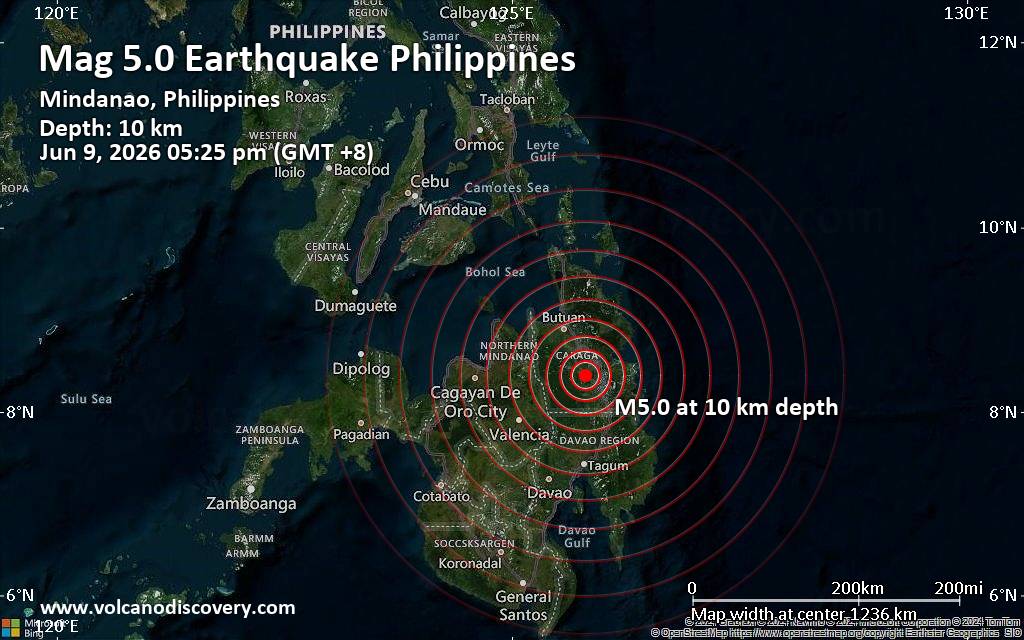
Significant earthquake of magnitude 5.0 just reported 22 km southwest of Prosperidad, Philippines
• Strong mag. 5.0 earthquake - Mindanao, Philippines, on Tuesday, Jun 9, 2026...
• World Earthquake Report for Tuesday, 9 June 2026
• Moderate magnitude 4.8 earthquake 110 km southwest of Tambolaka, Indonesia
• Moderate mag. 4.8 earthquake - South of Sumbawa, Indonesia, on Tuesday, Jun...
• Volcano earthquake report for Tuesday, 9 Jun 2026
|

#49458
Fri 30 Jul 2010 02:42:PM
|
Joined: Feb 2001
Posts: 678,976
Launch Director
|
OP

Launch Director
Joined: Feb 2001
Posts: 678,976 |
HUBBLE SPACE TELESCOPE - Continuing to Collect World Class Science
DAILY REPORT #5149
PERIOD COVERED: 5am July 29 - 5am July 30, 2010 (DOY 210/09:00z-211/09:00z)
FLIGHT OPERATIONS SUMMARY:
Significant Spacecraft Anomalies: (The following are preliminary reports
of potential non-nominal performance that will be investigated.)
HSTARS: (None)
COMPLETED OPS REQUEST: (None)
COMPLETED OPS NOTES: (None)
SCHEDULED SUCCESSFUL
FGS GSAcq 9 9
FGS REAcq 6 6
OBAD with Maneuver 6 6
SIGNIFICANT EVENTS: (None)
OBSERVATIONS SCHEDULED:
ACS/WFC3 11593
Dynamical Masses of the Coolest Brown Dwarfs
T dwarfs are excellent laboratories to study the evolution and the
atmospheric physics of both brown dwarfs and extrasolar planets. To
date, only a single T dwarf binary has a dynamical mass determination,
and more are sorely needed. The prospects of measuring more dynamical
masses over the next decade are limited to 6 known short-period T dwarf
binaries. We propose here to obtain Long-Term HST/ACS monitoring for the
3 of the 6 binaries which cannot be resolved with AO from the ground.
Upon completion, our program will substantially increase the number of T
dwarf dynamical mass measurements and thereby provide key benchmarks for
testing theoretical models of ultracool objects.
COS/NUV/FUV 12086
Generation of 1-D Fixed Pattern Templates
Tests have shown that application of a 1-D fixed pattern template to a
COS spectrum can reduce the fixed pattern noise in G130M or G160M
spectra to an equivalent S/N of about 30/1. For this to be occur, the
template must be derived from data for the same grating and nearly the
same central wavelength as the observation. This is because each grating
has a different cross dispersion profile, and different central
wavelengths fall at different cross dispersion detector locations. As a
result, spectra obtained at each grating and central wavelength setting
are derived from different regions of the detectors -- each with their
own, unique detector features and grid wire shadows.
STIS/CC 11845
CCD Dark Monitor Part 2
Monitor the darks for the STIS CCD.
STIS/CC 11847
CCD Bias Monitor-Part 2
Monitor the bias in the 1x1, 1x2, 2x1, and 2x2 bin settings at gain=1,
and 1x1 at gain = 4, to build up high-S/N superbiases and track the
evolution of hot columns.
STS/MA/CC 12085
STIS/E230M Observations of HD6655 for Calibration of COS/G230L
This program observes HD 6655, a radial velocity target that is used for
calibrating COS/G230L. The objective of this program is to get STIS data
of this target, with the E230M grating, and then use this observations
to derive the offsets between the internal and external COS/G230L
wavelength scales.
WFC3/ACS/IR 11677
Is 47 Tuc Young? Measuring its White Dwarf Cooling Age and Completing a
Hubble Legacy
With this proposal we will firmly establish the age of 47 Tuc from its
cooling white dwarfs. 47 Tuc is the nearest and least reddened of the
metal-rich disk globular clusters. It is also the template used for
studying the giant branches of nearby resolved galaxies. In addition,
the age sensitive magnitude spread between the main sequence turnoff and
horizontal branch is identical for 47 Tuc, two bulge globular clusters
and the bulge field population. A precise relative age constraint for 47
Tuc, compared to the halo clusters M4 and NGC 6397, both of which we
recently dated via white dwarf cooling, would therefore constrain when
the bulge formed relative to the old halo globular clusters. Of
particular interest is that with the higher quality ACS data on NGC
6397, we are now capable with the technique of white dwarf cooling of
determining ages to an accuracy of +/-0.4 Gyrs at the 95% confidence
level. Ages derived from the cluster turnoff are not currently capable
of reaching this precision. The important role that 47 Tuc plays in
galaxy formation studies, and as the metal-rich template for the
globular clusters, makes the case for a white dwarf cooling age for this
metal-rich cluster compelling.
Several recent analyses have suggested that 47 Tuc is more than 2 Gyrs
younger than the Galactic halo. Others have suggested an age similar to
that of the most metal poor globular clusters. The current situation is
clearly uncertain and obviously a new approach to age dating this
important cluster is required.
With the observations of 47 Tuc, this project will complete a legacy for
HST. It will be the third globular cluster observed for white dwarf
cooling; the three covering almost the full metallicity range of the
cluster system. Unless JWST has its proposed bluer filters (700 and 900
nm) this science will not be possible perhaps for decades until a large
optical telescope is again in space. Ages for globular clusters from the
main sequence turnoff are less precise than those from white dwarf
cooling making the science with the current proposal truly urgent.
WFC3/IR/S/C 11929
IR Dark Current Monitor
Analyses of ground test data showed that dark current signals are more
reliably removed from science data using darks taken with the same
exposure sequences as the science data, than with a single dark current
image scaled by desired exposure time. Therefore, dark current images
must be collected using all sample sequences that will be used in
science observations. These observations will be used to monitor changes
in the dark current of the WFC3-IR channel on a day-to-day basis, and to
build calibration dark current ramps for each of the sample sequences to
be used by Gos in Cycle 17. For each sample sequence/array size
combination, a median ramp will be created and delivered to the
calibration database system (CDBS).
WFC3/UV 11554
Luminosity Profiles of Extremely Massive Clusters in NGC 7252
The galactic merger remnant NGC 7252 represents one of the most extreme
post-starburst environments in the local universe. During the disk-disk
merger (~400 Myr ago) this galaxy produced the largest young massive
star cluster population known, including two clusters above 10^7 Msun, a
factor of 100 more massive than typical globular clusters in the Milky
Way. We propose ACS-HRC observations of 3 fields in NGC 7252 in order to
explore the detailed properties, i.e. luminosity profiles, of these
massive star clusters. These observations will be able to test massive
cluster formation mechanisms (e.g. the cluster merger scenario) as well
as the possible tidal erosion and truncation of the outer regions of the
clusters by the galactic tidal field. These observations will compliment
our large on-going study using archival HST data, of star cluster
profiles outside the Local Group. The cluster population in NGC 7252
will extend our sample in cluster mass by an order of magnitude.
WFC3/UVIS 11905
WFC3 UVIS CCD Daily Monitor
The behavior of the WFC3 UVIS CCD will be monitored daily with a set of
full-frame, four-amp bias and dark frames. A smaller set of 2Kx4K
subarray biases are acquired at less frequent intervals throughout the
cycle to support subarray science observations. The internals from this
proposal, along with those from the anneal procedure (Proposal 11909),
will be used to generate the necessary superbias and superdark reference
files for the calibration pipeline (CDBS).
WFC3/UVIS 11908
Cycle 17: UVIS Bowtie Monitor
Ground testing revealed an intermittent hysteresis type effect in the
UVIS detector (both CCDs) at the level of ~1%, lasting hours to days.
Initially found via an unexpected bowtie-shaped feature in flatfield
ratios, subsequent lab tests on similar e2v devices have since shown
that it is also present as simply an overall offset across the entire
CCD, i.e., a QE offset without any discernable pattern. These lab tests
have further revealed that overexposing the detector to count levels
several times full well fills the traps and effectively neutralizes the
bowtie. Each visit in this proposal acquires a set of three 3x3 binned
internal flatfields: the first unsaturated image will be used to detect
any bowtie, the second, highly exposed image will neutralize the bowtie
if it is present, and the final image will allow for verification that
the bowtie is gone.
WFC3/UVIS/IR 11644
A Dynamical-Compositional Survey of the Kuiper Belt: A New Window Into
the Formation of the Outer Solar System
The eight planets overwhelmingly dominate the solar system by mass, but
their small numbers, coupled with their stochastic pasts, make it
impossible to construct a unique formation history from the dynamical or
compositional characteristics of them alone. In contrast, the huge
numbers of small bodies scattered throughout and even beyond the
planets, while insignificant by mass, provide an almost unlimited number
of probes of the statistical conditions, history, and interactions in
the solar system. To date, attempts to understand the formation and
evolution of the Kuiper Belt have largely been dynamical simulations
where a hypothesized starting condition is evolved under the
gravitational influence of the early giant planets and an attempt is
made to reproduce the current observed populations. With little
compositional information known for the real Kuiper Belt, the test
particles in the simulation are free to have any formation location and
history as long as they end at the correct point. Allowing compositional
information to guide and constrain the formation, thermal, and
collisional histories of these objects would add an entire new dimension
to our understanding of the evolution of the outer solar system. While
ground based compositional studies have hit their flux limits already
with only a few objects sampled, we propose to exploit the new
capabilities of WFC3 to perform the first ever large-scale
dynamical-compositional study of Kuiper Belt Objects (KBOs) and their
progeny to study the chemical, dynamical, and collisional history of the
region of the giant planets. The sensitivity of the WFC3 observations
will allow us to go up to two magnitudes deeper than our ground based
studies, allowing us the capability of optimally selecting a target list
for a large survey rather than simply taking the few objects that can be
measured, as we have had to do to date. We have carefully constructed a
sample of 120 objects which provides both overall breadth, for a general
understanding of these objects, plus a large enough number of objects in
the individual dynamical subclass to allow detailed comparison between
and within these groups. These objects will likely define the core
Kuiper Belt compositional sample for years to come. While we have many
specific results anticipated to come from this survey, as with any
project where the field is rich, our current knowledge level is low, and
a new instrument suddenly appears which can exploit vastly larger
segments of the population, the potential for discovery -- both
anticipated and not -- is extraordinary.
David Cottle
UBB Owner & Administrator
|
|



CMS The Best Conveyancing solicitors conveyancing quotes throughout the UK
For any webhosting enquiries please email webmaster@aus-city.com
|
|
Forums60
Topics780,264
Posts815,022
Members2,960
| |
Most Online22,463
May 9th, 2026
|
|
|