|
0 members (),
732
guests, and
23
robots. |
|
Key:
Admin,
Global Mod,
Mod
|
|
S |
M |
T |
W |
T |
F |
S |
|
|
1
|
2
|
3
|
4
|
5
|
6
|
|
7
|
8
|
9
|
10
|
11
|
12
|
13
|
|
14
|
15
|
16
|
17
|
18
|
19
|
20
|
|
21
|
22
|
23
|
24
|
25
|
26
|
27
|
|
28
|
29
|
30
|
|
|
|
|
|
There are no members with birthdays on this day. |
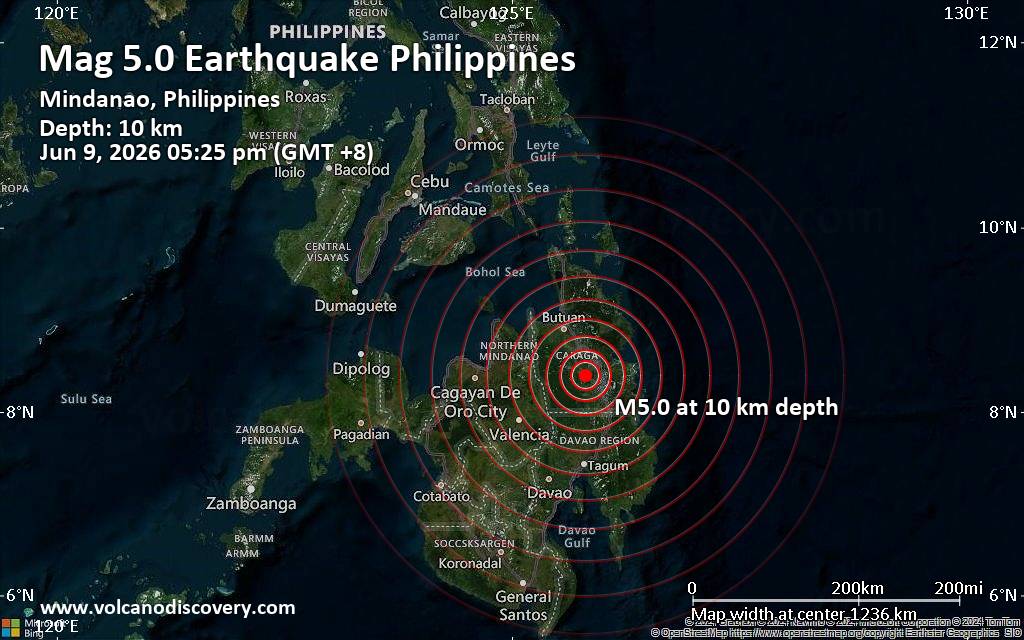
Significant earthquake of magnitude 5.0 just reported 22 km southwest of Prosperidad, Philippines
• Strong mag. 5.0 earthquake - Mindanao, Philippines, on Tuesday, Jun 9, 2026...
• World Earthquake Report for Tuesday, 9 June 2026
• Moderate magnitude 4.8 earthquake 110 km southwest of Tambolaka, Indonesia
• Moderate mag. 4.8 earthquake - South of Sumbawa, Indonesia, on Tuesday, Jun...
• Volcano earthquake report for Tuesday, 9 Jun 2026
|

#49817
Wed 08 Sep 2010 03:32:PM
|
Joined: Feb 2001
Posts: 678,976
Launch Director
|
OP

Launch Director
Joined: Feb 2001
Posts: 678,976 |
HUBBLE SPACE TELESCOPE - Continuing to Collect World Class Science
DAILY REPORT #5176
PERIOD COVERED: 5am September 7 - 5am September 8, 2010 (DOY 250/09:00z-251/09:00z)
FLIGHT OPERATIONS SUMMARY:
Significant Spacecraft Anomalies: (The following are preliminary reports
of potential non-nominal performance that will be investigated.)
HSTARS: (None)
COMPLETED OPS REQUEST: (None)
COMPLETED OPS NOTES: (None)
SCHEDULED SUCCESSFUL
FGS GSAcq 04 04
FGS REAcq 11 11
OBAD with Maneuver 04 04
SIGNIFICANT EVENTS: (None)
OBSERVATIONS SCHEDULED:
ACS/WFC 12210
SLACS for the Masses: Extending Strong Lensing to Lower Masses and
Smaller Radii
Strong gravitational lensing provides the most accurate possible
measurement of mass in the central regions of early-type galaxies
(ETGs). We propose to continue the highly productive Sloan Lens ACS
(SLACS) Survey for strong gravitational lens galaxies by observing a
substantial fraction of 135 new ETG gravitational-lens candidates with
HST-ACS WFC F814W Snapshot imaging. The proposed target sample has been
selected from the seventh and final data release of the Sloan Digital
Sky Survey, and is designed to complement the distribution of previously
confirmed SLACS lenses in lens-galaxy mass and in the ratio of Einstein
radius to optical half-light radius. The observations we propose will
lead to a combined SLACS sample covering nearly two decades in mass,
with dense mapping of enclosed mass as a function of radius out to the
half-light radius and beyond. With this longer mass baseline, we will
extend our lensing and dynamical analysis of the mass structure and
scaling relations of ETGs to galaxies of significantly lower mass, and
directly test for a transition in structural and dark-matter content
trends at intermediate galaxy mass. The broader mass coverage will also
enable us to make a direct connection to the structure of well-studied
nearby ETGs as deduced from dynamical modeling of their line-of-sight
velocity distribution fields. Finally, the combined sample will allow a
more conclusive test of the current SLACS result that the intrinsic
scatter in ETG mass-density structure is not significantly correlated
with any other galaxy observables. The final SLACS sample at the
conclusion of this program will comprise approximately 130 lenses with
known foreground and background redshifts, and is likely to be the
largest confirmed sample of strong-lens galaxies for many years to come.
COS/FUV 11686
The Cosmological Impact of AGN Outflows: Measuring Absolute Abundances
and Kinetic Luminosities
AGN outflows are increasingly invoked as a major contributor to the
formation and evolution of supermassive black holes, their host
galaxies, the surrounding IGM, and cluster cooling flows. Our HST/COS
proposal will determine reliable absolute chemical abundances in six AGN
outflows, which influences several of the processes mentioned above. To
date there is only one such determination, done by our team on Mrk 279
using 16 HST/STIS orbits and 100 ksec of FUSE time. The advent of COS
and its high sensitivity allows us to choose among fainter objects at
redshifts high enough to preclude the need for FUSE. This will allow us
to determine the absolute abundances for six AGN (all fainter than Mrk
279) using only 40 HST COS orbits. This will put abundances studies in
AGN on a firm footing, an elusive goal for the past four decades. In
addition, prior FUSE observations of four of these targets indicate that
it is probable that the COS observations will detect troughs from
excited levels of C III. These will allow us to measure the distances of
the outflows and thereby determine their kinetic luminosity, a major
goal in AGN feedback research.
11686( 7) - 25-Sep-2009 13:44:14 - [ 2]
We will use our state of the art column density extraction methods and
velocity-dependent photoionization models to determine the abundances
and kinetic luminosity. Previous AGN outflow projects suffered from the
constraints of deciding what science we could do using ONE of the
handful of bright targets that were observable. With COS we can choose
the best sample for our experiment. As an added
bonus, most of the spectral range of our targets has not been observed
previously, greatly increasing the discovery phase space.
COS/NUV/ACS/WFC/FUV 11658
Probing the Outer Regions of M31 with QSO Absorption Lines
We propose HST-COS spectroscopy of 10 quasars behind M31. Absorption
lines due to MgII, FeII, CIV, and a variety of other lines will be
searched for and measured. Six quasars lie between 1 and 4.2 Holmberg
radii near the major axis on the southwest side, where confusion with
Milky Way gas is minimized. Two lie even farther out on the southwest
side of the major axis. One lies within 1 Holmberg radius. Two of the 10
pass through M31's high velocity clouds seen in a detailed 21 cm
emission map. Exposure time estimates were based on SDSS magnitudes and
available GALEX magnitudes. Thus, using the most well-studied external
spiral galaxy in the sky, our observations will permit us to check,
better than ever before, the standard picture that quasar metal-line
absorption systems such as MgII and CIV arise in an extended gaseous
halo/disk of a galaxy well beyond its observable optical radius. The
observations will yield insights into the nature of the gas and its
connection to the very extended stellar components of M31 that have
recently been studied. Notably the observations have the potential of
extending M31's rotation curve to very large galactocentric distances,
thereby placing new constraints on M31's dark matter halo.
Finally, we also request that the coordinated parallel orbits be
allocated to this program so that we may image the resolved stellar
content of M31's halo and outer disk.
COS/NUV/FUV 11741
Probing Warm-Hot Intergalactic Gas at 0.5 < z < 1.3 with a Blind Survey
for O VI, Ne VIII, Mg X, and Si XII Absorption Systems
Currently we can only account for half of the baryons (or less) expected
to be found in the nearby universe based on D/H and CMB observations.
This "missing baryons problem" is one of the highest-priority challenges
in observational extragalatic astronomy. Cosmological simulations
suggest that the baryons are hidden in low-density, shock-heated
intergalactic gas in the log T = 5 - 7 range, but intensive UV and X-ray
surveys using O VI, O VII, and O VIII absorption lines have not yet
confirmed this prediction. We propose to use COS to carry out a
sensitive survey for Ne VIII and Mg X absorption in the spectra of nine
QSOs at z(QSO) > 0.89. For the three highest-redshift QSOs, we will also
search for Si XII. This survey will provide more robust constraints on
the quantity of baryons in warm-hot intergalactic gas at 0.5 < z < 1.3,
and the data will provide rich constraints on the metal enrichment,
physical conditions, and nature of a wide variety of QSO absorbers in
addition to the warm-hot systems. By comparing the results to other
surveys at lower redshifts (with STIS, FUSE, and from the COS GTO
programs), the project will also enable the first study of how these
absorbers evolve with redshift at z < 1. By combining the program with
follow-up galaxy redshift surveys, we will also push the study of
galaxy-absorber relationships to higher redshifts, with an emphasis on
the distribution of the WHIM with respect to the large-scale matter
distribution of the universe.
STIS/CCD 11845
CCD Dark Monitor Part 2
Monitor the darks for the STIS CCD.
STIS/CCD 11847
CCD Bias Monitor-Part 2
Monitor the bias in the 1x1, 1x2, 2x1, and 2x2 bin settings at gain=1,
and 1x1 at gain = 4, to build up high-S/N superbiases and track the
evolution of hot columns.
STIS/CCD 11849
STIS CCD Hot Pixel Annealing
This purpose of this activity is to repair radiation induced hot pixel
damage to the STIS CCD by warming the CCD to the ambient instrument
temperature and annealing radiation-damaged pixels.
Radiation damage creates hot pixels in the STIS CCD Detector. Many of
these hot pixels can be repaired by warming the CCD from its normal
operating temperature near -83 deg. C to the ambient instrument
temperature (~ +5 deg. C) for several hours. The number of hot pixels
repaired is a function of annealing temperature. The effectiveness of
the CCD hot pixel annealing process is assessed by measuring the dark
current behavior before and after annealing and by searching for any
window contamination effects.
STIS/MA2 11862
MAMA NUV Flats
This program will obtain NUV-MAMA observations of the STIS internal
Deuterium lamp to construct an NUV flat applicable to all NUV modes.
WFC3/IR 11696
Infrared Survey of Star Formation Across Cosmic Time
We propose to use the unique power of WFC3 slitless spectroscopy to
measure the evolution of cosmic star formation from the end of the
reionization epoch at z>6 to the close of the galaxy-building era at
z~0.3.Pure parallel observations with the grisms have proven to be
efficient for identifying line emission from galaxies across a broad
range of redshifts. The G102 grism on WFC3 was designed to extend this
capability to search for Ly-alpha emission from the first galaxies.
Using up to 250 orbits of pure parallel WFC3 spectroscopy, we will
observe about 40 deep (4-5 orbit) fields with the combination of G102
and G141, and about 20 shallow (2-3 orbit) fields with G141 alone.
Our primary science goals at the highest redshifts are: (1) Detect Lya
in ~100 galaxies with z>5.6 and measure the evolution of the Lya
luminosity function, independent of of cosmic variance; 2) Determine the
connection between emission line selected and continuum-break selected
galaxies at these high redshifts, and 3) Search for the proposed
signature of neutral hydrogen absorption at re-ionization. At
intermediate redshifts we will (4) Detect more than 1000 galaxies in
Halpha at 0.5<z<1.8 to measure the evolution of the extinction-corrected
star formation density across the peak epoch of star formation. This is
over an order-of-magnitude improvement in the current statistics, from
the NICMOS Parallel grism survey. (5) Trace ``cosmic downsizing" from
0.5<z<2.2; and (6) Estimate the evolution in reddening and metallicty in
star-forming galaxies and measure the evolution of the Seyfert
population. For hundreds of spectra we will be able to measure one or
even two line pair ratios -- in particular, the Balmer decrement and
[OII]/[OIII] are sensitive to gas reddening and metallicity. As a bonus,
the G102 grism offers the possibility of detecting Lya emission at
z=7-8.8.
To identify single-line Lya emitters, we will exploit the wide
0.8--1.9um wavelength coverage of the combined G102+G141 spectra. All
[OII] and [OIII] interlopers detected in G102 will be reliably separated
from true LAEs by the detection of at least one strong line in the G141
spectrum, without the need for any ancillary data. We waive all
proprietary rights to our data and will make high-level data products
available through the ST/ECF.
WFC3/IR/ACS/WFC 11663
Formation and Evolution of Massive Galaxies in the Richest Environments
at 1.5 < z < 2.0
We propose to image seven 1.5<z<2 clusters and groups from the IRAC
Shallow Cluster Survey with WFC3 and ACS in order to study the formation
and evolution of massive galaxies in the richest environments in the
Universe in this important redshift range. We will measure the evolution
of the sizes and morphologies of massive cluster galaxies, as a function
of redshift, richness, radius and local density. In combination with
allocated Keck spectroscopy, we will directly measure the dry merger
fraction in these clusters, as well as the evolution of Brightest
Cluster Galaxies (BCGs) over this redshift range where clear model
predictions can be confronted. Finally we will measure both the epoch of
formation of the stellar populations and the assembly history of that
stellar mass, the two key parameters in the modern galaxy formation
paradigm.
WFC3/IR/S/C 11929
IR Dark Current Monitor
Analyses of ground test data showed that dark current signals are more
reliably removed from science data using darks taken with the same
exposure sequences as the science data, than with a single dark current
image scaled by desired exposure time. Therefore, dark current images
must be collected using all sample sequences that will be used in
science observations. These observations will be used to monitor changes
in the dark current of the WFC3-IR channel on a day-to-day basis, and to
build calibration dark current ramps for each of the sample sequences to
be used by Gos in Cycle 17. For each sample sequence/array size
combination, a median ramp will be created and delivered to the
calibration database system (CDBS).
WFC3/UV/IR 12234
Differentiation in the Kuiper belt: a Search for Silicates on Icy
Bodies.
We currently have a large on-going program (Go Program 11644, 120
orbits) to exploit the superb stability and photometric characteristics
of HST and the broad range in wavelength coverage of the WFC3 to make
broad-band vis/IR spectral observations of a large sample of Kuiper belt
objects. Though the survey is currently only ~50% complete, the quality
and unprecedented signal-to-noise of these observations has revealed the
existence of a previously undiscovered spectral variability not
explainable within our current understanding of these objects.
A possible explanation for this variability is that with this faint set
of Kuiper belt objects, we are beginning to see the difference between
larger differentiated objects and smaller non-differentiated objects.
Its seems that the small and likely undifferentiated objects are
exhibiting silicate features that affect our photometry - features not
exhibited by the icy mantles of larger icy bodies.
We propose a small add-on survey to dramatically increase the scientific
results of our large program. The proposed observations will use the
proven capabilities of WFC3 to make broad and narrow-band photometric
observations to detect spectral features in the 1.0-1.3 micron range of
a small subset of our sources. The 13 targets have been carefully
selected to cover the range of spectral variability detected in our
large program as well as sample the entire dynamical range and physical
sizes of these targets. These observations will allow the identification
of undifferentiated Kuiper belt objects by detection of their silicate
features. As a probe for differentiation, these observations could
constrain the natal locations of different Kuiper belt classes, a
constraint currently unavailable to formation models. This small set of
observations will allow the calibration of the spectral variability seen
in our large program, and drastically enhance the scientific output of
our full Cycle 17 sample.
WFC3/UVIS 11905
WFC3 UVIS CCD Daily Monitor
The behavior of the WFC3 UVIS CCD will be monitored daily with a set of
full-frame, four-amp bias and dark frames. A smaller set of 2Kx4K
subarray biases are acquired at less frequent intervals throughout the
cycle to support subarray science observations. The internals from this
proposal, along with those from the anneal procedure (Proposal 11909),
will be used to generate the necessary superbias and superdark reference
files for the calibration pipeline (CDBS).
WFC3/UVIS 11908
Cycle 17: UVIS Bowtie Monitor
Ground testing revealed an intermittent hysteresis type effect in the
UVIS detector (both CCDs) at the level of ~1%, lasting hours to days.
Initially found via an unexpected bowtie- shaped feature in flatfield
ratios, subsequent lab tests on similar e2v devices have since shown
that it is also present as simply an overall offset across the entire
CCD, i.e., a QE offset without any discernable pattern. These lab tests
have further revealed that overexposing the detector to count levels
several times full well fills the traps and effectively neutralizes the
bowtie. Each visit in this proposal acquires a set of three 3x3 binned
internal flatfields: the first unsaturated image will be used to detect
any bowtie, the second, highly exposed image will neutralize the bowtie
if it is present, and the final image will allow for verification that
the bowtie is gone.
WFC3/UVIS/IR 11644
A Dynamical-Compositional Survey of the Kuiper Belt: A New Window Into
the Formation of the Outer Solar System
The eight planets overwhelmingly dominate the solar system by mass, but
their small numbers, coupled with their stochastic pasts, make it
impossible to construct a unique formation history from the dynamical or
compositional characteristics of them alone. In contrast, the huge
numbers of small bodies scattered throughout and even beyond the
planets, while insignificant by mass, provide an almost unlimited number
of probes of the statistical conditions, history, and interactions in
the solar system. To date, attempts to understand the formation and
evolution of the Kuiper Belt have largely been dynamical simulations
where a hypothesized starting condition is evolved under the
gravitational influence of the early giant planets and an attempt is
made to reproduce the current observed populations. With little
compositional information known for the real Kuiper Belt, the test
particles in the simulation are free to have any formation location and
history as long as they end at the correct point. Allowing compositional
information to guide and constrain the formation, thermal, and
collisional histories of these objects would add an entire new dimension
to our understanding of the evolution of the outer solar system. While
ground based compositional studies have hit their flux limits already
with only a few objects sampled, we propose to exploit the new
capabilities of WFC3 to perform the first ever large-scale
dynamical-compositional study of Kuiper Belt Objects (KBOs) and their
progeny to study the chemical, dynamical, and collisional history of the
region of the giant planets. The sensitivity of the WFC3 observations
will allow us to go up to two magnitudes deeper than our ground based
studies, allowing us the capability of optimally selecting a target list
for a large survey rather than simply taking the few objects that can be
measured, as we have had to do to date. We have carefully constructed a
sample of 120 objects which provides both overall breadth, for a general
understanding of these objects, plus a large enough number of objects in
the individual dynamical subclass to allow detailed comparison between
and within these groups. These objects will likely define the core
Kuiper Belt compositional sample for years to come. While we have many
specific results anticipated to come from this survey, as with any
project where the field is rich, our current knowledge level is low, and
a new instrument suddenly appears which can exploit vastly larger
segments of the population, the potential for discovery -- both
anticipated and not -- is extraordinary.
David Cottle
UBB Owner & Administrator
|
|



CMS The Best Conveyancing solicitors conveyancing quotes throughout the UK
For any webhosting enquiries please email webmaster@aus-city.com
|
|
Forums60
Topics780,140
Posts814,898
Members2,960
| |
Most Online22,463
May 9th, 2026
|
|
|