|
1 members (Alisa),
5,012
guests, and
23
robots. |
|
Key:
Admin,
Global Mod,
Mod
|
|
S |
M |
T |
W |
T |
F |
S |
|
|
|
|
1
|
2
|
3
|
4
|
|
5
|
6
|
7
|
8
|
9
|
10
|
11
|
|
12
|
13
|
14
|
15
|
16
|
17
|
18
|
|
19
|
20
|
21
|
22
|
23
|
24
|
25
|
|
26
|
27
|
28
|
29
|
30
|
31
|
|
|
There are no members with birthdays on this day. |
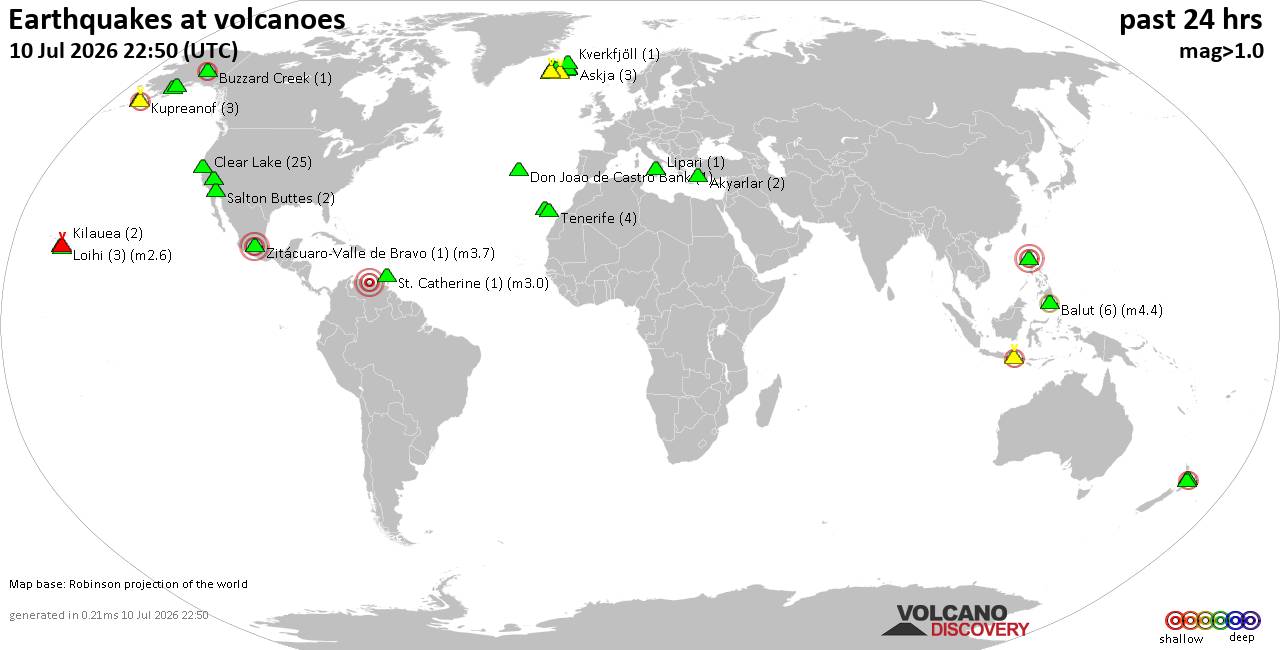
Volcano earthquake report for Friday, 10 Jul 2026
• Moderate mag. 4.2 earthquake - 133 km northwest of Ternate, Kota Ternate, N...
• World Earthquake Report for Friday, 10 July 2026
• Moderate mag. 4.6 earthquake - 17 km southwest of Comalapa, Estado de Chiap...
• Moderate mag. 4.1 earthquake - Olyutorskiy Rayon, 47 km northwest of Tilich...
• Moderate mag. 4.0 earthquake - Hawke's Bay, New Zealand, on Saturday, Jul 1...
|

#65255
Fri 29 Jul 2011 04:00:AM
|
Joined: Feb 2001
Posts: 678,976
Launch Director
|
OP

Launch Director
Joined: Feb 2001
Posts: 678,976 |
This oblique view of the lower mound in Gale Crater shows layers of rock that preserve a record of environments on Mars. Here, orbiting instruments have detected signatures of both clay minerals and sulfate salts, with more clay minerals apparent in the foreground of this image and fewer in higher layers. This change in mineralogy may reflect a change in the ancient environment in Gale Crater. Mars scientists have several important hypotheses about how these minerals may reflect changes in the amount of water on the surface of Mars. The Mars Science Laboratory rover, Curiosity, will use its full suite of instruments to study these minerals to provide insights into these ancient Martian environments. These rocks are also a prime target in the search for organic molecules since these past environments may have been habitable -- able to support microbial life. Scientists will study how organic molecules, if present, vary with mineralogical variations in the layers to understand how they formed and what influences their preservation. The smaller hills in this view may provide clues to the modern water cycle on Mars. They contain sulfate salts that have water in them, and as temperatures warm into summer, some of that water may be released to the atmosphere. As temperatures cool, they may absorb water from the atmosphere. The Mars Science Laboratory team will investigate how water is exchanged between these minerals and the atmosphere, helping us understand Mars' modern climate. The hills are particularly useful for this investigation because different parts of the hills are exposed to different amounts of sunlight and thus to different temperatures. Curiosity will be able to compare the water in these contrasting areas as part of its investigations. This three-dimensional perspective view was created using visible-light imaging by the High Resolution Imaging Science Experiment camera on NASA's Mars Reconnaissance Orbiter and the High Resolution Stereo Camera on the European Space Agency's Mars Express orbiter. Three-dimensional information was derived by stereo analysis of image pairs. The vertical dimension is not exaggerated. Color information is derived from color imaging of portions of the scene by the High Resolution Imaging Science Experiment camera. The Mars Science Laboratory spacecraft is being prepared for launch on Nov. 25, 2011. In a prime mission lasting one Martian year -- nearly two Earth years -- after landing, researchers will use the rover's tools to study whether the landing region has had environmental conditions favorable for supporting microbial life and for preserving clues about whether life existed. Image Credit: NASA/JPL-Caltech/University of Arizona Source: Oblique view of the lower mound in Mars' Gale Crater
David Cottle
UBB Owner & Administrator
|
|



CMS The Best Conveyancing solicitors conveyancing quotes throughout the UK
For any webhosting enquiries please email webmaster@aus-city.com
|
|
Forums60
Topics789,850
Posts824,628
Members2,960
| |
Most Online102,106
Jul 10th, 2026
|
|
|