|
1 members (Alisa),
1,620
guests, and
22
robots. |
|
Key:
Admin,
Global Mod,
Mod
|
|
S |
M |
T |
W |
T |
F |
S |
|
|
1
|
2
|
3
|
4
|
5
|
6
|
|
7
|
8
|
9
|
10
|
11
|
12
|
13
|
|
14
|
15
|
16
|
17
|
18
|
19
|
20
|
|
21
|
22
|
23
|
24
|
25
|
26
|
27
|
|
28
|
29
|
30
|
|
|
|
|
|
There are no members with birthdays on this day. |
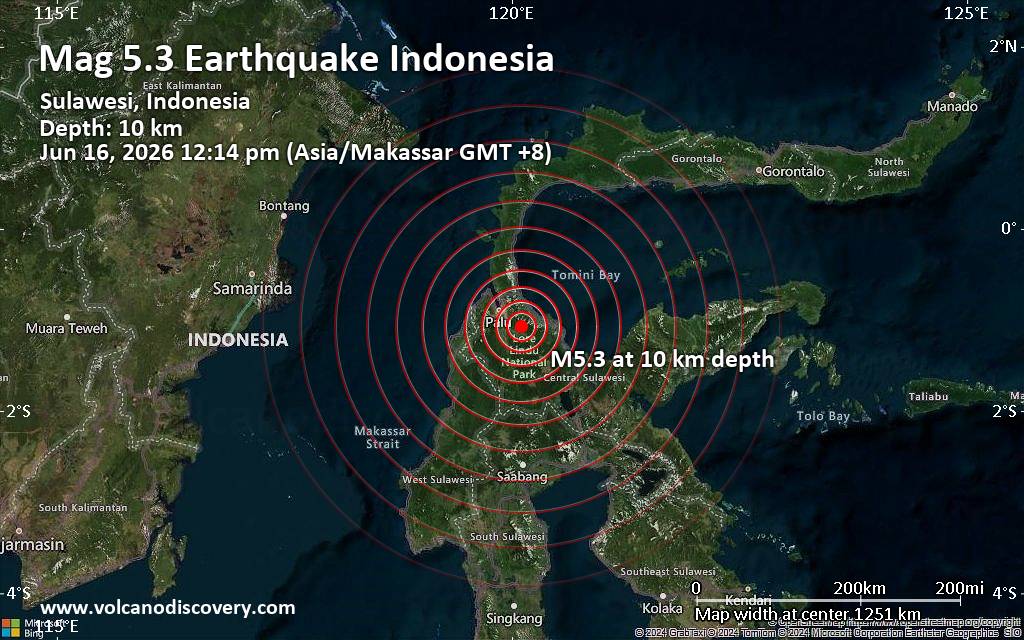
Magnitude 5.3 earthquake strikes near Palu, Kota Palu, Sulawesi Tengah, Indonesia
• Strong mag. 5.2 earthquake - Kabupaten Sigi, 25 km southeast of Palu, Kota ...
• Strong mag. 5.2 earthquake - Kabupaten Sigi, 25 km southeast of Palu, Kota ...
• Volcano earthquake report for Tuesday, 16 Jun 2026
• Volcano earthquake report for Tuesday, 16 Jun 2026
|

#714560
Thu 07 Mar 2024 05:46:AM
|
Joined: Feb 2001
Posts: 678,976
Launch Director
|
OP

Launch Director
Joined: Feb 2001
Posts: 678,976 |
SPC Mar 7, 2024 0600 UTC Day 1 Convective OutlookSPC 1200Z Day 1 Outlook 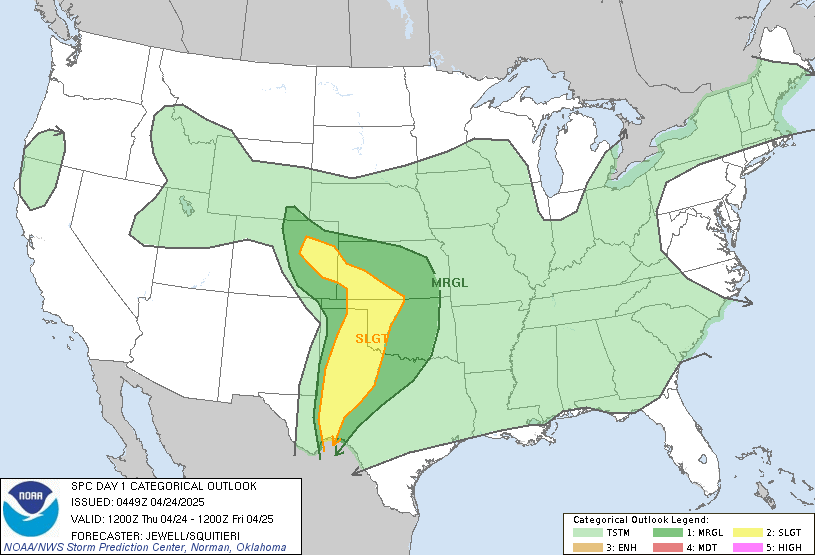
Day 1 Convective Outlook
NWS Storm Prediction Center Norman OK
1143 PM CST Wed Mar 06 2024

Valid 071200Z - 081200Z

...THERE IS A SLIGHT RISK OF SEVERE THUNDERSTORMS THIS AFTERNOON
INTO TONIGHT ACROSS PARTS OF THE EASTERN TEXAS PANHANDLE AND
NORTHWESTERN OKLAHOMA INTO SOUTHERN KANSAS...AND ACROSS PARTS OF
WEST CENTRAL INTO NORTH CENTRAL TEXAS...

...SUMMARY...
A few thunderstorms may pose primarily a risk for severe hail and
locally strong wind gusts across parts of the southern Great Plains
this afternoon into tonight.

...Synopsis...
Flow across the mid-latitude Pacific is becoming more amplified and,
later today through tonight, models indicate this will include
building mid/upper ridging spreading inland across the Pacific
coast.  Preceding this ridge, while one short wave trough digs
near/west of the Sierra Nevada, toward the Southwestern
international border, a downstream perturbation is forecast to
accelerate east-northeastward out of the Southwest, into the
southern Great Plains by early Friday.

In the wake of a vigorous short wave trough slowly accelerating from
southern Manitoba toward the southern Hudson/James Bay vicinity, a
significant cold intrusion is already underway to the lee of the
northern Rockies.  As this air continues to nose southward through
the high plains, modestly deep surface troughing will precede it
across the southern Great Plains through lower Missouri Valley, but
guidance suggests little in the way of embedded surface cyclogenesis
through this period.  One evolving wave along a developing frontal
zone may shift from the Texas Panhandle/northwestern Oklahoma
vicinity into the lower Missouri Valley late this afternoon through
tonight.

A narrow plume of better low-level moisture return may be ongoing
across the lower Rio Grande Valley into the San Angelo/Abilene
vicinity by 12Z this morning, before more substantive low-level
moisture return commences across the western Gulf/northwestern Gulf
coast and coastal plain toward the southeastern Great Plains/lower
Mississippi Valley.  Much of the this, however, may take place
beneath relative warm layers in the lower/mid-tropospheric and
layers further aloft, beneath low-amplitude subtropical ridging.

...Southern Great Plains...
Considerable thunderstorm development may be ongoing by 12Z this
morning, in response to ascent supported by lower/mid-tropospheric
warm advection, beneath difluent high level flow, from parts of west
central/northwest Texas into Kansas, Missouri and Arkansas.  Steeper
mid/upper level lapse rates supportive of somewhat better potential
for severe hail in widely scattered stronger storms probably will be
initially focused from the Kansas/Oklahoma border vicinity toward
the Ozark Plateau.  However, as convection across this region
becomes more widespread and spreads northeastward, the initial risk
for severe hail is expected to wane.

There is considerable model output indicating that a more prominent
cluster of convection may evolve through late morning into afternoon
across parts of west central through north central Texas, perhaps
aided by weak perturbation associated with the subtropical jet.
This may include a gradually intensifying line, supported by better
near-surface moist inflow along the leading (southern and eastern)
edge of associated convective outflow, which may eventually pose at
least some risk for severe hail and wind.  However, this potential
may be limited by generally weak lapse rates, particularly as it
continues eastward through the day.

While convective development to the south may impede better
low-level moisture return, a narrow corridor of stronger pre-frontal
daytime heating across the Texas Panhandle toward the Wichita, KS
vicinity will provide at least one focus for stronger late afternoon
into evening thunderstorm development.  Beneath the leading edge of
stronger mid/upper cooling associated with the troughing emerging
from the Southwest, steepening lapse rates will contribute to an
environment conducive to potential for at least severe hail, in the
presence of sufficient shear for supercells.

In the wake of early day convection, an appreciable increase in
potential for strong/severe thunderstorm development will await
mid-level forcing for ascent and cooling aloft associated with the
primary short wave perturbation emerging from the Southwest.  This
may not reach the Edwards Plateau vicinity until mid/late evening,
before spreading toward the Interstate 35 corridor of central into
northern Texas overnight.  But it appears that boundary-layer based
instability will probably become supportive of supercells, beneath
60-70+ kt southwesterly mid-level flow.  Low-level hodographs may
not become particularly large, but some risk for a tornado and
locally damaging wind gusts may accompany stronger cells, in
addition to severe hail.

..Kerr/Weinman.. 03/07/2024
Read morehttps://www.spc.noaa.gov/products/outlook/day1otlk_1200.html
|
|



CMS The Best Conveyancing solicitors conveyancing quotes throughout the UK
For any webhosting enquiries please email webmaster@aus-city.com
|
|
Forums60
Topics782,316
Posts817,074
Members2,960
| |
Most Online22,463
May 9th, 2026
|
|
|