|
|
|
0 members (),
1,160
guests, and
23
robots. |
|
Key:
Admin,
Global Mod,
Mod
|
|
S |
M |
T |
W |
T |
F |
S |
|
|
|
1
|
2
|
3
|
4
|
5
|
|
6
|
7
|
8
|
9
|
10
|
11
|
12
|
|
13
|
14
|
15
|
16
|
17
|
18
|
19
|
|
20
|
21
|
22
|
23
|
24
|
25
|
26
|
|
27
|
28
|
29
|
30
|
|
|
|
|
There are no members with birthdays on this day. |
|
|
the shoes
by Webmaster - Sun 06 Sep 2026 12:00:AM
|
|
|
|
|
|
|
|
|
|
|
|
|
|
|
|
|
|
|
|
|
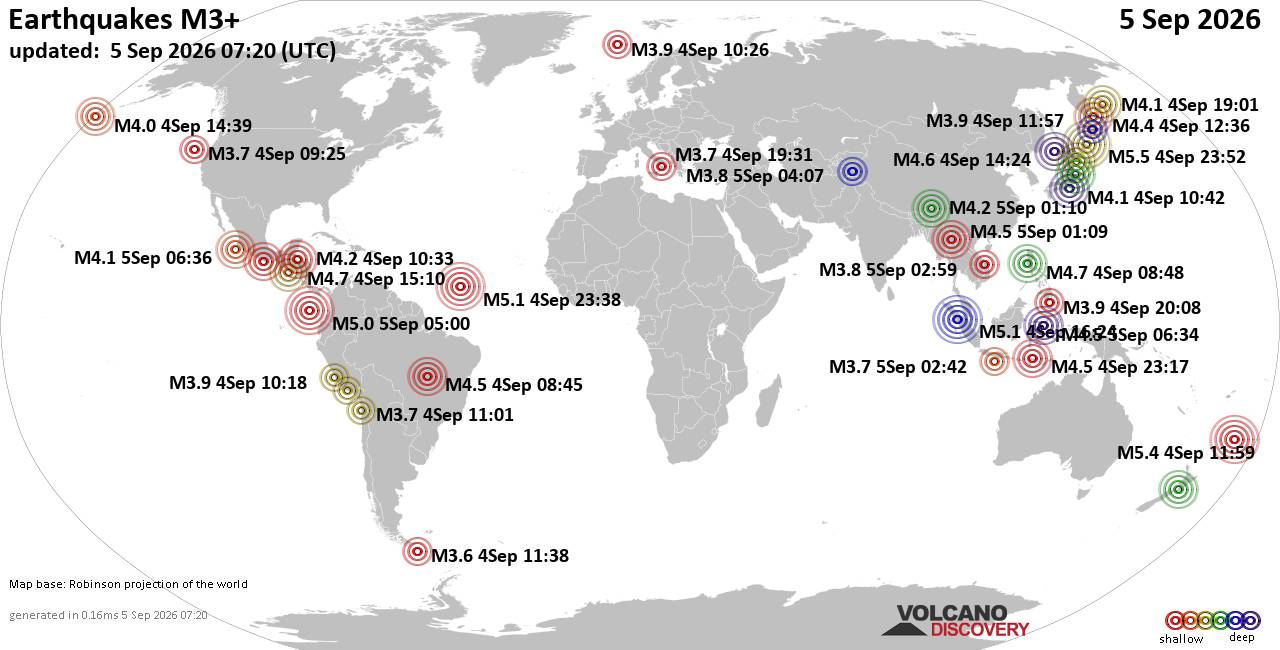
World Earthquake Report for Saturday, 5 September 2026
• Moderate mag. 4.0 earthquake - Provincia de Iquique, Tarapacá, Chile, on S...
• Volcano earthquake report for Saturday, 5 September 2026
• Moderate magnitude 4.6 earthquake 77 km southeast of Gorontalo, Indonesia
• Moderate mag. 4.1 earthquake - North Pacific Ocean, 152 km west of Manzanil...
• Moderate mag. 4.5 earthquake - Sulawesi Tengah, 77 km south of Gorontalo, K...
|

#857041
Fri 04 Sep 2026 02:06:PM
|
Joined: Dec 2002
Posts: 95,821
Launch Director
|
|
Launch Director
Joined: Dec 2002
Posts: 95,821 |
Free to Be Experimental Philosophy“But is this actually philosophy?” Ethan Landes (Eindhoven University of Technology) is tired of experimental philosophers being asked The Question. And he’s tired of experimental philosophers “appeasing” those who ask it by “dressing up experimental scholarship up as relevant to armchair analytic philosophy.” He writes: Every experimental philosopher has tons of practice doing this. It is how we answer The Question in Q&As. It is how we write grant applications. It is how we pitch ourselves in cover letters for jobs: “Oh sure, if you hire me, I will be conducting empirical research, but actually this is super important to existing debates in philosophy because x, y, and z”. This is the strategy experimental philosophers advise each other to use. It is the strategy I advise others to use. This sort of appeasement is, by and large, what we see in the academic literature on experimental philosophy. Arguments for experimental philosophy, whether friendly or unfriendly for the armchair, have, in one way or another, positioned themselves as being in service of academic philosophy’s status quo. The stated goal is always improvement upon existing questions and not the creation of something fundamentally new. He thinks it’s time for a change. His preferred answer to The Question is: “Of course we are doing philosophy. We are just not doing philosophy in their way. Not in the analytic way.” What if we as experimental philosophers stopped playing this game? What if we pitched experimental philosophy as something historically connected with analytic philosophy but not metaphilosophically connected to it? As its own philosophy with its own methods and its own questions? As a tradition of philosophy as legitimate of an heir to Aristotle, Leibniz, Hume, and Quine as analytic philosophy? For a lot of us, this would certainly be more truthful than how we currently pitch our work. Experimental philosophy is by no means a unified field, but a lot of its members, myself among them, just do not care about or believe in the specific problems and specific questions analytic philosophy is working on. Sure, we can pitch our research as applying to those debates. God knows I could monologue off the cuff for an hour about why my experimental research actually matters to.. The post Free to Be Experimental Philosophy first appeared on Daily Nous. https://dailynous.com/2026/09/04/free-to-be-experimental-philosophy/
|
|



CMS The Best Conveyancing solicitors conveyancing quotes throughout the UK
For any webhosting enquiries please email webmaster@aus-city.com
|
|
Forums60
Topics820,269
Posts855,062
Members2,960
| |
Most Online102,106
Jul 10th, 2026
|
|
|
|
|

|