|
|
|
1 members (Alisa),
1,522
guests, and
17
robots. |
|
Key:
Admin,
Global Mod,
Mod
|
|
S |
M |
T |
W |
T |
F |
S |
|
|
1
|
2
|
3
|
4
|
5
|
6
|
|
7
|
8
|
9
|
10
|
11
|
12
|
13
|
|
14
|
15
|
16
|
17
|
18
|
19
|
20
|
|
21
|
22
|
23
|
24
|
25
|
26
|
27
|
|
28
|
29
|
30
|
|
|
|
|
|
There are no members with birthdays on this day. |
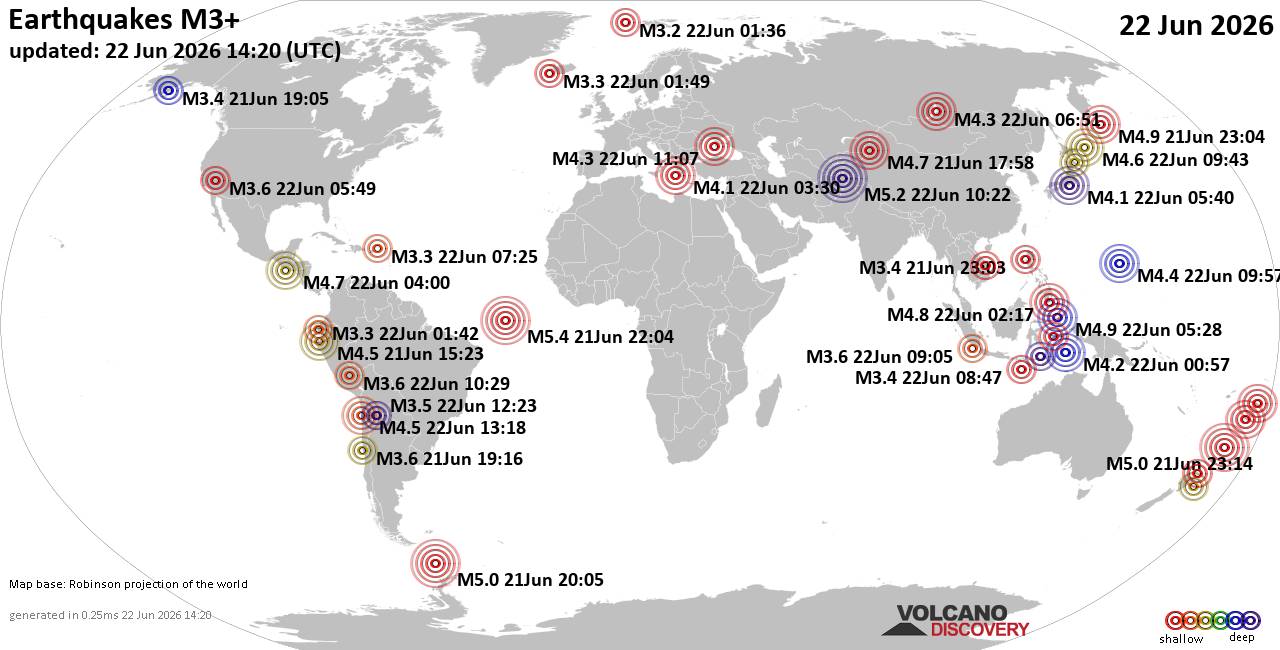
World Earthquake Report for Monday, 22 June 2026
• Moderate mag. 4.9 earthquake - Fiji Islands Region on Monday, Jun 22, 2026,...
• Moderate mag. 4.1 earthquake - South Pacific Ocean, 491 km northeast of Tau...
• Volcano earthquake report for Monday, 22 Jun 2026
• Moderate mag. 4.6 earthquake - 42 km south of Tocopilla, Provincia de Tocop...
• Moderate mag. 4.9 earthquake - South Pacific Ocean, 277 km south of Nuku'al...
|

#259126
Tue 21 Oct 2014 02:29:PM
|
Joined: Dec 2002
Posts: 95,756
Launch Director
|
OP

Launch Director
Joined: Dec 2002
Posts: 95,756 |
Chickens have changed. Today's broiler chickens are several times larger than chickens of past decades -- and a new study by researchers in Canada offers an explanation for why the birds got so big.
(Story continues below photos.)
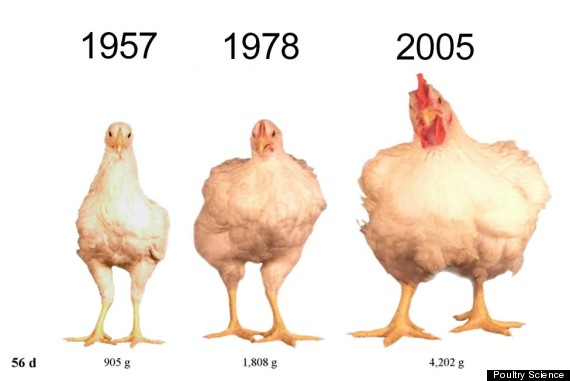 The chickens shown were all raised in the same manner and photographed at the same age. The Huffington Post added the dates to this image. (Poultry Science, Advanced Access, (2014) doi: 10.3382/ps.2014-04291, Figure 1) (Zuidhof et al, “Growth, efficiency, and yield of commercial broilers from 1957, 1978, and 2005") Credit: Zuidhof, MJ, et al. 2014 Poultry Science 93 :1–13.
For the study, the scientists raised three breeds of domesticated chickens: one breed that was common in 1957, another from 1978, and a third from 2005, called the Ross 308 breed, CBC News reported.
"We fed them exactly the same things, so we did not provide hormones," lead author Dr. Martin Zuidhof, associate professor of agricultural science at the University of Alberta, told the CBC. "The only difference that was part of our study treatments was the genetics."
(The U.S. Food and Drug Administration has long banned the use of hormones in poultry production.)
What did the researchers find? The Ross 308 chickens grew to be much bigger than the 1978 breed and four times larger than the 1957 breed.
"We had never actually tested our 1978 line before, but where they fell were very consistent with what we believed would be the case based on historical selection for growth rate and efficiency," Zuidhof told the Canadian news channel CTV.
In other words, today's chickens are bigger simply because they were bred to be bigger. Should we be concerned about eating these big birds?
"There is no danger in eating larger chickens," Zuidhof told The Huffington Post in an email. "That would be comparable to saying it is more dangerous to eat bigger carrots because they’re bigger."
The study was published online in the journal Poultry Science on September 26, 2014.
Source: [url=http://www.huffingtonpost.com/2014/10/21/chickens-bred-bigger_n_5983142.html?utm_hp_ref=weird-news&ir=Weird+News]Chickens Look Way Different Today, And Here's The Reason Why[/url]
|
|



CMS The Best Conveyancing solicitors conveyancing quotes throughout the UK
For any webhosting enquiries please email webmaster@aus-city.com
|
|
Entire Thread
|
 Chickens Look Way Different Today, And Here's The Reason Why
|
Alisa
|
Tue 21 Oct 2014 02:29:PM
|
|
Forums60
Topics784,207
Posts818,972
Members2,960
| |
Most Online22,463
May 9th, 2026
|
|
|
|
|
Copyright 1996 - 2026 by David Cottle. Designed by David Bate Jr. All Rights Reserved.
By using this forum, the user agrees not to transfer any data or technical information received under this agreement to any other entity without the express approval of the AUS-CITY Forum Admins and/or authors of individual posts (Forum Admins and DoD/USSPACECOM for the analysis of satellite tracking data).
Two-line elements (TLE) and all other satellite data presented and distributed via this forum and AUS-CITY mailing lists are distributed with permission from DoD/USSTRATCOM.

|

|