|
0 members (),
1,247
guests, and
23
robots. |
|
Key:
Admin,
Global Mod,
Mod
|
|
S |
M |
T |
W |
T |
F |
S |
|
|
1
|
2
|
3
|
4
|
5
|
6
|
|
7
|
8
|
9
|
10
|
11
|
12
|
13
|
|
14
|
15
|
16
|
17
|
18
|
19
|
20
|
|
21
|
22
|
23
|
24
|
25
|
26
|
27
|
|
28
|
29
|
30
|
|
|
|
|
|
There are no members with birthdays on this day. |
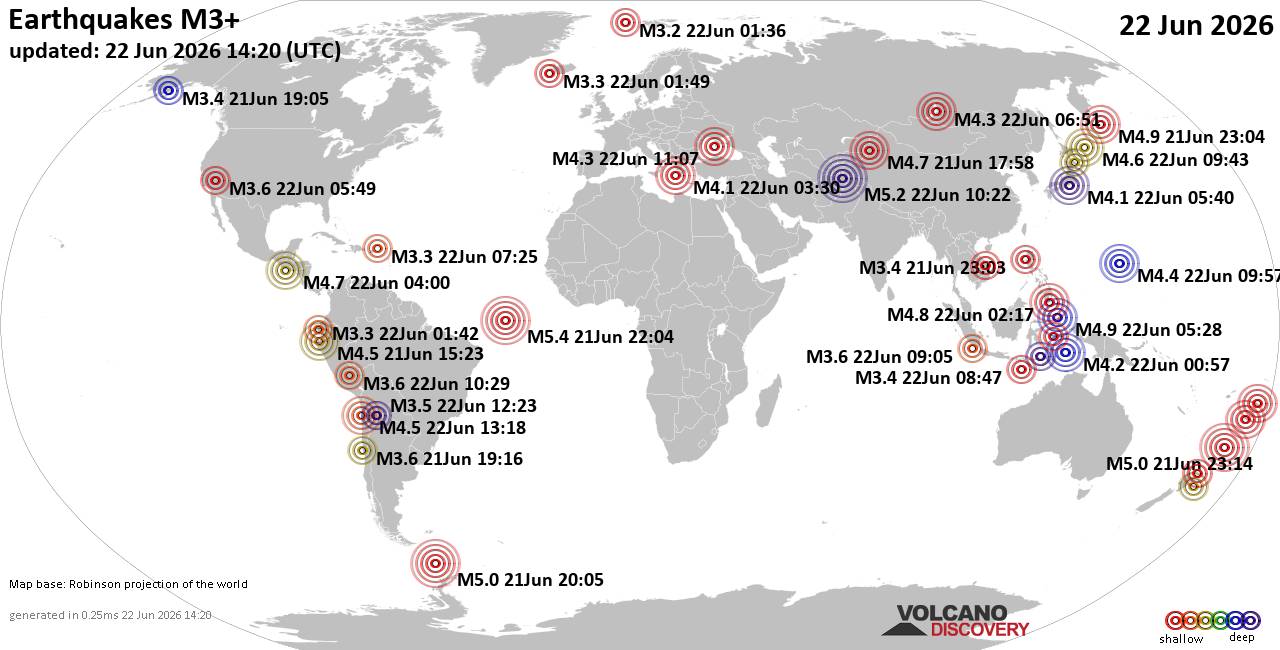
World Earthquake Report for Monday, 22 June 2026
• Moderate mag. 4.9 earthquake - Fiji Islands Region on Monday, Jun 22, 2026,...
• Moderate mag. 4.1 earthquake - South Pacific Ocean, 491 km northeast of Tau...
• Volcano earthquake report for Monday, 22 Jun 2026
• Moderate mag. 4.6 earthquake - 42 km south of Tocopilla, Provincia de Tocop...
• Moderate mag. 4.9 earthquake - South Pacific Ocean, 277 km south of Nuku'al...
|

#4123
Mon 12 May 2003 06:26:PM
|
Joined: Feb 2001
Posts: 3,536
Mission Commander
|
OP

Mission Commander
Joined: Feb 2001
Posts: 3,536 |
Donald Savage<br />Headquarters, Washington May 7, 2003<br />(Phone: 202/358-1547)<br /><br />Ray Villard<br />Space Telescope Science Institute, Baltimore<br />(Phone: 410/338-4514)<br /><br />RELEASE: 03-160<br /><br />DEEPEST VIEW OF SPACE YIELDS YOUNG STARS IN ANDROMEDA HALO<br /><br /> Relying on the deepest visible-light images ever taken<br />in space, astronomers using NASA's Hubble Space Telescope<br />(HST) have reliably measured the age of the spherical halo of<br />stars surrounding the neighboring Andromeda galaxy (M31).<br /><br />To their surprise, they have discovered that approximately<br />one-third of the stars in Andromeda's halo formed only 6 to 8<br />billion years ago. That's a far cry from the 11-to-13<br />billion-year age of the stars in the Milky Way's halo.<br /><br />Why the difference in halo ages? You might call it a tale of<br />rich galaxy/poor galaxy. Apparently, M31 must have gone<br />through a major "corporate merger" with another large galaxy,<br />or a series of mergers with smaller galaxies, billions of<br />years ago. Astronomers cannot yet tell whether this was one<br />tumultuous event or a more continual acquisition of smaller<br />galaxies.<br /><br />The newly discovered younger stars in Andromeda's halo are<br />richer in heavier elements than the stars in our Milky Way's<br />halo, or in most of the small dwarf galaxies that surround<br />the Milky Way. Indeed the level of chemical enrichment seen<br />in these younger stars is characteristic of relatively<br />massive galaxies, containing at least a billion stars.<br /><br />This suggests three possibilities: (1) collisions destroyed<br />the young disk of M31 and dispersed many of its stars into<br />the halo; (2) a single collision destroyed a relatively<br />massive invading galaxy and dispersed its stars and some of<br />Andromeda's disk stars into the halo; and/or (3) many stars<br />formed during the collision itself.<br /><br />Astronomers say it will take more detailed observations to<br />unravel the "acquisition history" of these early cataclysmic<br />events. Located only 2.5 million light-years away, the<br />magnificent Andromeda galaxy, visible to the naked eye as a<br />spindle of light in the autumn sky, has long been considered<br />a near twin to our Milky Way in terms of size, shape and age.<br />This new finding promises to offer new clues about how giant<br />galaxies, like M31 and our Milky Way, formed by<br />gravitationally shredding galaxies, like a cosmic Cuisinart,<br />and then devouring them.<br /><br />Dr. Tom Brown of the Space Telescope Science Institute<br />(STScI) is reporting the findings today in Baltimore at the<br />STScI May Symposium, "The Local Group as an Astrophysical<br />Laboratory." His team used Hubble's Advanced Camera for<br />Surveys (ACS) to peer into a small sample of the Andromeda<br />halo for 120 Hubble orbits. This allowed for a study of the<br />entire demographics of the halo population, down to its<br />extremely faint stars.<br /><br />Previously, telescopes could only see the bright giant stars<br />in the halo population, but the population of "normal" stars<br />like our own sun was beyond our grasp, because such stars in<br />M31 are so faint. The ACS is the first astronomical camera to<br />combine ultra-sharp vision and sensitivity to ferret out<br />M31's faint halo population.<br /><br />An estimated 300,000 of these never-before-seen halo stars<br />can be resolved, peppering Hubble's narrow sample of the halo<br />population. Looking far beyond the halo stars, Hubble reveals<br />thousands of background galaxies (down to 31st magnitude)<br />billions of light-years away.<br /><br />A large fraction of the background galaxies in the image also<br />have peculiar shapes due to collisions. This reinforces the<br />fact: we live in a vibrant and dynamic universe undergoing<br />constant change.<br /><br />Electronic image files and additional information are<br />available on the Internet at:<br /><br /> http://hubblesite.org/news/2003/15<br /><br />The Association of Universities for Research in Astronomy,<br />Inc. operates the STScI for NASA, under contract with the<br />Goddard Space Flight Center, Greenbelt, Md. The HST is a<br />project of international cooperation between NASA and the<br />European Space Agency.<br /><br />For information about NASA and space science on the Internet,<br />visit:<br /><br /> http://www.nasa.gov
|
|



CMS The Best Conveyancing solicitors conveyancing quotes throughout the UK
For any webhosting enquiries please email webmaster@aus-city.com
|
|
Entire Thread
|
 Deepest View Of Space Yields Young Stars In Andromeda Halo
|
VA3DBJ
|
Mon 12 May 2003 06:26:PM
|
|
Forums60
Topics784,205
Posts818,970
Members2,960
| |
Most Online22,463
May 9th, 2026
|
|
|