|
0 members (),
732
guests, and
26
robots. |
|
Key:
Admin,
Global Mod,
Mod
|
|
S |
M |
T |
W |
T |
F |
S |
|
|
1
|
2
|
3
|
4
|
5
|
6
|
|
7
|
8
|
9
|
10
|
11
|
12
|
13
|
|
14
|
15
|
16
|
17
|
18
|
19
|
20
|
|
21
|
22
|
23
|
24
|
25
|
26
|
27
|
|
28
|
29
|
30
|
|
|
|
|
|
There are no members with birthdays on this day. |
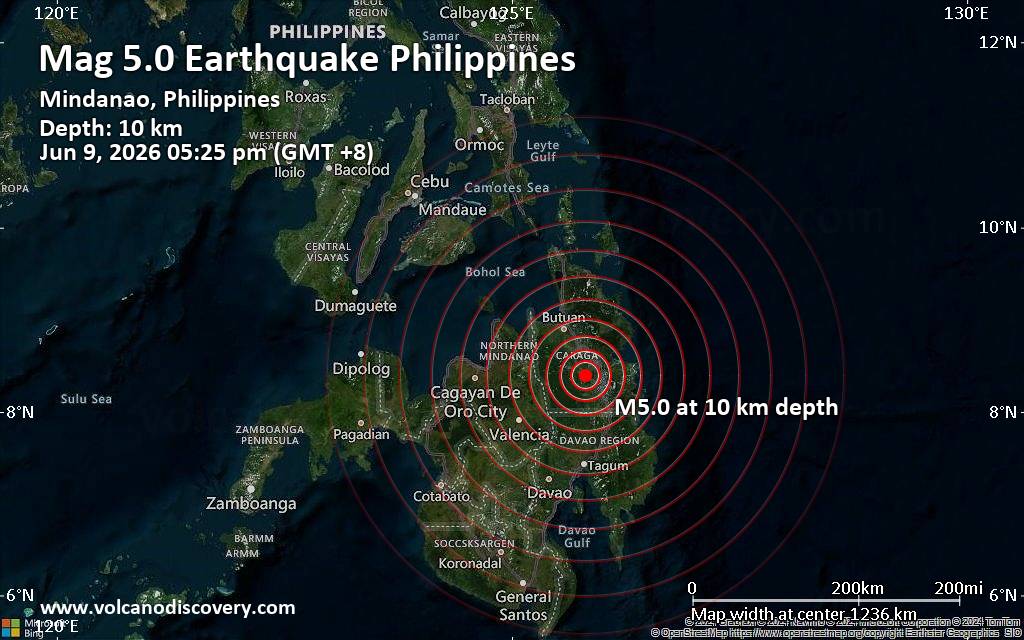
Significant earthquake of magnitude 5.0 just reported 22 km southwest of Prosperidad, Philippines
• Strong mag. 5.0 earthquake - Mindanao, Philippines, on Tuesday, Jun 9, 2026...
• World Earthquake Report for Tuesday, 9 June 2026
• Moderate magnitude 4.8 earthquake 110 km southwest of Tambolaka, Indonesia
• Moderate mag. 4.8 earthquake - South of Sumbawa, Indonesia, on Tuesday, Jun...
• Volcano earthquake report for Tuesday, 9 Jun 2026
|

#49829
Thu 09 Sep 2010 12:14:PM
|
Joined: Feb 2001
Posts: 678,976
Launch Director
|
OP

Launch Director
Joined: Feb 2001
Posts: 678,976 |
HUBBLE SPACE TELESCOPE - Continuing to Collect World Class Science
�
DAILY REPORT #5177
�
PERIOD COVERED: 5am September 8 - 5am September 9, 2010 (DOY 251/09:00z-252/09:00z)
�
FLIGHT OPERATIONS SUMMARY:
�
Significant Spacecraft Anomalies: (The following are preliminary reports
of potential non-nominal performance that will be investigated.)
�
HSTARS:
12384 - GSAcq(1,2,1) at 251/10:36:01 and REAcq(1,2,1) at 251/12:12:09z
������� �� and 251/13:48:00z all resulted in fine lock backup on FGS1.
�
������� �� Observations possibly affected: STIS 26-29 Proposal ID#11668 &
������� �� WFC3 74-75 Proposal ID#11912
�
�
12385 - REAcq(1,2,1) at 251/17:32:32z failed.
�
������� �� Observations affected: COS 70-72 Proposal ID#11535; WFC3 76-77
������� �� Proposal ID#11914
�
�
12387 - GSAcq(1,2,1) at 252/05:38:36z Fails to RGA Hold, Search radius Limit Exceeded on FGS1.
�
������� �� �Observations affected: ACS36-39 Proposal ID#12292
�
�
HSTAR FOR DOY 235
12386 - GSAcq(1,2,1) at 235/15:57:36 required three attempts to achieve
������� �� CT-DV on FGS1. The acquisition was successful.
�
������� �� Observations possibly affected: STIS 11-13 Proposal ID#11847; COS 15
������� �� Proposal ID#11895; WFC3 9 Proposal ID#11638
�
�
COMPLETED OPS REQUEST: (None)
�
COMPLETED OPS NOTES: (None)
�
������� ����� �������SCHEDULED�� SUCCESSFUL
FGS GSAcq �� �����������8�� ���� ������7��������� �����
FGS REAcq �� �����������7 ��� ����������6�������
OBAD with Maneuver 6 ���� ���������6
�
SIGNIFICANT EVENTS: (None)
�
�
OBSERVATIONS SCHEDULED:
�
ACS/WFC 11996
�
CCD Daily Monitor (Part 3)
�
This program comprises basic tests for measuring the read noise and dark
current of the ACS WFC and for tracking the growth of hot pixels. The
recorded frames are used to create bias and dark reference images for
science data reduction and calibration. This program will be executed
four days per week (Mon, Wed, Fri, Sun) for the duration of Cycle 17. To
facilitate scheduling, this program is split into three proposals. This
proposal covers 308 orbits (19.25 weeks) from 21 June 2010 to 1 November
2010.
�
ACS/WFC 12210
�
SLACS for the Masses: Extending Strong Lensing to Lower Masses and
Smaller Radii
�
Strong gravitational lensing provides the most accurate possible
measurement of mass in the central regions of early-type galaxies
(ETGs). We propose to continue the highly productive Sloan Lens ACS
(SLACS) Survey for strong gravitational lens galaxies by observing a
substantial fraction of 135 new ETG gravitational-lens candidates with
HST-ACS WFC F814W Snapshot imaging. The proposed target sample has been
selected from the seventh and final data release of the Sloan Digital
Sky Survey, and is designed to complement the distribution of previously
confirmed SLACS lenses in lens-galaxy mass and in the ratio of Einstein
radius to optical half-light radius. The observations we propose will
lead to a combined SLACS sample covering nearly two decades in mass,
with dense mapping of enclosed mass as a function of radius out to the
half-light radius and beyond. With this longer mass baseline, we will
extend our lensing and dynamical analysis of the mass structure and
scaling relations of ETGs to galaxies of significantly lower mass, and
directly test for a transition in structural and dark-matter content
trends at intermediate galaxy mass. The broader mass coverage will also
enable us to make a direct connection to the structure of well-studied
nearby ETGs as deduced from dynamical modeling of their line-of-sight
velocity distribution fields. Finally, the combined sample will allow a
more conclusive test of the current SLACS result that the intrinsic
scatter in ETG mass-density structure is not significantly correlated
with any other galaxy observables. The final SLACS sample at the
conclusion of this program will comprise approximately 130 lenses with
known foreground and background redshifts, and is likely to be the
largest confirmed sample of strong-lens galaxies for many years to come.
�
COS/NUV/FUV 11535
�
COS-GTO: Deep Search for an Oxygen Atmosphere on Callisto
�
We plan a deep search for 1304? and 1356? O emission from Callisto, to
detect or place strong limits on the presence of a hypothesized O2
atmosphere on this moon (Liang et al. 2005). Tenuous oxygen atmospheres
on Europa and Ganymede have been detected by HST using these emission
lines, but searches for O emission from Callisto have not been
successful (Strobel et al. 2002). The Liang et al. models predict O
emission at levels comparable to the Strobel et al. upper limit, so the
improved sensitivity of COS may be able to detect the emission, and thus
Callisto's O2 atmosphere, for the first time.
�
WFC3/UV 11638
�
Illuminating the HI Structure of a Proto-cluster Region at z=2.84
�
We propose very deep intermediate-band Lyman alpha imaging in the field
of a newly-discovered proto-cluster region surrounding the extremely
luminous QSO HS1549+19 at z=2.844. The large structure, initially
discovered in a spectroscopic survey of galaxies in fields surrounding
the brightest QSOs at z=2.5-2.8, represents an ideal laboratory for
studying the response of the intergalactic medium to a source of
ionizing photons that exceeds the UV background by factors >1000. Within
a single pointing of WFC3-UVIS there are already more than 45 known
Lyman alpha emitters, most of which are already spectroscopically
confirmed, and at least 3 of which are giant "Lyman alpha blobs''. Many
of the objects have properties similar to those expected from the
process of fluorescence, in which Lyman alpha emission is induced by the
UV radiation field of the QSO in any HI gas that dense enough to remain
partially self-shielded. Fortuitously, the F467M filter (Stromgren "b")
in WFC3-UVIS is a perfect match to Lyman alpha at z=2.844. In
combination with an equally deep broad-band continuum image, the
observations will allow the construction of a Lyman alpha map tracing
dense gas throughout the inner parts of a proto-cluster region at
sub-kpc resolution. The ability to measure the spatial sub-structure and
surface brightness distribution of Lya emission, relative to known
protocluster galaxies and AGN, will illuminate the "cosmic web'' in a
dense region caught in a violent stage of formation.
�
�
STIS/CCD/MA 11668
�
Cosmo-chronometry and Elemental Abundance Distribution of the Ancient
Star HE1523-0901
�
We propose to obtain near-UV HST/STIS spectroscopy of the extremely
metal-poor, highly r-process-enhanced halo star HE 1523-0901, in order
to produce the most complete abundance distribution of the heaviest
stable elements, including platinum, osmium, and lead. These HST
abundance data will then be used to estimate the initial abundances of
the long-lived radioactive elements thorium and uranium, and by
comparison with their observed abundances, enable an accurate age
determination of this ancient star. The use of radioactive chronometers
in stars provides an independent lower limit on the age of the Galaxy,
which can be compared with alternative limits set by globular clusters
and by analysis from WMAP. Our proposed observations of HE1523-0901 will
also provide significant new information about the early chemical
history of the Galaxy, specifically, the nature of the first generations
of stars and the types of nucleosynthetic processes that occurred at the
onset of Galactic chemical evolution.
�
STIS/CCD 11845
�
CCD Dark Monitor Part 2
�
Monitor the darks for the STIS CCD.
�
STIS/CCD 11847
�
CCD Bias Monitor-Part 2
�
Monitor the bias in the 1x1, 1x2, 2x1, and 2x2 bin settings at gain=1,
and 1x1 at gain = 4, to build up high-S/N superbiases and track the
evolution of hot columns.
�
�
COS/FUV 11895
�
FUV Detector Dark Monitor
�
Monitor the FUV detector dark rate by taking long science exposures
without illuminating the detector. The detector dark rate and spatial
distribution of counts will be compared to pre-launch and SMOV data in
order to verify the nominal operation of the detector. Variations of
count rate as a function of orbital position will be analyzed to find
dependence of dark rate on proximity to the SAA. Dependence of dark rate
as function of time will also be tracked.
�
�
WFC3/IR 11738
�
SPIDERWEBS AND FLIES: OBSERVING MASSIVE GALAXY FORMATION IN ACTION
�
Distant luminous radio galaxies are among the brightest known galaxies
in the early Universe, pinpoint likely progenitors of dominant cluster
galaxies and are unique laboratories for studying massive galaxy
formation. Spectacular images with the ACS and NICMOS of one such
object, the "Spiderweb Galaxy" at z = 2.2, show in exquisite detail,
hierarchical merging occurring 11 Gyr ago. By imaging 3 additional
Spiderweb-like galaxies we wish to study this potentially crucial phase
of massive galaxy evolution, when hierarchical merging, galaxy
downsizing and AGN feedback are all likely to be occurring. Properties
of the complete sample of Spiderweb galaxies will be used to (i)
constrain models for the formation and evolution of the most massive
galaxies that dominate rich clusters and (ii) investigate the nature of
chain and tadpole galaxies, a fundamental but poorly understood
constituent of the early Universe.
�
We shall image rest-frame UV and optical continuum emission from 3 radio
galaxies with 2.4 < z < 3.8 that appear clumpy and large in shallow
WFPC/PC observations. The new observations will typically reach ~2
magnitudes fainter over 20-40 times larger area than previously.
Photometric and morphological parameters will be measured for satellite
galaxies ("flies") in the clumpy massive hosts and for galaxies in ~ 1.5
Mpc x 1.5 Mpc regions of surrounding protoclusters. Locations, sizes,
elongations, clumpiness, masses, and star formation rates of the merging
satellite and protocluster galaxies will be compared with new state of
the art simulations. Combination of ACS and WFC3 images will help
disentangle the properties of the young and old populations.
�
Specific goals include: (i) investigating star formation histories of
the satellite galaxies and the extended emission,
�
(ii) studying "downsizing" and merging scenarios and (iii) measuring the
statistics of linear galaxies and relating them to models for the
formation of massive galaxies and to the properties of the important but
enigmatic class of chain/tadpole galaxies in the HUDF.
�
WFC3/IR 12181
�
The Atmospheric Structure of Giant Hot Exoplanets
�
Characterization of close-in giant exoplanets has proceeded rapidly over
the past few years, due largely to Spitzer and HST observations in
transiting systems. Low resolution thermal emission spectra of over two
dozen planets have been measured by Spitzer, and HST observations of a
few key planets have indicated unusual molecular abundances via
transmission spectroscopy. However, current models for the atmospheric
structure of these worlds exhibit degeneracies wherein different
combinations of temperature and molecular abundance profiles can fit the
same Spitzer data for each planet. Fortunately, the advent of the IR
capability on HST/WFC3 allows us to solve this major problem in
exoplanet science. We propose to inaugurate a Large HST program that is
scientifically complementary to Spitzer, Kepler, and CoRoT exoplanet
results.
�
We will obtain transmission spectroscopy of the 1.4-micron water band in
a sample of 13 planets, using the G141 grism on WFC3. Among the abundant
molecules, only water absorbs at this wavelength, and our measurement of
water abundance will enable us to break the degeneracies in the Spitzer
results with minimal model assumptions. We will also use the G141 grism
to observe secondary eclipses for 7 very hot giant exoplanets at
1.5-microns, including several bright systems in the Kepler and CoRoT
fields. The strong temperature sensitivity of the thermal continuum at
1.5-microns provides high leverage on atmospheric temperature for these
worlds, again helping to break degeneracies in interpreting the Spitzer
data. Moreover, our precise eclipse photometry, in combination with
extant Spitzer data, will enable us to extrapolate the thermal continuum
to optical wavelengths. Kepler and CoRoT teams will be thereby able to
subtract the thermal contribution from their increasingly precise
measurements of optical eclipses, and measure, or place extremely
stringent limits on, the albedo of these exotic worlds.
�
WFC3/UV/IR 12234
�
Differentiation in the Kuiper belt: a Search for Silicates on Icy
Bodies.
�
We currently have a large on-going program (Go Program 11644, 120
orbits) to exploit the superb stability and photometric characteristics
of HST and the broad range in wavelength coverage of the WFC3 to make
broad-band vis/IR spectral observations of a large sample of Kuiper belt
objects. Though the survey is currently only ~50% complete, the quality
and unprecedented signal-to-noise of these observations has revealed the
existence of a previously undiscovered spectral variability not
explainable within our current understanding of these objects.
�
A possible explanation for this variability is that with this faint set
of Kuiper belt objects, we are beginning to see the difference between
larger differentiated objects and smaller non-differentiated objects.
Its seems that the small and likely undifferentiated objects are
exhibiting silicate features that affect our photometry - features not
exhibited by the icy mantles of larger icy bodies.
�
We propose a small add-on survey to dramatically increase the scientific
results of our large program. The proposed observations will use the
proven capabilities of WFC3 to make broad and narrow-band photometric
observations to detect spectral features in the 1.0-1.3 micron range of
a small subset of our sources. The 13 targets have been carefully
selected to cover the range of spectral variability detected in our
large program as well as sample the entire dynamical range and physical
sizes of these targets. These observations will allow the identification
of undifferentiated Kuiper belt objects by detection of their silicate
features. As a probe for differentiation, these observations could
constrain the natal locations of different Kuiper belt classes, a
constraint currently unavailable to formation models. This small set of
observations will allow the calibration of the spectral variability seen
in our large program, and drastically enhance the scientific output of
our full Cycle 17 sample.
�
�
ACS/WFC 12292
�
SWELLS: Doubling the Number of Disk-dominated Edge-on Spiral Lens
Galaxies
�
The formation of realistic disk galaxies within the LCDM cosmology is
still largely an unsolved problem. Theory is now beginning to make
predictions for how dark matter halos respond to galaxy formation, and
for the properties of disk galaxies. Measuring the density profiles of
dark matter halos on galaxy scales is therefore a strong test for the
standard paradigm of galaxy formation, offering great potential for
discovery. However, the degeneracy between the stellar and dark matter
contributions to galaxy rotation curves remains a major obstacle. Strong
gravitational lensing, when combined with spatially resolved kinematics
and stellar population models, can solve this long-standing problem.
Unfortunately, this joint methodology could not be exploited until
recently due to the paucity of known edge-on spiral lenses. We have
developed and demonstrated an efficient technique to find exactly these
systems. During supplemental cycle-16 we discovered five new spiral lens
galaxies, suitable for rotation curve measurements. We propose
multi-color HST imaging of 16 candidates and 2 partially-imaged
confirmed systems, to measure a sample of eight new edge-on spiral
lenses. This program will at least double the number of known
disk-dominated systems. This is crucial for constraining the relative
contribution of the disk, bulge and dark halo to the total density
profile.
�
WFC3/UVIS 11905
�
WFC3 UVIS CCD Daily Monitor
�
The behavior of the WFC3 UVIS CCD will be monitored daily with a set of
full-frame, four-amp bias and dark frames. A smaller set of 2Kx4K
subarray biases are acquired at less frequent intervals throughout the
cycle to support subarray science observations. The internals from this
proposal, along with those from the anneal procedure (Proposal 11909),
will be used to generate the necessary superbias and superdark reference
files for the calibration pipeline (CDBS).
�
WFC3/UVIS 11912
�
UVIS Internal Flats
�
This proposal will be used to assess the stability of the flat field
structure for the UVIS detector throughout the 15 months of Cycle 17.
The data will be used to generate on-orbit updates for the delta-flat
field reference files used in the WFC3 calibration pipeline, if
significant changes in the flat structure are seen.
�
WFC3/UVIS 11914
�
UVIS Earth Flats
�
This program is an experimental path finder for Cycle 18 calibration.
Visible-wavelength flat fields will be obtained by observing the dark
side of the Earth during periods of full moon illumination. The
observations will consist of full-frame streaked WFC3 UVIS imagery: per
22- min total exposure time in a single "dark-sky" orbit, we anticipate
collecting 7000 e/pix in F606W or 4500 e/pix in F814W. To achieve
Poisson S/N > 100 per pixel, we require at least 2 orbits of F606W and 3
orbits of F814W.
�
For UVIS narrowband filters, exposures of 1 sec typically do not
saturate on the sunlit Earth, so we will take sunlit Earth flats for
three of the more-commonly used narrowband filters in Cycle 17 plus the
also-popular long-wavelength quad filters, for which we get four filters
at once.
�
Why not use the Sunlit Earth for the wideband visible-light filters? It
is too bright in the visible for WFC3 UVIS minimum exposure time of 0.5
sec. Similarly, for NICMOS the sunlit-Earth is too bright which
saturates the detector too quickly and/or induces abnormal behaviors
such as super-shading (Gilmore 1998, NIC 098-011). In the narrowband
visible and broadband near- UV is not too bright (predictions in Cox et
al. 1987 "Standard Astronomical Sources for HST: 6. Spatially Flat
Fields." and observations in ACS Program 10050).
�
Other possibilities? Cox et al.'s Section II.D addresses many other
possible sources for flat fields, rejecting them for a variety of
reasons. A remaining possibility would be the totally eclipsed moon.
Such eclipses provide approximately 2 hours (1 HST orbit) of opportunity
per year, so they are too rare to be generically useful. An advantage of
the moon over the Earth is that the moon subtends less than 0.25 square
degree, whereas the Earth subtends a steradian or more, so scattered
light and light potentially leaking around the shutter presents
additional problems for the Earth. Also, we're unsure if HST can point
180 deg from the Sun.
David Cottle
UBB Owner & Administrator
|
|



CMS The Best Conveyancing solicitors conveyancing quotes throughout the UK
For any webhosting enquiries please email webmaster@aus-city.com
|
|
Forums60
Topics780,117
Posts814,875
Members2,960
| |
Most Online22,463
May 9th, 2026
|
|
|