|
0 members (),
1,574
guests, and
24
robots. |
|
Key:
Admin,
Global Mod,
Mod
|
|
S |
M |
T |
W |
T |
F |
S |
|
|
|
|
|
1
|
2
|
3
|
|
4
|
5
|
6
|
7
|
8
|
9
|
10
|
|
11
|
12
|
13
|
14
|
15
|
16
|
17
|
|
18
|
19
|
20
|
21
|
22
|
23
|
24
|
|
25
|
26
|
27
|
28
|
29
|
30
|
31
|
|
There are no members with birthdays on this day. |
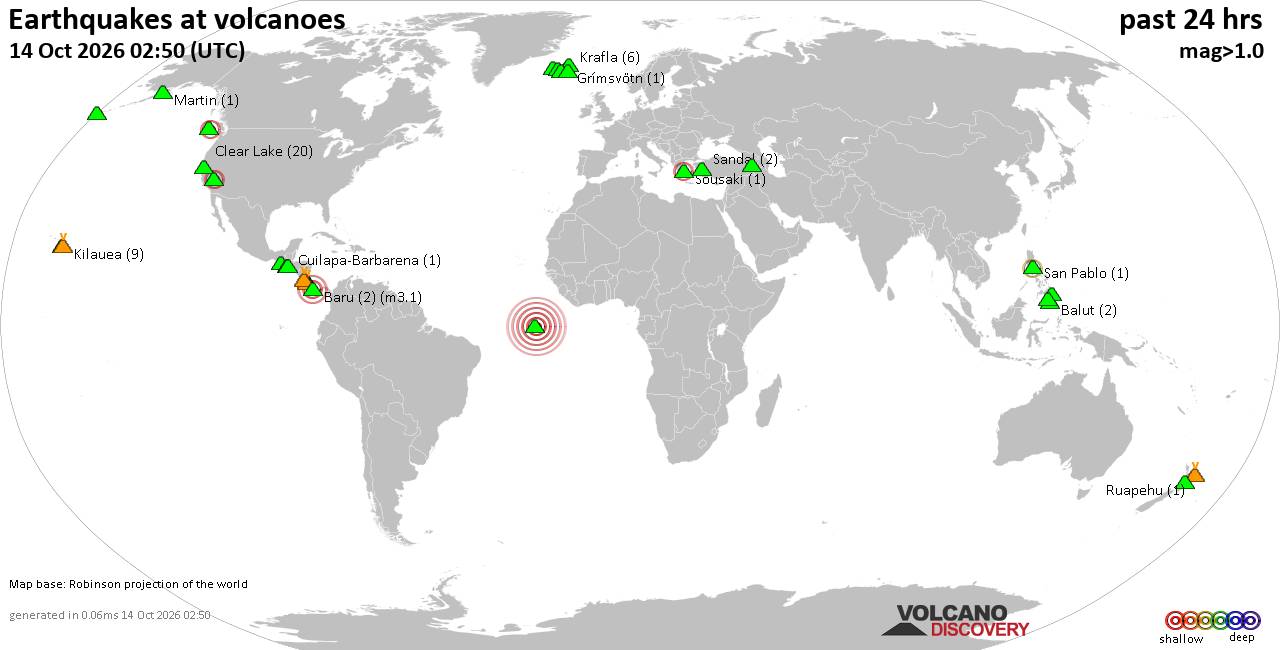
Volcano earthquake report for Wednesday, 14 October 2026
• M 2.0 - 4 km SW of Thomasville, Missouri
• M 3.0 - 23 km NE of Hydesville, CA
• M 2.8 - 6 km WSW of Wilderness Rim, Washington
• M 2.5 - 7 km N of Alex, Oklahoma
• M 3.0 - 23 km NE of Hydesville, CA
• M 7.7 - 12 km WSW of Pitaloza Arriba, Panama
|

#830339
Sat 01 Aug 2026 08:08:PM
|
Joined: Dec 2002
Posts: 95,830
Launch Director
|
|
Launch Director
Joined: Dec 2002
Posts: 95,830 |
The "75 lost books of the Bible" often refers to a collection of texts that were either mentioned in the Bible, found in ancient writings, or excluded from the canon. Here's a comprehensive list of these texts: 👇👇👇👇👇 75 lost books of the BibleThis list combines texts explicitly mentioned in the Bible, deuterocanonical works, pseudepigraphal writings, Gnostic scriptures, and other historical documents. Many of these texts are valued for their historical or theological insight but are not included in the Protestant or Catholic biblical canon. Some of these texts are considered sacred in specific Christian traditions, while others are regarded as apocryphal or heretical.
|
|



CMS The Best Conveyancing solicitors conveyancing quotes throughout the UK
For any webhosting enquiries please email webmaster@aus-city.com
|
|
|
Joined: Dec 2002
Posts: 95,830
Launch Director
|
|
Launch Director
Joined: Dec 2002
Posts: 95,830 |
Books Mentioned in the Bible (but Lost)
Book of the Wars of the Lord (Numbers 21:14)
Book of Jasher (Joshua 10:13; 2 Samuel 1:18)
Book of the Acts of Solomon (1 Kings 11:41)
Book of the Chronicles of the Kings of Israel (1 Kings 14:19)
Book of the Chronicles of the Kings of Judah (1 Kings 15:7)
Book of Samuel the Seer (1 Chronicles 29:29)
Book of Nathan the Prophet (1 Chronicles 29:29; 2 Chronicles 9:29)
Book of Gad the Seer (1 Chronicles 29:29)
Prophecy of Ahijah the Shilonite (2 Chronicles 9:29)
Visions of Iddo the Seer (2 Chronicles 9:29; 2 Chronicles 12:15)
Book of Shemaiah the Prophet (2 Chronicles 12:15)
Book of Jehu the Son of Hanani (2 Chronicles 20:34)
Sayings of the Seers (2 Chronicles 33:19)
Epistle to the Laodiceans (Colossians 4:16)
Books from the Apocrypha/Deuterocanon
1 Esdras
2 Esdras
Tobit
Judith
Additions to Esther
Wisdom of Solomon
Ecclesiasticus (Sirach)
Baruch
Letter of Jeremiah
Prayer of Azariah and Song of the Three Holy Children (Daniel 3)
Susanna (Daniel 13)
Bel and the Dragon (Daniel 14)
1 Maccabees
2 Maccabees
Books from the Pseudepigrapha
Book of Enoch (1 Enoch)
2 Enoch (Secrets of Enoch)
3 Enoch (Hebrew Enoch)
Book of Jubilees
Life of Adam and Eve
Martyrdom of Isaiah
Ascension of Isaiah
Testaments of the Twelve Patriarchs
Psalms of Solomon
Odes of Solomon
Letter of Aristeas
4 Ezra
Prayer of Manasseh
2 Baruch (Syriac Apocalypse of Baruch)
3 Baruch (Greek Apocalypse of Baruch)
Book of Noah
Gnostic Texts (Nag Hammadi Library)
Gospel of Thomas
Gospel of Philip
Gospel of Mary Magdalene
Gospel of Truth
Gospel of Judas
Apocalypse of Peter
Apocalypse of Paul
Sophia of Jesus Christ
Acts of Peter
Acts of Paul and Thecla
The Didache (Teaching of the Twelve Apostles)
Other Lost or Disputed Texts
Book of Eldad and Modad
Acts of Andrew
Acts of John
Acts of Philip
Acts of Thomas
Epistle of Barnabas
Shepherd of Hermas
Epistle of Polycarp to the Philippians
Clementine Homilies
Clementine Recognitions
Gospel of the Hebrews
Gospel of the Ebionites
Gospel of the Nazarenes
Protoevangelium of James
Infancy Gospel of Thomas
Arabic Gospel of the Infancy
Acts of Pilate (Gospel of Nicodemus)
Epistle of Ignatius to the Smyrnaeans
Epistle of Ignatius to the Trallians
Epistle of Ignatius to the Ephesians
|
|
|
|
Joined: Dec 2002
Posts: 95,830
Launch Director
|
|
Launch Director
Joined: Dec 2002
Posts: 95,830 |
I’ve been tempted to go down this rabbit hole before, but, no,  it just feels wrong. My interest dies fast. I’d rather just keep reading the modern day Bible as it is because it is so good and multidimensional. It is endlessly entertaining, but yeah.
|
|
|
|
Joined: Dec 2002
Posts: 95,830
Launch Director
|
|
Launch Director
Joined: Dec 2002
Posts: 95,830 |
Okay wait…I had wanted to read the extra 7 books of the Catholic Bible so I will go ahead with those to start. So far I’ve read the book of Tobit and it was amazing. I recently requested to learn more about God’s angels, and the book of Tobit was about an 👼 angel!
I was having a bit of resistance from myself as I tried to let go of my prejudice that it couldn’t be true, could it? That this amazing book with so much information about angels’ service to man is just as much God’s word as the original Bible I read that did not contain this book. This seems like such an important piece of the puzzle.🧩
The story itself seemed a unique but similar Bible story. Parable-y. As good as popular fiction books I’ve read. I wanted to go for the ride and find out what happened. Also I saw the name of the angel was the same as Tobin’s great-great-great grandfather, or thereabouts. Which adds to my theory that people are/become angels.
Anyway, I’m so glad my friend suggested I read the missing books. I’m onto Judith now.
|
|
|
|
Joined: Dec 2002
Posts: 95,830
Launch Director
|
|
Launch Director
Joined: Dec 2002
Posts: 95,830 |
Now I’ve finished reading the book of Judith, I can give my opinion. At first I was rather horrified at the power and gore. It kinda frightened me thinking of the world back then and how it was more stark and intense. Kings could have any numbers of people slaughtered. The victors looted and destroyed the conquered, killing any of them, taking others captive. And the whole book is about the war the Assyrian King waged and his revenge on those countries who didn’t support him in his war. Anyway, it is an Ester-like story that you may wish to read. Again, a good tale at the least, God’s word more importantly. I think there is agreement that these books were always biblical, but had been removed by… well, let me ask AI: For the “7 books†(Tobit, Judith, Wisdom, Sirach, Baruch, 1 Maccabees, 2 Maccabees), the simple answer is: yes— they existed and were used as Scripture by many early Jewish and Christian communities before later groups finalized different Old Testament canons.
What changed was which canon each tradition adopted, not whether those books existed.
Before “removal†(early centuries): These books were included in the Greek Old Testament tradition (the Septuagint), and they were commonly read and treated as authoritative in the early church.
Later (Reformation era): Protestants (notably beginning with the approach taken by Martin Luther and the broader Reformation) adopted a different Old Testament canon than the one used in Catholic/Orthodox Bibles, so these books were no longer included.
So they were always “around,†but they were not universally treated the same way everywhere until different churches standardized their canons. A strong point from this reading was it answered questions I had. And it’s just good supporting information that clarifies the Bible. And so why remove these books or not include them? It’s hard to tell you what it answered for me without spoiling the ending of the book, which, for me would be a deterrent in reading it - I like a surprise.  So let me see if I can use the spoiler function on this forum. The strong point is that it brought to my mind the question, is it seen as good for a woman to kill if it saves her people. Asking AI to see if any other woman kills someone. What happens (Judges 4):
Israel is being oppressed by King Jabin of Hazor, whose commander is Sisera.
Sisera’s army is defeated, and Sisera escapes on foot.
Sisera runs to the tent of Jael, the wife of Heber (there’s an alliance/relationship between Heber’s family and Jabin).
Jael welcomes Sisera, gives him milk when he asks for water, and then (while he’s asleep) kills him by driving a tent peg through his temple. I asked AI, Was Jael lauded or condemned? Jael was lauded.
In Judges 5 (the Song of Deborah), she’s specifically praised for killing Sisera and is celebrated as part of God’s deliverance of Israel (Judges 5:24–27).
|
|
|
|
Joined: Dec 2002
Posts: 95,830
Launch Director
|
|
Launch Director
Joined: Dec 2002
Posts: 95,830 |
If you’re still reading,  here’s more. I asked ai: biblical self defense killing The Bible contains both strong moral constraints against killing and narratives of people who used force, including some cases where God or Israel’s leaders sanctioned violence. There isn’t a single verse that cleanly “permits self-defense killing,†but you can use the Bible’s themes to form an answer.
What the Bible clearly affirms
Human life has deep moral weight. “You shall not murder†(common OT command; echoed in the NT as the moral heart of the command).
Justice is not the same as revenge. The Bible repeatedly pushes restraint, due process, and leaving vengeance/judgment to God rather than personal retaliation.
Roughly: “don’t kill, and don’t become the aggressor.†Even when force is used in the Bible, it’s typically framed as defense/justice, not bloodlust.
Where self-defense fits (the closest “textual patternâ€)
1) “Don’t murder,†not “never use force.â€
The Bible’s command targets murder—an unjust killing. That distinction is important because self-defense is usually argued as “unjust killing is what you must not do,†while defensive force aims to stop an immediate threat.
2) Cases that look like legitimate defense/necessity
Property/household protection logic: OT law includes situations where stopping an intruder could be lawful (the details differ by case), which shows the principle that protection of life/property can matter under certain conditions.
City-of-refuge/judicial restraint: The legal system treats some killings as accidental/justifiable vs. intentional—again implying the Bible distinguishes motives and circumstances.
What this means for “killing in self-defenseâ€
From a biblical-theology perspective, the safest synthesis is:
Self-defense is morally framed as preventing harm, not escalating violence.
It should be limited and proportionate to the threat (stop the attacker, not punish them beyond the threat).
It should avoid retaliation once the danger has passed.
It should be handled within justice frameworks as much as possible (reporting, courts, accountability), not private vengeance.
Key ethical cautions people often miss
The Bible repeatedly condemns anger-driven killing, revenge, and blood-guilt.
Even if a person “survives,†the Bible’s moral emphasis pushes toward taking responsibility, not treating lethal force as a right to act at will.
If you want, tell me the tradition/framework you mean (e.g., Catholic, Protestant evangelical, Orthodox, Jewish reading, or “just the Bible textâ€) and what scenario you have in mind (immediate physical attack? weapon involved? can you escape?), and I’ll map the biblical principles to that specific case.
RelatedSearchTerms suggestions: [{"suggestion":"Bible self-defense verse murder vs killing distinction","score":0.75},{"suggestion":"Old Testament laws intruder home defense self-defense","score":0.62},{"suggestion":"“Thou shalt not murder†self-defense Christian ethics","score":0.66}] What about the book of Judith where she killed holofernes? Has she sinned or been righteous? In the book of Judith, Judith is portrayed as righteous, not as a sinner, and the text explicitly frames what she did as an act of deliverance under God’s power.
1) The narrative treats her killing as God-enabled deliverance
Judith is single-mindedly seeking to “destroy the enemies who have risen up against us†and she prays that God would “look at this hour upon the work of my hands†for the glory of Jerusalem (Judith 13:4–5). When she decapitates Holofernes, the story quickly shifts to worship and blessing rather than condemnation.
2) Judith herself denies wrongdoing and highlights purity/motivations
Afterwards she testifies that she “deceived him with my appearance in order to kill him,†but adds: “he committed no sin with me, to pollute or shame me†(Judith 13:16). That line matters because the story is concerned with her moral integrity—what would have “polluted†her—not with her condemning the enemy by force.
3) The leaders and people bless her
When she returns, the community responds with praise and blessing, saying God “destroyed our enemies by my hand†(Judith 13:15) and affirming she was protected and guided. Uzziah even calls her “blessed†and credits God with guiding her “to cut off the head of our enemy’s leader†(Judith 13:18–20).
So: has she sinned or been righteous?
Within the book’s own moral logic: Judith is righteous. Her act is presented as God’s instrument to save Israel, not as transgression.
If you want, I can also explain how different Jewish/Christian traditions interpret the book overall (some read it as theological/moral narrative rather than literal history, which affects how people talk about “sin†vs “righteousness†in her action).
|
|
|
Forums60
Topics874,660
Posts909,456
Members2,960
| |
Most Online102,106
Jul 10th, 2026
|
|
|